Skip to content

Available 24/7: (852) 5537 6652

Support & Learning

Unlock DJI Signal Secrets: Your Ultimate OcuSync, O3, O4 Range Test Guide

by LauThomas 29 May 2026 0 comments

Whether you're a commercial pilot mapping construction sites or a recreational flyer chasing golden-hour footage, understanding your DJI drone's signal range is critical for safe and successful flights. Reboot Hub technicians in Shenzhen, China have diagnosed and repaired over 800+ DJI drones with OcuSync, O3, and O4 transmission issues since 2022, holding MOHRSS Level 3 Advanced Technician certification recognized by China's Ministry of Human Resources and Social Security — and the field-tested insights below reflect that direct, hands-on experience. Signal strength directly determines how far your drone can fly, how reliably it responds to your inputs, and whether your video feed remains stable throughout a mission. With DJI's transmission technology evolving rapidly—from the original OcuSync to O3 and now O4—many pilots find themselves confused about what these systems actually do, how they differ, and how to properly test and optimize their range in the field. This guide walks you through everything you need to know about DJI's transmission protocols, how to perform systematic signal and range tests, what environmental factors degrade performance, and how to get the most out of your aircraft whether you're flying over open farmland or through a dense urban corridor.

Related: DJI Matrice 300 RTK GPS/RTK Module Failure Diagnosis: Self-C

How Do DJI OcuSync, O3, and O4 Transmission Systems Compare?

Quick Answer: DJI's O4 system is rated at 20 km (FCC), O3 at 15 km, and OcuSync 2.0 at 10 km — but expect 70–85% of those numbers in open terrain and just 30–50% in urban environments. A proper signal range test takes about 15–20 minutes and will tell you exactly where your drone's practical limits are.
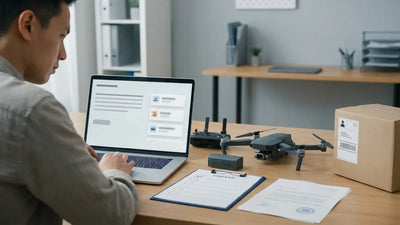
Unlock DJI Signal Secrets Your Ultimate OcuSync O3 - professional image

DJI has invested heavily in proprietary transmission systems to deliver low-latency, high-resolution video feeds and reliable control links between the remote controller and the aircraft. Each generation represents a meaningful leap in bandwidth, range, anti-interference capability, and latency. Before you can effectively test and optimize your drone's range, you need to understand what's under the hood.

Related: DJI Mavic Pro Repair Guide: Comprehensive Diagnostic & Repai

OcuSync (1.0 and 2.0)

OcuSync 1.0 debuted with the DJI Mavic Pro in 2016 and represented DJI's first fully proprietary transmission system, replacing the older Lightbridge and Wi-Fi-based solutions. It operated on both 2.4 GHz and 5.8 GHz frequencies and delivered a maximum transmission range of approximately 7 km (FCC) with 1080p video at short distances, dropping to 720p or 480p as distance increased.

OcuSync 2.0, introduced with the DJI Mavic 2 series in 2018, significantly improved on the original. It doubled the maximum video transmission bitrate to 40 Mbps, reduced latency to approximately 120 ms, and extended the theoretical maximum range to 10 km (FCC) under ideal conditions. OcuSync 2.0 also introduced automatic frequency switching between 2.4 GHz and 5.8 GHz, dynamically selecting the band with less interference in real time. Aircraft using OcuSync 2.0 include the Mavic 2 Pro, Mavic 2 Zoom, Mavic Air 2, and the DJI Mini 2.

A key advantage of OcuSync 2.0 was its support for dual-frequency operation. In environments where 2.4 GHz is heavily congested (such as residential areas with numerous Wi-Fi routers), the system could hop to 5.8 GHz, which offers more available channels but has shorter effective range due to higher signal attenuation. This dynamic switching is critical to understand when testing range, because your results will vary depending on which frequency band the system selects.

O3 (OcuSync 3.0)

The O3 transmission system arrived with the DJI Mavic 3 in late 2021 and represented a generational leap. O3 supports a maximum video transmission distance of 15 km (FCC) and increases the maximum bitrate to a remarkable 60 Mbps, enabling smooth 1080p/60fps live feeds at substantial distances. Latency dropped to approximately 130 ms.

O3 introduced more sophisticated adaptive bitrate algorithms and improved error-correction coding, allowing the system to maintain usable video feeds even in environments with moderate to heavy interference. Aircraft equipped with O3 include the Mavic 3, Mavic 3 Classic, Mavic 3 Pro, Mavic 3 Enterprise series, and the DJI Air 2S (which uses a variant sometimes marketed as O3 but with slightly different specifications).

O3 also improved the control link reliability, making it more resistant to momentary signal drops that could cause an aircraft to initiate Return-to-Home (RTH). This is particularly important for commercial operators who need consistent control authority during inspection flights, mapping missions, or search-and-rescue operations.

O4 (OcuSync 4.0)

O4 is DJI's latest transmission platform, debuting with the DJI Air 3 in 2023 and refined for the Mavic 4 Pro (expected 2024–2025). O4 pushes the maximum video transmission distance to 20 km (FCC) and supports bitrates up to 60 Mbps with enhanced stability. It also introduces support for the DJI RC-N2 and RC Pro controllers with improved antenna designs optimized for O4's signal characteristics.

O4's most significant advancement is its improved multi-antenna MIMO (Multiple Input Multiple Output) architecture, which uses spatial diversity to better reject multipath interference—signals bouncing off buildings, vehicles, and terrain. O4 also features an upgraded frequency management algorithm that can operate more effectively across 2.4 GHz and 5.8 GHz bands simultaneously, rather than simply switching between them.

Pilots upgrading from OcuSync 2.0 or even O3 to O4 will notice improved video feed stability in challenging RF environments, particularly in urban areas and locations near industrial facilities or broadcast towers. However, the fundamental physics of radio transmission still apply—range will always be affected by terrain, obstacles, interference, and antenna orientation.

Quick Comparison Table

  • OcuSync 2.0: 10 km max range (FCC), 40 Mbps bitrate, ~120 ms latency, dual-band 2.4/5.8 GHz. Found in Mavic 2 series, Mavic Air 2, Mini 2.
  • O3: 15 km max range (FCC), 60 Mbps bitrate, ~130 ms latency, advanced adaptive bitrate. Found in Mavic 3 series, Air 2S.
  • O4: 20 km max range (FCC), 60 Mbps bitrate, improved MIMO, enhanced multi-band. Found in Air 3, DJI RC-N2/RC Pro ecosystem.

How Do You Test Your DJI Drone's Signal Range Step by Step?

Testing your drone's signal range isn't just about flying until the video feed cuts out. A proper range test is a systematic process that gives you actionable data about your specific equipment, in your specific operating environment. The DJI Fly App (version 1.12.8 or later) and DJI GO 4 (version 4.3.60 or later) both provide real-time signal indicators, but you need to know how to interpret them and how to set up a controlled test.

Pre-Test Preparation

  1. Update firmware and app: Ensure your aircraft, remote controller, and batteries are all running the latest firmware via the DJI Fly App or DJI Assistant 2. Signal performance can change with firmware updates, as DJI occasionally tweaks transmission power and frequency management algorithms.
  2. Charge all batteries fully: A range test can consume significant battery, especially if you're testing at distance. Start with a fully charged Intelligent Flight Battery and controller battery.
  3. Check your region's regulatory settings: DJI drones automatically adjust transmission power based on GPS-determined region. FCC (United States) allows higher transmission power than CE (European Union). If your drone is incorrectly set to CE mode in an FCC region, your range will be significantly reduced. Check this in the DJI Fly App under Settings > Transmission > Region.
  4. Select a suitable test location: Choose an open area free from tall buildings, dense tree canopy, and known RF interference sources. A large park, open field, or coastal area works well. Record the GPS coordinates of your launch point.
  5. Calibrate the compass and IMU: Perform a compass calibration at the test site and verify IMU calibration status in the app. Signal testing is not the time to discover that your drone's navigation is compromised.
  6. Set RTH altitude appropriately: Configure your Return-to-Home altitude high enough to clear any obstacles between the drone and the home point. For open-area testing, 30 meters is usually sufficient.

Executing the Range Test

  1. Launch and hover at 30 meters AGL: Take off and establish a stable hover at 30 meters above ground level. Note the initial signal strength indicators (bars) for both the RC signal and the video feed signal in the DJI Fly App. On O3 and O4 systems, you'll see separate indicators for the uplink (control) and downlink (video) channels.
  2. Fly in a straight line away from the home point: Begin flying away from your position in a consistent direction, maintaining a constant altitude (ideally 30–50 meters AGL to minimize ground-effect variables). Fly at a moderate speed (5–8 m/s) to allow the system to adapt to changing signal conditions gradually.
  3. Record signal data at regular intervals: Every 200–500 meters, note the following: distance from home point, number of signal bars, RC signal quality (displayed as a percentage or quality indicator in some app versions), video feed resolution and bitrate (if visible), and any warnings or interference indicators. The DJI Fly App will display "Signal Interference Detected" or "Weak Signal" warnings at specific thresholds.
  4. Continue until the first significant signal degradation: You'll typically see a progression: full bars, then occasional brief flickers in the video feed, then consistent video stuttering, then "Weak Signal" warnings, and finally complete signal loss with automatic RTH initiation. Note the distance at which each stage occurs.
  5. Do NOT push to complete signal loss: As soon as you see consistent "Weak Signal" warnings or the video feed becomes unreliable, initiate a controlled return. The goal is to identify your practical operating limit, not to find the absolute breaking point. Pushing to total signal loss in a test environment is unnecessary and introduces unnecessary risk.
  6. Repeat in multiple directions: RF environments are rarely uniform. Repeat the test in at least three different directions from the same launch point to get a more complete picture of your range characteristics.

Recording and Analyzing Results

DJI's flight logs (accessible through the DJI Fly App under Profile > Flight Records, or via third-party tools like AirData UAV and DJI Flight Log Viewer) contain detailed telemetry including signal strength metrics at each point during the flight. Export these logs and plot signal quality against distance to create a performance profile for your specific setup. You can learn more about accessing and interpreting DJI flight data in our DJI Flight Log Analysis Guide.

Compare your results against DJI's published specifications. If you're seeing significantly shorter range than expected (less than 50% of the advertised FCC range in open terrain), there may be a hardware issue with your drone's antennas, your controller, or the transmission module itself.

How Should You Position Your DJI Controller Antennas for Maximum Range?

The antennas on your DJI remote controller are directional (in the case of the standard RC-N1, RC-N2, and RC Pro controllers), meaning their signal pattern is not uniform in all directions. Proper antenna positioning is one of the easiest and most impactful things you can do to improve your signal range and reliability.

Standard Controller Antenna Orientation

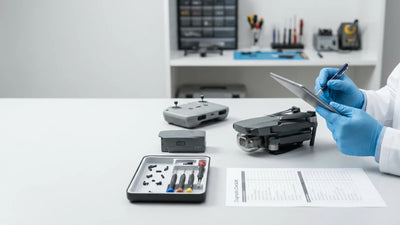
Unlock DJI Signal Secrets Your Ultimate OcuSync O3 - technical diagnostic close-up view

DJI's standard remote controllers (RC-N1, RC-N2) have internal antennas positioned behind the controller's face plate, oriented to radiate signal in a roughly forward-facing pattern with the strongest signal perpendicular to the antennas' long axis. The general rule is:

  • Hold the controller so the flat top face (where the phone mount is) points toward the drone. The antennas radiate strongest from the top and sides of the controller, not from the front (where the sticks are) or the back (where your hands grip).
  • Avoid covering the top of the controller with your hands, phone, or body. Your body absorbs and reflects 2.4 GHz and 5.8 GHz signals. Keep your hands on the grips and ensure the top surface is unobstructed.
  • When the drone is directly overhead, expect reduced signal strength. This is a known characteristic of directional antenna patterns—the null zone is directly above and below the controller. If you need to fly directly overhead, be aware that your signal may temporarily weaken.

RC Pro Controller Antenna Tips

The DJI RC Pro features external antenna elements that can be physically adjusted. For maximum range:

  1. Position the antenna arms at approximately 90 degrees from the controller body, forming a "V" shape.
  2. Orient the flat faces of the antenna arms toward the drone's position.
  3. Avoid folding the antennas flat against the controller body, as this dramatically reduces effective range.
  4. If flying at a significant elevation difference (drone much higher than you), tilt the antenna arms slightly upward to match the drone's elevation angle.

Third-Party Parabolic Reflectors

Parabolic signal reflectors (sometimes called "range boosters") are aftermarket accessories that clip onto the controller's antenna area and focus the signal into a narrower beam. While they can increase range by 20–40% in the direction they're aimed, they come with tradeoffs: the narrower beam means that small movements of the controller can cause the signal to "miss" the drone, and they can amplify the effects of multipath interference. Use them cautiously and only when you understand the directional limitations they impose. We cover antenna accessories in more detail in our DJI Drone Antenna Guide.

What Causes DJI Signal Interference — and How Do You Minimize It?

Radio frequency interference is the single most common cause of unexpectedly poor signal range. Understanding where interference comes from and how to mitigate it is essential for any serious pilot.

Wi-Fi Networks (2.4 GHz Congestion)

Residential neighborhoods, office buildings, coffee shops, and essentially any populated area generate massive amounts of 2.4 GHz Wi-Fi traffic. This is the same frequency band that OcuSync, O3, and O4 use as their primary or secondary communication channel. In dense urban environments, the 2.4 GHz band can be so congested that effective drone range drops to 1–2 km even with line of sight.

Mitigation: If you're operating in a Wi-Fi-dense environment, manually switch your transmission channel selection to 5.8 GHz in the DJI Fly App (Settings > Transmission > Manual Channel). The 5.8 GHz band has more available channels and typically less congestion, though it has shorter effective range due to greater signal attenuation through obstacles. On O4-equipped drones, the system can more effectively manage this automatically, but manual override still provides benefits in extreme cases.

Cellular Towers and 4G/5G Infrastructure

Cellular base stations, particularly those operating in adjacent frequency bands, can generate strong signals that desensitize your drone's receiver. This is especially problematic with 5G NR deployments that use frequencies close to 5.8 GHz. Flying near a cell tower can reduce your effective range by 50% or more.

Mitigation: Avoid launching or flying directly adjacent to cell towers. If you must operate near them, maintain as much distance as practical and monitor your signal indicators closely. If you see sudden unexplained signal drops, cell tower interference is a likely culprit.

High-Voltage Power Lines and Electrical Infrastructure

High-voltage transmission lines generate electromagnetic interference across a wide frequency spectrum. While the effect diminishes with distance, flying near or directly over power lines can cause intermittent signal disruptions. The corona discharge from high-voltage lines (particularly in humid conditions) creates broadband RF noise.

Mitigation: Maintain a horizontal distance of at least 100 meters from high-voltage transmission lines. Do not fly directly over them, both for safety and signal integrity reasons.

Industrial Equipment and Broadcast Towers

FM and television broadcast towers, industrial RF heaters, radar installations, and microwave communication links can all generate signals strong enough to interfere with drone communications. These sources are typically fixed and known—check for broadcast towers in your area using tools like the FCC's antenna structure registration database or RF signal mapping apps.

Solar Activity and Atmospheric Conditions

While less common, periods of high solar activity (increased sunspot activity, solar flares) can increase background RF noise levels and temporarily degrade signal propagation. This effect is more pronounced at higher latitudes and during geomagnetic storms. For most pilots, this is not a significant concern, but commercial operators in northern regions should be aware of it. For additional troubleshooting of signal-related issues, see our Drone Signal Loss Troubleshooting guide.

Why Does Your DJI Drone's Signal Range Drop in Urban Areas vs. Open Terrain?

The environment in which you fly has a dramatic impact on your drone's effective range. Understanding the physics behind these differences helps you set realistic expectations and plan missions accordingly.

Open Area Performance

Unlock DJI Signal Secrets Your Ultimate OcuSync O3 - tools and equipment workspace setup

In open terrain—farmland, desert, coastal areas, open water—your primary limiting factors are transmission power and the curvature of the Earth. With clear line of sight between the controller and the drone, and minimal RF interference, you can expect to achieve 70–85% of DJI's published maximum range specifications. For an O4-equipped Air 3 rated at 20 km FCC, this means realistic usable range of 14–17 km in truly open conditions.

In open areas, you're also less likely to encounter multipath interference (signals reflecting off surfaces and arriving at the receiver with varying phase shifts). This means your video feed will remain cleaner and your control link will be more stable at longer distances. However, open areas can present their own challenges: high winds at altitude can force the drone to consume more power fighting drift, which indirectly affects your range by reducing available flight time.

Urban and Suburban Performance

Cities are hostile RF environments for drones. The combination of dense Wi-Fi networks, cellular infrastructure, building materials that absorb and reflect radio signals, and the sheer number of electronic devices operating in every home and business creates a challenging operating environment. Expect your effective range to drop to 30–50% of the rated maximum in urban areas, and potentially even lower in downtown cores with tall buildings.

Building materials have varying effects on 2.4 GHz and 5.8 GHz signals:

  • Glass: Relatively transparent to 2.4/5.8 GHz, but low-emissivity (Low-E) glass with metallic coatings can significantly attenuate signals.
  • Concrete and brick: Substantial attenuation. A single concrete wall can reduce signal strength by 10–15 dB. Multiple walls between you and the drone will rapidly degrade the link.
  • Metal structures: Near-total reflection. Steel-framed buildings, metal roofing, and reinforced concrete create complex multipath environments where signal strength can vary dramatically over just a few meters of drone movement.
  • Vegetation (trees): Wet foliage is surprisingly effective at absorbing 5.8 GHz signals. Flying behind a row of leafy trees in rainy conditions can cut your range in half.

Multipath Interference Explained

In urban environments, the radio signal doesn't travel in a straight line from the controller to the drone. It bounces off buildings, vehicles, and other surfaces, arriving at the receiver via multiple paths with different lengths and therefore different arrival times. When these reflected signals combine at the receiver, they can constructively interfere (boosting the signal) or destructively interfere (canceling the signal). This creates "dead spots" where signal quality fluctuates rapidly as the drone moves even small distances.

O4's improved MIMO architecture helps mitigate multipath effects by using multiple antenna elements to distinguish between direct and reflected signals, but no system can completely eliminate the problem in severe environments. If you're flying in a downtown area and notice your video feed stuttering intermittently despite maintaining line of sight, multipath interference is the most likely cause.

Practical Tips for Different Environments

  • Urban flying: Keep the drone within 500 meters and maintain line of sight. Launch from elevated positions (rooftops, hilltops) when possible to improve the signal path. Prefer 5.8 GHz in dense Wi-Fi areas. Check our Urban Drone Flying Tips for more city-specific guidance.
  • Suburban flying: You can typically achieve 2–5 km range depending on neighborhood density. Watch for seasonal changes—trees in full leaf block significantly more signal than winter bare branches.
  • Open area flying: Trust the numbers more, but always maintain visual line of sight per regulatory requirements. Wind at altitude is your main enemy for range, not signal degradation.

How Do You Diagnose Poor DJI Drone Signal Range Step by Step?

If you suspect your drone is underperforming in terms of signal range, follow this systematic diagnostic procedure to identify and resolve the issue.

Step 1: Baseline Comparison

  1. Fly in a known open area with minimal interference.
  2. Perform a standard range test as described earlier in this article.
  3. Compare your maximum stable range (distance at which you first see consistent signal warnings) against the published specification for your drone model and region (FCC vs. CE).
  4. If your range is within 70% of the specification, your hardware is likely functioning normally, and any range issues in other locations are environmental.

Step 2: Hardware Inspection

  1. Inspect the controller antennas: Look for physical damage, cracks, or deformation in the antenna area of the controller. Even minor physical damage can degrade antenna performance significantly.
  2. Inspect the drone's antenna modules: On most DJI drones, the antennas are integrated into the arms or body. Check for cracks, missing screws, or any visible damage to the arms where the antenna elements are housed. On the Mavic 3 series, the antennas are located in the front and rear arms—any structural damage to these arms can compromise antenna performance.
  3. Check the controller connector: On controllers with external antenna connectors (some enterprise models), ensure connectors are tight and free from corrosion.
  4. Test with a different controller if available: If you have access to another compatible controller, pair it with your drone and repeat the range test. This helps isolate whether the issue is in the controller or the aircraft.

Step 3: Software and Settings Verification

  1. Verify regional settings: In the DJI Fly App, go to Settings > Transmission and verify the region is set correctly for your location. FCC mode provides significantly more range than CE mode.
  2. Check for custom channel configurations: If you've manually set a transmission channel, return to auto mode and retest. A manually selected channel may be in a congested portion of the spectrum.
  3. Update all firmware: Use DJI Assistant 2 on a desktop computer to check for and install all available firmware updates for the aircraft, controller, and batteries.
  4. Reset transmission settings to default: In the app, reset all transmission-related settings to factory defaults and retest.

Step 4: Environmental Assessment

  1. Use an RF spectrum analyzer app (such as Wi-Fi Analyzer on Android) to survey the 2.4 GHz and 5.8 GHz bands at your launch location. If you see heavy congestion on both bands, your range will be affected regardless of hardware condition.
  2. Note nearby interference sources: Cell towers (visible as tall structures with arrays of rectangular panels), power lines, broadcast towers, and industrial facilities should all be documented.
  3. Test at different times of day: Wi-Fi congestion varies significantly. A location that's challenging during business hours may be much cleaner early in the morning or late at night.

Step 5: Professional Assessment

If you've completed steps 1–4 and your drone is still significantly underperforming in known-good environments, you may have a hardware fault. Common issues include:

  • Damaged RF module: The transmission module inside the drone can fail due to impact damage, moisture intrusion, or manufacturing defects. This typically manifests as dramatically reduced range (less than 30% of specification) even in open areas.
  • Antenna cable disconnection: Impact damage can disconnect the internal antenna cables from the main board, even if there's no visible external damage. This is particularly common in the Mavic 3 series after hard landings.
  • Controller hardware failure: Less common, but the controller's transmission module can also fail, resulting in poor range from the controller side.

For professional diagnosis and repair with genuine DJI parts, visit our Schedule a Professional Diagnostic Assessment at Reboot Hub. For typical repair pricing, see our Reboot Hub DJI Repair Cost Database 2026.

How Can You Maximize Your DJI Drone's Signal Range on Every Flight?

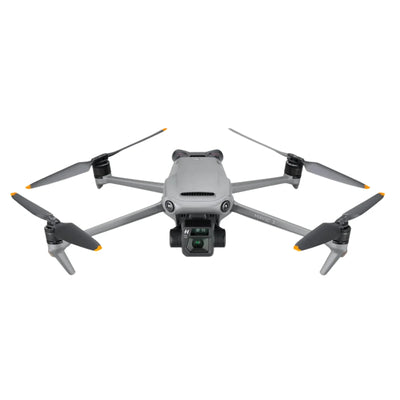
Unlock DJI Signal Secrets Your Ultimate OcuSync O3 - professional repair and inspection process

Beyond hardware and environmental factors, your flying technique and pre-flight habits significantly affect your practical range. Here are best practices compiled from thousands of hours of field operations.

Pre-Flight Best Practices

  1. Always perform a full pre-flight checklist that includes verifying antenna condition, firmware currency, battery health (both aircraft and controller), and regional settings.
  2. Launch from an elevated position when possible. Even 10–20 meters of elevation gain at your launch point significantly improves the signal path by reducing obstacles in the Fresnel zone (the ellipsoidal area around the direct line of sight that must also be clear for optimal signal propagation).
  3. Orient your body and controller to face the drone's planned flight direction. If you're planning to fly north for a long-distance shot, face north when you launch.
  4. Set your RTH altitude at least 10 meters above the tallest obstacle between you and the drone's planned maximum distance.

In-Flight Techniques

  1. Monitor signal quality continuously. Don't just watch the video feed—use the signal indicators in the app as your primary range reference. The video feed can appear stable even as signal quality degrades, masking a deteriorating situation.
  2. If you see signal quality dropping, climb altitude. Higher altitude almost always improves signal quality by establishing a clearer line of sight. This is the single most effective emergency range-recovery technique.
  3. Avoid flying behind obstacles. Even a single large building between you and the drone can cause a dramatic signal drop. If you must fly behind an obstacle, reduce your expectations and be prepared for signal loss.
  4. Use the signal quality indicator, not the distance reading, as your guide. A drone at 3 km in open terrain may have better signal than a drone at 500 meters in a congested urban environment. Distance alone is not a reliable indicator of signal health.

Battery Health and Signal

As your aircraft battery depletes, the available voltage drops, and the drone's electronics—including the transmission module—may reduce their operating power to conserve energy. This effect is subtle on modern DJI drones but becomes noticeable below 30% battery. For maximum range, start with a fully charged battery and plan your mission to complete well before the low-battery warnings activate. Battery health over its lifespan also matters: an aging battery with reduced capacity will trigger power-saving modes earlier than a fresh battery. Monitor your battery cycle count in the DJI Fly App (Settings > Battery) and consider replacing batteries that have exceeded 200 charge cycles or show cell voltage deviations greater than 0.1V between cells.

Frequently Asked Questions (FAQ)

Why is my DJI drone's range much shorter than the advertised specification?

The most common reasons for significantly reduced range are environmental interference (Wi-Fi networks, cell towers, power lines), incorrect regional settings (CE mode instead of FCC), physical damage to the drone's or controller's antennas, or flying in an area with heavy multipath interference from buildings and structures. Perform a baseline test in an open area with minimal interference—if range is still poor there, inspect your hardware for damage. Also verify that your firmware is fully updated, as DJI occasionally releases transmission performance improvements through firmware updates.

Does the DJI Mini 4 Pro use O4 transmission?

Yes, the DJI Mini 4 Pro uses the O4 transmission system when paired with the DJI RC-N2 or DJI RC 2 controller. This gives it a rated maximum range of 20 km (FCC) despite its compact size. However, the Mini 4 Pro's smaller body means its internal antennas are smaller, and real-world range may be somewhat less than larger O4-equipped drones like the Air 3 or Mavic 4 Pro. Always perform your own range testing to establish reliable operating limits for your specific unit and operating environment.

Can I extend my DJI drone's range beyond DJI's specifications?

While third-party parabolic reflectors can provide modest range improvements (20–40%) by focusing the controller's signal, there are no safe and legal methods to dramatically exceed DJI's published range specifications. Modifying the drone's transmission hardware, installing unauthorized firmware, or using signal amplifiers violates FCC regulations in the United States and equivalent regulations in most other countries. Such modifications can result in significant fines and legal liability. The best approach to maximizing range is optimizing antenna positioning, minimizing interference, and flying in favorable environments.

How does weather affect my drone's signal range?

Rain, fog, and high humidity attenuate radio signals, with the effect being more pronounced at 5.8 GHz than at 2.4 GHz. Heavy rain can reduce range by 10–20%. Fog has a smaller effect but can be significant over long distances. Temperature itself has minimal direct impact on signal propagation, but extreme cold affects battery performance, which indirectly impacts transmission power. Wind doesn't affect signal directly but affects the drone's battery consumption, limiting your flight time at long range. For critical missions, test signal performance in the specific weather conditions you'll be operating in rather than relying on clear-weather baseline data.

Is it normal for signal quality to fluctuate during a flight?

Yes, some fluctuation is normal and expected. DJI's adaptive bitrate and frequency management systems constantly adjust to changing conditions, which means signal quality indicators will vary in real time. Brief, occasional dips (one or two bars dropping for a few seconds) are normal, especially in suburban and urban environments. However, if you see sustained signal degradation, consistent warnings, or signal quality that drops and doesn't recover, this indicates a genuine problem—either environmental (you've reached the practical limit of your operating environment) or hardware-related (antenna or transmission module issues). If signal fluctuations are excessive in open, low-interference environments, have your equipment professionally inspected.

How much does it cost to repair a DJI drone's transmission or signal system?

Chip-level repair of a DJI drone's transmission module or main board at Reboot Hub in Shenzhen, China typically costs $150–180 — compared to $280–380 at US/Western authorized service centres. Antenna cable reconnection or RF module replacement runs $50–80 depending on the model and extent of damage. Our MOHRSS Level 3 certified technicians diagnose every unit within 1–2 business days and provide a detailed quote before starting any work. For full pricing breakdowns by component, see our Reboot Hub DJI Repair Cost Database 2026.

How long does DJI signal-related repair take at Reboot Hub?

Most DJI signal-related repairs at Reboot Hub are completed within 2–4 business days after you approve the diagnostic quote, with international shipping adding 5–8 business days round-trip. Our chip-level repair approach — surgically replacing individual transmission components rather than swapping entire boards — keeps both costs and turnaround times low. To start the process, visit Reboot Hub's professional DJI repair service page and request a diagnostic assessment.

Understanding and optimizing your DJI drone's signal performance is an ongoing process that improves with experience, careful testing, and attention to your operating environment. Whether you're flying an OcuSync 2.0-equipped Mavic Air 2 or the latest O4-based Air 3, the principles remain the same: know your hardware, test systematically, manage your environment, and always prioritize safe operating margins over maximum distance records. If you've diagnosed a hardware issue or your drone needs professional attention, our certified technicians at Reboot Hub can help with genuine DJI parts and chip-level repair services. For pricing details, see our Reboot Hub DJI Repair Cost Database 2026, or schedule a professional diagnostic assessment at Reboot Hub.

Prev post
Next post

Leave a comment

Please note, comments need to be approved before they are published.

Thanks for subscribing!

This email has been registered!

Shop the look

Choose options

Edit option
Back In Stock Notification
this is just a warning
Login
Shopping cart
0 items
0%