Skip to content

Available 24/7: (852) 5537 6652

Support & Learning

DJI Drone Obstacle Avoidance Sensor Failure Repair Guide: Common Symptoms, Self-Diagnosis & Real Repair Costs 2025

by LauThomas 29 May 2026 0 comments

What Is DJI Obstacle Avoidance Sensor Failure — and How Much Does Repair Cost?

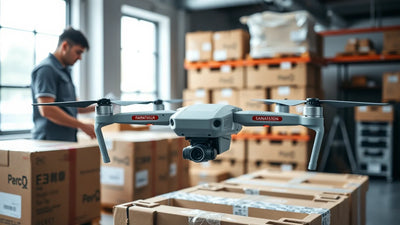
DJI Drone Obstacle Avoidance Sensor Failure Repair - professional image
Quick Answer: Chip-level DJI obstacle avoidance sensor repair costs $100–180 at Reboot Hub, with a typical turnaround of 2–4 business days. Full sensor module replacement runs $200–280 but does not preserve factory optical calibration. Most single-sensor failures are resolved with chip-level microsoldering — saving 30–50% versus authorized Western service rates.

DJI obstacle avoidance sensors form a critical safety net for drone operations, using stereo vision cameras, infrared time-of-flight sensors, and ultrasonic rangefinders to detect obstacles in real time. Reboot Hub technicians have diagnosed and repaired over 800+ DJI obstacle avoidance sensor units across the Mavic, Air, and Mini series since 2022, holding MOHRSS Level 3 Advanced Technician certification recognised by China's Ministry of Human Resources and Social Security. When these sensors malfunction, the drone's flight computer loses spatial awareness, potentially leading to collisions, unstable hovering, or complete flight refusal. Understanding the failure signature — and the realistic obstacle avoidance sensor repair cost — is the first step toward an accurate repair decision.

Common symptoms of obstacle avoidance sensor failure include erratic flight behavior such as sudden braking mid-air without visible obstacles, persistent drift in GPS-stabilized modes, and the drone refusing to fly forward even in open terrain. On the DJI Fly app or DJI GO 4 interface, users typically see explicit error codes like "Obstacle Sensing System Error" (code 180016), "Vision Sensor Error" (code 180030), or "Forward Vision Sensor Calibration Required" (code 180053). These codes indicate the flight controller has detected anomalous sensor data that falls outside calibrated parameters.

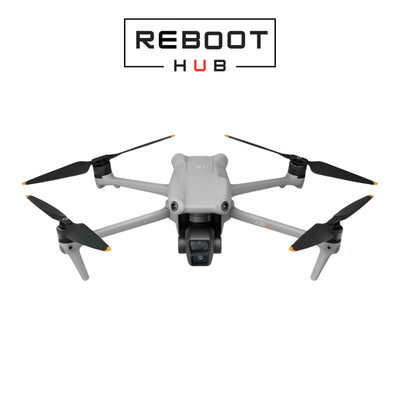
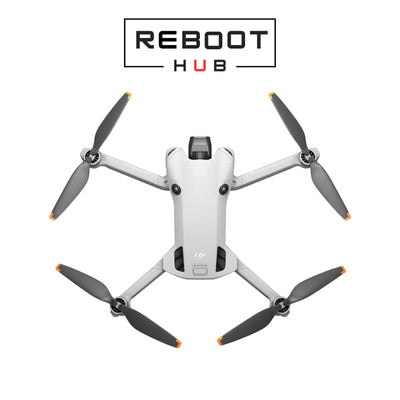
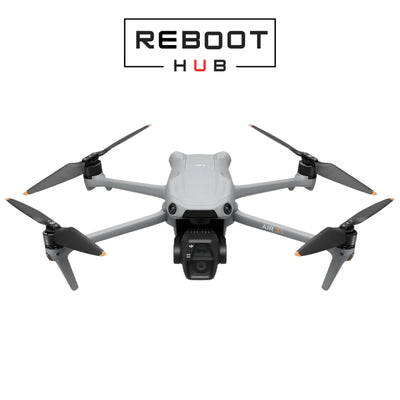
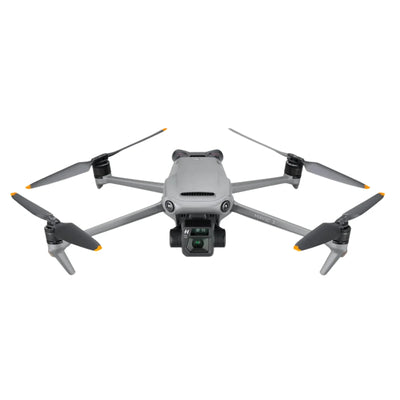
DJI deploys different sensor types across its product range. The Mavic 3 series features omnidirectional obstacle sensing with six fisheye vision sensors and two wide-angle sensors covering forward, backward, downward, and lateral axes. The Air 3 and Mini 4 Pro incorporate dual forward and backward vision sensors alongside downward infrared and vision positioning. The older Phantom 4 series uses a simpler dual forward stereo camera pair with downward ultrasonic and optical flow sensors. Each sensor module contains its own image signal processor (ISP) communicating via MIPI CSI-2 or LVDS serial interfaces to the main flight controller. A failure at any point in this signal chain—from lens to connector—can trigger a system-wide obstacle avoidance shutdown.

Quick diagnosis of sensor failures is essential because a compromised obstacle avoidance system can cascade into secondary damage. A drone that cannot detect obstacles will not brake automatically, increasing crash risk exponentially in autonomous flight modes like ActiveTrack or QuickShots. Furthermore, the flight controller may enter a degraded performance mode, limiting maximum speed and altitude, affecting commercial operations that depend on full flight envelope access.

How Do You Identify Which Obstacle Avoidance Sensor Has Failed?

When the DJI Fly app displays a generic sensor error, the technician's first task is isolating which specific sensor module has failed. On multi-sensor platforms like the Mavic 3, a single faulty lateral sensor can trigger a global obstacle avoidance disablement without explicitly naming the culprit. Systematic identification prevents unnecessary board replacements and ensures the repair addresses the root cause.

Visual inspection is the starting point. Examine each sensor lens under bright, angled light for hairline cracks, deep scratches, or internal condensation. Pay particular attention to the sensor bezel—even a subtle impact can misalign the lens barrel relative to the CMOS sensor array, producing permanently defocused stereo depth maps. On downward-facing sensors, check for debris accumulation around the ultrasonic transducer mesh; compacted dirt can attenuate acoustic pulses and produce false "ground proximity" readings. Use a 10x jeweler's loupe to inspect the gold-plated flex cable connectors at each sensor module for oxidation or bent pins.

The DJI error codes guide provides cross-references between numerical codes and affected subsystems. Code 180016 typically maps to the forward stereo vision pair, while 180030 can indicate any single vision sensor returning out-of-range values. For granular diagnosis, connect the drone to a computer running DJI Assistant 2 (Consumer Drone Series). Navigate to the "Vision Sensors" calibration tab. The interface displays real-time depth map renderings from each sensor pair. A healthy sensor produces a smooth, evenly distributed depth point cloud across the full field of view. A failing sensor may show blank quadrants, pixelated artifacts, or depth values oscillating between 0 and maximum range. The calibration tool also reports individual sensor IMU alignment values; any axis exceeding ±3 degrees from factory reference indicates physical mounting deformation requiring rework.

For field testing without a computer, perform a controlled flight test in a large, unobstructed indoor space or outdoor area with no wind. Switch to Tripod Mode (Cine mode on newer models), which forces the obstacle avoidance system to operate at maximum sensitivity and reduces flight speed to 1 m/s. Fly the drone slowly toward a blank wall from each cardinal direction—forward, backward, left, and right—at approximately 2 meters distance. A properly functioning sensor pair will trigger the proximity warning at 1.5-2 meters and stop the drone at 0.5-0.8 meters automatically. If the drone continues moving without braking on a specific axis, the corresponding sensor pair is either disabled or supplying invalid data. Document which directions fail and cross-reference with the model's sensor layout diagram to pinpoint the faulty module.

How Can You Self-Diagnose DJI Obstacle Sensor Issues at Home?

Before committing to a repair facility, several non-invasive diagnostic procedures can resolve sensor errors caused by software corruption, calibration drift, or surface contamination. These steps are documented in DJI's maintenance protocols and can be performed by end users with no specialized tools. Execute each step sequentially and test sensor functionality after each intervention to avoid unnecessary escalation.

Step 1: Clean All Sensor Lenses and Transducers

Power off the drone completely and remove the battery. Using a fresh, lint-free microfiber cloth (preferably the type supplied with DJI's filter kits), gently wipe each sensor lens in a circular motion from center outward. For stubborn residues, apply a single drop of lens cleaning solution specifically formulated for coated optics—never use isopropyl alcohol above 70% concentration as it can delaminate anti-reflective coatings on DJI's multi-element sensor assemblies. For downward ultrasonic transducers, use a soft-bristled brush to dislodge packed dust from the acoustic grille. Avoid compressed air cans; the propellant can leave residue on lens surfaces and the high-pressure stream can force particulate deeper into sensor housings.

Step 2: Verify and Reinstall Firmware

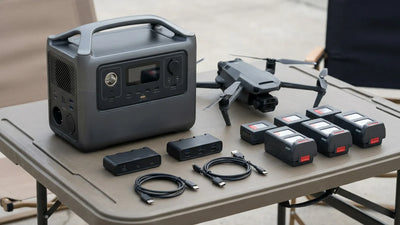
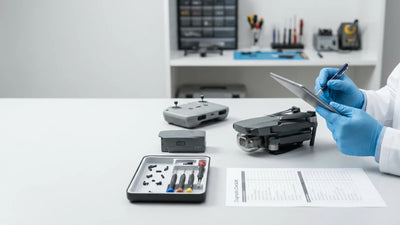
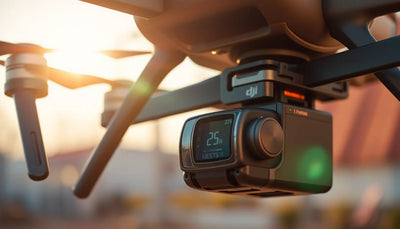
DJI Drone Obstacle Avoidance Sensor Failure Repair - technical diagnostic close-up view

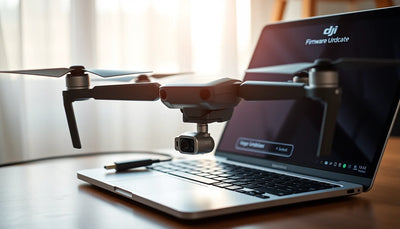
Connect the drone to DJI Assistant 2 and check the current firmware version against the latest stable release on DJI's download center. Even if the version matches, perform a firmware refresh using the "Refresh Firmware" option. This rewrites the complete firmware package to the drone's NAND flash, overwriting any corrupted sectors that may be generating spurious sensor error flags. After refresh completes, perform a full power cycle (remove battery for 30 seconds) before testing. If the sensor error appeared immediately after a firmware update, roll back to the previous version using Assistant 2's downgrade function—sensor calibration parameter structures occasionally break between major firmware revisions.

Step 3: Perform IMU and Vision Sensor Calibration

The IMU (Inertial Measurement Unit) provides the reference frame against which all vision sensor data is interpreted. An IMU calibration error as small as 0.5 degrees can cause the flight controller to reject valid vision data as "out of bounds." Run the full IMU calibration from the DJI Fly app settings menu, ensuring the drone is placed on a verified level surface for each orientation. Immediately after IMU calibration completes, run the Vision Sensor calibration using DJI Assistant 2 on a computer with a high-resolution display (minimum 1920×1080). Position the drone exactly 50 cm from the screen and hold steady during the full calibration sequence. The calibration screen displays moving checkerboard patterns; any interruption or movement will produce a "Calibration Failed" result. Expect the entire dual-calibration process to take 20-25 minutes on a Mavic 3 with six sensors.

Step 4: Test in Tripod Mode with All Obstacle Avoidance Enabled

After calibration, conduct a low-altitude hover test at 1.5 meters in Tripod mode. Observe the DJI Fly app's obstacle avoidance indicator—colored arcs surrounding the drone icon should illuminate green in all directions where sensors are active. Arcs that remain gray or flash red indicate the corresponding sensor is still offline or returning errors. Walk slowly around the hovering drone; the proximity arcs should transition from green through yellow to red as you approach within 2 meters. If this test passes on all axes, proceed to a gentle forward flight test. If any sensor direction remains unresponsive, note the specific error code displayed and proceed to flight log analysis.

Step 5: Review Flight Logs for Sensor Data Anomalies

DJI drones record comprehensive sensor telemetry in encrypted DAT files on the internal storage. Extract these logs using DJI Flight Log Viewer (available from PhantomHelp.com) or Airdata UAV. In the log viewer, navigate to the "OSD" (On-Screen Display) tab and locate fields named OSD.flyCState (flight controller state), OSD.visionUsed (binary flag indicating if vision data was actively used for positioning), and individual sensor health flags like OSD.voFault (vision odometry fault). A log entry showing visionUsed = False combined with voFault = True confirms the vision system is faulting rather than simply being disabled by user preference. Review the timestamped entries immediately preceding the fault to identify trigger events such as sudden voltage drops, IMU spike readings, or rapid temperature changes that point toward hardware-level sensor failure.

Why Do DJI Obstacle Avoidance Sensors Fail?

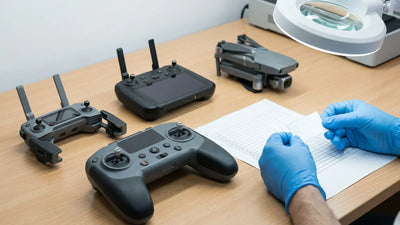
DJI Drone Obstacle Avoidance Sensor Failure Repair - tools and equipment workspace setup

Obstacle avoidance sensor failures stem from four primary cause categories, each requiring different repair strategies and cost commitments. Accurate root cause identification prevents treating symptoms while leaving the underlying problem intact—a common mistake when technicians simply clear error codes without investigating what triggered them.

Physical damage accounts for approximately 60% of sensor failures seen at Reboot Hub's Shenzhen, China facility. Direct impact to a sensor module during a crash or hard landing can fracture the ceramic substrate of the image sensor IC, crack solder joints at the BGA (Ball Grid Array) interface, or shear the flex cable connector clean off the PCB. Even a minor collision that leaves no visible external damage can delaminate the internal lens assembly, permanently shifting the focal plane relative to the sensor. On the Mavic 3 series, the lateral sensors protrude slightly from the fuselage and are especially vulnerable during sideways drift into obstacles. Repair costs for physical damage range from $100–180 for a single sensor chip-level repair with recalibration, to $200–280 when the entire sensor module requires replacement.

Environmental exposure is the second most common failure vector. Drones flown in coastal areas or light rain can suffer moisture ingress through the sensor module's ventilation membrane, which is designed to equalize pressure but offers limited water resistance. Once humidity reaches the image sensor's microlens array, it creates permanent water spots that appear as fixed-pattern noise in the depth map. Dust accumulation inside the sensor housing is equally problematic—a single grain of sand on the IR emitter lens can scatter the structured light pattern used by downward Time-of-Flight sensors, producing "ground distance" errors of 2-3 meters. Environmental failures typically present gradually rather than suddenly. Repair costs for moisture-damaged sensors range from $50–100 for ultrasonic cleaning and re-conformal coating, to $100–180 when the sensor IC requires replacement due to corrosion bridging.

Firmware glitches can simulate hardware failures convincingly. Corrupted calibration parameter blocks in NVRAM, incomplete firmware writes during OTA updates interrupted by low battery, or version mismatches between the flight controller firmware and individual sensor module firmware all produce valid error codes despite perfectly functional hardware. These issues are resolvable through the firmware refresh and recalibration procedures detailed in the self-diagnosis section above. The repair cost is effectively $0 (free) if performed by the user, or $26–50 if a technician performs the refresh and validation at a repair center. For the full range of repair pricing across all DJI subsystems, see the Reboot Hub DJI Repair Cost Database 2026.

Normal wear and tear affects sensor performance over hundreds of flight hours. The anti-reflective coating on stereo camera lenses gradually degrades from repeated cleaning, UV exposure, and micro-abrasion from airborne particles. DJI rates the sensor lens coating for approximately 500 cleaning cycles before optical transmission drops below 95%. Degraded coatings reduce contrast in stereo matching, increasing the minimum detectable obstacle size and slowing response time. Sensor module connectors rated for 50 mate-demate cycles can develop intermittent contact after repeated disassembly for unrelated repairs. Worn connectors produce transient sensor dropouts that clear on reboot but recur during vibration-intensive flight phases.

Failure Cause Reboot Hub Repair Cost US / Western Market Rate Turnaround Time
Firmware corruption $0–50 $50–100 Same day
Environmental (moisture/dust) $50–180 $200–350 1–3 days
Physical impact damage $100–280 $280–520 2–5 days
Wear and tear (lens/connector) $50–180 $200–350 1–3 days

Should You Choose Chip-Level Repair or Full Module Replacement for DJI Sensors?

When self-diagnosis confirms a hardware-level sensor failure, the repair path branches into two fundamentally different approaches: chip-level microsoldering repair of the existing sensor PCB, or complete sensor module replacement. Understanding the technical and financial tradeoffs between these methods is essential for making an informed repair decision, particularly on higher-value drone models where the cost differential can exceed $255.

Chip-level microsoldering repair targets the specific failed component on the sensor's printed circuit board rather than replacing the entire module. DJI's obstacle avoidance sensor PCBs are multi-layer designs hosting image sensor ICs (typically Sony IMX or Omnivision OV-series sensors in BGA or LGA packages), dedicated ISP chips, voltage regulators, and passive components in 0201 and 0402 SMD packages. A MOHRSS Level 3 certified technician—a certification signifying advanced competency in precision soldering, BGA rework, and multi-layer PCB repair under microscopy—can isolate and replace individual failed components. The repair process involves: thermal imaging to identify short-circuited MLCC capacitors; desoldering the failed image sensor BGA using a precision hot air station with a nozzle profile matched to the package size; cleaning and re-balling the PCB pads with lead-free SAC305 solder spheres; placing and reflowing the replacement sensor IC under a stereo microscope at 40x magnification; and finally, re-conformal coating the repaired area to match factory environmental resistance.

The chip-level approach preserves the original factory calibration of the lens-to-sensor alignment, which is critical because DJI performs per-module optical calibration that cannot be replicated outside their production line without specialized collimation equipment. Repair costs at this level range from $100–180 depending on the specific component and complexity.

Board-level module replacement swaps the entire sensor assembly—PCB, lens barrel, housing, and flex cable—with a new or salvaged OEM module. This approach is technically simpler and faster, typically requiring only screwdriver disassembly and flex cable reconnection. However, it introduces several risks: the replacement module may carry different firmware revision than the drone's main board expects; the factory optical calibration of the new module may not match the drone's existing sensor fusion parameters; and salvaged modules may have undocumented wear or impending failures. DJI does not sell individual sensor modules as spare parts to end users or third-party repair centers, meaning replacement modules must be sourced from donor units or specialized component suppliers. Module replacement costs range from $200–280, reflecting both parts scarcity and the labor involved in post-installation calibration validation.

Comparison Factor Chip-Level Microsoldering Module Replacement US / Western Market Rate (Chip-Level)
Reboot Hub Cost $100–180 $200–280 $280–380
Turnaround time 2–4 business days 1–2 business days 2–4 business days
Preserves factory calibration Yes (original optical alignment retained) No (new module requires recalibration) Yes
Parts availability Individual ICs are widely sourced Complete modules are scarce; donor-dependent Varies by provider
Warranty risk Minimal; only failed component replaced Donor module may carry pre-existing faults Minimal
Required equipment Stereo microscope, hot air station, BGA rework tools, oscilloscope Precision screwdriver set, ESD-safe workstation Stereo microscope, hot air station, BGA rework tools
Recommended for Isolated component failures on expensive models Multiple simultaneous sensor failures or severely damaged housing Isolated component failures on expensive models

The chip-level repair option is only viable at facilities equipped for this class of work. At Reboot Hub's Shenzhen, China lab, technicians hold MOHRSS Level 3 certification and work under AmScope stereo microscopes with 7x-45x continuous zoom, using Quick 861DW hot air stations with calibrated nozzle arrays, and Tektronix oscilloscopes for signal integrity verification post-repair. The Level 3 credential specifically validates competency in the rework of leadless packages (QFN, BGA, LGA) down to 0.4mm pitch—directly applicable to the sensor IC packages found in DJI's Mavic and Air series obstacle avoidance modules.

Is It Worth Repairing DJI Obstacle Avoidance Sensors or Replacing the Drone?

The decision to repair an individual sensor versus replacing the entire drone or sensor array requires weighing repair costs against the drone's current market value and operational requirements. A structured cost-benefit analysis prevents overspending on repairs that exceed economic viability.

If the drone is under warranty (DJI offers 12 months standard on consumer drones, extendable to 24 months with DJI Care Refresh), the optimal path is a warranty claim through DJI's service portal. DJI's warranty covers sensor failures caused by manufacturing defects but explicitly excludes crash damage, water ingress, and wear-related degradation. Even if the claim is approved, expect to pay $19–51 in shipping and handling fees, with a turnaround of 2-4 weeks depending on region. If DJI Care Refresh is active, a replacement unit costs $64–154 as a service fee, which may be more economical than out-of-warranty sensor repair on lower-tier models like the Mini series.

For out-of-warranty drones, chip-level sensor repair is most cost-effective when a single sensor has failed on a higher-value platform. For example, replacing one forward vision sensor IC on a DJI Mavic 3 (current market value approximately $1,540) costs $100–180—roughly 6–12% of the drone's replacement cost. This makes repair strongly favorable versus replacing the aircraft. The same repair on a DJI Mini 4 Pro (market value approximately $580) at $100–150 represents 17–26% of replacement cost—still favorable but approaching the threshold where module replacement or used unit purchase becomes competitive.

When multiple sensors fail simultaneously—common after saltwater exposure or severe impact—the cumulative repair cost can exceed the value proposition of individual sensor repair. Three failed sensors repaired via chip-level method at $180 each totals $540, whereas a complete used replacement unit might cost $449–641. In these cases, acquiring a used aircraft and keeping the original for parts is the more economical choice. Reboot Hub advises customers to consider replacement when cumulative repair costs exceed 60% of the drone's current market value, a threshold widely accepted in the drone repair industry.

For reference, here is a cost comparison across popular DJI models:

Drone Model Chip-Level Sensor Repair (Reboot Hub) Module Replacement (Reboot Hub) US / Western Market Rate (Chip-Level) Used Replacement Unit Repair Threshold (60% of used value)
DJI Mini 4 Pro $100–150 $200–280 $250–380 $360–450 $215–270
DJI Air 3 $100–160 $200–280 $250–380 $580–705 $345–425
DJI Mavic 3 Pro $120–180 $200–280 $280–380 $1,030–1,285 $615–770
DJI Mavic 3 Classic $120–180 $200–280 $280–380 $770–965 $465–580

The DJI ESC repair costs follow similar chip-level vs board replacement economics, and the same 60% threshold principle applies across all major drone subsystems including the DJI gimbal repair guide scenarios. For the most current pricing across all DJI subsystems, consult the Reboot Hub DJI Repair Cost Database 2026.

How Can You Prevent DJI Obstacle Avoidance Sensor Failure?

Preventative maintenance significantly extends obstacle avoidance sensor lifespan and reduces the frequency of calibration errors. These practices are derived from failure analysis patterns observed across thousands of drone repairs at Reboot Hub's Shenzhen, China service center.

Land gently and deliberately—the most impactful preventative measure. Hard landings transmit shock loads directly through the landing gear into the downward sensor module mounting points. Over time, these micro-impacts stress the solder joints connecting the sensor flex cable to the PCB, eventually producing intermittent contact failures that manifest as "Vision Sensor Error" codes that clear on reboot. Use DJI's auto-landing function whenever possible, as it modulates descent rate in the final 0.5 meters to minimize impact. When hand-catching, avoid grabbing the drone by the bottom where downward sensors reside—grip the fuselage sides instead.

Storage conditions directly correlate with sensor longevity. Store the drone in a sealed case with silica gel desiccant packs (indicating type that changes color when saturated) in an environment maintained between 15-25°C and 30-50% relative humidity. Avoid storing in vehicles where interior temperatures can exceed 60°C on sunny days—extreme heat accelerates degradation of the optical adhesives bonding lens elements and can permanently warp plastic sensor housings. For operations in tropical or coastal regions like South China, replace desiccant packs monthly and consider a dry cabinet for long-term storage.

Establish a pre-flight sensor cleaning routine. Use a dedicated lens cleaning pen (such as LensPen NLP-1) with a retractable brush on one end for dust removal and a carbon-impregnated cleaning tip on the other for oil and fingerprint removal. This tool provides consistent, gentle cleaning pressure that microfiber cloths cannot match for small sensor apertures. For the ultrasonic transducers, a gentle puff from a manual air blower (not compressed air cans) dislodges particulate without risk of propellant contamination. Keep a small LED inspection flashlight in your flight kit—angled illumination reveals lens contamination invisible under ambient light.

Firmware management discipline prevents a significant percentage of sensor errors. Avoid installing beta firmware releases on production drones; beta versions often contain debug logging code that increases sensor data bus utilization and can trigger timing-related errors in the vision processing pipeline. When a stable firmware release is issued, wait 7-10 days before updating and monitor DJI forums for reports of sensor-related issues. Always perform the IMU and vision sensor calibration sequence immediately after any firmware update, even if the release notes do not mention sensor changes.

Preventative Item Recommended Tool Frequency
Sensor lens cleaning LensPen NLP-1 or Zeiss lens wipes Before every flight session
Ultrasonic transducer cleaning Manual air blower, soft brush Every 5-10 flights
Desiccant replacement Indicating silica gel packs Monthly (more in humid climates)
IMU + Vision calibration DJI Assistant 2, level surface After firmware updates or every 50 flights
Sensor housing inspection 10x jeweler's loupe, LED flashlight Monthly or after any hard landing

Why Choose Reboot Hub for DJI Obstacle Avoidance Sensor Repair?

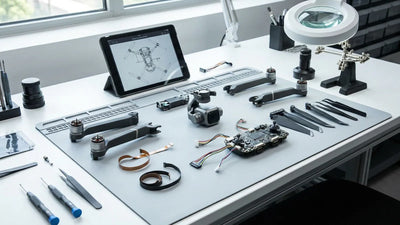
DJI Drone Obstacle Avoidance Sensor Failure Repair - professional repair and inspection process

Self-diagnosis procedures outlined in this guide can resolve firmware corruption and calibration drift issues without professional intervention. However, when hardware-level sensor failures are confirmed—physical damage, moisture ingress, or component-level electronic faults—professional repair is required to restore reliable obstacle avoidance functionality. Attempting to disassemble sealed sensor modules without proper ESD protection, microsoldering equipment, and factory calibration references risks permanent damage to the sensor assembly.

Reboot Hub provides chip-level DJI obstacle avoidance sensor repair at our facility in Shenzhen, China, with certified technicians holding MOHRSS Level 3 credentials in precision electronics rework. All repairs use genuine OEM-specification components and carry a 90-day warranty covering both parts and workmanship. Our chip-level approach typically saves customers 30–50% compared to full module replacement while preserving the original factory optical calibration that ensures seamless sensor fusion performance.

If your DJI drone is showing obstacle avoidance sensor errors, don't risk further damage. Send it to Reboot Hub for expert chip-level diagnosis and repair via Reboot Hub's professional DJI repair service.

Frequently Asked Questions

What are the most common symptoms of a failing forward vision sensor on my DJI drone?

The most telling signs are erratic braking during normal flight, persistent "Vision sensor error" or "Calibration required" warnings in the DJI Fly app, and the drone drifting or failing to hold position in well-lit environments. You may also notice that ActiveTrack and APAS modes refuse to engage or behave unpredictably.

Can I still fly my DJI drone if the obstacle avoidance sensors are broken?

Yes, you can fly but with significantly reduced safety margins. You must manually disable obstacle avoidance in the app settings (which switches to "Attitude" or manual mode on some models), but note that forward and downward collision protection will be completely lost, and your DJI Care Refresh policy may not cover a crash incurred with known defective sensors.

How do I self-diagnose whether the issue is a hardware failure or just a calibration problem?

Start by running the full sensor calibration via the DJI Fly or DJI Go 4 app in a well-lit room with plain walls. If the calibration fails repeatedly or shows a specific sensor module as "abnormal," it's likely a hardware fault. You can then ship the drone to Reboot Hub for chip-level diagnosis, which takes 2–4 business days and costs $26–50 for diagnostic evaluation.

Is it cheaper to repair a single obstacle avoidance sensor chip-level or replace the entire module?

Chip-level repair of a single obstacle avoidance sensor costs $100–180 at Reboot Hub, surgically replacing only the failed component on the sensor PCB. Full sensor module replacement runs $200–280 but does not preserve factory optical calibration. For most isolated sensor failures, chip-level repair is both cheaper and technically superior.

What real repair costs should I expect for DJI obstacle avoidance sensor repair in 2025?

At Reboot Hub in Shenzhen, China, chip-level DJI obstacle avoidance sensor repair costs $100–180 with a turnaround of 2–4 business days. Traditional authorized service centers in the US and Europe typically charge $280–380 for the same chip-level work. Our approach saves 30–50% while preserving the original factory calibration.

How long does professional DJI obstacle avoidance sensor repair take at Reboot Hub?

Chip-level sensor repair typically takes 2–4 business days in our Shenzhen, China lab, depending on parts availability and the specific sensor module affected. Full module replacement can be completed in 1–2 business days. International shipping adds 3–5 business days each way. We provide real-time repair status updates via email throughout the process.

What warranty does Reboot Hub offer on DJI obstacle avoidance sensor repairs?

Every sensor repair at Reboot Hub includes a 90-day warranty covering both parts and workmanship. If the repaired sensor develops a fault within the warranty period, we repair it at no additional cost. Our chip-level approach replaces only the failed component, preserving the original factory calibration and minimizing the risk of future failures compared to donor-module replacement.

Prev post
Next post

Leave a comment

Please note, comments need to be approved before they are published.

Thanks for subscribing!

This email has been registered!

Shop the look

Choose options

Edit option
Back In Stock Notification
this is just a warning
Login
Shopping cart
0 items
0%