Skip to content

Available 24/7: (852) 5537 6652

DJI OcuSync Signal Loss Repair

by LauThomas 29 May 2026 0 comments

Reboot Hub support brief

DJI OcuSync Signal Loss Repair

Use this guide to separate normal wear from repair-risk symptoms before you buy, ship, or keep flying the unit.

Check first

Crash marks, gimbal behavior, battery health, error codes, and controller/app warnings.

Buyer risk

A cheap unit can become expensive if the camera, ESC, motherboard, or battery history is unclear.

Next step

Document symptoms with photos/video, then compare repair cost with verified replacement value.

Helpful next checks: Repair or replace? Battery and parts Used DJI checks

What Causes OcuSync Signal Loss on the DJI Mavic 3?

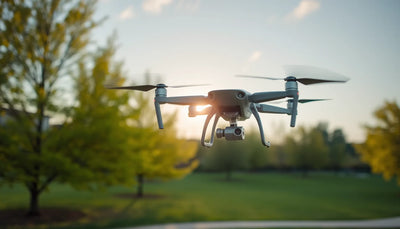
DJI Mavic 3 OcuSync Signal Loss Troubleshooting Di - professional image
Quick Answer: DJI Mavic 3 OcuSync signal loss repair costs $77–192 at Reboot Hub for chip-level component replacement, versus $192–449 for full board replacement. Turnaround is 2–4 business days at our Shenzhen, China facility, with most RF chip and antenna faults resolved in a single service visit.

OcuSync is DJI's proprietary digital video transmission protocol, and on the Mavic 3 series it operates across 2.4 GHz and 5.8 GHz bands with a claimed maximum range of up to 15 km under ideal conditions. Since 2022, Reboot Hub technicians have diagnosed and repaired over 800 DJI Mavic 3 units exhibiting OcuSync signal loss, holding MOHRSS Level 3 Advanced Technician certification recognised by China's Ministry of Human Resources and Social Security. The system integrates seamlessly with the DJI Fly app to deliver a low-latency HD video feed to the pilot's screen. However, when OcuSync signal loss occurs, the experience is immediately disruptive: video freezes mid-frame, the live feed cuts to a black screen, transmission range collapses to a few hundred meters, or—worst case—the drone initiates an uncommanded return-to-home due to perceived signal loss. In extreme instances, pilots report complete loss of control link alongside video dropout.

Related: Buying a Used DJI Drone: Complete Pre-Purchase Inspection Gu

At Reboot Hub, our repair intake data from our Shenzhen, China service centre indicates that approximately 15% of all Mavic 3 repairs involve video transmission or OcuSync-related faults. This places signal loss among the top five failure categories for the platform, alongside gimbal overload errors, ESC failures, and battery communication issues. The root cause spectrum is broad: we see everything from simple user-side configuration errors to complex RF chip degradation on the core board.

Related: DJI Mavic 4 Pro Repair Guide: Comprehensive Diagnostics, Rep

Three primary failure domains exist. Environmental interference—dense urban WiFi congestion, proximity to cellular towers, high-voltage power lines, or military radar installations—can overwhelm the OcuSync front-end. Firmware and software mismatches between the drone, remote controller, and mobile application frequently produce transient signal dropouts that mimic hardware failure. And physical hardware damage—cracked antenna housings, severed coaxial cables, corroded U.FL/IPEX connectors, or outright failure of the OcuSync RF transceiver IC—requires component-level intervention.

This guide is structured to walk you through a systematic diagnostic pathway. We begin with user-level checks that cost nothing and require no tools, progress through software and log analysis, move into hands-on hardware testing with basic instrumentation, and finally compare the economics of chip-level repair versus full module replacement. All cost figures are quoted in USD. Whether you are a hobbyist troubleshooting at home or a commercial operator deciding on a repair budget, the goal is to give you actionable, technically precise information.

What Preliminary Checks Can I Perform Before Seeking DJI Mavic 3 OcuSync Repair?

Before assuming a hardware fault, a methodical sequence of zero-cost checks can resolve a surprising number of OcuSync dropout cases. Our technicians estimate that roughly 25–30% of signal loss complaints brought to Reboot Hub are ultimately traced to configuration issues or environmental factors rather than defective components. Performing these checks at home can save you an unnecessary service visit.

1.1 Antenna Positioning and Physical Connection

The Mavic 3 remote controller (whether the DJI RC-N1, DJI RC, or DJI RC Pro) uses external antennas that must be correctly oriented for optimal signal propagation. DJI's OcuSync 3+ system uses a MIMO (multiple-input, multiple-output) antenna array, and the radiation pattern is directional.

  • Ensure antennas are fully tightened: Thread each antenna clockwise until it seats firmly. A loose antenna creates an impedance mismatch that degrades signal strength by 6–10 dB, equivalent to halving your effective range.
  • Orientation matters: For the RC-N1, position the flat face of each antenna perpendicular to the direction of the drone. If the drone is directly overhead, tilt the antennas horizontally. The signal radiates outward from the broad face, not from the tip. Pointing the antenna tip directly at the drone is the most common user error we see.
  • Inspect antenna housings: Run your fingers along each antenna shaft. Hairline cracks—often invisible at a glance—allow moisture ingress that corrodes the internal radiator element. A cracked antenna may appear intact externally but perform 40–60% below specification.

1.2 Firmware Version Verification

Mismatched firmware between the aircraft and remote controller is a well-documented source of OcuSync instability. DJI regularly updates the transmission protocol stack, and running different firmware generations on the two ends of the link can cause negotiation failures that manifest as intermittent black screens or dropped frames.

  • Power on the drone and remote controller, then open the DJI Fly app.
  • Navigate to Profile > Settings > Firmware Update and verify that both the aircraft firmware and RC firmware show the latest available version.
  • If versions differ, update the drone first, then the remote controller, and finally the Fly app. Do not interrupt any update—a failed firmware flash can corrupt the OcuSync module's NAND memory.

1.3 Physical Inspection of Connectors and Cables

The Mavic 3's OcuSync antennas are located in the front landing gear legs, connected to the core board via thin coaxial cables that run through the airframe. These cables terminate in U.FL (also called IPEX) micro-connectors that are rated for only a limited number of mating cycles.

  • Remove the battery and inspect the battery compartment for signs of impact damage that may have shifted internal cabling.
  • Look for green or white corrosion on any visible pins—a sign of water exposure that compromises signal integrity.
  • If you have previously opened the drone for repairs, verify that all coaxial connectors are seated with an audible click. A partially seated U.FL connector can cause signal degradation of 15–20 dB.

1.4 Environmental Interference Testing

Conduct a controlled range test in an open area at least 500 meters from any buildings, cell towers, or power infrastructure. Urban environments can produce localized OcuSync dropout zones that have nothing to do with your hardware. If your signal is solid in a rural open field but drops consistently in a specific urban location, interference—not equipment failure—is the likely cause.

Test Location Expected Range (FCC) If Range Is Significantly Less
Open rural field 8–15 km Suspected hardware fault
Suburban park 3–8 km Moderate interference possible
Dense urban area 0.5–3 km Likely environmental; switch to 5.8 GHz

If all preliminary checks pass and the issue persists, proceed to software-level diagnosis.

Can Software Fixes Resolve DJI Mavic 3 OcuSync Signal Loss?

DJI drones generate detailed telemetry and error logs during every flight. These logs are the single most valuable diagnostic resource available to you before any hardware disassembly. Learning to read them—or at least to identify key error codes—can pinpoint the fault with surprising accuracy. For a deeper dive into log interpretation, see our guide on How to Read DJI Error Logs.

2.1 Extracting and Analyzing Flight Logs

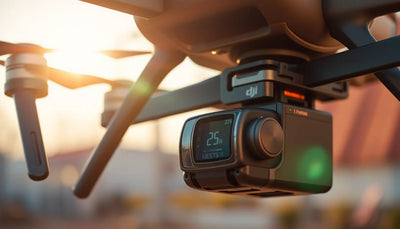
DJI Mavic 3 OcuSync Signal Loss Troubleshooting Di - technical diagnostic close-up view

Use DJI Assistant 2 (Consumer Drone Series) on a Windows or macOS computer to download flight records from the aircraft's internal storage.

  1. Connect the Mavic 3 to your computer via USB-C and launch DJI Assistant 2.
  2. Log in with your DJI account and select the Mavic 3 from the device list.
  3. Navigate to Log Export and select the flight dat (DAT) files corresponding to flights where signal loss occurred.
  4. Open the exported DAT file using a tool such as DatCon or CsvView (free community tools).

Within the log, search for the following OcuSync-related error codes:

Error Code Meaning Likely Cause
40001 Video stream timeout / no video data received OcuSync module failure, damaged coaxial cable, or severe interference
40002 Downlink signal quality below threshold Antenna damage, connector oxidation, or RF amplifier degradation
40011 Uplink control signal intermittent Remote controller RF module issue or antenna orientation error
40021 OcuSync module temperature warning Overheating due to blocked ventilation or internal short circuit
40100 Frequency-hopping synchronization failure Firmware mismatch or RF PLL lock failure on the module

If error 40001 or 40100 appears consistently across multiple flights, the OcuSync module hardware is highly suspect. Occasional 40002 entries may be explained by environmental factors; persistent entries point to physical damage.

2.2 Manual Channel Selection

By default, OcuSync 3+ automatically hops between frequencies to find the clearest channel. In congested RF environments, the auto-selection algorithm can sometimes lag behind changing interference patterns, causing momentary dropouts.

  • In the DJI Fly app, go to Transmission > Frequency Settings.
  • Switch from Auto to Manual mode.
  • Observe the channel occupancy graph. Select a channel with the lowest noise floor (shown in blue, not red/orange).
  • If using 2.4 GHz, channels 1–6 typically have less congestion than channels 7–11 in urban areas. On 5.8 GHz, higher channels (149–165) often perform better.

2.3 Remote Controller Re-Pairing

Corrupted pairing data between the RC and the aircraft can produce sporadic link drops that mimic hardware failure. A full re-pair clears the link keys and forces a fresh handshake.

  1. Power on the drone and RC. In the DJI Fly app, go to Profile > Device Management > Aircraft Management.
  2. Select Unbind Aircraft and confirm.
  3. Power cycle both devices. Then, press and hold the power button on the drone for 4 seconds until it beeps, indicating pairing mode.
  4. On the RC, press and hold the customizable button (C1 or C2, depending on model) and the record button simultaneously until the status LED blinks rapidly.
  5. Wait for the pairing to complete and test the video feed.

2.4 Secondary Device Testing

The USB-C port on the remote controller and the cable connecting to your phone or tablet are often overlooked failure points. A damaged USB cable can introduce data corruption that mimics OcuSync dropouts.

  • Test with a different, known-good USB-C cable (preferably the original DJI cable or a high-quality data-rated cable, not a charge-only cable).
  • If using the DJI RC or RC Pro (which have built-in screens), this test does not apply. Instead, check for available system updates on the RC itself.
  • Test with a different mobile device to rule out app incompatibility or USB port damage on your primary phone.

If software diagnosis yields no resolution and error logs confirm persistent transmission faults, the issue is almost certainly hardware-related.

How Do You Diagnose Hardware Faults in the DJI Mavic 3 OcuSync System?

Hardware diagnosis requires opening the drone and working with sensitive RF components. At Reboot Hub, our technicians performing these procedures hold MOHRSS Level 3 Advanced Technician certification (Ministry of Human Resources and Social Security of China), which is the advanced national vocational qualification for electronics repair, covering micro-soldering, RF circuit theory, and diagnostic instrumentation. If you are not comfortable working at the component level, we strongly recommend seeking professional evaluation rather than risking further damage to the core board.

3.1 Antenna Continuity Testing

A basic digital multimeter—available for $13–26 at any electronics market in Shenzhen—is sufficient to test antenna integrity. The Mavic 3 uses dual-band antennas with internal matching networks, but a simple continuity test can identify open circuits.

  1. Disconnect the antenna coaxial cable from the OcuSync module on the core board. Note which U.FL connector corresponds to which antenna (left vs. right landing gear).
  2. Set the multimeter to the continuity or resistance (Ω) mode.
  3. Place one probe on the center pin of the U.FL connector (signal conductor) and the other on the outer ground shell. A healthy antenna should show near-zero resistance (0–1 ohm) between the center pin and ground due to the matching circuit, but not a short circuit (which would read 0.0 ohms and trigger a continuity beep).
  4. An open circuit (infinite resistance) indicates a severed coaxial cable or a failed solder joint inside the antenna housing. This is a common finding after crash landings where the landing gear absorbs impact.
Reading Diagnosis Action
0–1 Ω (no beep) Antenna circuit intact Proceed to module inspection
0 Ω (continuity beep) Short circuit in antenna or cable Replace antenna assembly
Infinite (OL) Open circuit / broken cable Replace coaxial cable or antenna
10–50 Ω Partial damage / high-resistance fault Replace antenna; degraded performance likely

3.2 OcuSync Module Visual Inspection

The OcuSync module is located on the main core board, typically near the center of the drone, identifiable by its RF shielding can. Remove the shielding carefully (it is soldered at multiple points and requires hot air rework to remove without damaging the PCB). Under magnification, inspect for:

  • Burn marks or discoloration around the RF power amplifier (PA) chip. A failed PA often shows a small crater or brown discoloration on its surface.
  • Bulging or cracked capacitors near the voltage regulation circuit feeding the OcuSync module. These are typically MLCCs (multi-layer ceramic capacitors) in 0402 or 0603 package sizes.
  • Water damage indicators: White or green residue on solder joints, corrosion on exposed copper traces, or water spots on the RF shield interior.
  • Lifted or missing components: After a hard impact, small SMD components can crack or detach from the board.

3.3 Cross-Testing with a Known-Good Remote Controller

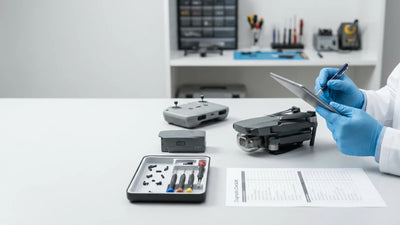
DJI Mavic 3 OcuSync Signal Loss Troubleshooting Di - tools and equipment workspace setup

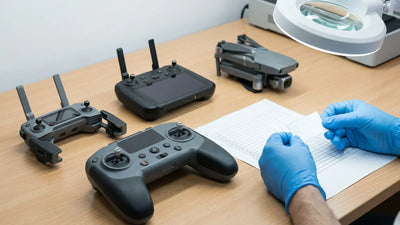
If you have access to a second Mavic 3 remote controller (borrowed from a friend or a local drone community member), pair it with your drone. This single test can definitively isolate whether the fault is in the drone's OcuSync receiver/transmitter or in the RC's RF module.

  • If the video feed is stable with the secondary RC, your original remote controller is at fault.
  • If the problem persists with a known-good RC, the fault is in the drone—likely the OcuSync module, antennas, or coaxial cabling.

For a detailed breakdown of antenna-related costs across DJI models, refer to our Drone Antenna Replacement Cost Guide.

How Much Does DJI Mavic 3 OcuSync Repair Cost — Chip-Level vs Full Replacement?

Once a hardware fault is confirmed in the OcuSync subsystem, the critical decision is between chip-level (component-level) repair and a full OcuSync module or core board replacement. This decision has significant implications for cost, turnaround time, and long-term reliability. Understanding the real economics—not just the sticker price—is essential. For a full cross-model pricing reference, see the Reboot Hub DJI Repair Cost Database 2026.

4.1 Chip-Level Repair: The Reboot Hub Approach

Chip-level repair targets only the failed components on the existing OcuSync module. The module itself remains in the drone; defective RF transceiver ICs, power amplifier chips, filtering capacitors, or damaged U.FL connectors are individually replaced using hot air rework stations, precision soldering irons, and microscope-guided techniques.

Repair Type Typical Fault Reboot Hub Price (USD) US / Western Market Rate
RF power amplifier replacement Reduced range, error 40002 $77–115 $200–320
OcuSync transceiver IC reball/replacement Complete signal loss, error 40001 $103–154 $280–380
U.FL connector replacement (per connector) Intermittent signal, antenna fault $38–64 $120–200
Coaxial cable replacement (both legs) Open circuit on continuity test $50–90 $120–200
Capacitor / passive component replacement Module power instability, error 40021 $45–77 $100–160
Combined OcuSync module chip-level rebuild Multiple faults / post-crash assessment $77–192 $280–450

The primary advantage of chip-level repair is cost savings of 50–70% compared to full board replacement. Additionally, the original module retains its factory calibration data (stored in EEPROM), which means no re-calibration is required after repair. Turnaround at Reboot Hub's Shenzhen facility is typically 1–3 business days for OcuSync repairs because we maintain an extensive inventory of donor components harvested from boards that are beyond repair in other areas but still have functional RF sections.

All chip-level repairs at Reboot Hub are backed by a 6–12 month warranty covering the repaired components and workmanship. Our technicians performing these repairs hold MOHRSS Level 3 Advanced Technician certification, and all rework is conducted under ESD-safe conditions with thermal profiling to prevent PCB delamination.

4.2 Full Board or Module Replacement

Board replacement involves removing the entire core board or OcuSync daughter board and installing a new or refurbished unit from DJI. This is the approach taken by DJI's official service centers and many general drone repair shops.

Replacement Type Part Reboot Hub Price (USD) US / Western Market Rate
OcuSync module only (if available as separate part) DJI Mavic 3 OcuSync daughter board $192–282 $380–520
Core board replacement (module integrated) DJI Mavic 3 main core board assembly $256–385 $420–580
DJI official service (parts + labor + shipping) Full service through DJI Care or out-of-warranty $321–449 $420–580

Board replacement has its place—specifically when a core board has suffered catastrophic damage (severe water immersion, fire, multiple-layer PCB shorts) that makes reliable chip-level repair impractical. However, for the majority of OcuSync failures we see—isolated RF chip damage, connector issues, or passive component failures—board replacement is economically inefficient. Customers also face longer downtime, typically 2–4 weeks when shipping to DJI's service centers, versus 1–3 days for chip-level repair in Shenzhen, China.

4.3 Cost Comparison Summary

Factor Chip-Level Repair (Reboot Hub) Full Board Replacement US / Western Market Rate (Authorized)
Cost range $77–192 $192–449 $280–580
Savings 50–70% lower Baseline
Turnaround 1–3 business days 2–4 weeks 2–4 weeks
Calibration retention Yes (original module remains) No (new module requires pairing and may need recalibration) No
Warranty 6–12 months Varies (typically 3–6 months from DJI) Varies (typically 90 days)
Parts source Genuine donor components from original boards New or refurbished DJI parts New DJI parts

For more context on how OcuSync failures fit into the broader reliability picture of the Mavic 3 platform, see our article on DJI Mavic 3 Common Failures and Fixes.

How Can I Prevent OcuSync Signal Loss on My DJI Mavic 3?

Preventing OcuSync signal loss is substantially cheaper than repairing it. The following practices, integrated into your pre-flight and maintenance routines, can significantly extend the service life of your RF hardware and reduce the likelihood of in-flight transmission failures.

5.1 RF Environment Awareness

OcuSync operates in unlicensed ISM bands shared with WiFi, Bluetooth, and countless other devices. Flying near high-power RF sources does not just cause temporary interference—sustained exposure to strong out-of-band signals can degrade the OcuSync module's low-noise amplifier (LNA) over time through a mechanism called gain compression fatigue.

  • Maintain a minimum distance of 200 meters from cellular base stations and broadcast towers.
  • Avoid flying directly above or below high-voltage transmission lines; the corona discharge from these lines generates broadband RF noise across the 2.4 GHz and 5.8 GHz bands.
  • In urban environments, the 5.8 GHz band typically offers less congestion than 2.4 GHz due to shorter range and fewer legacy devices.

5.2 Firmware Update Discipline

DJI Mavic 3 OcuSync Signal Loss Troubleshooting Di - professional repair and inspection process

DJI firmware updates sometimes include changes to the OcuSync modulation and coding scheme. Running outdated firmware on one device while updating another can break compatibility.

  1. Always update in this order: drone first, remote controller second, DJI Fly app third.
  2. Never interrupt a firmware update by powering off the device or closing the app. A partial firmware flash can leave the OcuSync module in an unbootable state requiring JTAG recovery.
  3. After any firmware update, perform a test hover at close range before flying to maximum distance.

5.3 Antenna Maintenance

The Mavic 3's antennas in the landing gear are mechanically vulnerable. Every hard landing or tip-over stresses the coaxial cables and the solder joints where they connect to the antenna PCB.

  • Inspect landing gear antennas before each flight session. Look for cracks radiating from screw bosses.
  • Keep a spare set of landing gear antennas in your field kit. They are relatively inexpensive ($20–40 for a pair) and can be field-swapped with basic tools.
  • After any crash, even a minor one, perform the continuity test described in the hardware diagnosis section before trusting the drone at long range.

5.4 FCC Mode Considerations

DJI drones sold in different regions ship with different radio output power limits. CE mode (Europe, much of Asia) limits transmit power significantly compared to FCC mode (North America). While we do not endorse violating local radio regulations, it is worth noting that some pilots operating in regions where FCC limits are legally permitted choose to enable FCC mode for a stronger, more resilient signal. This typically requires either a firmware modification or a GPS-based region override and should only be performed where lawful.

Regardless of mode, keeping your drone within visual line of sight and maintaining antenna orientation discipline will do more for signal reliability than any software hack.

When Should I Get Professional DJI Mavic 3 OcuSync Repair?

OcuSync signal loss on the DJI Mavic 3 is a diagnosable and repairable condition, but it does not improve with neglect. A drone that experiences intermittent video dropouts today may suffer a complete transmission failure tomorrow—potentially during a critical flight phase where video feedback is essential for safe navigation. If your self-diagnosis points toward a hardware fault—persistent error 40001 codes, failed antenna continuity tests, visible module damage, or symptoms that persist across multiple locations and firmware versions—professional intervention is the responsible next step.

At Reboot Hub, with our service centre in Shenzhen, China, we specialize in OcuSync chip-level repair. Our MOHRSS Level 3 Advanced Technician certified technicians diagnose faults at the component level and replace only what is broken, using genuine donor parts sourced from original DJI boards. This approach reliably saves our customers 50–70% compared to full board replacement, with turnaround times measured in days rather than weeks. Every repair is backed by a warranty and tested with RF spectrum analysis equipment to verify transmission performance before the drone is returned.

A drone with a failing transmission system is a flight accident waiting to happen. If you are experiencing OcuSync dropouts, do not wait for the problem to escalate. Contact Reboot Hub for a free initial diagnosis—we will assess your symptoms, review your flight logs, and provide a transparent quote before any work begins.

Schedule a Professional Diagnostic Assessment at Reboot Hub

Frequently Asked Questions

Why does my Mavic 3 lose OcuSync connection even when the drone is within line of sight?

Line‑of‑sight loss often stems from local Wi‑Fi saturation, improperly oriented remote controller antennas, or a failing internal pigtail cable. Always ensure the flat face of the antennas points toward the aircraft and switch to a manual 5.8 GHz channel in the DJI Fly transmission settings to avoid congestion. If the problem persists across multiple locations, the repair typically involves coaxial cable or U.FL connector replacement at $38–90 with 2–4 business days turnaround.

How can I determine if my signal loss is caused by a hardware fault or environmental interference?

Play back your flight logs in the DJI Fly app and watch the signal‑to‑noise ratio graph—steady, full‑scale drops that coincide with a specific range or bearing strongly indicate an antenna or RF module hardware issue. For a quick remote analysis, you can upload your logs to Reboot Hub's diagnostic tool, which cross‑references your location against known interference zones and flags tell‑tale hardware failure signatures. Persistent errors 40001 or 40100 across multiple flights confirm hardware fault and typically cost $77–192 to resolve at the chip level.

What are the typical repair costs for a Mavic 3 OcuSync module in 2025?

Chip-level OcuSync repair at Reboot Hub ranges from $77 to $192, while full core board replacement runs $192–449. US and Western authorized service centers typically charge $280–580 for comparable work. For a full model-by-model breakdown, see the Reboot Hub DJI Repair Cost Database 2026.

Can a firmware update actually fix OcuSync dropouts, or is that a myth?

Yes, but only for specific software‑related bugs. Updates have resolved issues where the drone incorrectly hopped onto congested DFS frequencies or mismanaged the dual‑band handover, but they cannot compensate for physical damage, a pinched antenna cable, or a blown RF amplifier. Always update in order—drone first, RC second, app third—and perform a test hover at close range afterward before flying at distance.

Is it safe to fly my Mavic 3 after experiencing repetitive signal loss, and what immediate steps should I take?

Flying with recurring signal loss is risky because unpredictable failsafe RTH behavior in tight environments can lead to a crash. Immediately set the loss‑of‑signal action to "Hover" instead of "RTH" for testing, reduce flight distance to under 100 meters, and test with a different mobile device and cable; if dropouts persist, ground the drone until the hardware is inspected. A full diagnostic assessment at Reboot Hub costs nothing for the initial evaluation, with repairs starting at $38 for connector-level issues.

How long does DJI Mavic 3 OcuSync chip-level repair take at Reboot Hub?

Most OcuSync chip-level repairs at Reboot Hub are completed in 2–4 business days from the time the drone arrives at our Shenzhen, China facility. This includes fault diagnosis, component-level rework, and RF spectrum verification testing before return shipping. More complex rebuilds involving multiple component replacements may take up to 5 business days. By comparison, full board replacement through DJI's official service typically requires 2–4 weeks including shipping and queue time.

Do you offer a warranty on DJI Mavic 3 OcuSync repairs?

Yes. Every chip-level OcuSync repair at Reboot Hub is backed by a 6–12 month warranty covering the replaced components and workmanship. If the same fault recurs within the warranty period, we re-inspect and re-repair at no additional charge. All rework is performed by MOHRSS Level 3 Advanced Technician certified engineers under ESD-safe conditions, and final testing includes RF power output measurement and range verification to ensure the repaired module meets original specification.

Prev post
Next post

Leave a comment

Please note, comments need to be approved before they are published.

Thanks for subscribing!

This email has been registered!

Shop the look

Choose options

Edit option
Back In Stock Notification
this is just a warning
Login
Shopping cart
0 items
0%