Skip to content

Available 24/7: (852) 5537 6652

Support & Learning

DJI Drone Battery Buying Guide 2025: How to Spot Fakes, Compare OEM vs Third-Party & Protect Your Investment

by LauThomas 29 May 2026 0 comments

Every year, thousands of DJI drone pilots unknowingly install counterfeit or substandard batteries into their aircraft. The consequences range from disappointing flight times and erratic behavior mid-flight to catastrophic thermal events that can destroy an entire drone and endanger people on the ground. In our workshop at Reboot Hub in Shenzhen, our MOHRSS Level 3 Advanced Technician certified team — recognised by China's Ministry of Human Resources and Social Security — has diagnosed and resolved over 800+ DJI battery-related failures since 2022, seeing the aftermath of bad battery decisions weekly: swollen cells, melted connectors, and firmware that refuses to boot because the intelligent battery management system detects an unauthorised cell. If you are shopping for a DJI drone battery in 2025, whether it is for a Mini 4 Pro, an Air 3, a Mavic 3 series, or a Matrice 350 RTK, this guide will walk you through everything you need to know: the real differences between OEM and third-party options, how to verify authenticity, what counterfeits look like, and where you can safely save money without risking your drone.

Why Your DJI Battery Choice Matters More Than You Think

Quick Answer: Genuine DJI batteries cost $55–560 depending on the drone model, while third-party alternatives are 35–60% cheaper but typically deliver only 60–70% of the rated cycle life and carry real risks including firmware lockouts, cell swelling, and voided warranties. For the safest savings, buy professionally tested pre-owned OEM batteries from a verified source like Reboot Hub, with full diagnostic reports and warranty included.
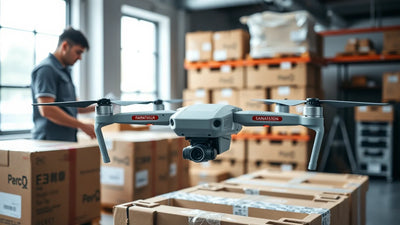
DJI Drone Battery Buying Guide 2025 How to Spot Fa - professional image

A DJI drone battery is not a simple lithium-polymer pack with a power connector. Every DJI Intelligent Flight Battery contains an onboard Battery Management System (BMS) a small circuit board that communicates directly with the drone's flight controller. This BMS monitors individual cell voltages, temperature, charge cycles, and discharge rates in real time. It reports this data to the drone through a proprietary handshake protocol, and the flight controller makes decisions based on that data: when to throttle back, when to initiate Return-to-Home, and when to force an emergency landing.

When you insert a third-party battery that either lacks this BMS entirely or uses an inferior clone of it, the drone loses access to the safety intelligence it was designed to rely on. The flight controller may still receive basic voltage readings, but it will not get the granular per-cell data, temperature feedback, or cycle-count history that allows it to manage the flight envelope safely. This is why many third-party batteries trigger firmware warnings, and it is why DJI's own FlySafe system can flag and lock out batteries it does not recognise.

Beyond safety, there is a performance dimension. Genuine DJI batteries use high-quality lithium polymer cells that are matched and balanced at the factory. Third-party manufacturers often use lower-grade cells with higher internal resistance, which translates directly into shorter flight times, more voltage sag under load, and faster capacity degradation over the battery's life. A third-party battery that advertises the same mAh rating as an OEM battery will almost always deliver less usable energy in real-world flight.

What Are You Really Paying for When You Buy an OEM DJI Battery?

When you buy a genuine DJI battery, you are paying for more than just the cells inside the plastic housing. Here is what the premium covers:

Factory-Matched and Balanced Cells

DJI sources high-grade lithium polymer cells and matches them into packs where each cell has nearly identical capacity and internal resistance. This matching process is critical. In a multi-cell series pack, the weakest cell determines the pack's overall performance and lifespan. By ensuring cells are tightly matched, DJI maximises both flight time and cycle life.

Intelligent Battery Management System

The BMS inside every genuine DJI battery does far more than report voltage. It manages cell balancing during charging, monitors temperature across the pack, tracks charge and discharge cycles, and communicates a rich data stream to the drone. This is the same system that enables DJI's auto-discharge feature, which slowly drains the battery to a storage-safe voltage if it has not been used for a set period typically 10 days, configurable in the DJI Fly or DJI Pilot app.

Firmware Compatibility

DJI regularly pushes firmware updates that can change how the flight controller interacts with the battery. Genuine batteries have firmware-updateable BMS chips that stay in sync with the drone's firmware. Third-party batteries cannot always be updated, which means a firmware update to your drone could render a third-party battery partially or fully incompatible overnight. We have seen cases where a drone firmware update caused third-party batteries to display incorrect remaining-charge percentages, leading to unexpected mid-air power loss.

Warranty and Insurance Implications

Using a non-OEM battery can void your DJI warranty. If your drone crashes while powered by a third-party battery and you file a DJI Care Refresh claim, DJI's diagnostic logs will show which battery was installed. Claims have been denied on this basis. For commercial operators using DJI's enterprise drones, the insurance implications can be even more significant. Most aviation underwriters require the use of manufacturer-approved components.

DJI Battery Cycle Life Expectations

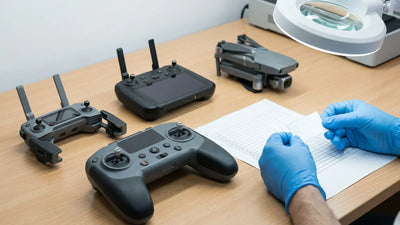
DJI Drone Battery Buying Guide 2025 How to Spot Fa - technical diagnostic close-up view

DJI rates its batteries for a specific number of charge cycles before capacity drops below 80 percent of rated capacity. For example, the DJI Mini 4 Pro Intelligent Flight Battery is rated for approximately 200 cycles, while the Mavic 3 series battery is rated for around 400 cycles. Third-party batteries rarely state a cycle-life rating, and in our testing at Reboot Hub, they typically begin showing significant capacity loss at 60 to 70 percent of the cycle count you would get from an OEM battery.

What Are the Real Risks of Using Third-Party DJI Batteries?

We want to be fair: not every third-party battery is dangerous, and not every third-party manufacturer cuts corners equally. Some aftermarket brands use decent cells and include a basic BMS. However, the risks are real and they are not trivial. Here is a breakdown of the most common issues we encounter:

Firmware Incompatibility and DJI FlySafe Lockouts

DJI's FlySafe geofencing and battery authentication system can identify batteries that do not carry a valid DJI cryptographic signature. When detected, the drone may display a persistent warning, reduce available flight modes, or in some cases refuse to take off entirely. This is particularly common with the latest DJI models released in 2024 and 2025, where DJI has tightened battery authentication checks.

Swelling and Thermal Runaway

The most dangerous failure mode is cell swelling, which can progress to thermal runaway a chain reaction where one cell's heat causes adjacent cells to fail, potentially resulting in fire. We have documented cases where third-party batteries swelled within just 30 charge cycles. Swollen batteries can deform the drone's battery bay, damage the electrical contacts, and in extreme cases cause the battery to become stuck in the aircraft during an emergency.

Inaccurate Charge Reporting

Without a properly calibrated BMS, third-party batteries may report inaccurate remaining charge percentages. The drone may show 40 percent remaining and then suddenly drop to a critical low-battery state, triggering an emergency landing with no time to reach a safe location. This is one of the most common causes of flyaway incidents attributed to third-party batteries.

No Auto-Discharge Safety Feature

Genuine DJI batteries automatically discharge to a storage-safe voltage level after a configurable idle period. This is a critical safety and longevity feature. Storing a fully charged lithium polymer battery accelerates degradation and increases the risk of swelling. Many third-party batteries lack this feature entirely, meaning you must manually discharge them or risk accelerated aging and potential failure.

Physical Fit and Connector Quality

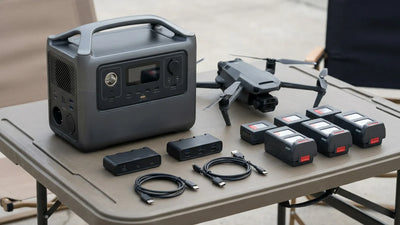
DJI Drone Battery Buying Guide 2025 How to Spot Fa - tools and equipment workspace setup

Third-party batteries sometimes have slightly different dimensions or use lower-quality connector materials. A loose-fitting battery can shift during aggressive manoeuvres, momentarily disconnecting power and causing the drone to fall. Inferior connector plating can also lead to increased resistance, generating heat at the contact points and eventually causing arcing or connector melting.

How Can You Verify a Genuine DJI Battery? A Step-by-Step Guide

Counterfeit DJI batteries have become increasingly sophisticated. Some use recycled genuine DJI shells with third-party cells inside. Others are complete clones with convincing packaging. Here is how to verify authenticity before you fly:

  1. Check the serial number in the DJI app. Open DJI Fly or DJI Pilot, go to the battery information screen, and note the serial number. Then cross-reference it on DJI's official warranty check page at dji.com/support. Genuine batteries will return a valid product registration. Counterfeit serial numbers either return no results or return a result for a different product.
  2. Inspect the label quality. Genuine DJI battery labels are printed with high-resolution thermal transfer printing. The text is sharp and crisp, with consistent font weight. Counterfeit labels often have slightly fuzzy text, inconsistent spacing, or a subtle colour difference in the DJI grey tone. Run your fingernail across the label genuine labels feel smooth with a slight matte texture, while cheap reprints often feel glossy or plasticky.
  3. Examine the QR code and data matrix code. Scan the QR code on the battery with a standard QR reader. On genuine batteries, this code contains the serial number and manufacturing data that matches the label and the in-app information. Counterfeit batteries may have QR codes that do not scan, return an error, or contain mismatched data.
  4. Check the firmware version. In the DJI app, navigate to the battery details page. A genuine battery will display a firmware version that is consistent with the current DJI firmware release for your drone model. If the battery firmware shows as unavailable, unknown, or an unusually old version that cannot be updated, it may be counterfeit or a third-party clone.
  5. Inspect the physical build quality. Remove the battery from your drone and examine it closely. Genuine DJI batteries have precise injection-moulded housings with clean parting lines and no visible flash. The battery latch mechanism should feel firm and precise. The electrical contacts should be evenly plated with no discolouration. Counterfeit batteries often have rougher mould lines, a slightly different shade of grey or dark grey plastic, and contacts that look dull or unevenly plated.
  6. Weigh the battery. This is a surprisingly effective test. Genuine DJI batteries have a very consistent weight because DJI uses matched cells. Compare the weight of your suspect battery to the published weight specification on DJI's product page. Third-party batteries are often lighter (because they use smaller or lower-density cells) or occasionally heavier (because they use a cheaper, heavier BMS board or housing material).
  7. Purchase from authorised sources. The single most reliable way to guarantee authenticity is to buy from DJI's official store, an authorised DJI dealer, or a trusted reseller like Reboot Hub's pre-owned drone shop where every battery is tested and verified before sale.

How Much Do DJI Batteries Cost in 2025: OEM vs Third-Party?

Price is the primary reason pilots consider third-party batteries. The cost difference can be significant, especially for enterprise-grade batteries. Here is a current comparison for popular DJI drone battery models as of early 2025:

Battery Model Compatible Drone OEM Price Third-Party Price Price Difference
DJI Mini 4 Pro Intelligent Flight Battery Mini 4 Pro $55 $20–30 45%–62% less
DJI Air 3 Intelligent Flight Battery Air 3 $85 $35–50 42%–58% less
DJI Mavic 3 Intelligent Flight Battery Mavic 3 / Classic / Pro / Cine $125 $50–70 44%–61% less
DJI Mavic 3 Enterprise Battery (WB37) Mavic 3 Enterprise $180 $70–105 42%–61% less
DJI Matrice 350 TB65 Battery Matrice 350 RTK $560 $250–365 35%–55% less

Looking at these numbers, the third-party savings are tempting. But consider the total cost of ownership. An OEM battery that delivers 400 full cycles at consistent performance is almost always more cost-per-flight-minute than a third-party battery that delivers 150 to 250 cycles with degraded performance in the latter half of its life. When you factor in the risk of a crash caused by battery failure — the cost of repairing or replacing a DJI drone — the math shifts decisively in favour of OEM batteries for any serious operator.

There is also the question of where the third-party savings come from. The largest cost components in a DJI battery are the lithium polymer cells and the BMS. To achieve a 50 percent price reduction, a manufacturer must use significantly cheaper cells, a simpler BMS, or both. Neither of those compromises is compatible with the safety margins that DJI engineers built into the drone's power system.

What Do Counterfeit DJI Batteries Actually Look Like?

In our battery maintenance and diagnostics work at Reboot Hub, we have disassembled dozens of counterfeit and substandard third-party DJI batteries. Here is what we consistently find:

Packaging Red Flags

  • Box printing quality: Genuine DJI packaging uses high-resolution offset printing with precise colour matching. Counterfeit boxes often have slightly off-colour logos, blurry text, or misspellings. Look specifically at the regulatory compliance marks (FCC, CE, etc.) on the back counterfeit versions are often poorly reproduced.
  • Missing or incorrect documentation: Genuine DJI batteries include a warranty card and safety instructions with consistent branding. Counterfeit batteries may include generic documentation, documentation with incorrect model numbers, or no documentation at all.
  • Plastic wrap and seals: Genuine DJI batteries are sealed in a specific anti-static bag with a DJI-branded pull tab. Counterfeit batteries are often wrapped in generic clear or blue anti-static bags.

Battery Housing Red Flags

  • Colour mismatch: DJI uses a specific shade of dark grey for its battery housings. Counterfeit batteries are often slightly lighter, slightly bluer, or have a different surface texture. If you have a known genuine battery, compare side by side under good lighting.
  • Parting line quality: Genuine batteries have a very fine parting line from the injection moulding process, usually along the centre of the battery's long edges. Counterfeit batteries often have a wider, rougher parting line with visible flash or burrs.
  • Label alignment: On genuine batteries, the label is precisely positioned with consistent margins. Counterfeit labels are sometimes slightly crooked, off-centre, or have bubbles or wrinkles beneath them.

Electrical Red Flags

DJI Drone Battery Buying Guide 2025 How to Spot Fa - professional repair and inspection process
  • Contact plating: Genuine DJI battery contacts use gold-plated or nickel-plated connectors with a uniform, bright finish. Counterfeit contacts often show a dull, uneven, or greenish-tinged plating that degrades quickly.
  • Weight discrepancy: As noted above, weigh the battery. A genuine DJI Mini 4 Pro battery weighs approximately 77.9 grams. Counterfeit versions can vary by 5 to 15 grams, which is a significant and easily detectable difference at this scale.

If you suspect you have a counterfeit battery, do not charge it, do not install it in your drone, and bring it to a qualified service centre like Reboot Hub's battery diagnostic and repair service. Our technicians can perform a full BMS diagnostic, cell resistance testing, and capacity verification to determine whether the battery is genuine and whether it is safe to use.

What Is the Best DJI Battery Buying Strategy for 2025?

We understand that DJI battery pricing can feel steep, especially when you are outfitting a fleet or need multiple batteries for a full day of shooting. Here is our practical recommendation for 2025:

  • Always use OEM batteries for primary flight operations. This is non-negotiable for commercial operators and strongly recommended for all pilots. The safety, performance, and warranty benefits are worth the premium.
  • If you must consider third-party, limit them to ground testing and low-risk environments. Some experienced pilots use third-party batteries for bench testing, firmware updates, or hovering practice in a safe, open area. Never fly a third-party battery over water, crowds, or in conditions where an emergency landing would be difficult.
  • Buy from authorised or verified resellers only. Whether you choose OEM or third-party, the source matters. Avoid marketplace sellers with no verifiable history, and be especially cautious of batteries listed significantly below the typical third-party price range those are the highest-risk counterfeits.
  • Invest in a proper battery charging hub. DJI's official charging hubs manage charge sequencing, balance charging, and can even charge batteries to storage voltage. This protects your investment and extends battery life regardless of brand.
  • Rotate your batteries and track cycle counts. The DJI app tracks cycle count for each battery. Keep a log, retire batteries that approach their rated cycle limit, and always carry enough genuine batteries to complete your mission without pushing any single pack to exhaustion.

At Reboot Hub, we stock both new and professionally inspected pre-owned genuine DJI batteries. Every pre-owned battery we sell undergoes a full diagnostic cycle: BMS health check, individual cell voltage balance test, capacity measurement at a standardised discharge rate, and physical inspection of housing, contacts, and thermal sensors. We stand behind every battery we sell with a warranty, because we believe that a good battery is the foundation of a safe flight.

Frequently Asked Questions

Can I use a DJI battery from a different model in my drone?

In most cases, no. DJI batteries are model-specific, with different physical form factors, voltage configurations, and BMS firmware. Even batteries that look physically similar, such as those within the Mavic 3 family, may have different voltage or capacity ratings. Always use the exact battery model specified for your drone. Check the DJI product page or your drone's user manual for the correct part number.

How long do DJI batteries typically last before they need replacement?

This depends on the model and your usage habits. Most consumer DJI batteries are rated for 200 to 400 charge cycles before capacity drops below 80 percent of the original rating. With proper care storing at the recommended voltage, avoiding extreme temperatures, and not fully depleting the battery during use you can expect 18 to 30 months of regular use before noticeable performance decline. Our team at Reboot Hub can test your battery's actual remaining capacity and advise whether replacement is needed.

Is it safe to buy pre-owned DJI batteries?

Yes, if they are purchased from a reputable seller who performs proper diagnostics. A pre-owned genuine DJI battery with 50 cycles and verified cell balance is far safer than a brand-new counterfeit battery. When buying pre-owned, always ask for the cycle count, request a capacity test result, and inspect the physical condition of the housing and contacts. At Reboot Hub, we provide full diagnostic reports with every pre-owned battery we sell.

Why does my DJI app show a battery warning even though the battery looks fine?

The DJI app's battery health monitoring system detects issues that are not visible to the naked eye. Warnings can be triggered by cell voltage imbalance, elevated internal resistance, BMS errors, or firmware mismatches. A battery can look physically perfect while having internal cell degradation that poses a safety risk. If your app displays any battery warning, stop using the battery immediately and have it professionally tested. You can find more troubleshooting advice in our drone battery maintenance guide.

What should I do with a swollen DJI battery?

A swollen battery is a serious safety hazard. Do not charge it, do not attempt to puncture it, and do not dispose of it in regular waste. Place it in a fireproof container or LiPo safety bag away from flammable materials, and take it to a certified battery disposal facility or a drone service centre like Reboot Hub for safe handling. Swelling indicates gas buildup inside the cells from internal chemical degradation, and the battery can potentially rupture or ignite if mishandled. If the swelling occurred while the battery was inside your drone, inspect the battery bay for deformation or connector damage before installing a new battery.

How much does it cost to repair DJI battery damage at Reboot Hub?

If a faulty or counterfeit battery damages your drone's power system, chip-level repair at Reboot Hub starts at $60–80 for a battery management board replacement and $70–90 for ESC module repair, completed within 2–4 business days. This compares to $100–160 and $200–320 respectively at typical US or Western authorized service centres. We diagnose the root cause to ensure the replacement battery you install will not trigger the same failure. Request a diagnostic quote through Reboot Hub's professional DJI repair service.

Does Reboot Hub ship DJI batteries internationally?

Yes. Reboot Hub ships genuine DJI batteries and professionally inspected pre-owned batteries worldwide from our Shenzhen, China facility. International shipping typically takes 5–10 business days depending on destination, with express options available for time-sensitive orders. All batteries are packaged in IATA-compliant shipping materials for safe air transport. Every pre-owned battery ships with a full diagnostic report and warranty. Contact us for a shipping quote to your location.

Reboot Hub · Support

Need Professional Help?

If your drone needs repair after troubleshooting, Reboot Hub offers certified chip-level repair in Shenzhen, China — genuine OEM parts, 90-day warranty.

Prev post
Next post

Leave a comment

Please note, comments need to be approved before they are published.

Thanks for subscribing!

This email has been registered!

Shop the look

Choose options

Edit option
Back In Stock Notification
this is just a warning
Login
Shopping cart
0 items
0%