DJI RC-N3 and Remote Controllers: Compatibility Buying Guide
Reboot Hub buyer action brief
What to verify before buying a DJI remote controller
Read the exact controller label
DJI RC, RC-N1, RC-N2, RC-N3, Smart Controller, RC Pro, and RC Plus are different product families. A similar name or shell does not confirm aircraft support.
Match the aircraft and firmware path
Confirm the exact drone model, controller model, current firmware, DJI Fly support, and whether the seller can show a successful live link before payment.
Check binding and physical condition
Ask for evidence that the controller is unbound where required, then inspect sticks, antennas, ports, screen, battery, buttons, dials, and charging behavior.
A search for DJI RC or RC-N3 often hides two separate questions: which controller works with the drone, and whether a particular used unit is ready to link. The safest answer starts with the exact model label and aircraft, not a claimed range number or a seller's statement that it “works with DJI.”

Quick answer
Buy a DJI remote controller by exact aircraft support, controller model, firmware path, binding status, and live-link evidence. RC-N3, RC-N2, RC-N1, DJI RC, Smart Controller, and RC Plus are not universal substitutes for one another, and transmission performance depends on the aircraft, regulatory region, interference, antennas, and flight environment.
Which DJI remote controller do you actually have?
Start with the model printed on the controller or shown in its system information. Marketplace titles frequently shorten several different products to “DJI RC,” while sellers may reuse a listing across generations. That is not enough for a compatibility decision.
| Controller family | What it means for a buyer | What not to assume |
|---|---|---|
| RC-N1 | Phone-based controller used across several earlier DJI Fly camera-drone families. | Do not assume a nearby model name, such as RC-N2 or RC-N3, has the same aircraft list. |
| RC-N2 / RC-N3 | Phone-based controllers associated with newer DJI Fly aircraft. Exact support still needs a model-level check. | Do not buy from the shell appearance or the phrase “new DJI controller.” |
| DJI RC / RC 2 / RC Pro | Screen-equipped controllers with different transmission generations and aircraft lists. | A built-in screen does not make the controller compatible with every camera drone. |
| DJI Smart Controller | An older screen-equipped platform that supports selected aircraft and firmware paths. | Do not treat it as another name for DJI RC or RC Pro. |
| DJI RC Plus | An enterprise controller used with supported enterprise aircraft and payload workflows. | It is not a general consumer-drone upgrade. |
How do RC-N3, RC-N2, and RC-N1 compatibility differ?
DJI's current support material places RC-N1 with aircraft such as Mavic Air 2, Mini 2 and Mini 2 SE, Air 2S, the Mavic 3 family, Mini 3 Pro, and Mini 4K. It places RC-N2 and RC-N3 with newer aircraft families that include Air 3, Air 3S, Mini 4 Pro, Neo, and Flip. These are useful reference points, not a substitute for checking the exact aircraft and current firmware before buying.
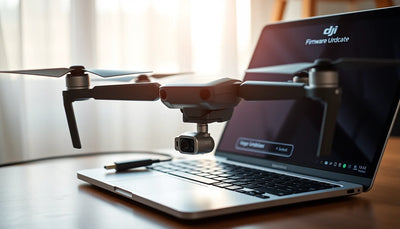
Compatibility can also involve a firmware switch. A controller that supported one aircraft may need DJI Fly and a controller firmware change before it links to another supported aircraft. Ask the seller to show the controller model, firmware screen, and a live connection to the same aircraft model you own. Use the model pages for DJI RC-N3, DJI RC-N2, DJI RC-N1, and DJI RC as the next compatibility check.

Does RC-N3 range have one reliable answer?
No single RC-N3 range number describes every real purchase. The aircraft's transmission system, the controller firmware, the regulatory standard used in the operating region, antenna orientation, obstruction, radio interference, and return-flight margin all affect usable performance.
A seller may quote a laboratory maximum from a supported aircraft page. Treat that as a model-specific test condition, not a promise for city streets, indoor work, wooded terrain, or a different regulatory region. Before buying, confirm the exact controller-aircraft pair and use the aircraft's own official specification as the relevant reference.
What should a used-controller seller prove?
| Evidence to request | What it helps verify | Reason to pause |
|---|---|---|
| Photo of the exact model label | Controller identity and listing accuracy | Only stock photos or a model name typed in chat |
| Firmware and DJI Fly screen | Current software path and device access | Seller refuses to power on the unit |
| Live link to the same aircraft model | Practical pairing, sticks, buttons, dials, and video feed | “Compatible” claim without a demonstrated link |
| Binding or account-status evidence | Whether the unit can move cleanly to the buyer's setup | Unknown previous account or incomplete reset |
| Close inspection video | Stick centering, antenna damage, ports, screen, battery, and charging | Drift, intermittent charging, damaged antennas, or screen defects |

When should you choose a screen controller?
A screen-equipped DJI controller can simplify setup because it does not depend on the buyer's phone for the live view. That can be useful for repeated work, bright outdoor operation, or teams that want a consistent device. The tradeoff is that screen condition, internal battery health, storage, firmware support, and repair cost become part of the purchase decision.
A phone-based RC-N controller may be the more flexible or economical path when it is supported by the aircraft and the buyer already has a compatible mobile device. Choose by aircraft support and workflow, not by assuming the more expensive controller is always better.
Where should Reboot Hub buyers start?
Use the Drone Wiki to identify the aircraft family, then compare the exact controller model against that aircraft before opening the controller inventory. For a used unit, Reboot Hub's buying path should include model verification, condition notes, account or binding checks where applicable, and evidence that the controller powers on and links as described.
If the controller has physical damage or an uncertain fault, move to the controller-parts or repair path instead of buying another shell, board, antenna, or screen module by appearance.
Keep exploring
Further reading
From The Reboot Hub Chronicle


From Drone Guides