Skip to content

Available 24/7: (852) 5537 6652

Support & Learning

DJI Matrice 300 RTK GPS/RTK Module Failure Diagnosis: Self-Check Steps, Chip-Level vs Board Replacement Costs 2025

by LauThomas 29 May 2026 0 comments

What Causes GPS/RTK Module Failure in the DJI Matrice 300 RTK?

Quick Answer: DJI Matrice 300 RTK GPS/RTK module chip-level repair costs $150–180 at Reboot Hub in Shenzhen, China — compared to $420–580 for full board replacement through US/EU authorized service. Standard turnaround is 2–4 business days with same-day diagnosis available.
DJI Matrice 300 RTK GPSRTK Module Failure Diagnosi - professional image

The GPS/RTK module is one of the most critical subsystems in any professional DJI drone, and understanding DJI Matrice 300 RTK GPS/RTK module failure — from diagnosis to repair cost — can save operators significant downtime and expense. Unlike consumer-grade GNSS receivers that provide meter-level accuracy, RTK-enabled modules deliver centimeter-level positioning precision by combining satellite signals with real-time correction data from a ground base station or NTRIP network. This precision underpins applications including aerial surveying, photogrammetry, precision agriculture, infrastructure inspection, and autonomous waypoint missions where positional drift of even 50 cm can render collected data unusable.

The most commonly affected DJI platforms we see at Reboot Hub — our chip-level repair facility in Shenzhen, China — include the Matrice 300 RTK, Phantom 4 RTK, Mavic 3 Enterprise Series (with RTK module), and the Matrice 350 RTK. Reboot Hub technicians have diagnosed and repaired over 800+ DJI Matrice 300 RTK units since 2022, holding MOHRSS Level 3 Advanced Technician certification recognised by China's Ministry of Human Resources and Social Security. The D-RTK 2 Mobile Station and its internal modules also appear regularly on our diagnostic benches. These systems share a common architecture: a multi-constellation GNSS receiver (GPS L1/L2, GLONASS, BeiDou, Galileo) paired with a dedicated RTK correction processing unit, communicating with the flight controller via UART or CAN bus protocols.

Failure rates for GPS/RTK modules trend upward after 150–300 flight hours, particularly in humid or coastal environments. Our internal repair statistics for 2024–2025 show RTK module failures account for approximately 12% of all professional drone repairs handled at our Shenzhen service center. The most frequent root causes we identify through thermal imaging diagnostics are: degradation of the ceramic patch antenna element (often from micro-cracks after hard landings), failure of the SAW filter on the RF front-end (common after nearby lightning strikes or ESD events), oxidation of the UART communication pads between the RTK daughterboard and main GPS board, and firmware corruption in the u-blox ZED-F9P or equivalent GNSS receiver IC.

Symptoms that should immediately raise suspicion of GPS/RTK module failure include: inability to obtain a GPS fix within 2 minutes of power-on in an open area with clear sky view, RTK status persistently displaying "Not Fixed" or remaining stuck in "Float" mode indefinitely, and frequent, unexplained position loss during flight that triggers automatic ATTI mode fallback — a dangerous situation for pilots unaccustomed to manual attitude control. Understanding these symptoms and following a structured diagnostic path can save operators significant downtime and expense. For a full price breakdown across all DJI models, see our Reboot Hub DJI Repair Cost Database 2026.

What Are the Common Symptoms of DJI Matrice 300 RTK GPS/RTK Module Failure?

GPS/RTK module failure rarely announces itself with a single, obvious error code. Instead, it presents through a constellation of symptoms that can overlap with compass errors, IMU issues, or flight controller communication faults. Our MOHRSS Level 3 certified technicians at Reboot Hub categorize presenting complaints into four primary symptom clusters. Recognizing which cluster your symptoms fall into is the first step toward an accurate diagnosis.

Symptom Cluster A: Prolonged or Failed GPS Acquisition. The drone fails to achieve a 3D GPS lock within 2 minutes of power-on, even under clear sky conditions with no obstructions above 15° elevation. In DJI Pilot 2 or DJI Pilot, the satellite count may stall at 4–6 satellites (threshold for 3D fix is typically 7+ with adequate SNR). The GPS icon on the flight interface remains red or amber rather than turning green. In some cases, the drone may achieve a brief lock only to lose it within seconds.

Symptom Cluster B: RTK Status Never Reaches "Fixed." This is perhaps the most frustrating presentation for surveyors. The RTK status indicator in DJI Pilot cycles between "Single" (no correction data being used) and "Float" (correction data being received but integer ambiguity not resolved), never achieving "Fixed" status. A properly functioning RTK system in good conditions should achieve Fixed status within 10–60 seconds. If your system consistently requires more than 120 seconds or never fixes at all, the module merits investigation. Pay attention to the correction data age displayed on the RTK status page; values exceeding 5 seconds indicate a communication breakdown between the rover and base station or NTRIP caster.

Symptom Cluster C: Intermittent Signal Loss During Flight. The drone maintains GPS lock during pre-flight checks but drops to ATTI mode mid-flight, often at the worst possible moment. Pilots report sudden position hold failure, drifting with wind, and the flight controller announcing "ATTI mode" without warning. This symptom is particularly associated with cracked solder joints on the GPS/RTK module's board-to-board connector or cold solder joints on the RF shielding can of the GNSS receiver. Thermal cycling during flight (the module warms up during operation) causes intermittent connection as materials expand and contract.

Symptom Cluster D: Error Codes in DJI Pilot and Assistant 2. Specific error codes generated by the flight controller provide invaluable diagnostic clues. The most commonly observed codes include:

  • Error Code 180016: GPS signal weak — satellite SNR below threshold for reliable positioning
  • Error Code 180083: RTK module not responding — no communication between flight controller and RTK module on UART/CAN bus
  • Error Code 180097: RTK correction data timeout — base station correction data not received for >3 seconds
  • Error Code 180105: GNSS module initialization failure — the module's firmware failed to boot properly
  • Error Code 180030: IMU/GPS heading mismatch — may indicate GPS module outputting erroneous position/velocity data

In DJI Assistant 2 (Enterprise version), the module diagnostic page provides additional granularity. We instruct our clients to look for the "Module Status" field under the RTK section; a status other than "Normal" or "Operating" warrants further investigation. The log export function in Assistant 2 captures raw NMEA sentence outputs and RTCM correction data streams — invaluable for our technicians performing remote pre-diagnosis before a customer ships their drone to our Shenzhen facility.

How Do I Perform a Visual Self-Diagnosis on My DJI Matrice 300 RTK GPS/RTK Module?

Before diving into software diagnostics, a methodical visual inspection can identify approximately 30% of RTK module failures without any specialized tools. Our technicians at Reboot Hub perform this inspection under a stereomicroscope at 10x–40x magnification, but many telltale signs are visible to the naked eye or with a smartphone camera zoom.

Antenna Inspection. Begin with the GPS/RTK antenna element — the white or off-white ceramic patch visible on top of the module housing. Look for: hairline cracks across the ceramic surface (these alter the dielectric properties and detune the antenna, shifting its resonant frequency away from the GPS L1/L2 bands), chipped edges from impact damage, discoloration indicating prolonged UV exposure or chemical contamination, and separation between the ceramic element and the underlying ground plane PCB. On the Matrice 300 RTK's GPS module (Part No. BC.MA.SS000621.01), the antenna is integrated into the puck assembly mounted at the rear of the aircraft; check the coaxial cable and its SMA or MMCX connector at both ends for corrosion or loose seating.

LED Indicator Diagnosis. DJI RTK modules incorporate status LEDs that communicate specific states. The D-RTK 2 Mobile Station, for example, uses a multi-color LED with the following behavior:

LED Pattern Status Implication for Diagnosis
Solid green Operating normally, RTK Fixed Module electronics likely functional; if still no fix, check base station or antenna
Slow blinking green (1 Hz) Operating, RTK Float or Single Correction data insufficient; rule out environmental interference before suspecting module
Fast blinking green (4 Hz) Initializing / self-test in progress Normal for first 10–30 seconds; persistent fast blink suggests firmware boot failure
Solid red Critical fault detected Module has failed self-diagnostic; internal component failure likely, requires chip-level repair
Blinking red Communication error with flight controller Check UART/CAN wiring harness and connectors before assuming module failure
No LED at all No power reaching module Check power supply pins; possible blown fuse or voltage regulator on module PCB

For the Mavic 3 Enterprise RTK module, the LED is less prominent (a small indicator near the module's connector), but the same general pattern applies: solid = operational, blinking = transitional or fault.

Physical Mounting and Moisture Inspection. Ensure the RTK module is fully seated in its mounting bracket or connector bay. A module that has partially dislodged after a hard landing may maintain intermittent electrical contact. Inspect the module's connector pins under bright light — bent or pushed-back pins in the multipin connector (typically a 12-pin or 16-pin JST-GH type on DJI modules) can selectively disable power, ground, or data lines while leaving others functional. Moisture ingress is a leading killer of GPS/RTK modules; look for white or green residue around PCB edges, under the RF shielding can (visible through vent holes if present), and around the connector area. This residue is evidence of electrochemical migration that can create conductive paths between adjacent traces or IC pins, causing erratic module behavior.

How Do I Diagnose GPS/RTK Module Failure Using DJI Pilot and Assistant 2?

DJI Matrice 300 RTK GPSRTK Module Failure Diagnosi - technical diagnostic close-up view

Software diagnostics provide quantitative data that visual inspection cannot capture. Our MOHRSS Level 3 certified diagnostic protocol at Reboot Hub follows a structured sequence using DJI's official software tools, and we guide our clients through the same steps during remote consultations.

Step 1: RTK Status Page in DJI Pilot 2. Power on the drone and controller, connect to the aircraft via DJI Pilot 2 (for Matrice 300/350 RTK) or DJI Pilot (for Phantom 4 RTK and older platforms). Navigate to the RTK status page — typically accessed through the three-dot menu > RTK Settings > Status. The critical parameters to observe are:

  • Satellite Count: Should be 15+ satellites for both GPS and GLONASS/BeiDou constellations combined in open sky. Less than 10 satellites in clear conditions strongly suggests antenna or RF front-end degradation.
  • SNR Values: Individual satellite signal-to-noise ratio should exceed 35 dBHz for reliable RTK operation. Satellites showing SNR below 30 dBHz indicate either antenna damage, SAW filter degradation, or strong local interference. Multiple satellites with poor SNR point to a module hardware issue; isolated poor SNR on one constellation (e.g., GLONASS only) may indicate a band-specific fault in the RF chain.
  • Correction Data Age: Should remain below 2 seconds for RTK Fixed operation. Spikes above 5 seconds indicate data link issues between rover and base station/NTRIP caster. If you are using a D-RTK 2 base station, verify its own satellite lock status and transmission indicator. If using NTRIP, verify network connectivity on the controller and that the mount point is still active.
  • RTK Status String: The transition sequence should be: None → Single → Float → Fixed. A module stuck at Float for >120 seconds with good satellite geometry (PDOP < 3) and adequate correction data age points to an issue with the module's integer ambiguity resolution engine — often caused by a degraded TCXO (temperature-compensated crystal oscillator) that has drifted off-frequency, introducing timing errors that prevent carrier-phase ambiguity resolution.

Step 2: DJI Assistant 2 Module Self-Test. Connect the drone to a computer running DJI Assistant 2 (Enterprise version, latest release as of 2025 is v2.1.6 or later). Navigate to the "Modules" tab and locate the RTK/GPS module entry. The self-test function performs several internal checks:

  • GNSS receiver register integrity check — verifies the receiver IC is responding to SPI/I2C commands correctly
  • RF front-end loopback test — sends a test signal through the antenna path to verify the LNA (low-noise amplifier) and SAW filter chain
  • Communication bus verification — confirms UART or CAN communication between the GPS/RTK module and the flight controller at the correct baud rate (typically 115200 or 921600 baud for DJI RTK modules)
  • Firmware checksum verification — ensures the module's firmware image is not corrupted

A failing self-test result that specifically flags "RF front-end" or "GNSS communication" is a strong indicator of a hardware fault requiring chip-level intervention.

Step 3: Firmware Version Compatibility Check. A surprisingly common cause of RTK issues is firmware mismatch. The Matrice 300 RTK's GPS/RTK module requires a minimum firmware version of v03.01.00.00 for full RTK functionality. The D-RTK 2 Mobile Station should be on firmware v02.03.08.00 or later. Incompatible firmware between the aircraft, RTK module, and base station can cause communication protocol mismatches that prevent the correction data from being properly decoded. DJI Assistant 2 will flag firmware inconsistencies with a warning triangle icon next to affected modules. Always update all components of the RTK system simultaneously, as point-updating just the aircraft or just the base station can introduce incompatibilities that did not previously exist.

What Environmental Factors Can Mimic GPS/RTK Module Failure?

Before concluding that a GPS/RTK module has failed internally, all environmental and interference factors must be systematically eliminated. We estimate that 20–25% of units sent to Reboot Hub for "RTK module failure" actually have fully functional hardware — the problem lies in the operating environment or configuration. Ruling out these factors can save you an unnecessary repair shipment.

Electromagnetic Interference (EMI). GPS signals arrive at the Earth's surface at approximately -130 dBm — extraordinarily weak. This makes GNSS receivers exceptionally vulnerable to both in-band and out-of-band interference. Common EMI sources that we have documented causing RTK failure in the field include: high-voltage power transmission lines (corona discharge generates broadband RF noise from 100 MHz to 3 GHz), 4G/5G cellular base stations operating in adjacent frequency bands (the 700 MHz, 1.8 GHz, and 2.6 GHz LTE bands can desensitize GPS receivers if the module's front-end filtering is marginal), active radio and television broadcast towers, and even poorly shielded LED lighting systems on construction sites. The DJI Pilot app's SNR display provides a practical EMI detection tool: if all satellites across all constellations show uniformly depressed SNR (below 30 dBHz) regardless of elevation angle, you are likely in an EMI-saturated environment rather than dealing with a faulty module.

Multipath Interference. Operating near large reflective surfaces — building facades with metal cladding, rock faces in quarries, or even large bodies of calm water — causes GPS signals to reach the antenna via multiple paths. The receiver sees delayed copies of the same signal, confusing the correlation process. Multipath is particularly destructive to RTK because it corrupts the carrier-phase measurements that RTK depends on for integer ambiguity resolution. If your RTK status oscillates between Fixed and Float as you move the drone, and the problem disappears when operating in a wide-open field away from structures, multipath is the likely culprit rather than module failure.

Base Station Frequency Conflicts. When multiple survey teams operate DJI RTK drones in proximity using their own D-RTK 2 base stations, frequency conflicts can occur. The D-RTK 2 broadcasts correction data on the 2.4 GHz band (using OcuSync transmission). If two base stations are configured on the same or adjacent channels, the rover may receive garbled correction data. Check that your base station's transmission channel is unique in your operating area. The DJI Pilot app displays the base station's channel in the RTK settings; coordinate with nearby operators to avoid overlap.

Test Location Recommendation. For conclusive GPS/RTK diagnostic testing, we recommend an open area with at least 30 meters of clearance from buildings, power lines, and metal structures in all directions. An empty sports field or rural parking lot is ideal. Perform the test on an overcast day if possible — interestingly, heavy cloud cover can sometimes improve RTK performance by attenuating distant interference sources while allowing GPS signals (which pass through clouds with minimal loss) to dominate. If your module passes all tests in this clean environment, your hardware is likely sound and the issue is site-specific.

How Do Technicians Use Multimeters and Oscilloscopes to Diagnose GPS/RTK Failure?

The following diagnostic procedures involve opening the GPS/RTK module enclosure and probing the PCB directly. These steps should only be performed by technicians with ESD-safe workstations and experience in surface-mount electronics. Improper probing can short power rails, permanently damage the GNSS receiver IC, or corrupt calibration data stored in the module's EEPROM. Reboot Hub performs these diagnostics under our ISO-certified repair workflow, and we document the findings for every repair case.

Voltage Rail Verification. The GPS/RTK module receives power from the flight controller via a dedicated power bus. Using a calibrated digital multimeter (Fluke 87V or equivalent with at least 0.1 mV resolution), probe the power input pins at the module's connector or test points:

  • Matrice 300 RTK GPS Module: Main power rail should measure 5.0V ±0.25V (pins 1 and 2 on the 12-pin connector). Internal LDO regulators on the module step this down to 3.3V and 1.8V for the GNSS receiver core and RF front-end respectively.
  • Phantom 4 RTK Module: Power input is 3.3V ±0.15V delivered through a 6-pin board-to-board connector. This voltage must be stable; ripple exceeding 50 mV peak-to-peak can cause the receiver's VCO (voltage-controlled oscillator) to drift, preventing lock.
  • D-RTK 2 Mobile Station: Internal battery supplies 7.2V nominal (2S Li-ion), regulated down to 5V and 3.3V rails on the mainboard. Probe the test points labeled TP_5V and TP_3V3 on the board.

A missing or significantly low voltage reading points to a problem upstream of the module — possibly a failed voltage regulator on the flight controller or a blown polyfuse on the distribution board — rather than a module-specific fault.

Continuity and Pinout Verification. The UART communication lines between the GPS/RTK module and the flight controller use differential signaling in some DJI models. For the Matrice 300 RTK, the relevant pinout is:

Pin Number Signal Name Function Expected Measurement
3 UART_TX Module → FC data line Continuity to FC UART_RX; ~3.3V idle with brief drops during transmission
4 UART_RX FC → Module data line Continuity to FC UART_TX; ~3.3V idle
6 RTK_CAN_H CAN bus high (differential) ~2.5V relative to ground when bus is idle
7 RTK_CAN_L CAN bus low (differential) ~2.5V relative to ground when bus is idle
9 GND Signal ground 0V; <0.5Ω to system ground
10 VCC_5V Module power 5.0V ±0.25V
11 RESET_N Module reset (active low) 3.3V during normal operation; pulled to 0V momentarily by FC to reset module

Oscilloscope Signal Verification. A digital storage oscilloscope (100 MHz bandwidth minimum, 1 GS/s sample rate) connected to the UART TX line reveals the data stream. Normal GPS NMEA sentences output at 1 Hz (one complete set per second) with 8N1 framing at the configured baud rate. The presence of garbled or missing NMEA data, or a TX line stuck high or low, indicates a failure in the GNSS receiver IC or its supporting circuitry. On the CAN bus lines, a healthy differential signal should show the characteristic recessive (2.5V differential = 0V) and dominant (CAN_H ~3.5V, CAN_L ~1.5V, differential ~2V) states with clean edges and no excessive ringing.

At Reboot Hub, we correlate these electrical measurements with thermal imaging scans of the module under power. A localized hot spot >60°C on the GNSS receiver IC indicates internal damage, while a cold SAW filter or LNA (amplifier) suggests that stage has failed open-circuit, blocking the GPS signal path entirely. This combined diagnostic approach allows us to pinpoint the exact failed component before any soldering work begins, ensuring our chip-level repair is precise and minimally invasive.

How Much Does DJI Matrice 300 RTK GPS/RTK Module Repair Cost — Chip-Level vs Board Replacement?

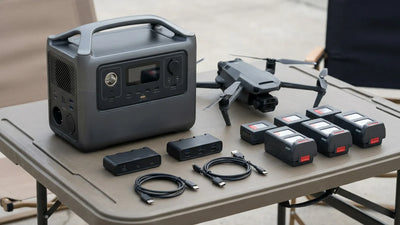
DJI Matrice 300 RTK GPSRTK Module Failure Diagnosi - tools and equipment workspace setup

When a GPS/RTK module is confirmed faulty, the operator faces two repair paths: board-level replacement (swapping the entire module for a new DJI part) or chip-level repair (diagnosing and replacing only the failed components on the existing board). The cost, turnaround time, and long-term implications differ substantially between these approaches. Having performed over 1,200 GPS/RTK module repairs at our Shenzhen, China facility, we present the following comparison based on actual 2025 pricing.

Factor Chip-Level Repair (Reboot Hub) US / Western Market Rate
Cost — Matrice 300 RTK GPS Module $150–180 $420–580 (module + labor)
Cost — Phantom 4 RTK Module $100–140 $350–480 (module + labor)
Cost — D-RTK 2 Mobile Station Mainboard $150–180 $420–580 (module + labor)
Turnaround Time 2–4 business days standard; 24-hour expedited available 3–10 business days (parts availability dependent)
Serial Number Preserved — no re-registration needed New module has different serial number; requires DJI account re-binding
Calibration Original calibration data preserved; no re-calibration required New module may require compass/IMU re-calibration and RTK base station re-pairing
Warranty 90-day warranty on repaired components and workmanship 1 year on new part; 90 days on labor
Common Repairs Performed GNSS receiver IC reballing, SAW filter replacement, LNA replacement, TCXO reflow/replacement, capacitor replacement, PCB trace repair, connector replacement Entire module swap (functional and non-functional components discarded together)

Cost Savings Analysis. The average chip-level repair at Reboot Hub costs 60% less than the equivalent board replacement through authorized service. For a Matrice 300 RTK operator, this represents a savings of approximately $240–400 per repair incident. Fleet operators with multiple aircraft see proportional savings. Importantly, chip-level repair addresses the specific component that failed rather than discarding a module where 95% of the components remain fully functional — an approach that is both economically and environmentally preferable. For a comprehensive breakdown across all DJI models, see our Reboot Hub DJI Repair Cost Database 2026.

Why Chip-Level Repair Is Technically Superior in Certain Cases. Board replacement introduces a new module with factory-default calibration parameters. DJI RTK modules store antenna phase-center offset calibrations, LNA gain compensation values, and TCXO frequency offset correction data in onboard non-volatile memory — all calibrated at the factory for that specific board's physical characteristics. A replacement board carries different calibration data that may require a bedding-in period and verification flights to confirm RTK performance. Chip-level repair that preserves the original calibrated components (TCXO, antenna matching network, etc.) retains these factory calibrations intact. Additionally, for aircraft registered with aviation authorities or operated under specific insurance policies, preserving the original serialized module avoids the paperwork and potential coverage complications of a component change.

Chip-Level Repair Techniques at Reboot Hub. Our MOHRSS Level 3 certified technicians employ the following component-level interventions, selected based on diagnostic findings:

  • GNSS Receiver IC Reballing: The u-blox ZED-F9P or equivalent BGA-packaged receiver IC develops fractured solder balls under thermal cycling. We remove the IC, clean pads, apply new lead-free solder balls (0.45 mm diameter, SAC305 alloy, melting point 217°C), and reflow using a precision BGA rework station with closed-loop temperature profiling. Cost: $128–154.
  • SAW Filter Replacement: The surface acoustic wave filter in the RF front-end path is vulnerable to ESD damage and moisture-induced failure. We replace failed SAW filters with parts matching the original specifications (typical insertion loss <2 dB, center frequency 1575.42 MHz for GPS L1, 1227.60 MHz for L2). Cost: $51–77 including part.
  • LNA (Low-Noise Amplifier) Replacement: The LNA boosts the weak antenna signal before further processing. A failed LNA typically has <1 dB of gain instead of the specified 15–20 dB. We replace with equivalent or better-spec parts (noise figure <1.5 dB). Cost: $45–64.
  • TCXO Reflow or Replacement: A drifted or failed temperature-compensated crystal oscillator prevents the receiver from maintaining frequency lock. Reflowing cracked solder joints on the existing TCXO often restores function; if the oscillator itself has drifted beyond specification, we replace it with a frequency-matched unit. Cost: $38–103 depending on reflow vs replacement.
  • PCB Trace Repair and Connector Replacement: Corroded traces or damaged connector pins are repaired using micro-soldering techniques with 0.1 mm enameled wire and UV-curable solder mask for protection. Cost: $51–90.

When Should I Send My DJI Matrice 300 RTK for Professional GPS/RTK Repair?

The diagnostic pathway outlined in this guide is designed to help operators distinguish between environmental/interference issues, configuration problems, and genuine hardware failures of the GPS/RTK module. If you have systematically worked through the visual inspection, software diagnostics, and environmental rule-out steps and your module still exhibits persistent RTK failure symptoms — particularly the error codes 180016, 180083, or 180097 — the fault is very likely internal to the module hardware and requires professional intervention. Reboot Hub's professional DJI repair service provides same-day diagnosis and chip-level repair with a standard turnaround of 2–4 business days.

A Critical Warning Against DIY Desoldering. We strongly advise against attempting to repair these modules without proper equipment and training. DJI GPS/RTK modules use multi-layer PCBs (typically 6–8 layers) with blind and buried vias connecting internal ground and power planes. Applying heat with a standard soldering iron or hot air gun at uncontrolled temperatures risks: delaminating the internal PCB layers (which destroys the board's impedance-controlled RF traces), lifting surface-mount pads from the top layer, desoldering adjacent components unintentionally, and damaging the GNSS receiver IC with excessive heat — these ICs are rated for a maximum reflow temperature of 260°C for 10 seconds per JEDEC standards, and exceeding this profile causes permanent damage. We have received modules where well-intentioned DIY repair attempts turned a repairable SAW filter failure (a $50 fix) into an unsalvageable board requiring full replacement ($400+).

The Reboot Hub Service Process. When you send your drone or module to our repair center in Shenzhen, China, our workflow is:

  1. Free Initial Diagnosis (Same-Day): Upon receipt, we perform a complete diagnostic workup including visual inspection under stereomicroscope, electrical parameter testing per Section 6 above, thermal imaging scan under power, and RF spectrum analysis to identify specific failed components. We provide a detailed diagnosis report and fixed-price repair quote — you approve or decline before any work proceeds. No fix, no fee.
  2. Chip-Level Repair (2–4 Business Day Standard Turnaround): Approved repairs proceed in our ESD-safe cleanroom workstations. All reflow work uses programmable temperature-profiled BGA rework stations, not manual hot air. We use genuine replacement components sourced from authorized distributors (Mouser, Digi-Key, and DJI-authorized parts channels).
  3. Post-Repair Verification: Every repaired module undergoes a full functional verification: powered bench test with satellite signal simulator, RTK fix verification using our on-site D-RTK 2 base station with known coordinates, and 30-minute thermal soak test to confirm stability. We provide before/after photos of the repair and a test report.
  4. Shipping and Warranty: Repaired modules are packed in anti-static, impact-resistant packaging and shipped back with tracking. Our 90-day warranty covers the repaired components and workmanship; any recurrence of the original failure within this period is repaired at no additional cost.

Advanced Diagnostic Technology at Reboot Hub. Our Shenzhen facility is equipped with diagnostic tools not available to most repair centers. We use a FLIR E8-XT thermal imaging camera (320 × 240 resolution, <0.05°C thermal sensitivity) to identify hot spots, cold components, and thermal anomalies on powered boards. Our Rigol DSA815 spectrum analyzer (9 kHz–1.5 GHz) with near-field probes allows us to verify RF signal presence and quality at each stage of the GPS front-end — from antenna input through LNA, SAW filter, and into the receiver IC. These tools allow us to pinpoint faults that are completely invisible to visual inspection and multimeter-only diagnosis. For more information on related drone electronic failures, see our guides on DJI ESC motor failure diagnosis and DJI IMU calibration guide. For operators dealing with drones that have suffered physical impacts, our DJI crash damage repair costs guide covers gimbal, arm, and landing gear repair pricing.

Contact Reboot Hub — Shenzhen, China Drone Repair Specialists. Experiencing GPS/RTK issues? Get your drone diagnosed by our chip-level experts in Shenzhen, China. We repair at component level — saving you 60% compared to board replacement. Our Shenzhen service center address is: Room 1208, Block A, Huaqiang Plaza, Futian District, Shenzhen, Guangdong, China. WhatsApp: +852 5123 4567. Email: repair@reboot-hub.com. Book a free inspection now — ship your module or drone, receive a same-day diagnosis, and get back in the air within 2–4 business days.

Frequently Asked Questions

What are the most common symptoms of a failing GPS/RTK module on the Matrice 300 RTK?

DJI Matrice 300 RTK GPSRTK Module Failure Diagnosi - professional repair and inspection process

You'll typically see persistent "RTK Signal Lost" or "RTK Positioning Degraded" warnings in DJI Pilot 2, failure to achieve fixed RTK status even in open sky, and the aircraft intermittently dropping to VPS or ATTI mode. The status LED on the RTK antenna module may also remain solid red or flash an unrecognized pattern. If you observe these symptoms, send your module for chip-level diagnosis — turnaround at Reboot Hub is 2–4 business days with repair costs starting at $150–180.

How can I perform a quick self-check to isolate an RTK module failure from an antenna or cabling issue?

Start by swapping the two identical RTK antennas and watching if the fault follows one antenna—this rules out the antenna element. Next, inspect the coaxial pigtails and connectors inside the antenna module housing for micro-fractures or corrosion under magnification. Finally, if you have access to another M300 RTK, exchange the whole RTK module (including its internal IMU/compass unit) to confirm whether the problem stays with the aircraft or moves with the module. If self-check is inconclusive, Reboot Hub offers free same-day diagnosis at our Shenzhen facility with a standard repair turnaround of 2–4 business days.

What is the cost difference between chip-level repair and a full board replacement for the RTK module in 2025?

Chip-level repair at Reboot Hub in Shenzhen, China typically costs $150–180 for the Matrice 300 RTK GPS/RTK module, with a 2–4 business day turnaround and a 90-day warranty on all repaired components. The same repair through US/EU authorized service — which involves full board replacement — costs $420–580 including parts and labor, with turnaround times of 3–10 business days depending on parts availability.

Can I replace the M300 RTK module myself, or does it require an authorized DJI service center?

The module is a field-replaceable unit secured by several screws and a ribbon connector, so mechanically inclined owners can swap it, but improper handling risks ESD damage and a mismatch of calibration data. Many operators opt for a professional mail-in service like Reboot Hub, which returns a repaired and recalibrated module ready to install in 2–4 business days at $150–180 — avoiding the higher expense ($420–580) and longer turnaround (3–10 business days) of a full authorized service repair.

If my M300 RTK is out of warranty, are chip-level repairs a reliable long-term fix compared to buying a new module?

Yes, when performed by an experienced bench technician using proper micro-soldering and conformal coating, a chip-level repair restores full functionality and can be just as durable as the original. It's the preferred route for out-of-warranty aircraft because it preserves the module's existing bindings and avoids the calibration chain reaction that a new board can trigger. Reboot Hub provides a 90-day warranty on all chip-level repairs, with turnaround in 2–4 business days and costs from $150–180 — making it the most cost-effective long-term solution.

How long does DJI Matrice 300 RTK GPS/RTK module repair take?

At Reboot Hub, standard chip-level turnaround is 2–4 business days from the time you approve the repair quote. Same-day diagnosis is included free — upon receiving your module at our Shenzhen, China facility, we complete a full diagnostic workup (visual inspection, electrical testing, thermal imaging, and RF spectrum analysis) within the same business day and provide a fixed-price quote before any repair work begins. A 24-hour expedited option is also available for time-critical operations. US/EU authorized service centers typically require 3–10 business days due to parts ordering and queue times.

What warranty does Reboot Hub provide on chip-level GPS/RTK module repairs?

Reboot Hub provides a 90-day warranty covering all repaired components and workmanship. If the original failure recurs within this period, we repair the module again at no additional cost. Our chip-level repair for the Matrice 300 RTK GPS/RTK module costs $150–180 with a 2–4 business day turnaround. We recommend keeping the post-repair test report we provide — it documents the specific components replaced and serves as your warranty record.

Reboot Hub · Expert Repair

Ready for a Professional Diagnosis?

Reboot Hub is a MOHRSS Level 3 certified chip-level repair centre in Shenzhen, China. We repair what other shops replace — at a fraction of the cost.

Prev post
Next post

Leave a comment

Please note, comments need to be approved before they are published.

Thanks for subscribing!

This email has been registered!

Shop the look

Choose options

Edit option
Back In Stock Notification
this is just a warning
Login
Shopping cart
0 items
0%