Support & Learning / Module 8 branch
Symptoms, Evidence and Diagnosis
Before this lesson: Preserve the exact symptom and stop when structure, battery, liquid or powered hardware may be unsafe.
What you will understand
- Separate the visible symptom from the functional domains that can produce it.
- Use model- and board-bounded repair experience without turning one case into a universal claim.
- Move from the customer's concern to written findings, approval and staged acceptance evidence.
DJI Flip exact-model diagnosis
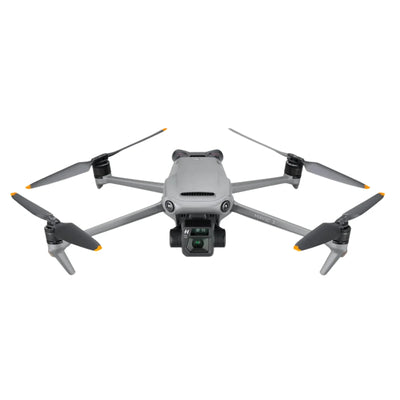
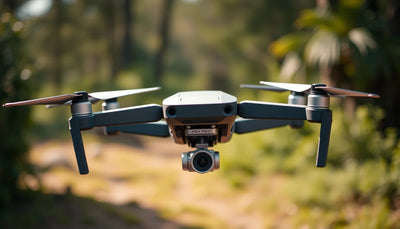
DJI Flip combines a foldable full-coverage propeller guard, folding arms, camera, gimbal, sensing, propulsion and several control methods in a compact aircraft. A bent guard can load a propeller without breaking the shell; a camera warning can sit beside a mechanical gimbal issue; a connection complaint can belong to the phone, controller, radio environment or aircraft. This guide begins with the customer's concern and uses exact-model, case-level evidence to separate those systems before any part or repair route is approved.
Quick answer
Treat the propeller guard, camera and control path as connected evidence
Record the exact DJI Flip, controller or phone control method, battery, event and warning before changing anything. Preserve original footage, the behavior of the foldable guard, camera and gimbal, motor response, link state and whether the fault repeats safely. Reboot Hub then states known and unknown findings, parts provenance, relevant board revision where observed, written scope and the acceptance checks that answer the customer's actual concern.
DJI Flip · series repair estimates by path
Each USD figure is a historical series-level estimate for the listed repair path, not a quote for this exact aircraft. Diagnosis determines the parts, labor, calibration, and testing needed.
| Repair path | Estimated USD range | When to consider it |
|---|---|---|
| Ribbon / flex cable | $30-$48 | Camera signal, gimbal tilt, image loss, or impact-damaged cable routing. |
| Complete gimbal module | $120-$168 | Camera, lens, motor, or stabilization damage beyond a cable-only repair. |
| ESC module / board | $42-$54 | Propulsion warnings, motor-control faults, water exposure, or ESC-stage damage. |
| Motor arm replacement | $36-$48 | Structural damage involving an arm, hinge, landing point, shell, or motor mount. |
| Main board (chip-level) | $90-$108 | A board fault can be isolated at component level before full-board replacement. |
| Complete board replacement | $180 | The board is physically unrecoverable or component-level repair is not practical. |
| IMU sensor / calibration path | $30 | Calibration loops, drift, sensor errors, or unstable attitude require diagnosis. |
| Battery management board | $36-$48 | Charging, balancing, BMS, or battery power-path faults require diagnosis. |
What evidence should be captured before the customer acts?
How does repair-bench experience map the fault domains?
Why does DJI Flip need a model-specific repair intake?
DJI Flip is not a Mini airframe with a cosmetic cage. Its foldable full-coverage propeller guard changes how impact, transport pressure and debris can reach the propellers and motors. Record the aircraft, guard position, controller or phone method, battery, charger and any accessories exactly as received. Photograph each corner from above, below and the side before folding or unfolding it again. The first warning and the user's sequence of events matter more than a later generic description such as it shakes or will not connect.
The official DJI repair boundary starts with visible structure and app-observed function, while a professional diagnosis can go further only when the exact unit and evidence support it. Reboot Hub records the relevant board revision if the aircraft is opened under an approved scope, but no hidden component is inferred from the product name alone. Real repair experience can be published when the exact model, observed condition and case-level evidence travel with the conclusion.

How can a folded guard create a propulsion symptom without obvious damage?
Inspect guard rings, hinges, latches, propeller clearance and each motor corner before commanding a start. Look for fine cracks, whitening, deformation, trapped grit, a blade that no longer sits in the same plane or contact marks inside the guard. Compare corners rather than judging one in isolation. Do not spin motors when a propeller, guard, arm or motor can touch, and do not bend the guard back merely to see whether the warning disappears.
A noisy corner can involve the blade, its fastener, guard geometry, motor, connection or drive electronics. The strongest written finding names only the layer demonstrated by inspection and controlled comparison. If the guard is the confirmed fault, the quote should still define the adjacent propeller and motor checks. If the propulsion warning remains after the mechanical path is safe, the electrical branch requires separate evidence rather than an automatic ESC conclusion.
What does an abnormal DJI Flip image or gimbal movement actually prove?
Preserve an original file from before the event when available, a current recording, live-view behavior, startup movement, horizon, vibration and the exact message. The DJI Flip uses a 1/1.3-inch sensor and gimbal system, but those specifications describe the imaging platform, not the failed part. A blurred file, striped live view, tilted horizon, obstructed movement and unstable footage are different symptoms. Note whether recording and live view fail together and whether the fault changes with aircraft orientation.
External alignment, debris, flexible connections, camera power, gimbal feedback, image processing and physical damage can overlap. The public guide therefore does not tell an owner to force the gimbal or open the aircraft. Reboot Hub identifies what was reproduced, what could be observed safely and what remains unknown. Parts provenance and any board-level conclusion are attached to the exact unit and approved bench evidence.

How should a link or control complaint be divided between phone, controller and aircraft?
Record which control method was in use, the compatible phone and app context where relevant, the controller identity, telemetry, live image and whether the aircraft still responded. DJI O4 is part of the supported transmission path, but a short or unstable session in a crowded room cannot prove the aircraft radio is faulty. Preserve the warning and test in a suitable low-interference environment with supported equipment only when the airframe is otherwise safe.
A phone connection problem, controller link failure, frozen image and complete control loss require different branches. Reboot Hub compares the same exact aircraft across a documented supported configuration, without using unauthorized firmware or region changes. The written finding states which layer was reproduced and which device was substituted. That keeps a customer from paying for an aircraft repair when the evidence points elsewhere.
What changes after impact, sand, moisture or abnormal heat?
Impact can load the guard, blades, motor corner, gimbal and internal connections in one event. Sand can enter the guard and motor area even when the aircraft still folds. Moisture may travel beyond its visible entry point, and abnormal heat can indicate battery, supply, load or cooling risk. Preserve photos and logs. Isolate the battery safely and stop repeated power cycles when there is liquid evidence, swelling, deformation, burnt odor or unusual temperature.
A successful startup does not clear hidden structural or corrosion risk. The scope should distinguish confirmed damage, credible adjacent risk and areas not inspected. A customer sees which tests were intentionally withheld and why. Repair is defensible when the affected domain can be bounded and a staged acceptance plan can prove the required functions; otherwise a broader module or replacement decision may be more transparent.

How should battery and charging evidence be handled?
Record the exact battery, charger or charging hub, status-light pattern, storage history, temperature and whether another supported known-good item changes the behavior. Keep shell damage, swelling, leakage, unusual heat and terminal contamination separate from a normal low-charge condition. A battery that is damaged or behaves abnormally is not a candidate for improvised revival, opening or transport as an ordinary spare.
The written diagnosis distinguishes the battery, charging equipment and aircraft-side power path. It does not translate a battery symptom into a main-board conclusion or promise that one charge cycle proves long-term health. Reboot Hub documents what was observed, which comparison was used, what cannot be safely tested and whether repair or exact documented replacement gives the customer the clearer path.
When should DJI Flip be repaired rather than replaced?
Repair is stronger when the guard, structure and affected functional domain can be bounded, compatible parts provenance is available and a controlled test can demonstrate the customer's camera, control and flight needs. Replacement becomes more credible when several high-value domains are affected, liquid or heat history is broad, geometry cannot be trusted or the complete creator workflow cannot be validated reliably.
Reboot Hub frames the comparison from the customer's perspective. We identify the exact unit, included controller and accessories, condition, known and unknown findings, written terms and what the acceptance evidence will show. The goal is to remove the concerns that normally remain hidden in a marketplace listing, not to push a board or replacement before diagnosis.

What must a DJI Flip quote and final acceptance prove?
The quote should connect the customer's concern to reproduced evidence, name the exact model and relevant board revision where established, describe the approved work, parts provenance, timing and stop conditions, and state what would require revised approval. The normal workshop target is 1-3 business days after quote approval, subject to scope, parts and testing. Approved work has a 30-day repair warranty; a qualifying complete product follows the separate 180-day product warranty.
Acceptance begins with the original symptom, then covers guard movement and clearance, propellers and motors, power, camera and recording, gimbal, positioning evidence, controller or phone path, telemetry and a staged flight only when earlier checks support it. Handover includes written findings, completed tests and remaining observations. It proves a defined result for the exact DJI Flip rather than promising every future condition.
Keep exploring
Further reading
From The Reboot Hub Chronicle

From Drone Guides