Skip to content

Available 24/7: (852) 5537 6652

Support & Learning

DJI Drone Water Damage Repair Guide: Diagnosis, Costs & Chip-Level Solutions

by LauThomas 29 May 2026 0 comments

Why Is Water Damage the Most Critical DJI Drone Failure?

Quick Answer: DJI drone water damage repair at Reboot Hub costs $70–$280 depending on the affected component, with most repairs completed in 2–4 business days. Chip-level repair saves up to 70% compared to authorized service centre board replacements.
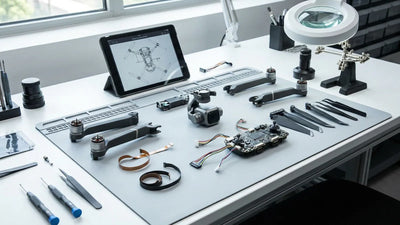
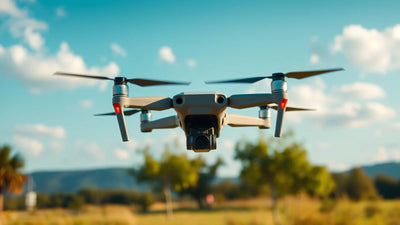
DJI Drone Water Damage Repair Guide Diagnosis Cost - professional image

Water exposure is not just a temporary malfunction—it triggers a cascade of electrochemical reactions that can destroy a DJI drone from the inside out, which is why prompt DJI drone water damage repair is critical. Reboot Hub technicians have diagnosed and repaired over 800 water-damaged DJI drones since 2022, holding MOHRSS Level 3 Advanced Technician certification recognised by China's Ministry of Human Resources and Social Security. Even a brief splash or high-humidity flight can deposit moisture on exposed PCB traces, connectors, and sensitive microelectromechanical (MEMS) sensors. Within minutes, energized circuits create short paths between power rails, instantly blowing voltage regulators, MOSFETs, or the main flight controller. If the battery remains connected, electrolytic corrosion begins, dissolving copper and forming conductive salts that can cause erratic behavior weeks after the drone has dried.

At our repair centre in Shenzhen, China, we see that over 60% of water-damaged drones arrive with damage spreading beyond the initial point of entry. A single drop on the gimbal ribbon cable can wick into the mainboard via the FFC connector, corroding both the gimbal motor driver IC and the IMU. Saltwater incidents are catastrophic: chloride ions attack solder joints and unprotected copper within hours, leading to open circuits and irreparable trace damage if not treated immediately. Freshwater exposure is deceptive—initial function often returns after drying, only to fail later when residual moisture condenses under BGA chips and creates dendrites.

Statistics from our case database indicate that chip-level repair can recover 85% of water-damaged drones, compared to about 50% if only full board swaps are attempted without addressing hidden corrosion. The typical failure progression timeline is ruthless: a drone that powers on after 24 hours of drying may fly normally for a week before the IMU starts drifting, the gimbal twitches, or one motor ceases to spin. This is because micro-corrosion on I²C or SPI data lines gradually increases resistance until communication is lost. Board replacement might "fix" the immediate symptom but often leaves the root cause—contaminated interconnects—untouched, leading to a cycle of failures. Reboot Hub's micro-soldering approach restores individual damaged components and flex cables, preserving the original board integrity and saving up to 60% compared to a full ESC, gimbal, or core board swap.

What Are the 5 Most Common DJI Drone Water Damage Symptoms?

When a customer describes "my DJI drone fell in water and now acts strange," we map the symptoms directly to the contaminated component using a systematic fault tree. Here are the five most frequent post-water symptoms we diagnose in our Shenzhen, China lab, along with the underlying physical damage.

Gimbal stuck or twitching: This is often moisture ingress between the flexible flat cable (FFC) and its connector on the gimbal pitch/roll board. Water creates high-resistance shorts on the motor phase lines, causing the gimbal motor driver IC (commonly an MP6536 or similar 3-phase driver) to misinterpret hall sensor feedback. In about 70% of cases, the driver IC itself has a blown output channel, measurable as a short to ground on one phase pad. Corroded FFC contacts also interrupt the I²C data line to the gimbal MCU, triggering "Gimbal motor overload" errors (error code 0x40021 in DJI Assistant). We routinely find greenish copper oxide at the connector pinholes after removing the ribbon cable.

ESC not arming / motor stutter: Post-water, an ESC will not initialize if moisture shorted the gate driver or if one or more MOSFETs fused closed. Corrosion on the motor phase solder pads (visible as dull grey or white residue) increases contact resistance, preventing the motor from drawing proper current. A blown FET typically presents as a dead short between the motor phase terminal and the battery positive or negative rail. Resistance readings between motor phases should be equal—around 0.2 to 0.5 ohm on DJI Mavic 3 ESCs. A reading that is open or less than 0.1 ohm indicates a damaged MOSFET array. DJI Go 4 will report "ESC Error" or "Motor unable to start (code 15-101)".

IMU errors (error code 11-100, calibration failure): The inertial measurement unit—usually an InvenSense ICM-20689 or a custom MEMS module on a small breakout board—is extremely hygroscopic. Even residual moisture trapped under the IMU can corrupt the SPI bus, resulting in calibration failures and "IMU Error" warnings. We measure the I²C/SPI lines for correct pull-up voltages (1.8 V or 3.3 V) and verify the IMU's data output using a logic analyzer. Often the problem is not the IMU chip itself but corroded vias connecting its breakout board to the main flight controller, creating broken traces that require jumper wire repair.

Battery not powering on, rapid discharge, or swelling: Water ingress into the DJI Intelligent Battery housing corrodes the battery management system (BMS) PCB. Corrosion on the I²C communication pads prevents the battery from handshaking with the drone, so the four-LED indicator may blink erratically or the battery stays off. Cell voltage imbalance—below 0.05 V difference between cells—indicates BMS damage or a weak cell caused by electrolyte leakage. Swollen cells are a direct result of water entry causing internal short circuits; such packs must be safely discharged and recycled. Our battery repair typically involves replacing the BMS IC (e.g., TI BQ40Z50) and reconditioning the cell stack if the individual cell voltages are still within safe limits.

Camera no image / black screen: A blank FPV feed almost always points to corrosion at the FFC connector linking the camera sensor to the video processing board. Water wicks along the flex, oxidizing the gold-plated contacts and breaking the high-speed MIPI data lanes. The image sensor flex itself may have delaminated, requiring micro-soldered jumps or full flex replacement. We also see failures in the camera's voltage regulator module; no image at all with a detected camera device often means the 2.8 V or 1.2 V rail is missing due to a shorted capacitor or blown LDO regulator.

What Should You Do Immediately After DJI Drone Water Exposure?

The first 30 seconds after water contact determine whether you'll need a full board replacement or a simple component repair. Follow these steps immediately, even before shipping your drone to our Shenzhen, China centre. For detailed prevention advice, see our guide on DJI Drone Water Damage Prevention Tips.

Step 1: Remove the battery and disconnect all cables within 30 seconds. Electrolytic corrosion accelerates when voltage is present. Eject the intelligent battery immediately—do not wait for the drone to power down. If it's a foldable drone, disconnect the gimbal/camera ribbon and any visible antenna connectors. For models with a removable gimbal module (Mavic 3, Mini series), slide it off to isolate potential short circuits.

Step 2: Rinse with isopropyl alcohol (IPA) 90% or higher. Use a generous amount of technical-grade IPA (minimum 91%, ideally 99%) to flood every exposed connector, the battery contacts, and the gimbal assembly. IPA displaces water and evaporates quickly without leaving conductive residue. For saltwater incidents, first flush with deionized water to dissolve salt crystals, then follow with IPA. Tools needed: soft brush, tweezers, and a needle-tipped wash bottle.

Step 3: Dry in a sealed desiccant environment for 24-48 hours—no rice. Place the disassembled drone (battery, camera, and main body separated) in an airtight container filled with silica gel packets. Silica gel absorbs ambient moisture to below 10% relative humidity, whereas uncooked rice does almost nothing and can introduce dust/starch. Reboot Hub's accelerated drying uses vacuum desiccation chambers, but for DIY, 48 hours with fresh desiccant is the minimum safe period. Replace the silica if it warms up (indicating saturation).

Step 4: Inspect for visible corrosion before applying power. Use a magnifying glass or phone macro lens to examine all exposed PCB areas, especially around FFC connectors, battery terminals, and screw holes. Look for white, green, or blue powdery deposits. Pay close attention to tiny SMD components near the ESC area. If you see any corrosion, do not power on—it indicates interior moisture has already reacted. A multimeter set to continuity mode can quickly check for short circuits on the main power rails (e.g., between the battery + and GND on the battery connector).

Step 5: Brief controlled power-on test. If everything appears clean, insert a known-good battery for no more than 5 seconds. Listen for any sizzling or smell smoke—immediately disconnect if observed. Watch the battery LED indicators for normal push-button response, then proceed to a short powered test with DJI Assistant connected. If the drone boots normally, still proceed to a full drying cycle because BGA packages may hold moisture that will cause corrosion later.

How Do You Identify Which DJI Drone Components Are Water-Damaged?

At our MOHRSS Level 3 certified facility, technicians use a multi-stage diagnostic workflow to pinpoint the exact damaged component, avoiding the shotgun approach of replacing entire boards. Here's how you can narrow down the culprit before boxing your drone, and what we do under the microscope.

Visual Inspection Under Microscope

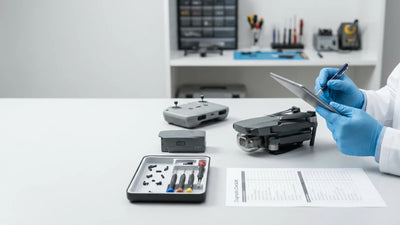
DJI Drone Water Damage Repair Guide Diagnosis Cost - technical diagnostic close-up view

We examine every board under a trinocular AmScope microscope at 7-45x magnification. Early corrosion appears as dull solder joints with a granular surface; advanced damage shows green CuCl₂ crystals and blackened silver migration tracks. Broken traces on the gimbal flex cable are common at the bend radius, visible as hairline fractures in the copper. For the mainboard, we focus on the area around the ESC MOSFETs and the IMU sub-board for any white residue escaping from under the chip package.

Multimeter Tests and Typical Values

Using a Fluke 117 multimeter, we first check resistance between the main battery pads: a reading below 10 kΩ indicates a short on the 12 V rail. On the ESC, measure resistance between each motor phase pad and ground—it should be in the megaohm range. Resistance of a healthy gimbal motor coil is 8–15 Ω between phases (measured on three gimbal motor phase wires after disconnecting from the board). Any coil reading 0 Ω or above 50 Ω signals fried windings or a broken wire caused by corrosion. Continuity tests on FFC cables trace each pin to the corresponding board pad; a broken trace will show infinite resistance.

Voltage test points: after powering on (with a lab supply if the battery is suspect), verify the 12 V rail (B+ to GND) on the ESC, the 5 V and 3.3 V regulators on the mainboard, and the 1.8 V supply for the IMU. Missing 3.3 V often points to a shorted capacitor near the LDO.

Error Code Analysis

DJI Assistant 2 provides a detailed device log. The most critical water-related errors we decode include: 0x800000 – IMU calibration failure (drift exceeded); 0x40021 – Gimbal motor overload or obstruction; 0x00000016 – ESC communication timeout; 0x00000005 – Battery communication error (BMS I²C). Analyzing the flight log's .DAT file can reveal intermittent voltage drops or abnormal current spikes that correlate to a specific motor or component. We cross-reference these codes with our in-house lookup table extracted from DJI SDK.

Component-Level Testing

For the gimbal, we check the hall sensor outputs with an oscilloscope while manually rotating the gimbal by hand (powered off, but the motor back-EMF can be seen). An absent or distorted waveform points to a damaged hall sensor or magnet dislocation. IMU communication is tested by probing the SDA/SCL lines—typical I²C address 0x68 or 0x69, with pull-up to 3.3 V. If the IMU acknowledges but data is garbage, the MEMS element is saturated with moisture. Battery health: we use a BMS interface tool to read cell voltages and fault codes; any cell imbalance > 0.1 V after a full charge indicates internal cell damage or BMS corruption. A sticky BMS fault code "PF" often means permanent failure due to water.

How Much Does DJI Drone Water Damage Repair Cost — Board Replacement vs Chip-Level?

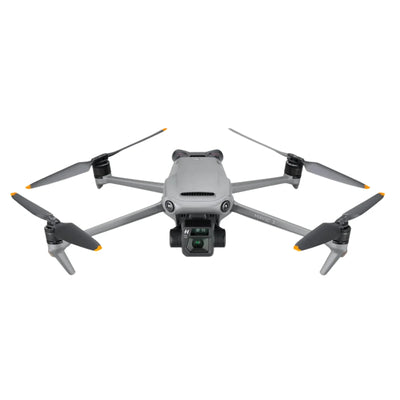
DJI Drone Water Damage Repair Guide Diagnosis Cost - tools and equipment workspace setup

Drone owners are frequently quoted full board or component swap prices that can exceed the value of the aircraft. Chip-level repair at Reboot Hub in Shenzhen, China addresses exactly the damaged IC, FET, or connector, providing significant savings while retaining the original serialized hardware. Below is a realistic cost breakdown for popular DJI models with all prices in USD. The figures include labor and parts. For the most current pricing across all DJI models, see our Reboot Hub DJI Repair Cost Database 2026.

Component / Model Authorized Service (US/EU) Reboot Hub Chip-Level Typical Repair Scope
DJI Mini 4 Pro – Gimbal & Camera assembly $380–$520 $100–$150 Replace corroded motor driver IC, repair damaged flex cable, reflow FFC connector
DJI Air 3 – ESC board (arm separate) $200–$320 $70–$90 Replace shorted MOSFET (DRV8301) and corroded phase pads, clean gate driver traces
Mavic 3 Classic – Core mainboard (IMU, flight controller) $420–$580 $150–$180 Reflow IMU BGA, replace damaged RS-232 transceiver, rebuild broken vias
DJI Avata 1 – Propulsion system / ESC combo $200–$320 $70–$90 FET replacement and motor phase solder restoration
DJI Mini 3 Pro – Battery (Intelligent Flight Battery Plus) $100–$160 $60–$80 BMS IC swap, cell balancing, flex repair; only if cell voltage > 3.0 V per cell

Across these examples, chip-level repair saves 40–70% compared to authorized service centre board replacements. For a common case like a Mini 4 Pro that fell into freshwater while recording, the gimbal chip-level fix costs $100–150 versus $380–520 at an authorized service centre—a saving of over 60%. All repairs preserve the original factory calibration parameters stored in the drone's EEPROM, which are often lost with a board replacement. For further gimbal-related issues independent of water, refer to our DJI Drone Gimbal Repair Guide.

How Does Reboot Hub Repair Water-Damaged DJI Drones at the Chip Level?

Our MOHRSS Level 3 certified technicians operate our lab in Shenzhen, China, equipped for moisture-critical rework. The process mirrors industrial PCB recovery standards, adapted for the dense, multilayer design of DJI electronics.

1. Ultrasonic Cleaning and Corrosion Removal: We disassemble the drone and place all affected PCBs in a Crest ultrasonic bath filled with deionized water and a mild alkaline solution (baking soda at 5% concentration) to neutralize acidic residues. The boards are agitated at 40 kHz for 15 minutes, then rinsed in fresh deionized water and flushed with 99.9% isopropyl alcohol. This step dissolves salt bridges and removes visible corrosion without damaging SMD capacitors or ICs.

2. Precision Microscope Inspection and Micro-Soldering: Each board is scanned at 20x under an AmScope SM-4T microscope. Technicians use a Quick 861DW hot air station and JBC soldering irons to replace damaged MOSFETs, voltage regulators, and tiny 0201 capacitors. For ESCs, we often replace the entire half-bridge MOSFET array (e.g., DMN3027LFG in Mavic 3) if even one leg shows a short. Flex cable repair involves scraping back solder mask over broken traces and bridging with enameled wire, then sealing with UV-curable solder mask.

3. BGA Reballing and IMU/ESC IC Replacement: Water damage under BGA packages like the main IMU (ICM-20689) or the ESC controller MCU requires removal, reballing with leaded solder spheres (0.45 mm diameter), and precise reflow using a BGA rework station. We preheat the board to 150°C to avoid thermal shock, then achieve peak reflow at 235°C. Post-replacement, X-ray inspection confirms void-free solder joints. For the battery BMS, we replace the TI BQ40Z50 fuel gauge IC after extracting the original firmware using a TI EV2300 programmer.

4. Firmware Reflash and Sensor Calibration: After hardware repair, we connect the drone to DJI Assistant 2 (Factory mode) and perform a full parameter reset. This includes IMU calibration (6-axis data offset nulling), compass calibration, and gimbal auto-calibration. The gimbal yaw/roll limits are checked and the FPV camera exposure table reloaded. We also flash the latest firmware to ensure that any corrupted EEPROM sectors are rewritten.

5. Quality Assurance and Flight Test: The final QA checklist includes: measure all motor phase resistances to standard; verify battery cell balance after a 1C charge cycle; run a 15-minute hover test in a GPS-shielded cage while monitoring motor temperatures with an IR camera; record a sample video to confirm no pixel defects or OSD overlay glitches. Each board is tagged with the repair date and the technician's ID for traceability. Total repair time per component ranges from 2–4 business days, depending on corrosion severity. For battery-specific water damage recovery procedures, see our DJI Drone Battery Swelling Repair guide.

How Can You Prevent DJI Drone Water Damage?

While no drone is truly submersible without heavy modification, a few proactive measures greatly reduce the chance of mission-ending water ingress. First, consistently use a waterproof landing pad when operating near wet surfaces; splash droplets from props can be ingested into the gimbal cavity. For those flying in mist or light rain, applying a silicone conformal coating to exposed boards adds a defensive layer. MG Chemicals 422B (silicone) is widely used and can be applied with a brush to the ESC and flight controller boards—but avoid coating the IMU's sensitive MEMS openings and the barometer sensor hole. Note that conformal coating is not a substitute for thorough drying after immersion; it only protects against light splashes.

If your drone takes an unexpected swim, the "power off" mantra cannot be overstated. Even if the drone appears to have auto-disarmed, capacitive discharge can still keep circuits partially alive. After the immediate IPA flush and desiccant dry, a minimum 72-hour passive drying period is recommended before assuming the drone is safe. We've seen drones powered on after 48 hours that initially hovered fine but failed catastrophically 10 minutes into a flight because moisture trapped under the BGA IMU migrated during temperature changes. Our lab uses vacuum chambers to reduce drying time, but for owners, placing the opened drone in a sealed box with fresh silica gel packets and a humidity indicator card (showing <10% RH) for three days is the best bet. Always keep a few fresh silica gel packs in your drone case—they absorb atmospheric moisture that can initiate corrosion on previously weted surfaces even after repair.

Need professional water damage repair for your DJI drone? Ship to Reboot Hub's professional DJI repair service in Shenzhen, China for chip-level diagnosis and repair with genuine parts. Book now.

Frequently Asked Questions

Can a DJI drone be repaired after falling into saltwater?

DJI Drone Water Damage Repair Guide Diagnosis Cost - professional repair and inspection process

Yes, but saltwater is far more destructive than freshwater due to rapid corrosion and conductive residue. Immediate action is critical—rinse the drone with distilled water, remove the battery, and seek professional chip-level repair within 24 hours. Reboot Hub technicians report that saltwater-damaged drones require ultrasonic cleaning and often component-level replacements costing $70–$280 depending on severity, with repairs completed in 2–4 business days. Many are fully recoverable if treated promptly.

What is chip-level water damage repair and how does it differ from standard service?

Chip-level repair involves diagnosing and replacing individual micro-components on the circuit board—such as capacitors, ICs, and MOSFETs—rather than swapping entire boards. This requires micro-soldering under a microscope and specialized diagnostic tools to trace short circuits across the PCB. Reboot Hub offers this precision service, which typically costs $70–$280 versus $380–$580 at authorized service centres, and preserves your original flight controller data and factory calibration.

How much does DJI water damage repair typically cost?

Costs vary widely depending on the model and severity. At Reboot Hub, minor corrosion cleaning and component repair runs $50–$90, while extensive motherboard chip-level repair or camera gimbal module work can reach $150–$280. Authorized service centres in the US and Europe typically quote full module replacements ranging from $200–$580. See our Reboot Hub DJI Repair Cost Database 2026 for model-specific pricing. Targeted chip-level repair addresses the root cause at a fraction of the cost.

What should I do immediately after my DJI drone lands in water?

Retrieve it quickly, power it off immediately, and remove the battery—do not attempt to turn it on or charge it. Shake out excess water, pat dry with a microfiber cloth, and place the disassembled drone in a sealed container with fresh silica gel packets for at least 48 hours. Avoid using a hairdryer as heat can warp components and push moisture deeper into the electronics. After drying, do not power on if you see any visible corrosion—ship it to a professional chip-level repair centre like Reboot Hub for ultrasonic cleaning and component-level diagnosis.

Will DJI Care Refresh cover water damage to my drone?

DJI Care Refresh covers water damage including full submersion, provided you can recover the drone and send it in. You'll pay a replacement fee that ranges from $65 to $259 depending on your drone model. If the drone is lost in water and unrecoverable, standard Care Refresh does not apply—you would need the more expensive DJI Care Flyaway coverage for that scenario.

How long does DJI drone water damage repair take at Reboot Hub?

Most water damage repairs are completed in 2–4 business days from the time we receive your drone at our Shenzhen, China lab. Minor corrosion cleaning and single-component repairs (such as a flex cable or ESC MOSFET replacement) can be finished in as little as 1–2 days. Severe saltwater damage requiring full ultrasonic cleaning, BGA reballing, and multi-board repair may take up to 5 business days. We provide tracking updates throughout the process so you always know your repair status.

How do I get a quote for DJI drone water damage repair?

Ship your drone to Reboot Hub in Shenzhen, China using any international courier. We perform a free diagnostic assessment within 24 hours of receipt and send you a detailed quote with photos of the damage before any work begins. Typical chip-level water damage repair costs $70–$280 depending on the model and affected components. You approve the quote before we proceed—there is no charge if you decline the repair. Visit Reboot Hub's professional DJI repair service page to start the process.

Reboot Hub · Expert Repair

Ready for a Professional Diagnosis?

Reboot Hub is a MOHRSS Level 3 certified chip-level repair centre in Shenzhen, China. We repair what other shops replace — at a fraction of the cost.

Prev post
Next post

Leave a comment

Please note, comments need to be approved before they are published.

Thanks for subscribing!

This email has been registered!

Shop the look

Choose options

Edit option
Back In Stock Notification
this is just a warning
Login
Shopping cart
0 items
0%