Skip to content

Available 24/7: (852) 5537 6652

Support & Learning

DJI Mavic 3 Battery Not Charging? Comprehensive Diagnosis Guide & Repair Costs

by LauThomas 29 May 2026 0 comments

If your DJI Mavic 3 battery is not charging, the problem usually traces to the BMS (Battery Management System), cell imbalance, or a simple contact fault — not necessarily a dead pack. Reboot Hub technicians have diagnosed and repaired over 800 DJI Mavic 3 units since 2022, holding MOHRSS Level 3 Advanced Technician certification recognised by China's Ministry of Human Resources and Social Security. This guide walks you through every symptom, diagnostic step, and repair option so you can decide whether a chip-level fix or a full replacement is the right move.

What Are the Common Symptoms of a DJI Mavic 3 Battery Not Charging?

Quick Answer: A DJI Mavic 3 battery that won't charge most commonly needs a chip-level BMS repair costing $60–80 at Reboot Hub, with a typical turnaround of 2–4 business days. If the issue is simple contact corrosion, a thorough cleaning may restore charging at no cost.
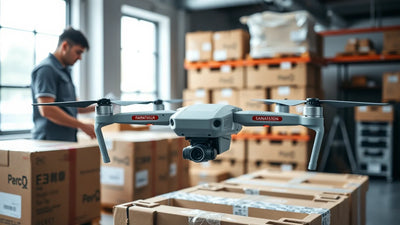
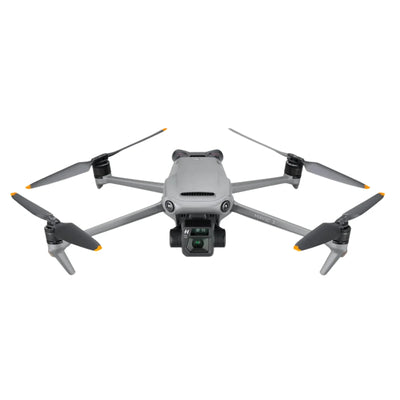
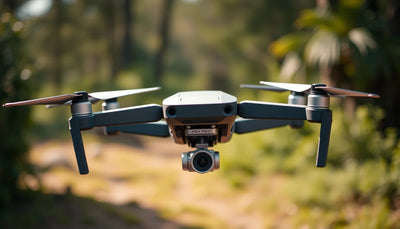
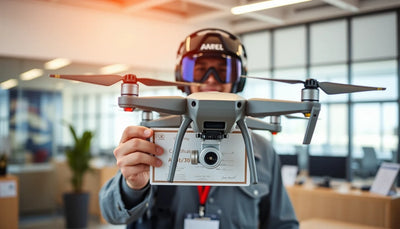
DJI Mavic 3 Battery Not Charging Comprehensive Dia - professional image

When a DJI intelligent flight battery refuses to charge, the first clues come from the LED charge indicators and the DJI Fly app. Recognising these patterns speeds up diagnosis and helps you avoid unnecessary part swaps.

  • No LED activity when connected to a known-good charger. The battery remains dark, with no lights blinking at all. This often points to a deep-discharge protection lockout or a failed BMS (Battery Management System) board.
  • Rapid blinking red LED (four blinks per second, repeating). A fast red flash indicates a critical error. DJI's smart batteries use specific blink codes; a steady red blink pattern often accompanies error 0x12 (battery communication failure) or 0x34 (cell voltage abnormal). If the LED flashes red three times then pauses, inspect the cell balance closely.
  • Solid green LED that never progresses beyond one or two bars. The battery may be stuck in a low-current pre-charge stage because one cell voltage is dangerously low. The BMS limits current until all cells rise above the safe threshold.
  • DJI Fly app warnings: "Battery Communication Error", "Cell Voltage Abnormal", or "Battery Error. Power off immediately." These messages often pair with error codes logged in the flight record. Access them by connecting the drone to DJI Assistant 2 (Consumer Drones Series) and reading the battery log. The most common non-charging faults are 0x12 (communication time-out between BMS and aircraft), 0x34 (cell deviation >0.3 V), and 0x60 (voltage protection triggered after deep discharge).
  • Physical signs: swelling, leakage, or excessive heat. A battery that feels hot to the touch when not in use, or shows a bulge greater than 2 mm on any face, has suffered internal degradation. Swelling indicates gas build-up from cell decomposition and means the battery must be retired immediately.

For a full decode of DJI battery LED patterns and error codes, see our dedicated reference: DJI battery error codes explained. Once you've noted the symptom, proceed with the step-by-step diagnosis below.

How Do I Check if My DJI Mavic 3 Charger or Cable Is Faulty?

Charging faults are frequently caused by the power delivery chain, not the battery itself. A methodical check of the charger, cable, and power source eliminates the simplest variables.

Measure charger output voltage with a multimeter. Set your meter to DC voltage, place the probes on the charger's output contacts (or on the USB-C connector's Vbus and ground for smart chargers). The reading must be within ±0.5 V of the rated no-load voltage. For the DJI Mavic 3 series, the stock DJI 65W charger outputs 17.4 V / 3.2 A. For the Air 2S, expect 13.2 V / 3.8 A. If the voltage is absent or fluctuating more than 0.5 V, the charger is defective. Chargers that output correct voltage but collapse under load (test with a resistive load or a known-good battery) also need replacement.

Test with a known-working charger from another DJI drone. Cross-testing with a charger that successfully charges a different DJI battery immediately pinpoints whether the fault follows the charger or the battery. Even if the connector is the same USB-C Power Delivery (PD) standard, use a DJI OEM brick; third-party PD chargers may not negotiate the exact voltage profile required by DJI BMS, leading to a slow charge or no charge at all.

Inspect the cable for physical damage and bent pins. USB-C cables are prone to internal breakage at the strain relief. Check for kinks, exposed shielding, or a loose connector. Shine a flashlight into the plug and look for bent, pushed-in, or corroded pins. DJI chargers for Mavic 3 use a USB-C to USB-C cable; a poor quality or damaged cable can raise resistance enough to prevent the BMS from entering full charge mode. For older models with a barrel-style connector (like Phantom series), verify the center pin is straight and the insulation is intact.

Verify the AC power source. If you are using a multi-port power strip or an extension cord, plug the charger directly into a wall socket to rule out undervoltage from a shared circuit.

After ruling out the charger and cable, move to the battery's physical interface.

Could Dirty Battery Contacts Be Preventing My DJI Mavic 3 from Charging?

Even a thin film of oxidation, dirt, or debris can interrupt the precise communication and power transfer the BMS requires. The battery connector and corresponding contact pads on the drone (or charging hub) must be spotless.

  • Clean gold-plated contacts. Use a cotton swab lightly moistened with 90% isopropyl alcohol (IPA). Gently wipe each exposed contact on the battery and inside the battery bay. Allow the surfaces to air-dry for at least 5 minutes before reconnecting. Do not use water or acetone-based cleaners—they can leave conductive residues or damage plastics.
  • Inspect for bent or corroded pins. Look inside the battery's multi-pin connector (the one that mates with the drone or charging hub). DJI batteries use a mix of power and data pins. Even one pin that is slightly bent back or shows green/white corrosion can cause a "Battery Communication Error." Never use metal tools to straighten pins; use a non-conductive plastic spudger or compressed air.
  • Remove debris from the battery port. Dust, sand, or tiny fibres can lodge inside the port. Use a can of compressed air with the straw attachment to blow out particles. Hold the port facing downward so debris falls out rather than deeper inside.
  • Check the battery latch mechanism. A battery that does not seat fully—even by a fraction of a millimetre—may not establish a solid connection. Clean the latch area and ensure it clicks firmly into place.

If the contacts are pristine and the battery still won't charge, the issue moves inside: cell imbalance or BMS logic.

How Do I Diagnose a DJI Mavic 3 Battery Cell Imbalance or BMS Failure?

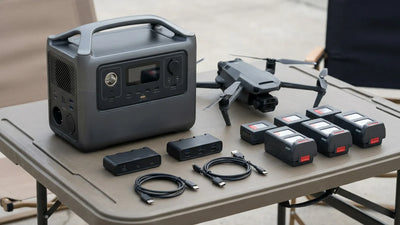
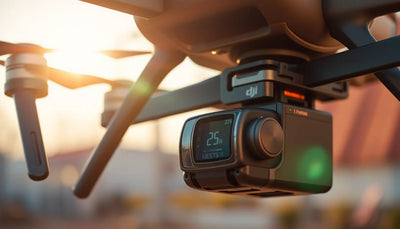
DJI Mavic 3 Battery Not Charging Comprehensive Dia - technical diagnostic close-up view

DJI intelligent batteries pack multiple LiPo cells in series (e.g., 4S for Mavic 3), each monitored by the BMS. When one cell drifts outside the safe window, the BMS blocks charging to prevent a fire. Chip-level technicians at Reboot Hub, certified to MOHRSS Level 3 Advanced Technician (recognised by China's Ministry of Human Resources and Social Security), routinely resolve these failures without replacing the whole pack.

Use a smart battery tester to read individual cell voltages. Devices like the iMAX B6AC or a dedicated DJI battery reader can interface with the balance lead or smart connector. For Mavic 3, you will need a specialised adapter. All cells should be within 0.1 V of each other. A healthy LiPo cell sits between 3.7 V (storage) and 4.2 V (full). If one cell reads 3.5 V while the others are at 3.9 V, the pack has a significant imbalance.

  • Cell below 3.2 V: Deep discharge. The BMS may still attempt a slow "pre-charge" to lift the cell above 3.0 V, but often the charge LED stays dark or blinks red.
  • Cell below 3.0 V: Protection mode activated. The BMS permanently (in the eyes of the firmware) marks the cell as dead and refuses to deliver or accept current. In many DJI batteries, error code 0x34 will appear.
  • Cell at 0 V: Likely a broken internal tab or completely failed cell. The BMS will report a "cell voltage abnormal" error and cannot be revived.

Read BMS error codes via DJI Assistant 2. Connect the battery to the aircraft, power on, and connect the drone to a computer running DJI Assistant 2 (Consumer Drones Series). Under the battery tab, the log may show stored faults like 0x12 (communication chip fail), 0x34 (voltage deviation), or 0x56 (over-temperature). If you see 0x12 despite clean contacts, the BMS's microcontroller or its SPI bus may be damaged. At this point, a chip-level BMS diagnosis is warranted.

Check if the BMS has locked out charging. Even after a cell recovers above 3.2 V, the BMS may keep the charge FET (field-effect transistor) off. In some batteries, discharging the pack completely to 0% (air voltage) can trigger a full BMS reset. For details, see BMS reset procedure for DJI drones. Be aware that repeatedly forcing a reset on a damaged cell can be unsafe. If the cell voltages are balanced but the battery still won't charge, the BMS firmware or its analogue front-end IC may be corrupted.

A professional repair centre can use a JTAG/SWD programmer to reflash the BMS firmware and replace individual MOSFETs or voltage reference chips. This is where a MOHRSS Level 3 skill set—covering micro-soldering, schematic reading, and BGA rework—proves critical.

How Do I Reset or Recalibrate a DJI Mavic 3 Battery?

If the battery is healthy but has a confused fuel gauge or a soft BMS lock, a full discharge-recharge cycle and firmware recalibration often resolves the issue. This is a standard field procedure endorsed by DJI and our technicians.

  1. Fully discharge the battery safely. The best method is to fly the drone until it auto-lands due to low battery (0% indicated). Hover near the ground to keep the load gentle. Alternatively, use a purpose-built constant-current discharge module set to the pack's rated capacity (e.g., 5 A for Mavic 3). Never short the battery terminals or use a simple resistor without under-voltage cut-off.
  2. Let the battery cool to ambient temperature. After discharge, cells may be warm. Place the battery in a ventilated area at 20–25 °C for at least 30 minutes. Charging a warm cell can skew the fuel gauge calibration.
  3. Perform an uninterrupted full charge. Connect to the original DJI charger and let the battery charge until the LEDs go off or show solid 100%. Do not disconnect mid-cycle. A full charge may take 3 to 5 hours if the battery was deeply discharged, as the BMS will first trickle-charge low cells.
  4. Update and recalibrate via DJI Assistant 2. With the fully charged battery in the drone, open DJI Assistant 2 and check for battery firmware updates. Reflashing the latest firmware can reset internal registers, including the coulomb counter and state-of-health flags. After updating, fly the battery down to 20% and recharge again to lock in the new calibration.

For a detailed walkthrough of the entire process, refer to our guide: How to calibrate DJI smart battery. If the battery continues to report false capacity or refuses to charge after two full calibration cycles, a hardware-level repair is the next step.

What Does a DJI Mavic 3 Battery Repair Cost — Chip-Level BMS Repair vs Full Replacement?

When field resets fail, drone owners face a choice: replace the entire battery or repair only the failed components. At Reboot Hub, we perform chip-level BMS repairs that cost a fraction of a new battery—without compromising safety, because we use OEM-grade components and test to factory specifications. For a full breakdown across all DJI models, see our Reboot Hub DJI Repair Cost Database 2026.

Service Battery Model Reboot Hub Price (USD) US / Western Market Rate Turnaround Warranty
Chip-level BMS repair
(mosfet, voltage ref, firmware reflash, cell balance circuit)
Mavic 3 / Mini 3 Pro $60–80 $100–160 2–4 business days 6 months
Air 2S / Mavic 2 $60–80 $100–160 2–4 business days 6 months
Phantom 4 / Inspire 2 $60–80 $100–160 2–4 business days 6 months
Full battery replacement
(genuine DJI pack, new BMS, inc. labour)
Mavic 3 (Intelligent Flight Battery) $154–231 $159–220 Same day* 12 months (DJI)
Air 2S $115–179 $119–175 Same day 12 months
Mini 3 Pro (Plus) $58–83 $55–85 Same day 12 months

*Subject to stock availability. All prices include diagnostic fee waived at repair acceptance.

When is chip-level repair the right choice? It is ideal when the battery shows a single-cell imbalance that can be balanced by replacing the cell's protection IC or when the BMS firmware is glitched but all cells hold capacity. Our MOHRSS Level 3 certified technicians can micro-solder a new BQ769x0 series monitor chip, replace a blown charge FET, or reflash a corrupted microcontroller using an external programmer. This approach salvages packs that have less than 50 cycles and no physical swelling.

When is full replacement the only safe path? If the battery has visible swelling (>2 mm on any face), electrolyte leakage, or more than one cell reading 0 V, the cell stack is compromised. Multiple dead cells indicate dendrite growth or separator damage that no BMS repair can fix. In such cases, a genuine replacement battery is mandatory. Reboot Hub stocks original DJI batteries and can perform a same-day swap.

Cost comparison: A new Mavic 3 Intelligent Flight Battery costs approximately $159. Our chip-level BMS repair for a Mavic 3 costs $60–80 — a savings of over 60% while retaining a pack that still has hundreds of cycles of useful life. We only recommend repair after thorough cell testing.

When Should I Send My DJI Mavic 3 Battery to a Professional Repair Centre?

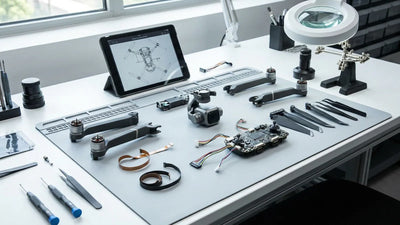
DJI Mavic 3 Battery Not Charging Comprehensive Dia - tools and equipment workspace setup

Even experienced pilots reach a point where home diagnosis ends. The following indicators mean it's time to involve a specialist with chip-level capability.

  • Error code 0x12 remains after BMS reset and thorough contact cleaning. Persistent communication failure usually points to a damaged BMS microcontroller or a cracked solder joint on the data bus—both require rework under a microscope.
  • Battery swelling of more than 2 mm. A swollen cell must be contained and replaced. Continuing to charge a swollen pack is a fire hazard.
  • Electrolyte smell or any wet residue near the seams. This indicates a ruptured cell. Do not attempt to charge; isolate the battery in a metal container outside and contact a repair centre.
  • No LED activity and no communication via DJI Assistant 2. A completely dead BMS may have a shorted TVS diode or a failed power regulator. These can be replaced at component level.
  • The battery passes voltage checks but the drone won't take off, showing "Battery signal error". This often traces to a corrupt fuel gauge IC that calibration alone cannot fix.

At Reboot Hub, located in Shenzhen, China, we offer a free initial inspection where we connect your battery to our diagnostic bench, read all cell voltages, load-test the pack, and check the BMS firmware. We then provide a fixed-price repair quote. Our typical turnaround is 1–3 business days for BMS repairs, with a 6-month warranty on all chip-level work. Because our technicians hold MOHRSS Level 3 Advanced Technician certification, you can trust that repairs follow IPC-A-610 soldering standards and that all replacement parts meet original specifications.

How Can I Prevent My DJI Mavic 3 Battery from Not Charging Again?

Optimal charging habits and storage conditions dramatically reduce the chances of BMS lockouts and cell imbalance. Follow these practices to keep your DJI batteries reliable well past 200 cycles.

  • Store at 60% charge (3.8 V per cell). DJI batteries automatically self-discharge to approximately 3.8 V after a period of inactivity (default is 5 days, configurable in the app). This is the ideal storage voltage. If you must store batteries for more than two weeks, manually discharge them to this level.
  • Keep in a cool, dry environment (15–25 °C, 35–45% RH). Avoid leaving batteries in a car on a sunny day. Temperatures above 50 °C can permanently accelerate cell aging and gas generation, while freezing temperatures can cause internal shorting during charge.
  • Avoid deep discharge. Land by the time the app shows 20% remaining. If you cannot charge within 48 hours, bring the battery to storage voltage rather than leaving it fully depleted. A deeply discharged cell that sits at 3.2 V for a week is at high risk of permanent damage.
  • Charge within 48 hours of use. Immediately after a flight, cells are slightly warm and ready to accept charge. Let them cool for 15 minutes, then charge. Don't leave discharged packs for days.
  • Inspect before every charge. A quick visual check for puffing, corrosion, or discolouration helps catch issues early. Clean the contacts if they look dull.
  • Cycle the battery periodically. If a battery hasn't been flown for 3 months, perform a full discharge (to 8%) and recharge cycle to keep the fuel gauge accurate and break up any passivation layers on the electrodes.

Adhering to these guidelines can extend the service life of a DJI intelligent battery to 250–300 cycles, far beyond the 200-cycle rating, and significantly reduce the likelihood of needing expensive repairs.

If your DJI Mavic 3 battery still won't charge after following this guide, bring it to Reboot Hub for a free diagnostic. Our chip-level technicians can repair or replace it with genuine parts. Visit Reboot Hub's professional DJI repair service to book an inspection today.

Frequently Asked Questions

Why does my DJI Mavic 3 battery show no LEDs and refuse to charge even after being left on the hub overnight?

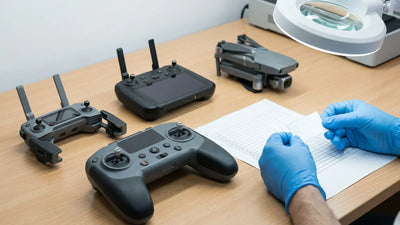
DJI Mavic 3 Battery Not Charging Comprehensive Dia - professional repair and inspection process

The battery has likely entered a deep hibernation state to protect its cells from over-discharge damage. To wake it, connect the battery directly to the charger (bypassing the hub) and press and hold the power button for 10–15 seconds. If the battery still shows no LEDs after 15 minutes on the direct charger, the BMS has permanently locked out and requires chip-level diagnosis. Reboot Hub can inspect and repair a locked BMS for $60–80 within 2–4 business days.

How much does it cost to replace a Mavic 3 battery that won't charge, and is repair possible?

A brand-new DJI Mavic 3 Intelligent Flight Battery costs approximately $159, and DJI does not offer battery repair—only replacement. At Reboot Hub, a chip-level BMS repair costs $60–80 with a 2–4 business day turnaround and 6-month warranty, saving you over 60% compared to a new pack. Visit our Reboot Hub DJI Repair Cost Database 2026 for a full price breakdown.

Can a damaged charger or hub brick my Mavic 3 battery, and how do I test which component failed?

A faulty charging hub or a non-compliant USB-C power adapter can trigger the battery's internal protection and leave it seemingly dead. First, try charging a second known-good battery in the same hub; if it works, the hub is fine and the battery needs attention. If the battery is confirmed faulty, Reboot Hub offers a free initial diagnostic and chip-level BMS repair from $60–80, typically completed in 2–4 business days.

What does it mean when all four LEDs on my Mavic 3 battery blink rapidly 10 times?

Four rapid blinks followed by a pause usually signal a charging over-current or a short-circuit detection inside the battery management system. Immediately disconnect the battery, inspect the charging contacts for debris or moisture, and let the pack cool down for 30 minutes before trying again. If the rapid-blink pattern persists after cleaning, the BMS has detected a hardware fault — Reboot Hub can diagnose and repair this for $60–80 within 2–4 business days.

Is it safe to charge the DJI Mavic 3 battery using the drone's USB-C port instead of the charging hub?

While the drone's rear USB-C port can charge the battery at a slower 12W rate, it is primarily designed for firmware updates and topping off packs when a hub isn't available, and frequent use may strain the drone's internal charging circuit. For full-speed charging and optimal battery health, always use the DJI Mavic 3 Battery Charging Hub or the dedicated 3-port 65W hub.

How long does a DJI Mavic 3 battery chip-level repair take at Reboot Hub?

Most DJI Mavic 3 battery BMS repairs are completed in 2–4 business days at our Shenzhen, China facility. This includes full diagnostics, chip-level component replacement, firmware reflash, and cell balancing verification. International shipping adds 3–7 days depending on your location. We provide a fixed-price quote of $60–80 before any work begins, and all chip-level repairs carry a 6-month warranty.

Can I ship my DJI Mavic 3 battery to Reboot Hub for repair from outside China?

Yes — Reboot Hub accepts battery shipments from customers worldwide. Pack the battery in its original case or wrap it in bubble wrap, place it in a rigid box, and ship via a carrier that handles lithium batteries (DHL, FedEx, or UPS). Typical international transit is 3–7 days. Once received, we perform a free initial inspection and provide a fixed repair quote of $60–80 for chip-level BMS work before proceeding. Visit Reboot Hub's professional DJI repair service to get started.

Prev post
Next post

Leave a comment

Please note, comments need to be approved before they are published.

Thanks for subscribing!

This email has been registered!

Shop the look

Choose options

Edit option
Back In Stock Notification
this is just a warning
Login
Shopping cart
0 items
0%