Skip to content

Available 24/7: (852) 5537 6652

Support & Learning

DJI Drone Motor Test & Diagnosis Guide: How to Catch Motor Failures Before They Ground You

by LauThomas 29 May 2026 0 comments

Your drone's motors are the heartbeat of every flight. When one starts to fail, the symptoms can be subtle at first — a faint hum that wasn't there before, a slight vibration in your footage, or an intermittent ESC warning that disappears on restart. Ignore these early signals, and you risk a mid-air motor failure that could turn a routine flight into a costly crash. This DJI motor test and diagnosis guide walks you through every professional-grade diagnostic technique our technicians at Reboot Hub use in our Shenzhen, China workshop — our team has diagnosed and repaired over 800 DJI drone motor and ESC assemblies since 2022, holding MOHRSS Level 3 Advanced Technician certification recognised by China's Ministry of Human Resources and Social Security — so you can catch motor problems early, understand what the data means, and make informed decisions about repair or replacement.

Whether you fly a DJI Mavic 3, an Inspire 3, a Matrice 350 RTK, or a consumer Mini series quad, the fundamental principles of motor diagnosis remain the same. We will cover the DJI Assistant motor spin test, vibration analysis techniques, bearing noise detection methods, and ESC error code interpretation — giving you a complete diagnostic toolkit you can apply at home or in the field.

Why Is Motor Health the Most Overlooked Aspect of DJI Drone Maintenance?

Quick Answer: You can test and diagnose most DJI motor failures at home for free using the DJI Assistant 2 motor spin test and the vibration and bearing-detection methods below. If a fault is confirmed, Reboot Hub's chip-level motor repair starts at $60–80 with a turnaround of 2–4 business days.
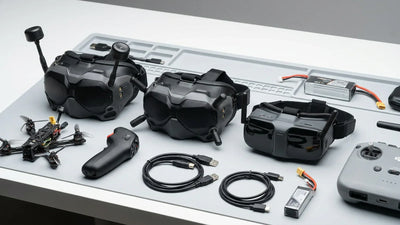
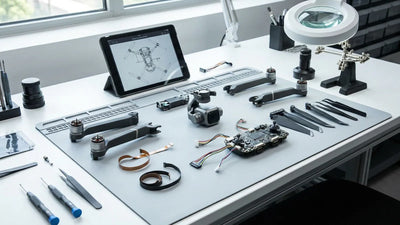
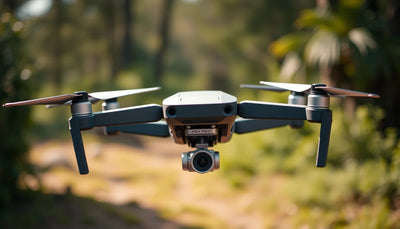
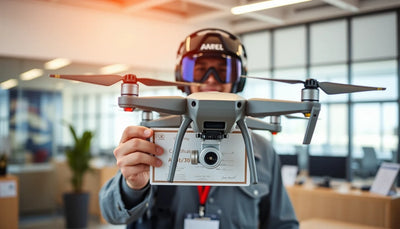
DJI Drone Motor Test  Diagnosis Guide How to Catch - professional image

Most drone operators focus on camera calibration, firmware updates, and propeller condition. Motors, however, rarely get attention until something goes visibly wrong. This is a mistake. DJI brushless motors are engineered for thousands of hours of operation, but they operate in harsh conditions — dust, humidity, sand, and occasional impacts all take their toll on internal components.

Common Signs Your DJI Motor May Be Failing

  • Unusual vibrations visible in video footage — especially jello effects that persist even with new propellers and balanced gimbals.
  • Asymmetric motor temperatures after flight, where one motor is noticeably hotter than the others.
  • Intermittent ESC errors in the DJI Fly or DJI Pilot app that appear and disappear between flights.
  • Reduced flight time without changes to payload, battery health, or environmental conditions.
  • Abnormal sounds — grinding, clicking, or high-pitched whining that differs from the normal motor hum.
  • Motor startup hesitation where one motor spins up a fraction of a second slower than the others during pre-flight check.

If you have experienced any of these symptoms, the diagnostic steps in this guide will help you determine whether the issue is a motor, an ESC (Electronic Speed Controller), a bearing, or even a simple propeller imbalance. Early detection can save you from a full motor replacement and, more importantly, prevent a dangerous in-flight failure.

How Do You Run the DJI Assistant Motor Spin Test?

The motor spin test is the single most important diagnostic tool available to DJI owners. It is built into the DJI Assistant 2 software and allows you to spin each motor individually while the drone is on the ground and connected via USB. This test isolates each motor, making it easy to compare performance across all units and identify the specific motor causing issues.

What You Need Before You Start

  1. A Windows or macOS computer with the latest version of DJI Assistant 2 installed (download the correct version for your drone series from the DJI website).
  2. A high-quality USB-C cable — avoid cheap cables that may cause connection drops during the test.
  3. Remove all propellers before running the test. This is a critical safety step. Never run motor tests with propellers installed.
  4. A fully charged battery (at least 50%) to ensure consistent power delivery during the test.
  5. A quiet environment so you can clearly hear each motor's sound profile.

Step-by-Step Motor Spin Test Procedure

  1. Power on the drone and connect it to your computer via USB-C.
  2. Launch DJI Assistant 2 and wait for the software to detect your aircraft. Click on your device when it appears in the list.
  3. Navigate to the "Tools" or "Device Settings" section (the exact menu name varies by model). Look for "Motor Test" or "Motor Diagnostics".
  4. Run the auto test first. DJI Assistant will spin each motor sequentially at varying RPM levels. Watch and listen carefully to each motor.
  5. After the auto test, switch to manual mode. Spin each motor individually, starting at low RPM and gradually increasing to maximum. Pay attention to:
    • Smoothness of acceleration — any stuttering or hesitation indicates an issue.
    • Sound consistency — compare the pitch and tone of each motor at the same RPM.
    • Vibration transmitted to the frame — place your finger lightly on the motor housing (not the bell) to feel for roughness.
  6. Record or take note of any error codes that appear during the test. DJI Assistant will display specific ESC error codes if it detects anomalies.
  7. Compare readings across all motors. In a healthy drone, all motors should sound and behave nearly identically at the same RPM.
Motor Behavior During Test Likely Cause Severity Recommended Action
Motor hesitates at low RPM but runs fine at high RPM Worn bearings or ESC calibration drift Moderate Inspect bearings; recalibrate ESC via firmware refresh
Motor produces grinding or scraping noise Debris in motor bell or damaged bearing High Clean motor; replace bearings if noise persists
Motor runs at visibly lower RPM than others at same setting Winding damage or ESC power delivery issue High Test with known-good ESC; consider motor replacement
Motor vibrates excessively compared to others Bent shaft, unbalanced bell, or loose mounting screws Moderate to High Check mounting screws; inspect shaft for bends; replace if needed
Motor triggers ESC error code immediately on start Short circuit in windings or ESC failure Critical Stop testing; inspect wiring; replace ESC or motor assembly

For a deeper look at general DJI troubleshooting workflows, visit our DJI troubleshooting guide in the Support Learning hub.

How Does Vibration Analysis Reveal Hidden DJI Motor Failures?

Vibration is the silent killer of drone components. Excessive motor vibration does not just ruin your aerial footage — it accelerates wear on bearings, loosens structural screws, stresses the flight controller's IMU, and can even cause fatigue cracks in carbon fiber frames over time. Professional vibration analysis goes beyond simply noticing "the footage looks shaky."

Visual Vibration Detection

With propellers removed, run the motor spin test described above and observe the motor bell (the rotating outer housing) from the side. A healthy motor bell should spin perfectly concentric — it should not wobble or oscillate. Even 0.5mm of visible wobble at the motor bell rim translates to significant vibration at flight RPM.

Smartphone Vibration Measurement

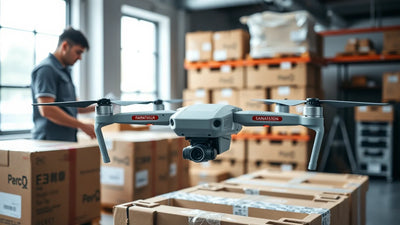
DJI Drone Motor Test  Diagnosis Guide How to Catch - technical diagnostic close-up view

You do not need expensive lab equipment to measure motor vibration. A simple smartphone app can give you actionable data:

  1. Download a vibration analysis app such as Vibration Analysis (Android) or VibSensor (iOS).
  2. Mount your phone securely to the drone frame using soft tape near the suspected motor.
  3. Run the motor spin test at 30%, 50%, and 70% throttle, recording readings at each level.
  4. Repeat for each motor and compare the vibration amplitude values.

A healthy DJI motor typically produces vibration readings within 15–20% of its sibling motors. If one motor's vibration amplitude exceeds the average of the others by 30% or more, that motor warrants closer inspection. Common causes include:

  • Propeller hub damage — even if propellers look fine, microscopic cracks in the hub can create imbalance.
  • Bent motor shaft — often caused by hard landings or propeller strikes. Even a 0.2mm bend is enough to cause visible vibration.
  • Corroded or pitted bearings — moisture ingress degrades bearing surfaces, creating rough rotation.
  • Loose motor mounting hardware — vibration can cause screws to back out over time, creating a compounding feedback loop.

The "Jello Effect" Diagnostic Test

If your aerial footage shows the classic jello effect (rolling shutter distortion caused by vibration), but your propellers and gimbal are in good condition, the motors are the prime suspect. To isolate the cause:

  1. Fly a short test flight and record in the highest resolution available.
  2. Import the footage into video editing software and examine frame-by-frame at the point of worst distortion.
  3. If the jello frequency corresponds to a specific RPM range, note which motors reach that RPM at the corresponding throttle position.
  4. Swap the suspected motor's propeller with a known-good propeller and re-test. If the jello persists, the motor itself is the issue.

How Do You Detect Bearing Noise in DJI Drone Motors?

DJI motors use high-precision sealed ball bearings that are designed to last the lifetime of the motor under normal conditions. However, real-world operating environments are rarely ideal. Sand, dust, moisture, and impact forces all degrade bearing surfaces over time. Learning to identify bearing noise is one of the most valuable diagnostic skills a drone operator can develop.

Normal vs. Abnormal Motor Sounds

Every DJI motor has a characteristic sound profile. When the bearings are healthy, the motor produces a smooth, consistent hum that changes predictably with RPM. Abnormal bearing sounds include:

  • Grinding — a rough, sandy sound that increases with RPM. This indicates contaminated or damaged bearing races.
  • Clicking or ticking — rhythmic sounds at consistent intervals. Often caused by a chipped bearing ball or cracked race.
  • High-pitched whining — a squeal that is not part of the normal motor tone. May indicate dry bearings that need lubrication or replacement.
  • Rattling — loose sounds at low RPM that smooth out at higher speeds. Could be a loose bearing retainer or debris inside the motor bell.

The Stethoscope Method

Professional technicians use a simple but effective technique: they place a long screwdriver or metal rod against the motor housing (not the spinning bell) and press their ear against the handle end. This amplifies bearing sounds transmitted through the motor's metal structure, making subtle defects much easier to detect. You can replicate this at home with:

  1. A metal rod, long screwdriver, or even a sturdy chopstick.
  2. Remove the propeller from the motor you want to test.
  3. Run the motor spin test at low-to-medium RPM using DJI Assistant.
  4. Touch the rod gently to the motor housing base (the stationary part near the mounting screws).
  5. Press your ear to the other end of the rod and listen carefully. Rotate the rod slightly to find the clearest sound path.
  6. Compare the sound to a motor you know is healthy.

When Bearings Need Replacement vs. Cleaning

Condition Sound Character Action
Slight roughness, no grinding Mild buzzing at specific RPM Clean and re-lubricate with light machine oil
Consistent grinding across RPM range Sandy, rough hum Replace bearings immediately
Intermittent clicking Rhythmic tick at rotation frequency Replace bearings — likely chipped ball
High-pitched squeal Thin whine superimposed on motor sound Try lubrication first; replace if squeal returns within 5 flights

Bearing replacement is a precision job that requires proper tools and technique. If you are not confident performing the replacement yourself, Reboot Hub's professional DJI repair service can handle it quickly with OEM-spec bearings.

What Do DJI ESC Error Codes Mean and How Should You Respond?

The Electronic Speed Controller (ESC) is the bridge between the flight controller and the motor. It converts digital commands into precisely controlled electrical pulses that spin the motor at the required speed. When something goes wrong with the motor or the ESC itself, the system generates error codes that appear in the DJI Fly or DJI Pilot app. For a full price breakdown on ESC and motor repairs, see the Reboot Hub DJI Repair Cost Database 2026.

Understanding How the ESC Monitors Motor Health

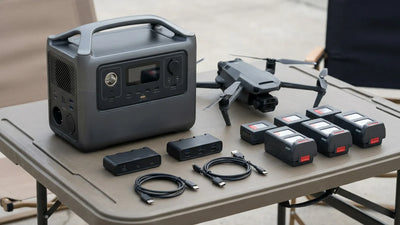
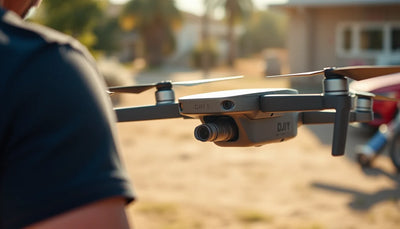
DJI Drone Motor Test  Diagnosis Guide How to Catch - tools and equipment workspace setup

Modern DJI ESCs do not simply send power to the motor and hope for the best. They actively monitor several parameters in real-time:

  • Back-EMF (electromotive force) — the voltage generated by the spinning motor. Anomalies in back-EMF indicate winding issues or bearing resistance.
  • Current draw — excessive current at a given RPM suggests mechanical resistance (bad bearings) or electrical faults (shorted windings).
  • Commutation timing — the precise timing of electrical pulses to the motor's three phases. Irregular timing indicates sensor issues or winding faults.
  • Temperature — both motor and ESC temperatures are monitored to prevent thermal damage.

Common DJI ESC Error Codes and Their Meanings

Below is a reference table of frequently encountered ESC-related error codes across DJI product lines. Note that exact code numbers may vary by firmware version and aircraft model:

Error Code / Message Description Probable Cause First Response
ESC Error (Code 1-4) ESC malfunction on motor 1-4 ESC board failure, wiring damage, or motor short Restart aircraft; if persistent, inspect wiring and ESC board
Motor Stall Detected Motor not reaching commanded RPM Obstruction, bearing seizure, or propeller strike Check for physical obstructions; spin motor by hand to feel for resistance
Motor Overcurrent Current draw exceeds safe limits Winding short, severely worn bearings, or wrong propeller Verify correct propellers installed; test motor spin without propellers
ESC Calibration Required ESC timing out of calibration range Firmware update anomaly or ESC board degradation Re-flash firmware via DJI Assistant; recalibrate IMU
Motor Unable to Start Motor fails to spin up from standstill Dead ESC channel, broken motor wire, or seized bearing Inspect motor wiring continuity with multimeter; test motor independently
ESC Temperature Warning ESC board temperature exceeds threshold Extended high-throttle flight, ambient heat, or ESC component failure Land immediately; allow cooling; inspect ESC board for damage

How to Distinguish Motor Faults from ESC Faults

This is one of the trickiest aspects of diagnosis because motor and ESC symptoms often overlap. Here is the professional method for isolating the fault:

  1. Swap test (if your drone model allows motor/ESC swap): Move the suspected motor to a different ESC channel. If the error follows the motor, the motor is faulty. If it stays at the same ESC channel, the ESC is the problem.
  2. Resistance measurement: Using a multimeter set to ohms, measure the resistance between each pair of the motor's three phase wires. All three readings should be equal (typically 0.1–0.5Ω for DJI motors). Unequal readings indicate winding damage.
  3. Visual ESC inspection: Open the drone shell and visually inspect the ESC board for burn marks, bulging capacitors, or corroded solder joints. ESC boards in DJI drones often show physical damage before total failure.
  4. Firmware diagnostic logs: DJI Assistant 2 stores detailed flight logs that include ESC telemetry data. Export these logs and look for abnormal current spikes or temperature readings on specific ESC channels.

For owners of enterprise DJI platforms like the Matrice series, we recommend reviewing our enterprise drone maintenance guide for additional ESC management best practices and inspection intervals.

How Do You Prevent DJI Motor Failures with Regular Maintenance?

The best motor diagnosis is the one you never have to do. A disciplined preventive maintenance routine will dramatically extend the life of your DJI motors and reduce the likelihood of unexpected failures. Here is the maintenance schedule our technicians follow at Reboot Hub:

After Every 50 Flights (or Monthly for Heavy Users)

  • Remove propellers and visually inspect each motor bell for debris, scoring, or discolouration.
  • Spin each motor by hand and feel for roughness or resistance. A healthy motor should spin freely with a smooth, even magnetic cogging feel.
  • Clean motor exteriors with compressed air, directing the nozzle at a 45-degree angle to blow debris out rather than deeper in.
  • Check all motor mounting screws for tightness using the correct torque driver.

After Every 150 Flights (or Quarterly)

  • Run the full DJI Assistant motor spin test and compare results to baseline readings from when the drone was new.
  • Inspect the motor wire connections at both the motor end and the ESC solder joints for signs of fatigue or heat damage.
  • Check the motor shaft play by gently pushing and pulling the motor bell — there should be virtually zero axial play.

After Any Hard Landing or Propeller Strike

  • Immediately run a motor spin test before flying again.
  • Inspect the struck motor's shaft for bends by spinning it slowly and observing the bell for wobble.
  • Check propeller hub seats for deformation that could cause imbalance on the next flight.
  • If any abnormality is detected, ground the aircraft until the motor is replaced or professionally inspected.

Environmental Best Practices

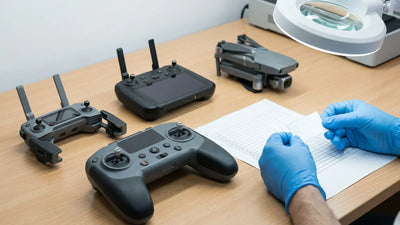
DJI Drone Motor Test  Diagnosis Guide How to Catch - professional repair and inspection process

Operating environment has a massive impact on motor longevity. If you fly in dusty, sandy, or humid conditions:

  • Increase your inspection frequency by 50%.
  • Store your drone in a sealed case with desiccant packs to prevent moisture-related bearing corrosion.
  • Avoid landing on loose sand or dirt — use a landing pad to minimise debris ingestion.
  • In coastal environments, wipe down motor exteriors with a lightly dampened cloth after each session to remove salt residue.

Taking care of your motors is an investment in flight safety and image quality. If you need professional inspection or replacement parts, contact our team — we stock OEM DJI motors and ESC boards with fast shipping from Shenzhen, China.

Frequently Asked Questions

Can I fly my DJI drone if one motor makes a slight buzzing noise?

A very faint buzz at specific RPM ranges can sometimes be normal due to electromagnetic resonance, especially on newer motors during the break-in period. However, if the buzzing is new, increasing over time, or accompanied by vibration in your footage, you should ground the aircraft and perform a full motor spin test before your next flight. If inspection reveals a fault, Reboot Hub can diagnose and repair the issue in 2–4 business days starting at $60–80 per motor arm. It is always better to diagnose on the ground than to discover a problem at 100 meters altitude.

How much does a DJI motor replacement cost at Reboot Hub?

Motor replacement costs vary by DJI model and the extent of damage. For consumer drones like the Mavic series, a chip-level motor arm replacement at Reboot Hub typically costs $60–80 per motor including labour, compared to $130–180 at US or Western authorized service centres. ESC module repairs run $70–90 at Reboot Hub versus $200–320 elsewhere. We provide a free diagnostic assessment and transparent quote before any work begins. For the full price list across all DJI models, visit the Reboot Hub DJI Repair Cost Database 2026.

Is it safe to replace a DJI motor at home?

If you have experience with electronics repair and the correct tools (precision screwdriver set, soldering iron, and anti-static workspace), replacing a DJI motor is achievable for technically inclined owners. However, improper soldering on ESC connections or over-tightening mounting screws can cause additional damage. If you are not confident, professional replacement is the safer option — Reboot Hub completes most motor replacements in 2–4 business days with a 90-day warranty on all parts and labour.

Why does the DJI Fly app show an ESC error only sometimes and not every flight?

Intermittent ESC errors are often caused by marginal motor conditions that only trigger the error under specific circumstances — such as a particular RPM range, temperature, or flight manoeuvre. A motor with early-stage bearing wear might not trigger an error during gentle flight but will spike current draw during aggressive acceleration, tripping the ESC's overcurrent detection. Intermittent errors typically worsen over time, so treat them as early warnings rather than glitches. A diagnostic assessment at Reboot Hub costs $50 and takes 1–2 business days — this fee is credited toward any repair.

Can firmware updates cause false ESC errors?

Yes, firmware updates can occasionally cause calibration mismatches between the flight controller and the ESCs, leading to false error codes. If you receive an ESC error immediately after a firmware update, try the following: restart the aircraft, recalibrate the IMU and compass, and re-flash the firmware using DJI Assistant 2. If the error persists after these steps, the issue is likely genuine and not firmware-related. We recommend sending the drone for professional diagnosis — Reboot Hub can confirm whether the ESC board needs chip-level repair ($70–90) or if a simpler recalibration resolves it.

How long does DJI motor repair or replacement take at Reboot Hub?

Most DJI motor and ESC repairs at Reboot Hub are completed within 2–4 business days from the time we receive your drone. Simple motor arm replacements are often finished in 1–2 business days, while more complex chip-level ESC repairs may take 3–4 business days. We offer expedited service for time-sensitive projects. All repairs include a 90-day warranty. To get started, schedule a diagnostic assessment and we will provide a detailed timeline with your quote.

What is the difference between chip-level motor repair and full board replacement?

Chip-level repair means our technicians surgically replace only the failed individual component — such as a single MOSFET on the ESC board or a damaged bearing in the motor — rather than discarding the entire assembly. For example, a chip-level ESC repair at Reboot Hub costs $70–90, while a full ESC board replacement can cost $300 or more. This approach saves you significant cost, reduces electronic waste, and typically matches or exceeds original factory performance. US or Western authorized service centres generally replace entire boards at $200–580 because they lack the component-level diagnostic equipment and MOHRSS Level 3 certified technicians required for chip-level work.

Reboot Hub · Support

Need Professional Help?

If your drone needs repair after troubleshooting, Reboot Hub offers certified chip-level repair in Shenzhen, China — genuine OEM parts, 90-day warranty.

Prev post
Next post

Leave a comment

Please note, comments need to be approved before they are published.

Thanks for subscribing!

This email has been registered!

Shop the look

Choose options

Edit option
Back In Stock Notification
this is just a warning
Login
Shopping cart
0 items
0%