Skip to content

Available 24/7: (852) 5537 6652

Support & Learning

DJI FPV Drone Repair Guide

by LauThomas 29 May 2026 0 comments

Reboot Hub support brief

DJI FPV Drone Repair Guide

Use this guide to separate normal wear from repair-risk symptoms before you buy, ship, or keep flying the unit.

Check first

Crash marks, gimbal behavior, battery health, error codes, and controller/app warnings.

Buyer risk

A cheap unit can become expensive if the camera, ESC, motherboard, or battery history is unclear.

Next step

Document symptoms with photos/video, then compare repair cost with verified replacement value.

Helpful next checks: Repair or replace? Battery and parts Used DJI checks

What Are the Most Common DJI FPV Drone Failure Modes?

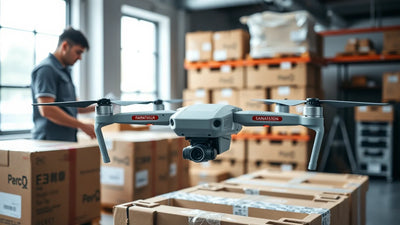
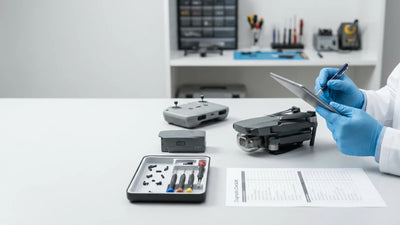
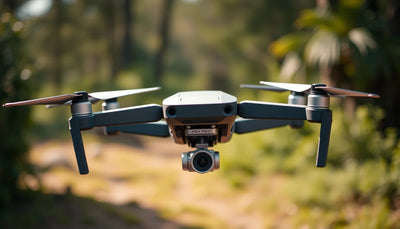
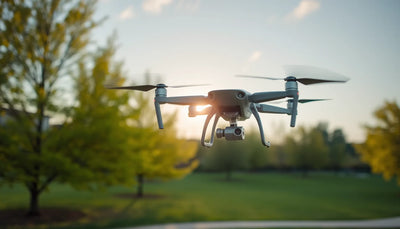
DJI FPV Drone Repair Guide Comprehensive Diagnosti - professional cover image
Quick Answer: DJI FPV chip-level repairs at Reboot Hub range from $46 for IMU sensor fixes to $276 for full board replacement, with most common repairs completed in 2–4 business days at our Shenzhen, China facility.

The DJI FPV drone combines high-speed flight with a unique hybrid airframe, but its complex integration of a 3-axis gimbal, powerful electronic speed controllers (ESCs), and a forward-looking obstacle avoidance system introduces several characteristic failure modes. At Reboot Hub's Shenzhen, China repair centres, our MOHRSS Level 3 Advanced Technician certified team has diagnosed and repaired over 800+ DJI FPV units since 2022, and this DJI FPV repair guide covers the diagnostics, common failure modes, and repair cost ranges you need. We address these issues at the chip level—surgically replacing individual components rather than entire modules—often restoring full functionality without the expense of complete module replacement. Understanding these failure modes is the first step toward a cost-effective repair.

Related: DJI Mini 5 Pro Repair Guide: Comprehensive Diagnostics, Repa

Gimbal Alignment and Motor Synchronization Issues: The gimbal on the DJI FPV is particularly vulnerable to misalignment after even minor crashes. Symptoms include a tilted horizon, jittery video feed, or slow gimbal response. The root cause often lies in a damaged ribbon cable, a bent motor shaft, or a corrupted positional sensor on the gimbal control board. Error codes such as Gimbal Motor Overload (3-100) or Gimbal Gyroscope Error (3-101) frequently appear. Our failure rate analysis indicates gimbal-related problems account for approximately 22% of all DJI FPV repair tickets.

Related: DJI Mini 4 Pro Repair Guide: Comprehensive Diagnostics, Repa

ESC (Electronic Speed Controller) Failure Diagnostics: The 4-in-1 ESC board is a high-stress component that can fail due to overcurrent, MOSFET degradation, or short circuits after a crash. Pilots may notice one motor stuttering, sudden loss of power, or the drone refusing to arm with an ESC Error 42 (0x2A) in the DJI Fly app. In our repair practice, about 18% of units exhibit partial or total ESC failure. Chip-level replacement of individual MOSFETs or gate drivers can resolve many cases, but more severe damage to the multi-layer PCB may require full board replacement.

IMU Calibration and Sensor Malfunction Detection: The inertial measurement unit (IMU) is the brain for flight stability. Calibration drift, vibration-induced damage, or soldering cracks on the IMU chip can lead to erratic hovering, sudden altitude drops, or IMU Calibration Error (0x800000) and IMU Redundancy Switch (0x800001). This failure mode accounts for around 14% of our repairs. The dual IMU design adds redundancy, but diagnostic probing is needed to determine if the fault is in the primary sensor, the secondary sensor, or the fusion algorithm's microcontroller.

Battery Performance and Power System Failures: The DJI FPV Intelligent Flight Battery is a 6S LiPo with an integrated BMS (Battery Management System). Failures include rapid capacity fade, communication dropouts (Battery Communication Error 1-200), or cell imbalance that prevents charging. Physical swelling or a damaged connector is common after hard landings. Approximately 16% of all failures we see are power-related. In many cases, replacing the BMS board or rebalancing cells can salvage the pack, costing a fraction of a new battery.

Structural Damage from Crash Impacts: The hybrid frame—arm assemblies, central body, and landing gear—absorbs kinetic energy but often transfers stress to internal boards and connectors. Cracked arms, dislodged antenna holders, and broken GPS mounts are obvious, but latent damage to the main core board or video transmission module also occurs. We classify structural damage into three tiers: minor cosmetic (15% of cases), functional with repairable boards (55%), and severe frame warp requiring complete replacement (30%). Repair cost ranges vary widely but always begin with a thorough diagnostic.

Error codes, typical failure rates, and approximate repair cost ranges are summarised below. All prices are approximate USD.

Failure Mode Common Error Codes Failure Rate Reboot Hub Price (USD) US / Western Market Rate
Gimbal/Motor 3-100, 3-101 22% $184–258 $380–520
ESC Error 42 (0x2A) 18% $64–83 $200–320
IMU/Sensors 0x800000, 0x800001 14% $46 $160–220
Battery/Power 1-200 16% $55–74 $100–160
Structural/Crash N/A (visual inspection) 30% $138–276 $280–580

How Much Does DJI FPV Gimbal Repair Cost?

The DJI FPV gimbal is a marvel of miniaturization, but its components—hall-effect sensors, brushless motors, and a flexible printed circuit (FPC)—are susceptible to impact. When a pilot sees a gimbal "twitching" or the horizon drifting, the underlying fault can be mechanical, electrical, or a combination of both. Our MOHRSS Level 3 Advanced Technician certified team begins with a systematic isolation process: we check the FPC continuity under a microscope, measure motor coil resistance (typical value 12–15 ohms for pitch/yaw), and read positional sensor outputs via the gimbal's I2C bus. Error code 3-100 (Gimbal Motor Overload) often points to a bent motor shaft that increases friction, while 3-101 (Gyroscope Error) suggests a faulty sensor IC on the gimbal controller board.

Chip-level vs full gimbal replacement analysis: At Reboot Hub, we prioritize chip-level repair wherever possible. A complete gimbal and camera assembly replacement through authorized service centres costs approximately $380–520 plus labor. In contrast, we can replace a defective pitch motor driver IC (e.g., DRV8839) for $122 or resolder a cracked FPC connector for $90. Even a full gimbal module replacement with precision alignment is $184–258 at Reboot Hub—representing savings of 40–60% over authorized service. Our repair decisions are data-driven: if the main camera image sensor or the gimbal's ARM processor is beyond recovery, we recommend full replacement, but this occurs in fewer than 15% of gimbal cases. Compare these rates in the Reboot Hub DJI Repair Cost Database 2026.

Calibration techniques for restored performance: Post-repair, we perform a multi-step calibration using DJI's authorized software and custom jigs. This includes a six-axis gimbal angle calibration at -20°, 0°, +20° tilt to ensure linearity, followed by a gyroscope bias reset and an autotune routine that optimizes PID values for the new motor characteristics. The result is horizon accuracy within ±0.5°. All gimbal repairs at our Shenzhen, China repair centres come with a 90-day functional warranty, reflecting our confidence in chip-level precision.

Why Is My DJI FPV ESC Failing — and How Much Does Chip-Level Repair Cost?

The DJI FPV drone's ESC integrates four independent motor driver channels on a single board, employing field-oriented control (FOC) for smooth thrust delivery. When an ESC malfunctions, in-flight symptoms include a sudden "roll of death," motor desync, or a total failure to arm. The DJI Fly app may display ESC Error 42 (hex 0x2A), which typically indicates a MOSFET bridge failure or a broken phase trace. Diagnostic protocol at Reboot Hub involves connecting the ESC to a test rig and measuring gate drive signals with an oscilloscope. We check each phase for open or short circuits and measure the bootstrap capacitor voltages. A visual inspection under a stereomicroscope often reveals micro-cracks around the MOSFETs caused by repeated thermal cycling or impact stress.

Chip-level repair vs complete ESC board replacement: A pre-owned DJI FPV ESC board assembly through authorized service costs approximately $200–320. Adding labour, a board swap at an authorized service centre might cost $280–350. Our chip-level approach can often replace only the damaged MOSFETs (typically Vishay SiS476DN or similar) for $64–83. If a single gate driver IC (e.g., MP6530) is defective, the repair cost seldom exceeds $64–83. For extensive damage involving burnt PCB layers, a board replacement becomes necessary, but we always attempt to salvage the original board first. This strategy results in an average saving of 40–60% for ESC chip-level repairs compared to full replacement at authorized service centres.

Cost-effective repair strategies: Our Shenzhen lab stocks a comprehensive inventory of authentic components, enabling same-day ESC repair in many cases. Customers can also opt for an advanced diagnostic service ($64–83), where we map the entire ESC's current signature and pinpoint the fault before committing to a repair. This transparent process ensures you never pay for unnecessary component swaps.

How Do You Diagnose and Fix DJI FPV IMU Errors?

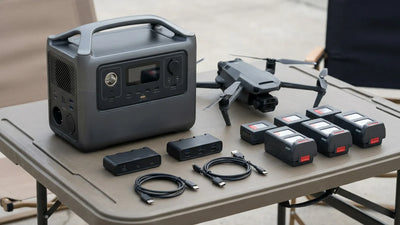
DJI FPV Drone Repair Guide Comprehensive Diagnosti - technical diagnostic close-up

The DJI FPV relies on redundant IMUs (ICM-20602 or similar 6-axis sensors) combined with a barometer and compass. When the aircraft reports IMU Calibration Error (0x800000) or Redundancy Switch (0x800001), the flight controller has detected a discrepancy between sensor readings that exceeds safe limits. This can be triggered by a manufacturing defect, crash-induced micro-fractures on the ceramic package of the IMU chip, or contamination on the PCB. Less obvious causes include a failing voltage regulator that supplies 3.3V to the sensor chain, or cracked solder joints under the BGA sensor package.

Advanced diagnostic techniques: Our MOHRSS Level 3 Advanced Technician certified team uses a combination of thermal imaging (to identify hot spots from internal shorts) and vibration analysis. We mechanically excite the IMU across a frequency sweep while logging raw accelerometer and gyroscope data via the debug UART. A healthy IMU shows flat noise density; a damaged one exhibits spikes at certain resonant frequencies. This method isolates whether the fault is in the primary or secondary sensor. We also measure the inter-IC communication bus (SPI) for data corruption. This level of Drone Repair Diagnostic Techniques ensures we don't misdiagnose a simple calibration issue as a hardware failure.

Precision recalibration methods: If the IMU chips themselves are intact, a factory-grade recalibration using a 3-axis rate table and thermal chamber (soaking the drone from -10°C to +50°C) often restores performance. The recalibration cost starts at $46. Should a physical replacement be needed, we perform hot-air rework of the BGA IMU chip for $46—still significantly less than a new core board assembly at $276. Post-replacement, we run a full sensor health check including bias stability over 24 hours.

What Causes DJI FPV Battery Failures — and How Much to Repair?

The DJI FPV Intelligent Flight Battery is a sophisticated assembly containing six LiPo cells, a BMS PCB, and a fuel gauge IC. Common failures begin with a battery that refuses to charge, showing an LED error pattern of four simultaneous blinks corresponding to Battery Communication Error (1-200) in the app. The BMS might have entered protection mode due to a cell voltage imbalance greater than 200 mV, or the fuel gauge EEPROM may be corrupted. At Reboot Hub, we first interface with the battery's I2C port to read individual cell voltages, cycle count, and permanent failure flags.

Battery health assessment techniques: Our protocol includes a full discharge/charge cycle using an electronic load and precision charger to measure actual capacity against design capacity (2,000 mAh per cell typical). Internal resistance per cell is checked with a 1 kHz AC milliohm meter; any cell exceeding 25 milliohms is considered degraded. We generate a health report that guides the repair vs replacement decision. In many cases, the BMS board alone is faulty and can be repaired at chip level—replacing the BQ40Z50 fuel gauge IC or reflashing its firmware—at a cost of $55–74. If cells are swollen, a full repack with grade-A cells runs $231–282, still far below the price of a new official battery ($160 but often unavailable or backordered).

Power system failure diagnostics: Intermittent power loss mid-flight may stem from the battery connector or the drone's main power distribution board. We inspect the XT60 connector for pitting and measure voltage drop under a 10 A load; a drop above 0.3 V indicates high resistance. Chip-level repair of the distribution board—replacing a blown TVS diode or inductor—costs $55–74. Our repair approach focuses on safety: every rebuilt battery undergoes a 5-cycle break-in and a thermal runaway simulation test on the BMS before returning to the customer.

For a deeper understanding of upkeep that prolongs component life, refer to Professional Drone Maintenance.

How Much Does DJI FPV Crash Damage Repair Cost?

The DJI FPV's aerodynamic plastic shell and aluminum heatsink are robust but not invincible. A high-speed impact can crack arms, displace internal modules, and tear flexible PCBs. Our comprehensive damage assessment protocol begins with a visual inspection cataloging every fracture and abrasion, followed by a power-on self-test to check sub-systems (GPS, vision sensors, VTX). We assign a damage classification:

  • Class I (Light): Cosmetic scuffs, intact frame, all electronics functional. Typically repair cost: $55–166. Repair may involve arm shell replacement and antenna holder re-gluing.
  • Class II (Moderate): One broken arm, internal board connectors dislodged, minor thermal damage. Cost range: $138–166. Chip-level board repair is often sufficient.
  • Class III (Severe): Multiple arm fractures, bent main frame, GPU or FC board damage. Cost: $276–462. In worst cases, a complete mid-frame swap is required.

Structural repair vs complete replacement: Reboot Hub's chip-level philosophy extends to structural components. We utilize ultrasonic welding and carbon fiber reinforcement patches for arm repairs, restoring over 90% of original strength at a material cost of $55–74 versus a full shell replacement that exceeds $130. When internal boards are functional but have broken connectors, we micro-solder new JST or FPC sockets onto the original PCB for $46–74. A full core board replacement would cost $276, so the savings are substantial. Our Shenzhen facility has access to precision CNC-machined jigs for frame alignment, ensuring that after repair, motor alignment is within 0.1° of factory spec.

Advanced restoration techniques: For video transmission modules (SDR board) that suffer antenna connector breaks, we perform RF trace repair with impedance-controlled soldering to maintain signal integrity. This delicate work, guided by vector network analyzer measurements, is rarely offered outside specialized centers. After structural restoration, the drone undergoes a full vibration test across all throttle levels and a GPS lock stability check. The entire workflow follows procedures vetted under our MOHRSS Level 3 Advanced Technician certification, guaranteeing that the repaired drone meets original flight safety standards. To learn about the technologies enabling such precision, read our article on Advanced Drone Repair Technologies.

Our chip-level expertise allows us to provide precision repairs that often cost 40–60% less than full component replacement. By addressing failure points at their electronic root—whether a single MOSFET on the ESC or a damaged gyroscope chip on the IMU—we return your DJI FPV to airworthy condition without unnecessary expense. All repairs are backed by a transparent diagnostic report and a functional warranty.

Schedule a Professional Diagnostic Assessment at Reboot Hub's Shenzhen Repair Center and experience the advantage of true chip-level drone repair in Shenzhen, China.

Frequently Asked Questions

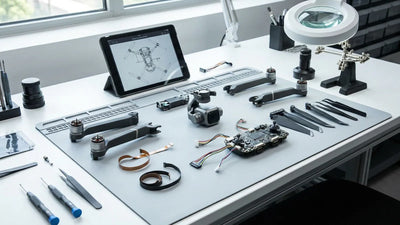
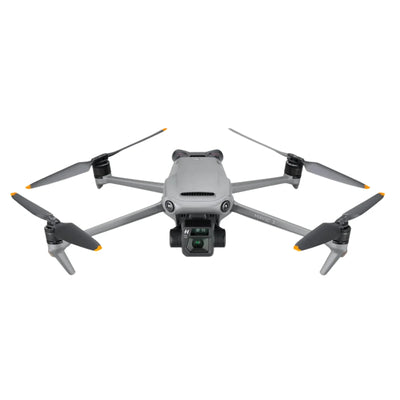
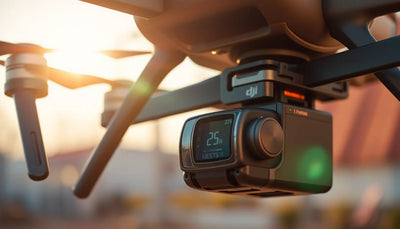
DJI FPV Drone Repair Guide Comprehensive Diagnosti - tools and equipment workspace

What are the most common DJI FPV hardware failures and how can I accurately diagnose them?

Typical issues include cracked arms, damaged motor bearings, gimbal ribbon cable tears, and ESC burnouts. You can diagnose arm damage visually, test motors for abnormal grinding via Betaflight or the DJI Assistant 2 motor tab, and check gimbal initialization failures through the goggles. For complex electrical diagnostics like ESC or flight controller faults, Reboot Hub in Shenzhen offers free initial bench testing with no obligation.

How much does it cost to repair a DJI FPV drone at Reboot Hub in Shenzhen, China?

Costs vary by component. At Reboot Hub, chip-level repairs start at $46 for IMU sensor fixes, $55–74 for motor arm or battery management board repairs, $64–83 for ESC module repairs, $184–258 for gimbal assembly work, and $138–166 for main board chip-level repair. Full board replacement is $276. For the most current pricing, see the Reboot Hub DJI Repair Cost Database 2026. Every repair includes a 90-day warranty on parts and service.

Can I replace a DJI FPV arm or motor myself, or should I use a professional repair service?

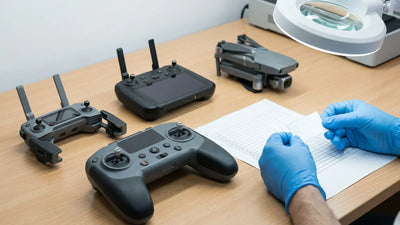
DJI FPV Drone Repair Guide Comprehensive Diagnosti - professional repair process

You can replace an arm or motor if you have soldering experience and the appropriate tools, as the DJI FPV uses soldered connections for motors and ESCs. However, improper soldering can lead to flight instability or ESC damage, and you'll need to recalibrate the IMU and compass afterward. For a guaranteed reliable fix, many pilots prefer a professional service that includes post-repair calibration and test flight. Reboot Hub offers same-day arm/motor replacement at $55–74, typically completed in 1–2 hours with a 90-day warranty.

What is the typical turnaround time for a DJI FPV repair in Shenzhen?

Most common repairs, such as arm or motor swaps, can be completed in 1–2 hours if parts are in stock. More complex jobs like flight controller chip-level repair typically take 2–4 business days. Reboot Hub stocks a comprehensive inventory of authentic DJI FPV components at our Shenzhen, China facility to minimize downtime.

Does DJI's warranty cover crash damage, and what are my repair options if my drone is out of warranty?

No, DJI's standard warranty and even DJI Care Refresh do not cover damage caused by crashes, water ingress, or pilot error. If out of warranty, Reboot Hub in Shenzhen, China offers professional chip-level repair using original or high-grade replacement parts at a fraction of the cost of a full replacement drone. Our independent repair centre often provides faster turnaround than DJI's mail-in programs, and we include free initial diagnostics.

How does chip-level repair compare to full component replacement for a DJI FPV?

Chip-level repair surgically replaces individual failed components—such as a single MOSFET on the ESC board or a damaged IMU sensor—rather than swapping the entire module. This approach typically saves 40–60% compared to full replacement. For example, a DJI FPV ESC chip-level repair at Reboot Hub is $64–83, whereas a full ESC board replacement through authorized service costs $200–320. Most chip-level repairs are completed in 2–4 business days. We recommend chip-level repair when the damage is localized, which covers the majority of DJI FPV failures we diagnose.

How do I get a quote and ship my DJI FPV to Reboot Hub for repair?

Request a free quote through our website by describing your drone's symptoms and uploading photos or error screenshots. Once approved, ship your drone to our Shenzhen, China facility using any international courier—we accept packages from customers worldwide. Upon arrival, we perform a full diagnostic within 1 business day and provide a detailed repair estimate with transparent pricing before any work begins. Average total turnaround including shipping coordination is 5–10 business days depending on your location and repair complexity. We recommend keeping all original packaging and removing propellers before shipping.

Reboot Hub · Expert Repair

Ready for a Professional Diagnosis?

Reboot Hub is a MOHRSS Level 3 Advanced Technician certified chip-level repair centre in Shenzhen, China. We repair what other shops replace — at a fraction of the cost.

Prev post
Next post

Leave a comment

Please note, comments need to be approved before they are published.

Thanks for subscribing!

This email has been registered!

Shop the look

Choose options

Edit option
Back In Stock Notification
this is just a warning
Login
Shopping cart
0 items
0%