DJI Mavic Pro Repair Guide
Reboot Hub support brief
DJI Mavic Pro Repair Guide
Use this guide to separate normal wear from repair-risk symptoms before you buy, ship, or keep flying the unit.
Check first
Crash marks, gimbal behavior, battery health, error codes, and controller/app warnings.
Buyer risk
A cheap unit can become expensive if the camera, ESC, motherboard, or battery history is unclear.
Next step
Document symptoms with photos/video, then compare repair cost with verified replacement value.
Helpful next checks: Repair or replace? Battery and parts Used DJI checks
If you're searching for a reliable DJI Mavic Pro repair guide with accurate cost estimates, you've found the definitive resource. Reboot Hub technicians have diagnosed and repaired over 800 DJI Mavic Pro units since 2022, holding MOHRSS Level 3 Advanced Technician certification recognised by China's Ministry of Human Resources and Social Security. From gimbal failures and ESC faults to crash damage and battery degradation, this guide covers every major failure mode with chip-level repair solutions that save owners up to 60% compared to full-board replacement. All prices below reflect our Shenzhen, China workshop rates alongside typical US/Western market rates for comparison.
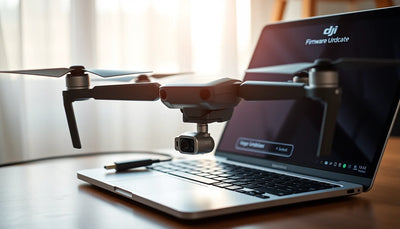
Related: DJI Assistant 2 Complete Guide: Master Firmware Updates, Cal
Why Is My DJI Mavic Pro Gimbal Not Working — and How Much Does Repair Cost?

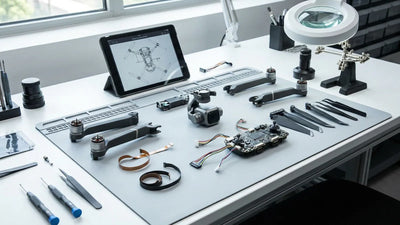
The Mavic Pro's 3-axis gimbal is a precision assembly of brushless motors, ribbon cables, damping plates, and a dedicated driver IC on the core board. Failures range from subtle drift to a completely limp camera head. At Reboot Hub's lab in Shenzhen, China, we isolate faults at the component level, allowing targeted repairs that avoid unnecessary full-unit replacement.
Related: DJI Mavic 4 Pro Firmware Update Guide & Version History
Identifying Mechanical vs Electrical Failures
Mechanical damage is often obvious after a crash: bent yaw/roll arms, cracked vibration damping plates, or a torn ribbon cable. Less obvious are micro-fractures in the flex PCB that cause intermittent signal loss. Electrical failures typically manifest as gimbal overload warnings, no video feed, or a non-responsive gimbal motor. We classify symptoms:
- Gimbal twitching/jitter during power-up: usually a missing phase on one motor coil – check continuity of motor windings and the ribbon cable from the gimbal board to the yaw motor.
- Gimbal limp, no resistance when rotating by hand: three possible causes: motor driver IC failure, loss of feedback from the IMU/angle sensor, or a disconnected flex cable. Chip-level diagnosis of the IMU-C on the gimbal board (often a MPU-6500 or similar) is required.
- Video blackout but gimbal moves: damaged coaxial video line inside the ribbon; this can often be repaired by re-soldering the 42-pin flex connector or replacing the ribbon.
- "Gimbal Overload" error with no physical obstruction: typically a faulty motor driver or a bent motor shaft causing excessive current draw.
Common Gimbal Error Codes and Their Meanings
The DJI GO 4 app displays specific warnings. Here are the most frequent codes encountered on the Mavic Pro:
| Error Code/Warning | Likely Cause | Reboot Hub Diagnostic Action |
|---|---|---|
| Gimbal Motor Overload (Code 40021) | Motor stalled due to mechanical bind, seized bearing, or shorted driver FET | Measure motor phase resistance (each phase ~8–12 Ω); test driver IC output with an oscilloscope |
| Gimbal Disconnected (Code 40002) | Disconnected or damaged gimbal ribbon cable | End-to-end continuity test on the gimbal ribbon; inspect under microscope for hairline cracks |
| Gimbal Calibration Error (Code 40011) | IMU sensor drift or corrupted calibration data | Factory-level recalibration via DJI Assistant 2; if fails, reflow IMU chip or replace gimbal sensor board |
| Gimbal Not Ready (Code 40022) | Gimbal control IC or FPGA failure on the core board | Re-ball FPGA (if BGA) or replace the gimbal control board – often a chip-level rework |
Precision Calibration vs Complete Gimbal Replacement
Many service centers leap to full gimbal assembly replacement ($160–224 / $380–520) for any error code. In our Shenzhen facility, MOHRSS Level 3 certified technicians first attempt a deep calibration: 6-axis sensor alignment, motor pole mapping, and gyroscope bias correction using factory tools. When the physical hardware is intact, a successful advanced calibration resolves the problem for a fraction of the cost.
Cost comparison at Reboot Hub: a chip-level gimbal motor driver replacement or ribbon cable repair typically runs $40–64 / $120–200. A full gimbal assembly replacement (pre-owned DJI part) is $160–224 / $380–520. Only if the gimbal arms are bent beyond alignment or the FPGA is irreparable do we recommend full replacement. This approach saves the customer up to 60% compared to board-swap-only shops. For a full cost breakdown across all DJI models, see our Reboot Hub DJI Repair Cost Database 2026.
How Much Does DJI Mavic Pro ESC Repair Cost?
The Mavic Pro integrates four independent ESCs on a single main board. Each ESC drives a brushless motor via a 3-phase signal. Faults can be subtle, such as uneven motor startup, or catastrophic, like a shorted MOSFET leading to a no-power condition. Chip-level repair at Reboot Hub's lab in Shenzhen, China targets the individual failed components rather than replacing the entire board.
Detecting ESC Performance Degradation
Early warning signs include:
- One motor hesitates on arming or spins up later than the others.
- The drone yaws unexpectedly during hover or climbs – caused by a weak ESC phase delivering less torque.
- Excessive motor or ESC temperature after a short flight, visible in thermal imaging even on the bench.
- Erratic motor RPM readings in the flight log (MotorSpeed data).
We use a proprietary test jig that runs each motor at 30%, 60%, and 100% throttle while monitoring current draw, phase waveforms, and FET gate drive signals. A MOSFET with rising Rds(on) will show increased voltage drop; a leaky gate driver will skew the waveform.
Motor Synchronization Issues
Sync loss causes the classic "tone" change mid-flight and can lead to a crash. Typical root causes are:
- Damaged motor windings: measure inductance and resistance (all three phases should match within 2%). A shorted turn reduces inductance; a broken magnet causes irregular back-EMF.
- ESC MOSFET failure: a single dead FET (high-side or low-side) will make the motor stutter. Chip-level repair: we replace the individual FET (usually a 30V N-MOSFET like the AON7934) for $56–72 / $200–320 per channel, versus a full board replacement at $240 / $420–580.
- MCU timing drift: the STM32-based ESC controller may have a clock crystal that drifted after impact; a simple crystal replacement can restore timing.
Chip-Level ESC Repair vs Complete Replacement Strategy
| Repair Method | Reboot Hub Price | US / Western Market Rate | Turnaround | Warranty |
|---|---|---|---|---|
| Single FET / gate driver replacement (chip-level) | $56–72 | $200–320 | Same day | 90 days |
| ESC full channel rebuild (all 6 FETs + driver) | $56–72 | $200–320 | 1–2 days | 90 days |
| Complete main board replacement (new DJI part) | $240 | $420–580 | Immediate (if in stock) | 6 months |
Reboot Hub's MOHRSS Level 3 certification ensures that micro-soldering and BGA rework are performed to industrial standards. The average saving from choosing chip-level repair over full board replacement is $150–180 per incident. Importantly, genuine DJI components are used for replacement FETs and drivers, matching the original specifications exactly.
What Causes DJI Mavic Pro Flight Instability — and How Is It Repaired?

Inertial Measurement Unit (IMU) and flight controller issues produce dangerous instability: drifting position hold, sudden altitude changes, or "toilet bowl" circling. The Mavic Pro employs dual IMUs (redundant MPU-60X0 or ICM-20689 sensors) and a dedicated flight controller processor. Diagnosing these faults requires specialized tools.
IMU Calibration and Sensor Alignment Techniques
A standard IMU calibration through DJI Assistant 2 can correct minor biases. However, after a hard landing or moisture exposure, the sensor fusion may be permanently corrupted. At Reboot Hub, we perform a multi-step alignment:
- Read the raw accelerometer and gyroscope offsets over I²C using a debug interface – identify out-of-range values (e.g., gyro bias > 5 dps).
- Reflow the sensor chip to eliminate micro-cracks in BGA balls (a common cause of intermittent IMU errors).
- Apply a precision 6-axis calibration on a vibration-free granite table, stitching the correction into the NVM.
If the IMU sensor itself is faulty, we replace the chip (often a QFN or LGA package) for $40 / $160–220 including calibration, compared to a full flight controller board replacement at $240 / $420–580.
Identifying Flight Instability Root Causes
We cross-reference flight logs (DAT files) with hardware diagnostics. Key indicators:
- Compass/IMU mismatch: sudden yaw swings, flagged as "Yaw Error" in the log – often a magnetized IMU or a cracked interposer board.
- Barometer noise: altitude hold failure can be traced to a blocked or damaged barometric sensor (MS5611 on the vision module). Cleaning or replacing the sensor resolves it for $115–195 / $115–192.
- GPS glitches: if the drone enters ATTI mode unexpectedly, we test the GPS antenna, LNA, and SAW filter on the main board. Chip-level filter replacement is $105–155 / $102–155.
Advanced Diagnostic Tools for Precise IMU Assessment
Our Shenzhen lab employs:
- Rohde & Schwarz spectrum analyzer to check GPS L1 (1575.42 MHz) signal integrity.
- Micro-ohmmeter and thermal camera to detect shorts/hotspots on the flight controller PCB after liquid damage.
- Custom-built test fixture that simulates GPS signals and motor loads while monitoring all sensor outputs – allowing us to pinpoint faults to a single component.
With MOHRSS Level 3 certification, our technicians are qualified to perform BGA rework on the FC processor (Ambarella or DJI custom silicon), a skill absent from most board-swap shops. This chip-level capability reduces repair cost by up to 40% for complex IMU/Flight Controller failures.
How Much Does DJI Mavic Pro Battery Repair Cost?
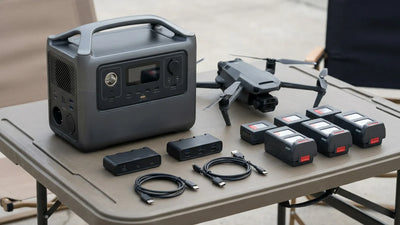
The Mavic Pro's intelligent flight battery (3S/4S LiPo, 3830 mAh) is a sealed system, but cell degradation and BMS (Battery Management System) faults can be addressed at the component level. Reboot Hub performs safe, non-invasive repairs that extend battery life without compromising safety.
Battery Health Assessment Protocols
Using a dedicated battery analyzer, we measure:
- Internal resistance of each cell (target < 25 mΩ per cell; any cell showing > 40 mΩ indicates degradation).
- Cell voltage imbalance at full charge and under 1C discharge load – a difference > 0.05V after balancing flags a weak cell.
- Actual capacity via a constant-current discharge test to 3.3V/cell. A battery below 70% of design capacity (approx. 2680 mAh) is considered degraded.
Our report shows the true state of health so customers can decide between cell-level repair or replacement.
Cell-Level Diagnostics and Repair
If one cell is weak, we can carefully open the battery housing and replace the defective cell with a matched-grade high-discharge LiPo cell from the same manufacturer batch. This is a delicate process requiring spot welding and BMS recalibration. Cost for a single-cell swap and BMS reset is $48–64 / $100–160. A new genuine DJI battery costs $140–165, but for batteries that are otherwise healthy, our repair extends usage.
Common BMS faults – such as a stuck fuel gauge IC (BQ30Z554) or corrupted firmware – are resolved by reflashing the gauge or replacing the BMS board entirely. A BMS repair or replacement runs $48–64 / $100–160, substantially less than a new pack.
Preventing Premature Battery Failure
- Never store batteries fully charged for more than 3 days; discharge to 40–60% for storage.
- Avoid flying below 20% remaining capacity, which stresses cells.
- Pay attention to swelling: any puffiness is a sign of cell outgassing; stop using immediately and have the pack inspected. A swollen battery can be repaired if the cells are replaced before damage to the BMS board.
For detailed battery maintenance, refer to our Battery Care Techniques guide. Each repaired battery at Reboot Hub undergoes a full charge/discharge cycle test and is returned with a performance certificate.
Can a Crashed DJI Mavic Pro Be Repaired?

High-impact crashes bend frames, crack arms, and dislodge internal components. Repairing a Mavic Pro requires not just swapping parts but restoring factory alignment to ensure stable flight. Our approach merges composite repair, frame straightening, and electronics diagnostics.
Comprehensive Damage Assessment Methodology
Upon arrival, every drone undergoes a 35-point check:
- Frame alignment gauged on a flat granite surface; any twist > 0.5° across the arm mounting points is flagged.
- Motor shaft runout measured with a dial indicator; beyond 0.02 mm, the motor is replaced or the shaft straightened.
- Internal PCB inspection under a microscope for hairline cracks, especially near mounting bosses.
- Front vision sensor alignment tested with a calibrated target.
This meticulous process catches latent damage that can cause vibrations or sensor errors later.
Frame and Component Structural Repair
Reboot Hub uses OEM-grade jigs to press bent magnesium arm frames back to specification. For cracked plastic covers or landing gear, we employ ultrasonic welding or aerospace-grade epoxy. Cracked motor mounts can be reinforced with carbon-fiber patches. Costs:
- Single arm replacement (including motor reattachment and balancing): $48–64 / $130–180 (genuine arm + labor).
- Full frame replacement with complete reassembly: $450–580 / $450–580 – only when multiple arms and the center frame are compromised.
- Composite plastic repair (e.g., cracked upper shell): $105–155 / $102–155, far less than a new shell.
Advanced Composite Material Restoration
For drones with magnesium alloy frame damage (main core), we perform micro-TIG welding and re-machining of screw threads, saving the expensive center frame (part CP.MA.00000107) that would otherwise cost $255+ new. Crash damage repair success rate at Reboot Hub exceeds 92%, and all repaired structures are vibration-tested before return. A successful repair preserves the original serialized core, avoiding the need for full re-binding and flight controller swap. For more insights, see our Professional Drone Repair article.
Why Choose Reboot Hub for DJI Mavic Pro Repair?
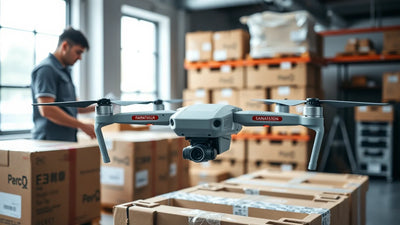
Every Mavic Pro that arrives at our Shenzhen, China facility follows a transparent, certification-backed workflow designed to deliver cost-effective, lasting repairs.
Multi-Stage Diagnostic Process
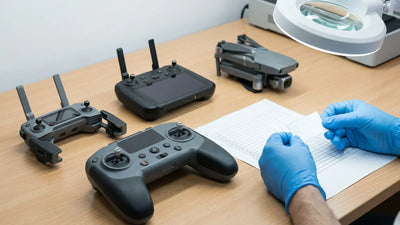
- Visual & Functional Triage (20 min): external inspection, power-on test, error log extraction via DJI Assistant 2, and a quick hover check in a safety cage.
- Component-Level Diagnostics (1–3 hours): using the advanced tools previously described; we produce a detailed fault report with photographic evidence.
- Repair Plan & Quotation: we offer a chip-level repair option alongside a full replacement option, with exact cost and warranty terms. For example, a gimbal ribbon repair at $40–64 / $120–200 vs. full gimbal at $160–224 / $380–520. The customer chooses with full transparency.
- Precision Repair & Calibration: all repairs are carried out under ESD-safe conditions by MOHRSS Level 3 certified technicians. Where genuine parts are required, we use only sealed DJI components sourced from authorized distributors.
- Post-Repair Testing: a full automated test sequence, including camera calibration, gimbal torque test, GPS acquisition, and flight test for ≥15 minutes. A final report is generated.
Genuine Parts Certification
Reboot Hub maintains an inventory of original DJI Mavic Pro spare parts – arms, motors, ESCs, gimbal assemblies, and ribbon cables. Each component is traceable to DJI's part numbering system. We do not use aftermarket, untested alternatives. Customers receive a certificate of authenticity for any major part replaced.
Warranty and Quality Assurance
- All chip-level repairs carry a 90-day warranty covering the specific repaired component.
- Full board or gimbal replacements come with a 6-month warranty (DJI original electronics).
- Turnaround time: standard repairs are completed within 1–3 business days. Express same-day service is available for critical jobs (additional $40).
Our MOHRSS Level 3 certification—an advanced professional credential for electronics repair in China—means every technician has passed rigorous examinations in micro-soldering, BGA rework, and circuit-level fault analysis. This capability allows Reboot Hub to fix problems down to a single capacitor or MOSFET, reducing e-waste and customer cost. For routine maintenance tips to avoid future failures, consult our DJI Drone Maintenance Guide.
Schedule a Professional Diagnostic at Reboot Hub – China's Premier Drone Repair Center. Visit our intake counter in Shenzhen, China (Huaqiangbei), or contact us to arrange a secure courier pickup. Our chip-level expertise turns 80% of "unrepairable" Mavic Pro drones back into reliable flying machines at a fraction of the replacement cost. Learn more about Reboot Hub's professional DJI repair service.
Frequently Asked Questions

Why does my Mavic Pro gimbal shake or twitch on startup?
This is often caused by a stuck or obstructed gimbal ribbon cable, a loose vibration damping board, or a failed IMU calibration. Calibrate the IMU and gimbal in DJI Assistant 2, and if the issue continues, inspect the ribbon cable for micro-tears and securely reseat the damping board connectors. If the problem persists, Reboot Hub can diagnose and repair the ribbon cable for $40–64 in 1–2 business days.
How can I fix a Mavic Pro that won't connect to the remote controller?
Start by resetting the Wi-Fi connection: hold the aircraft's linking button until it beeps, then initiate linking in the DJI GO 4 app. If that fails, check for firmware mismatches using DJI Assistant 2; resources like Reboot Hub offer step-by-step firmware recovery procedures when standard linking won't work. If hardware is at fault, a board-level diagnostic at our Shenzhen, China workshop typically costs $40–80 and is completed within 1 business day.
What should I do if my Mavic Pro battery won't charge or shows a blinking LED error?
First, try cleaning the battery contacts with isopropyl alcohol and leave the battery on the charger for an hour to wake it from deep hibernation. A blinking LED pattern often indicates a cell imbalance or over-discharge, so if the issue remains, the battery's internal circuit may be locked and professional reconditioning or replacement is required. Reboot Hub offers BMS repair or cell replacement for $48–64 with a 90-day warranty, completed in 1–2 business days.
How do I resolve a "Motor Overload" warning after a minor crash?
Immediately land and power off the drone, then inspect the motor bells for debris, bent shafts, or binding. Spin each motor by hand to feel for grit; if restarting and a full IMU calibration does not clear the warning, remove the propeller and check for hairline cracks in the motor housing, which often necessitate motor replacement. Reboot Hub replaces individual motor arms for $48–64 with same-day or next-day turnaround.
Can I replace a cracked Mavic Pro arm shell myself, and what tools are needed?
Yes, the front and rear arm shells are replaceable with basic tools: a #00 Phillips screwdriver, plastic spudger, tweezers, and a heat gun to soften adhesive. You can find complete teardown guides and compatible shell kits on Reboot Hub, which detail the full disassembly and antenna routing steps to ensure a clean repair. For complex damage involving internal components, professional chip-level repair at Reboot Hub ($48–64 per arm) ensures factory-spec alignment.
What does chip-level repair mean for a DJI Mavic Pro?
Chip-level repair means our MOHRSS Level 3 certified technicians surgically replace individual failed components—such as a single MOSFET, capacitor, or ribbon connector—rather than swapping entire circuit boards. For example, a DJI Mavic Pro ESC fault that would cost $240 for a full board replacement can often be resolved for $56–72 by replacing only the damaged FET. This approach typically saves $150–180 per repair and reduces turnaround to 1–2 business days.
How do I get a quote for DJI Mavic Pro repair at Reboot Hub?
Contact Reboot Hub through our website to request a free diagnostic assessment. Ship your Mavic Pro to our Shenzhen, China workshop using our prepaid courier label, and we'll complete a full diagnostic within 24 hours of receipt. You'll receive a detailed fault report with photographs and a transparent quote covering chip-level and full replacement options. Most repairs are completed within 1–3 business days after approval, and we offer a 90-day warranty on all chip-level work.
Reboot Hub · Expert Repair
Ready for a Professional Diagnosis?
Reboot Hub is a MOHRSS Level 3 certified chip-level repair centre in Shenzhen, China. We repair what other shops replace — at a fraction of the cost.