Support & Learning / Module 8 branch
Symptoms, Evidence and Diagnosis
Before this lesson: Preserve the exact symptom and stop when structure, battery, liquid or powered hardware may be unsafe.
What you will understand
- Separate the visible symptom from the functional domains that can produce it.
- Use model- and board-bounded repair experience without turning one case into a universal claim.
- Move from the customer's concern to written findings, approval and staged acceptance evidence.
CPU999 exact-model repair branch
A DJI Mavic Air 2 repair decision should not begin with a guessed part. A no-start event, gimbal warning, blurred image, weak link, unstable hover or crash can cross several modules that look similar from the outside. This guide turns dealer-level Mavic Air 2 repair material into a customer-facing evidence path: identify the exact model, preserve the event record, separate power, flight-control, imaging, sensing and radio domains, approve only a written scope, and require staged acceptance before the aircraft returns to service.
Quick answer
Confirm the exact Mavic Air 2, preserve evidence, then isolate one fault domain at a time
Do not treat Mavic Air 2 as Mavic Air 2S, and do not buy a core board, ESC board or gimbal from one warning alone. Record the aircraft, controller, battery, charger, firmware context, event history and exact DJI Fly messages. Inspect structure and battery safety before power. Professional diagnosis then separates the ESC and supply path, core board, GPS and IMU, forward and backward vision, downward vision, camera and gimbal, image transmission and propulsion. Reboot Hub reports confirmed findings, remaining unknowns, exact board revision where observed, parts provenance, approved work and the acceptance tests that must pass.
What evidence should be captured before the customer acts?
How does repair-bench experience map the fault domains?
How do you confirm this is a Mavic Air 2 rather than a Mavic Air 2S?
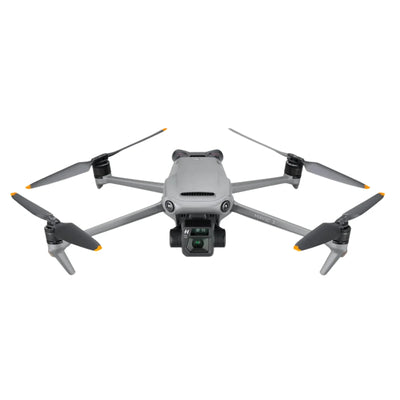
Photograph the product label, aircraft front and underside, gimbal camera, controller, battery and charger before diagnosis. Mavic Air 2 and Mavic Air 2S share a family resemblance, but their imaging hardware, sensing arrangement, internal modules and compatible assemblies cannot be treated as interchangeable. The repair record should name DJI Mavic Air 2 explicitly and capture the configuration that matters to the unit, including whether the GPS area includes the relevant ADS-B arrangement. A marketplace listing, shell shape or seller description is not enough evidence for a part order.
This identity gate protects both technical accuracy and the customer's money. The CPU999 Mavic Air 2 dealer guide lists separate ESC, GPS, vision, core-board, arm and controller modules and distinguishes ADS-B and non-ADS-B variants in relevant assemblies. That information is useful for scoping, but it does not authorize blind replacement. Reboot Hub ties any exact module or board revision to the aircraft in front of us, records what was visually or electrically demonstrated, and states what remains unverified before the customer approves work.

What should be recorded before the aircraft is powered or opened?
Start with the customer's concern and the sequence that produced it. Preserve the exact DJI Fly warning, flight log, controller screen recording, original photo or video, last normal use, storage interval, charger used and any crash, liquid, sand or unusual heat event. Photograph all four arms, propellers, motors, shell seams, battery bay, sensing windows and the gimbal at rest. If the battery is swollen, leaking, abnormally hot, impact-damaged or contaminated, stop use and isolate it according to safe battery handling rather than continuing a startup experiment.
The first record should also say what has already been tried. Repeated firmware changes, multiple batteries, forced gimbal movement or uncontrolled motor tests can change the evidence and create secondary damage. A professional intake preserves the unit as received and separates safe external observations from tests that require an approved bench. The result is a written baseline: exact configuration, reported symptom, reproduced behavior, safety boundaries, known prior interventions and the questions the diagnosis must answer. That baseline is more valuable than a generic list of likely parts.
Why does a Mavic Air 2 that will not power on need a layered diagnosis?
The dealer troubleshooting sequence does not begin by declaring the core board dead. It first considers whether the battery and power-button behavior are credible, whether the ESC-board-to-core-board flexible connection is secure, whether the ESC board can supply and communicate as expected, and only then whether core-board evidence remains. Crash history, liquid evidence, terminal condition, odor, local heating and app or link behavior change the order and safety of those checks. A battery that looks normal externally still does not prove the aircraft supply path is healthy.
Board-level findings should be published only with case boundaries. If an exact component, board revision or measured failure is observed on a Mavic Air 2, it can become useful case-level evidence; it must not be presented as a universal failure map for every Mavic Air 2. The customer receives the demonstrated layer, the evidence used, adjacent areas that were or were not inspected, parts provenance and a stop condition if the scope changes. That keeps a repair quote transparent and prevents an expensive large-module guess from being disguised as certainty.

How should camera, gimbal and image defects be separated?
Preserve an original file from the aircraft as well as a view of the live feed. Record whether blur, color defects, dark spots, horizon error, vibration or loss of image appears in the recorded file, only in live view, only during movement or only after an impact. Observe gimbal startup and range without forcing an axis. Inspect the intact camera housing, gimbal support, flexible cable and coaxial connection externally where possible. A black live view may belong to capture, processing, cable, radio or display paths; it does not by itself prove the camera sensor failed.
The Mavic Air 2 repair plan treats camera data, gimbal IMU data, gimbal axis calibration and aircraft-gimbal calibration as controlled service operations after specific work, not universal owner remedies. Reboot Hub does not expose internal calibration packages or encourage improvised parameter writing. Instead, the report states which image and movement behavior was reproduced, whether a supported service calibration was justified, what changed after approved work and which original-file and horizon checks passed. The camera is accepted only as part of the full aircraft, not because the gimbal moved once on a bench.
What do forward vision, backward vision and downward vision warnings actually prove?
Mavic Air 2 has distinct forward, backward and downward vision paths, so direction, environment and message wording matter. Record whether the warning is constant or intermittent, which direction is affected, lighting, surface texture, transparency or reflection, contamination, impact location and whether image transmission is otherwise normal. Clean only the external sensing windows with an appropriate non-abrasive method. A warning in poor light or over a difficult surface is not the same evidence as a repeatable module connection failure in a suitable controlled environment.
The dealer test plan includes vision calibration after relevant repairs and checks image transmission alongside it. That does not mean calibration can repair cracked optics, displaced structure or damaged electronics. A responsible diagnosis separates environmental limitation, dirty or damaged windows, alignment, cable or connector evidence, module behavior and core-board communication. The written result identifies the direction tested and the conditions used. It also states the operating boundary: obstacle sensing assists the pilot and never guarantees detection of every object or surface after repair.

Why can unstable hover involve propellers, arms, IMU, compass, GPS and vision?
Hover drift is not a one-sensor diagnosis. Inspect propeller identity and condition, correct marked mounting positions, motor freedom, arm geometry and impact evidence before any flight command. Record whether drift follows one direction, whether vibration or moiré appears in the transmitted image, whether the app reports IMU or compass messages, and whether the test area provides suitable light, ground texture and distance from magnetic interference. A bent arm or mismatched propeller can affect attitude and image stability even when calibration completes.
The Mavic Air 2 architecture places GPS, compass, barometer and IMU evidence alongside multiple vision modules, while the ESC board and motors create the actual thrust response. Diagnosis therefore moves from mechanical integrity to messages and controlled calibration evidence, then to a stable hover only when earlier gates pass. Reboot Hub records which branch was demonstrated rather than advertising one reset as a cure. Post-repair acceptance repeats the relevant compass, IMU, vision, motor and hover checks under documented conditions so the original concern is genuinely closed.
How do you distinguish aircraft link, controller and image-transmission faults?
Capture whether the aircraft and controller link at all, whether telemetry responds, whether live image is absent or merely unstable, and whether buttons, joysticks and dials behave normally. Repeat only safe comparisons in a low-interference environment with the correct aircraft, controller and supported app context. Inspect exterior antenna and impact evidence before assuming a board. A smooth control link with missing video is different from a complete link failure; a problem that changes with environment is different from a fixed connection or module fault.
The dealer plan tests aircraft link and hardware connections, the controller's buttons and controls, image transmission and manual flight as separate gates. That separation is valuable to the customer because it prevents an aircraft core board and controller core board from being proposed at the same time without evidence. The quote states which side of the link was cross-checked, what conditions were used, and whether the issue was reproduced. Acceptance then proves control response, telemetry, image stability and range only within a safe permitted test plan.

What does the Mavic Air 2 module map change about a repair quote?
The Mavic Air 2 service material identifies a core board, ESC board, GPS board, forward vision, backward vision, downward vision, camera and gimbal, fan, arm and motor assemblies, plus the controller core board and antenna system. This map shows why a symptom can cross boundaries; it is not a shopping list. The exact aircraft may use variant-specific assemblies, including ADS-B or non-ADS-B configurations, and a compatible-looking part can still have a different identity, history, calibration state or connector condition.
A strong quote therefore names the fault domain first, then the exact part only when evidence supports it. It records whether a part is new, OEM-pulled or otherwise documented, the exact model and revision, known prior use, included work and acceptance criteria. Unknowns are stated before approval. If new evidence expands the scope, the technician stops and returns to the customer rather than silently replacing more hardware. This is how technical depth becomes trust: every conclusion has a visible evidence trail and a defined customer decision.
When is repair stronger than replacing a Mavic Air 2?
Repair is stronger when the damaged domain can be bounded, the airframe geometry remains trustworthy, compatible parts provenance is available and the complete aircraft can pass the customer's required camera, sensing, control and flight tests. Replacement becomes more credible when liquid or heat exposure is broad, multiple high-value domains are affected, structure cannot be validated, exact parts cannot be verified or the final system cannot be accepted with confidence. Age alone does not decide the case, and a low initial part estimate should not hide unresolved adjacent risk.
Reboot Hub looks at the decision from the customer's perspective. We show the exact unit, condition, included equipment, known and unknown findings, written repair scope, parts evidence, timing and warranty terms. The normal workshop target is 1-3 business days after quote approval, subject to scope, parts and testing. Approved work has a 30-day repair warranty; qualifying complete products have a separate 180-day product warranty. The customer can compare a defined repair with a documented replacement instead of choosing between vague promises.
What must pass before a repaired Mavic Air 2 returns to flight?
Acceptance begins on the bench: correct identity, secure structure, battery and charging condition, startup, thermal behavior, aircraft link, controller buttons and sticks, app messages, camera original-file capture, gimbal movement, storage, vision status and motor response. The dealer test plan specifically connects relevant repairs to firmware and version checks, link checks, app tests, photo and video, motor rotation, image transmission and flight testing. Reboot Hub translates those gates into a readable handover rather than presenting an internal tool result as proof.
A controlled outdoor test follows only when the earlier gates are safe. It verifies stable positioning and hover, control response, image stability, the original symptom and any repaired direction or module. The report records what was tested, conditions, outcome and any remaining observation. It does not promise that one repaired board prevents every future fault. The aircraft returns to service only when the exact customer's concern has evidence behind it and the full Mavic Air 2 behaves coherently as one system.
How does Reboot Hub remove the customer's concerns before approval?
Reboot Hub starts with the customer's concern, the exact aircraft and every reasonable question that can affect the decision. We preserve the reported symptom, event history, supplied kit and visible condition; separate confirmed findings from repair-bench hypotheses; name the known and unknown items; and return written findings before asking for approval. Where a board revision and measured repair evidence identify a particular chip or component, that case-level experience can be stated directly. It is not silently expanded into a claim that every aircraft with a similar warning has the same fault.
Repair work normally takes 1-3 business days after quote approval. That workshop period is separate from inbound transit, parts availability, customs handling where relevant and return transit. A diagnostic fee applies to the inspection and written findings. When an eligible repair is approved, that diagnostic fee is credited toward labor or eligible service charges under the written quote. If the customer declines, the diagnosis still explains what was found and what remains unknown.
Eligible completed repair work has a 30-day repair warranty under the written terms. That is separate from the 180-day product warranty for qualifying complete pre-owned products. Neither term is a promise about unrelated later impact, liquid exposure, consumable wear, misuse or work outside the approved scope. The repair record should identify the exact work and acceptance evidence to which the repair term applies.
This is the commercial difference between a generic marketplace instruction and a Reboot Hub path. The customer sees the exact-unit evidence, the concern-by-concern response, the proposed scope, the parts path, the testing and the written terms before commitment. If replacement is stronger, the comparison uses a documented unit and kit rather than an anonymous headline listing. The purpose is not merely to share repair information; it is to turn technical uncertainty into a transparent decision the customer can trust.
Related Reboot Hub paths
Continue from exact-model evidence to a documented next step
Use the learning, model and service paths below to move from technical evidence to written scope and action.
Keep exploring
Further reading
From The Reboot Hub Chronicle




From Drone Guides