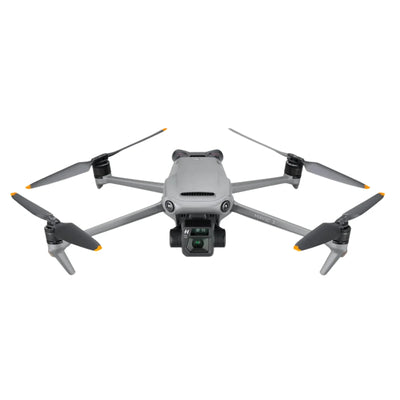
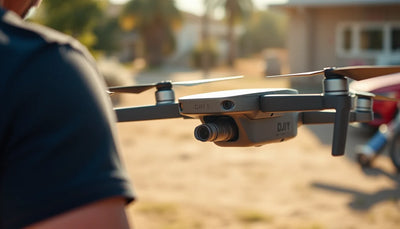
Support & Learning / Module 8 branch
Symptoms, Evidence and Diagnosis
Before this lesson: Preserve the exact symptom and stop when structure, battery, liquid or powered hardware may be unsafe.
What you will understand
- Separate the visible symptom from the functional domains that can produce it.
- Use model- and board-bounded repair experience without turning one case into a universal claim.
- Move from the customer's concern to written findings, approval and staged acceptance evidence.
Exact-model Mini repair branch
DJI Mini SE looks close to Mavic Mini and DJI Mini 2, but a responsible repair record cannot collapse those products into one machine. The exact regional aircraft assembly, battery, controller, gimbal and board evidence matter. This guide converts dealer repair training into a customer-facing path for no-start, gimbal, image transmission, camera, compass, IMU, hover and propulsion concerns. It keeps internal service tools out of the public procedure while making the reasoning, exact board findings and post-repair proof visible.
Quick answer
Keep Mini SE identity, regional variant and symptom evidence together from intake to acceptance
Confirm DJI Mini SE rather than Mavic Mini or DJI Mini 2, then record whether the aircraft is FCC, CE or Brazil configuration where relevant. Preserve the battery, charger, controller, app message, event history and original media. A no-start branch considers battery, the ESC-to-core flexible connection, ESC board and core board in sequence. Camera, gimbal, image link, compass, IMU, propellers and arm geometry remain separate branches. Reboot Hub publishes exact H22, 1064, PMIC or other board findings only when they belong to the observed Mini SE board revision and case evidence, then requires staged system acceptance.
DJI Mini SE · series repair estimates by path
Each USD figure is a historical series-level estimate for the listed repair path, not a quote for this exact aircraft. Diagnosis determines the parts, labor, calibration, and testing needed.
| Repair path | Estimated USD range | When to consider it |
|---|---|---|
| Complete gimbal module | $120-$168 | Camera, lens, motor, or stabilization damage beyond a cable-only repair. |
| ESC module / board | $42-$54 | Propulsion warnings, motor-control faults, water exposure, or ESC-stage damage. |
| Motor arm replacement | $36-$48 | Structural damage involving an arm, hinge, landing point, shell, or motor mount. |
| Main board (chip-level) | $90-$108 | A board fault can be isolated at component level before full-board replacement. |
| Complete board replacement | $180 | The board is physically unrecoverable or component-level repair is not practical. |
| IMU sensor / calibration path | $30 | Calibration loops, drift, sensor errors, or unstable attitude require diagnosis. |
| Battery management board | $36-$48 | Charging, balancing, BMS, or battery power-path faults require diagnosis. |
What evidence should be captured before the customer acts?
How does repair-bench experience map the fault domains?
How do you distinguish DJI Mini SE from Mavic Mini and DJI Mini 2 during repair?
Photograph the model label, airframe details, camera and gimbal, rear arm area, controller, battery, charger and aircraft identity shown in the supported app. The Mini SE dealer material explicitly compares Mini SE with DJI Mini 2 and Mavic Mini because some service references and visible parts are related, but that comparison is not permission to mix products. Mini SE has its own complete-aircraft assemblies and regional identities. The repair record should say which reference is shared and which module, connector, part number or calibration state must remain exact.
Regional configuration also matters. The material lists FCC, CE and Brazil variants for relevant complete-aircraft assemblies, and the quote should not hide that boundary under the phrase Mini family. A compatible-looking shell or seller claim cannot establish the correct core board or complete module. Reboot Hub records the exact Mini SE configuration, board revision and part provenance where observed. This protects the customer from receiving a repair that powers on but no longer matches the aircraft's original configuration, radio context or acceptance evidence.

What evidence should be preserved before testing a Mini SE?
Record the reported symptom in the owner's own sequence: when it last worked, storage duration, charger and cable used, battery LED pattern, exact DJI Fly message, crash or liquid history, image behavior and whether the fault is constant. Photograph the battery, six-pin battery port, shell, all arms, propellers, motors, camera, gimbal and downward sensing area. Preserve an original media file and any available flight record. A swollen, leaking, hot, impact-damaged or contaminated battery creates a stop-use boundary rather than an invitation to keep charging it.
State what has already been attempted, including battery swaps, app updates, calibration attempts or prior repair. Repeated startup tests can erase an intermittent clue or extend a liquid-related fault. A responsible intake separates safe external evidence from powered tests that need a controlled bench. The resulting baseline lists exact configuration, customer concern, visible condition, known interventions, reproduced behavior and unknowns. It gives the technician a question to answer instead of a predetermined part to sell, and it gives the customer a record against which the finished repair can be judged.
Why does a Mini SE no-start fault follow battery, connection, ESC and core-board layers?
The dealer troubleshooting flow considers the battery first, then the flexible connection between ESC board and core board, the ESC board itself and finally core-board evidence. That order matters because the aircraft's motor-power and system-power paths are not one undifferentiated main board. Inspect terminals, the battery port, impact or liquid evidence, odor, local heat and whether any LEDs or link behavior appear. Do not improvise internal electrical tests, open a battery or repeatedly force startup to obtain a more dramatic symptom.
If an approved internal inspection identifies a failed part, the report names the exact Mini SE board revision and measured or observed case-level evidence. It can publish genuine repair experience, including exact components and outcomes, without pretending every Mini SE fails in the same place. The quote states what was proven, what adjacent areas were inspected, what remains unknown and when work must stop for renewed approval. That makes board-level capability useful to the owner while preventing a large-module guess from becoming an unsupported universal claim.

What do H22, 1064 and PMIC tell us about Mini SE board diagnosis?
Repair-bench references identify H22 as an operating platform that processes signals associated with vision, camera, navigation and image transmission. They describe 1064 as controlling flight-controller, gimbal and battery functions and storing flight-controller firmware in built-in memory. PMIC manages power to system circuits outside the motor-power path. The board also connects camera and gimbal, the 3-in-1 flexible cable, downward vision, TOF, GPS, IMU, barometer, compass and image-link functions. Those relationships explain why one visible symptom may cross more than one domain.
They do not justify naming a chip from an app message alone. Exact chip identity, voltage behavior, corrosion, heat pattern or replacement outcome is publishable when tied to the exact observed Mini SE board revision and case record. It should never be copied onto Mavic Mini, DJI Mini 2 or a different regional board as though the layout were universal. Reboot Hub reports the evidence chain in plain language: customer symptom, reproduced behavior, signal or supply layer, exact finding, approved action and acceptance result. Internal service software and parameter-writing procedures remain controlled workshop tools.
How should Mini SE camera, gimbal and image defects be divided?
Observe gimbal self-check and movement without forcing an axis. Preserve original photos or video, then compare them with live view. Record whether blur, dark or multicolored spots, vibration, skew, black image or intermittent transmission appears in the stored file, only on screen or only during movement. Inspect the lens exterior, gimbal axis area, camera flexible connection and coaxial path where appropriate. Cleaning a dirty exterior lens can be a valid first observation, but a successful cleaning does not prove the gimbal, camera or image link is otherwise healthy.
Dealer diagnosis distinguishes an axis arm that cannot move smoothly, camera or coaxial-cable evidence, repeated image defects and supported gimbal calibration after relevant work. Reboot Hub does not present calibration as a cure for impact-damaged structure or failed electronics. The report says which behavior was reproduced, which branch the evidence supports and which calibration or comparison was justified. Acceptance includes gimbal recentering, movement, horizon, original-file capture, storage and live image. A black screen is never allowed to jump directly to a camera replacement without separating aircraft, controller and radio paths.

How do you isolate a Mini SE image-transmission or controller fault?
Record whether the aircraft links, whether telemetry responds, whether video is missing or merely unstable, and whether controller buttons, sticks and dial work. Compare the aircraft and controller only through safe supported combinations and test interference-sensitive behavior in a suitable open environment. Inspect external antenna and impact evidence. A video stream that improves outside is different from a fixed antenna, aircraft core-board or controller-main-board fault, and a working live view with failed control input belongs to another branch.
The dealer flow uses cross-comparison, antenna connection checks, current supported software context and manual flight as separate evidence. That separation prevents both the aircraft core board and controller main board from being sold as possibilities without proof. Reboot Hub records which side was substituted or otherwise isolated, the environment used, the exact result and remaining uncertainty. Post-repair acceptance then reconnects the system: aircraft link, telemetry, controller controls, image transmission and a permitted flight gate. The customer sees the demonstrated path rather than a vague statement that the signal was fixed.
Why can compass, IMU, propellers and arms all cause unstable hover?
Mini SE hover stability depends on mechanics, sensing and environment together. Inspect whether propellers are the correct matching type for each motor position, whether paired propellers on an arm are consistent, and whether any blade, motor, foam or arm is deformed. Record app messages and perform supported compass or IMU observations only in a suitable environment on a level stable surface. The dealer material places the compass on the 3-in-1 flexible path and associates the IMU with the GPS board, while downward vision and TOF contribute close-to-ground positioning evidence.
Strong electrical or magnetic interference, poor ground texture and unsuitable lighting can change a test without proving hardware failure. Conversely, a calibration that completes does not clear a bent arm or damaged propeller. Diagnosis therefore moves from structure and propellers to environment and messages, then to compass, IMU, GPS-board, vision or drive evidence as justified. Acceptance repeats the original hover concern under documented conditions. It records drift, vibration, control response and image stability rather than claiming that one calibration resets the entire aircraft.

What do FCC, CE and Brazil Mini SE variants change for parts decisions?
The Mini SE dealer material lists region-specific complete-aircraft assemblies for FCC, CE and Brazil configurations. That does not mean a customer should alter a region or use unsupported firmware. It means the workshop must identify the original unit and choose a documented compatible assembly or board when replacement is actually supported. A part listing that says Mini SE without configuration evidence may be incomplete, and a shared battery or accessory reference does not prove the core board, radio path or complete aircraft assembly is interchangeable.
Reboot Hub records label evidence, exact part identity, board revision, source and known prior use. If an OEM-pulled part is considered, its condition and compatibility evidence are written rather than assumed. The customer sees what is being installed and what acceptance must demonstrate. We do not expose internal version-writing tools or suggest changing the aircraft's regulatory identity. The goal is to return the exact Mini SE to a documented working state that remains consistent with its original configuration and the customer's destination and permitted use.
When is Mini SE repair better than replacement?
Repair is stronger when the failure can be bounded, airframe geometry is sound, the exact compatible part is documented and the complete aircraft can pass power, camera, gimbal, link, positioning and flight tests. Replacement becomes more credible when liquid or heat exposure is broad, several high-value domains are affected, structural confidence is low, the correct configuration cannot be verified or final acceptance cannot prove the owner's needs. A low parts estimate is not a good repair if it leaves an untested power, radio or flight-control risk.
Reboot Hub approaches the choice from the customer's perspective and works to remove every reasonable concern before approval. We document the exact product, condition, included equipment, known and unknown findings, parts provenance, written scope, timing and terms. The normal workshop target is 1-3 business days after quote approval, subject to scope, parts and testing. Approved work has a 30-day repair warranty; qualifying complete products have a separate 180-day product warranty. That allows a transparent repair-to-replacement comparison rather than a price-only decision.
What must pass before a repaired Mini SE returns to service?
Bench acceptance confirms exact identity, structure, propellers, motors, battery and charging, startup, thermal behavior, aircraft link, app messages, controller buttons and sticks, camera original files, live view, gimbal movement, storage and relevant compass, IMU or vision evidence. The dealer test plan connects component work to version checks, one-time functional checks, hardware-link checks, app tests, photo and video, calibration where relevant and flight. Reboot Hub turns those internal gates into a customer-readable record without exposing controlled service utilities.
A permitted controlled flight follows only after structure, power and control gates pass. It verifies the original symptom, stable hover, response, image transmission, camera and gimbal behavior and any repaired direction or function. The report states conditions, results and remaining observations. It does not promise that one repaired chip prevents all future faults. A Mini SE returns to service when the exact customer's concern has been reproduced or responsibly bounded, the approved work is traceable, and the complete aircraft demonstrates a coherent result.
Keep exploring
Further reading
From The Reboot Hub Chronicle










From Drone Guides