Support & Learning / Module 8 branch
Symptoms, Evidence and Diagnosis
Before this lesson: Drone Repair Complete Guide
What you will understand
- Know what to record, when to stop and when service begins.
- Separate observable evidence from assumptions before choosing an action.
- Continue through the main lesson path or enter a focused topic branch when needed.
Module 8 / DJI Air 3S model-specific diagnosis branch
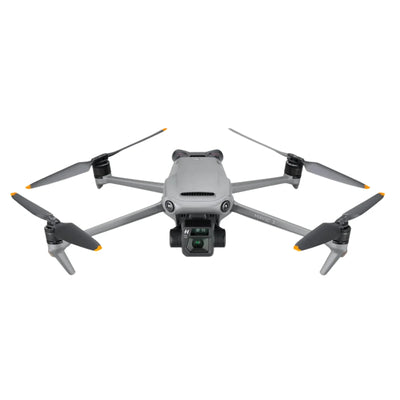
This page is specific to DJI Air 3S. It is not an Air 3 or Air 2S parts map and it does not turn a warning into a guessed component. The Air 3S combines a dual-camera gimbal, forward-facing LiDAR, omnidirectional vision sensing, positioning inputs, intelligent flight battery, controller, software state and recorded incident history. A useful repair decision must preserve the exact symptom, separate safe owner observations from professional service work, and define how the entire aircraft will be accepted after repair. The purpose is to remove the customer's reasonable concerns before any part, cost or return-to-flight decision is approved.
Quick answer
Ground the Air 3S, preserve the exact evidence and require a written diagnosis before approving parts
Record the exact aircraft, controller, battery and symptom; save the complete DJI Fly warning; photograph the dual-camera gimbal, forward-facing LiDAR windows, vision surfaces, arms, motors and battery; and note impact, moisture, transport, update or prior-service history. The warning is evidence, not a parts diagnosis. If the aircraft is wet, structurally distorted, has a damaged battery, produces unusual heat or smell, or cannot establish a stable normal state, keep the aircraft grounded. A DJI Air 3S repair cost is meaningful only when the quote identifies the supported scope, unknowns, calibration needs and full-system acceptance plan.
What evidence should exist before an Air 3S repair decision?
A trustworthy support page connects the customer's concern to exact-unit evidence, a written decision boundary and a useful next action. This table is the decision spine for the topic.
What is the fastest safe way to assess a DJI Air 3S problem?
Begin with a no-disassembly intake. Photograph the aircraft folded and unfolded, the dual-camera gimbal at rest, the forward-facing LiDAR windows, each external vision surface, every arm and motor, the battery case and bay, the controller and the supplied kit. Preserve the complete on-screen message rather than shortening it to camera fault, sensor fault or motherboard. Note whether the concern appeared at startup, after transport, during an ordinary flight, after an update or after a landing event. That sequence provides a defensible starting point and helps decide whether another power-on is safe.
Safe owner checks end at external observation, correct battery seating, clean unobstructed sensing surfaces, compatible controller identification and supported software status. They do not include opening the aircraft, forcing the gimbal, probing powered components or flying through an obstacle challenge to reproduce a warning. If physical structure, battery condition, moisture, abnormal heat, odor, repeated attitude warnings or sensing status is uncertain, keep the aircraft grounded. Reboot Hub's customer-first path starts by stating what is known, what remains unknown and what evidence is required next.
What evidence should be captured before an Air 3S repair decision?
Build one evidence packet around the exact aircraft, controller, battery and symptom. Include the controller type, the battery used when the event occurred, the full warning, photographs from multiple angles, a short description of normal steps immediately before the event and any impact, moisture, storage or previous-service history. If a camera problem is visible, retain short examples from both camera views when it is safe to capture them. If a warning is intermittent, record the ordinary condition that produces it without deliberately creating an unsafe flight or repeating power cycles on damaged hardware.
The packet should identify actions already attempted and what changed afterward. Record only ordinary supported actions such as a normal restart, gentle external cleaning, correct re-seating or checking the model's supported software state. Do not hide a previous opening, failed repair, hard landing or water exposure. These facts affect diagnostic confidence, possible warranty or service eligibility, calibration scope and the reliability of a quote. A transparent handoff lets the owner understand why a recommendation follows from evidence rather than from a confident but unexplained parts claim.

Which DJI Air 3S symptom family are you actually dealing with?
Classify the observation before discussing parts. A no-power or unstable-power concern belongs to the battery, contacts, power path and incident-history branch. A stable gimbal with missing or abnormal image output differs from a gimbal that cannot complete normal movement. A forward sensing or LiDAR warning differs from a general positioning or attitude concern. A controller-link problem differs from an aircraft that links normally but cannot deliver a stable preview. Motor noise, blocked rotation and arm distortion belong to propulsion and structure. One incident can affect several families, especially after impact or moisture.
This classification does not diagnose an internal assembly. Its purpose is to stop unrelated symptoms from being bundled into a convenient core-board or camera label. A written diagnosis should explain which observations support the proposed work, which alternatives were considered, which functions could not yet be evaluated and whether the selected repair creates additional calibration or acceptance obligations. If the reasoning skips directly from one app message to one expensive assembly, the evidence chain is incomplete and the customer should pause before authorizing the scope.
How should an Air 3S crash or hard-landing concern be triaged?
After an impact, do not use a successful startup as proof that the aircraft is flightworthy. First document arms, hinges, motor alignment, propellers, shell seams, battery latches, camera and gimbal support, sensing windows and any new noise or resistance. Remove a visibly damaged battery from ordinary use. If the aircraft contacted water, shows deformation, develops unusual heat or smell, or cannot hold the battery securely, do not power it on again. Repeated startup attempts can erase useful context, deepen damage or create a battery and propulsion hazard.
A collision can produce hidden alignment, connection, calibration or structure concerns even when the shell looks acceptable. The service intake should preserve the event direction, estimated severity without pretending to know exact force, surface struck, whether motors stopped, whether the aircraft was powered afterward and which warnings appeared. The professional path then determines what can be verified externally, what requires controlled service evaluation and what cannot be responsibly promised before inspection. Any return-to-flight decision must cover the whole connected system rather than the most visible cosmetic damage.
What does an Air 3S dual-camera or gimbal symptom prove?
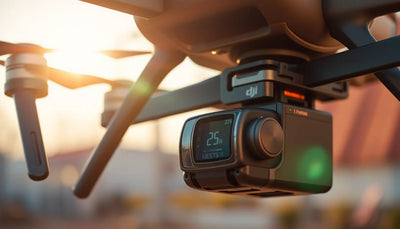
Separate image output from mechanical movement and evaluate both camera views. Record whether the concern is blur, focus inconsistency, image artifact, missing preview, horizon error, vibration, abnormal startup movement or physical obstruction. Photograph the gimbal at rest and preserve a short stable sample only when the aircraft can be powered safely. Do not force movement through resistance and do not assume an app calibration can correct impact damage. The dual-camera assembly, movement system, image path, controller preview and recorded files belong to one connected acceptance question.
A repair proposal should state which observed behavior supports the recommended scope and which behavior remains normal. It should distinguish a protective-surface concern from image generation, gimbal movement, physical support or communication evidence. After work, the owner needs documented checks of both camera views, focus and image stability under suitable conditions, gimbal movement, horizon behavior, storage, recording and controller preview. Replacing a visible assembly without this model-specific acceptance leaves the original customer concern unresolved even if the aircraft looks complete.

How should forward-facing LiDAR and vision warnings be understood?
The Air 3S uses forward-facing LiDAR as part of a wider sensing system that also includes vision and positioning inputs. A warning does not by itself identify a failed LiDAR or vision assembly. Begin with the full message, physical history, lighting and surface conditions, cleanliness and obstruction of the external windows, and whether the concern appears at startup or only in a particular environment. Dark, reflective, transparent or low-texture settings can change what a vision system can observe, so an environmental comparison can be informative when performed safely on the ground.
The warning is evidence, not a parts diagnosis. A repeated warning in suitable conditions, especially after impact or moisture, belongs in professional evaluation rather than an obstacle test flight. The written result should state which external conditions were excluded, which sensing functions were evaluated, whether positioning or attitude warnings were also present and what post-repair calibration and controlled acceptance are required. An absence of one warning during one casual startup does not prove that the complete Air 3S sensing system is ready for flight.
How should DJI RC 2 or DJI RC-N3 link symptoms be separated?
Record the exact compatible controller in use rather than saying only remote. DJI RC 2 includes its own display, while DJI RC-N3 depends on a connected mobile device, so app, cable, display and power evidence can differ. Preserve whether the aircraft and controller link, whether telemetry is present, whether the preview is stable, whether controls and buttons respond normally and whether the issue follows one controller, one device or the aircraft. Do not conduct a long-range flight to prove link quality when the command path is already uncertain.
A link symptom can involve controller compatibility, software state, device or cable context, antennas, physical history, the aircraft or more than one factor. A professional diagnosis should describe the controlled comparison used and avoid calling the aircraft core board faulty merely because the preview is missing. Post-repair acceptance should confirm supported linking, controls, camera switching, preview, recording and warning state in a safe ground setup before any controlled flight acceptance. The controller and aircraft must be treated as one represented system.
How should Air 3S battery or power symptoms be separated safely?
Inspect the battery and bay externally. Look for swelling, deformation, moisture, damaged contacts, unusual odor, abnormal heat or latches that do not hold normally. If any of these conditions is present, isolate the battery from ordinary use and do not power it on again. Do not repeatedly charge a visibly damaged battery or attempt undocumented recovery. If there is no physical hazard, record indicator behavior, app messages, seating, the exact battery used and whether a known-compatible healthy battery changes the observed symptom under a controlled ground check.
A battery warning is evidence, not a parts diagnosis. An unresponsive aircraft does not prove the battery is the only fault, and an unresponsive battery does not prove the aircraft core board is damaged. The service handoff should identify which battery was tested, its external condition, the warning state and whether the concern follows the battery or aircraft. Any quote should also state whether the battery is inside or outside the proposed scope and how charging, power stability and battery retention will be accepted afterward.
Does a DJI Air 3S motherboard search prove a core-board fault?
A motherboard search does not prove a core-board fault. Owners often use motherboard as a catch-all for no power, missing image, link failure, storage errors, repeated warnings or a previous shop's verbal opinion. These observations can involve different Air 3S systems, connections, software state, physical damage or several assemblies. Ordering a core board from a search phrase can preserve the original problem, create compatibility and calibration work, and remove evidence needed to understand what failed.
Ask for the observation chain behind any core-board conclusion. The written diagnosis should list the exact symptom, external and controlled system checks, relevant incident history, alternatives considered, why the proposed assembly best fits the evidence, remaining unknowns and required post-repair procedures. It should not present an internal board as certain merely because the aircraft did not start or a generic warning appeared. If the service provider cannot explain that boundary in plain language, the customer should not approve the part.
What actually determines DJI Air 3S repair cost?
DJI Air 3S repair cost is not one universal number. It depends on the exact symptom, affected and possibly connected assemblies, impact or moisture history, whether the aircraft was previously opened, availability and provenance of the exact replacement, calibration requirements, controller or battery involvement, post-repair testing, shipping and the owner-approved scope. A low public estimate that omits diagnosis, calibration or acceptance evidence cannot be compared directly with a complete service proposal. The useful comparison is like-for-like work and evidence, not the smallest number in a search result.
Request a written diagnosis and quote before authorizing work. It should separate findings, proposed parts, labor or service work, calibration, acceptance testing, shipping, exclusions, unknowns and the approval boundary. Reboot Hub does not use a fabricated public price matrix because the same visible symptom can support different outcomes after evidence is reviewed. The owner should know what could change the quote and must approve that change before additional work proceeds. This turns a repair-cost query into a transparent decision rather than a sales estimate.
What should a written Air 3S diagnosis and quote contain?
The quote should identify the exact Air 3S and represented kit, repeat the owner-reported concern, summarize verified findings and connect each proposed action to evidence. It should distinguish confirmed damage from suspected damage and from functions that could not be assessed. It should state the replacement condition and provenance, calibration requirements, expected acceptance checks, exclusions, shipping responsibility and what happens if deeper inspection changes the supported scope. Camera, LiDAR, vision, command-link and power concerns should not be hidden behind one vague electronics line.
The quote creates an owner-approved scope, not an open permission slip. The customer must be able to approve, decline or ask for clarification before parts are committed. Reboot Hub works from the customer's point of view by addressing the worries that usually appear later: whether the exact unit will be returned, whether the proposed part fits the evidence, whether secondary damage is known, how the camera and sensing system will be validated and what written result accompanies the aircraft. Unknowns are stated early instead of being covered by confident language.
When should you repair or replace the DJI Air 3S?
Repair can be appropriate when the diagnosis is bounded, structure and connected systems remain suitable, exact parts and calibration are available, and the complete supported scope fits the owner's intended use and downtime tolerance. Replacement can be stronger when damage spans several safety-critical systems, moisture creates broad uncertainty, structure is compromised, exact work cannot be validated, repeated prior repairs reduce confidence or a fully supported scope no longer makes sense for the mission. Sunk cost and a clean exterior should not override evidence and flight safety.
Compare repair and replacement using verified condition, represented batteries and controller, intended workload, time constraints, availability of an accurately described replacement and the value of documented acceptance. The decision should also explain how data, accessories and the unrepaired unit will be handled. Reboot Hub can compare a written repair scope with a transparent replacement path without claiming one answer fits every owner. The recommended route should remove reasonable uncertainty, not merely move it to the next transaction.
What post-repair calibration and testing should be documented?
The plan must match the work performed. It may include supported software and linking checks, both camera views, gimbal behavior, image recording, forward LiDAR and external vision status, positioning, battery and charging behavior, controller operation, motor behavior and absence of the original warning under suitable controlled conditions. Some work requires service procedures an ordinary owner cannot reproduce. A finished-looking aircraft therefore is not proof that the system is ready to fly, and one clean startup is not a complete release gate.
Ask for a written full-system acceptance record. It should identify the exact unit, changed scope, calibration completed, functions tested, limitations and result. Controlled flight acceptance comes only after safe ground checks and must follow local operating rules and a suitable environment. If a function could not be verified, that limitation should remain visible rather than becoming an implied pass. The next lesson in the curriculum explains how to turn repair completion into a disciplined return-to-service decision.
Keep exploring
Further reading
From The Reboot Hub Chronicle






From Drone Guides