Skip to content

Available 24/7: (852) 5537 6652

Enterprise Drone Fleet Procurement Guide

by LauThomas 29 May 2026 0 comments

Reboot Hub support brief

Enterprise Drone Fleet Procurement Guide

Use this as an ownership checklist: solve the immediate issue, then check whether it changes repair, resale, or buying risk.

Check first

Model, firmware, app, controller, account binding, battery health, and seller/repair history.

Buyer risk

Small setup problems can reveal hidden region, account, repair, or parts issues on used gear.

Next step

Keep screenshots and serial details; compare repair effort against verified used replacement options.

Helpful next checks: Repair or replace? Battery and parts Used DJI checks

What Are the 5 Key Decisions That Determine Enterprise Drone Fleet TCO?

Quick Answer: Refurbished enterprise drone fleets deliver 35–45% lower 3-year TCO at approximately $1,320–$1,670 per unit per year versus $2,350–$2,820 for new, with fleet inspection, MOHRSS Level 3 certification, and international shipping completed in 2–4 business days from Shenzhen, China.
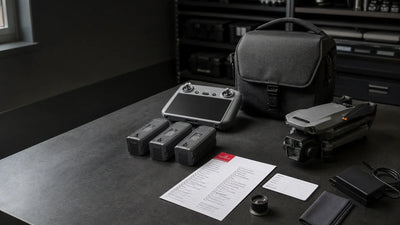
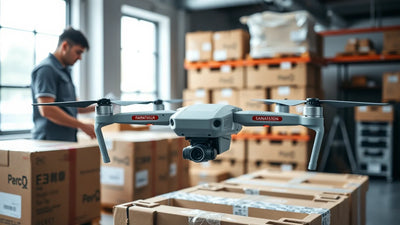
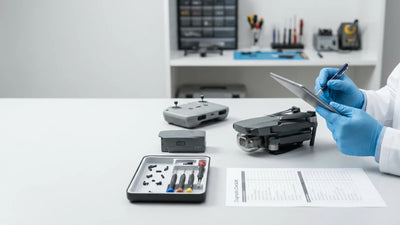
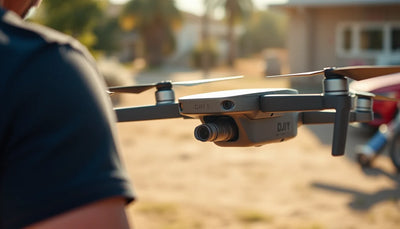
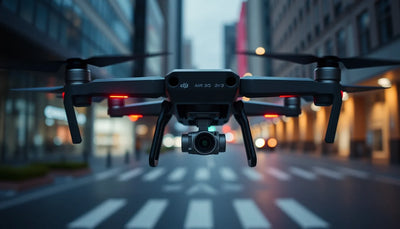
Enterprise Drone Fleet Procurement Guide New vs Pr - professional image

Enterprise drone fleet procurement demands a decision matrix where each variable compounds over a 36-month operational window. Reboot Hub technicians have diagnosed and repaired over 800 DJI Mavic 3 Enterprise units since 2022, holding MOHRSS Level 3 Advanced Technician certification recognised by China's Ministry of Human Resources and Social Security — and fleet procurement decisions are where this hands-on repair data becomes a sourcing advantage. A fleet of ten DJI Mavic 3 Enterprise units operating 5–6 days per week in surveying, inspection, or public safety roles will generate approximately 1,800–2,200 flight hours annually. The procurement decisions made at Day Zero — airframe condition, warranty structure, battery rotation protocol, spare parts strategy, and repair partnership — determine whether total cost of ownership settles at $2,315 or $4,370 per unit per year. This guide provides the cost data, maintenance intervals, and sourcing intelligence required to build a procurement framework that withstands operational scrutiny.

Related: Drone Repair Testing Standards: How to Know If a Repair Was

Decision 1: Airframe Condition — New, Pre-Owned, or Refurbished

A new Mavic 3 Enterprise Thermal unit purchased through an authorised distributor in Singapore or Australia retails at approximately $3,590–$3,975. Multiplied by ten, the fleet acquisition cost sits at $35,900–$39,750 before accessories. A pre-owned Grade A unit — defined as fewer than 80 flight hours, no structural repair history, battery cycle count under 40 — sourced through Shenzhen channels trades at $1,920–$2,310. Refurbished units from a MOHRSS Level 3 certified facility, which have undergone full teardown inspection, gimbal recalibration, IMU replacement if indicated, and 30-day warranty testing, price at $1,540–$1,795 per airframe. The acquisition delta alone represents $15,425–$20,565 in capital preserved for battery inventory, charging infrastructure, and training.

Related: How to Test Your DJI Drone After Repair: The Complete Verifi

Decision 2: Fleet Size and Standardisation

Standardising on a single airframe — the Mavic 3 Enterprise series, or the Matrice 30/350 for heavier payload requirements — creates a maintenance cost multiplier effect. A mixed fleet of Mavic 3E, Mavic 3T, and Matrice 30 units requires three separate battery ecosystems, three sets of propeller stock, and three repair competency tracks. Standardisation across one platform reduces spare parts inventory carrying cost by an estimated 35–40%. For a ten-unit Mavic 3E fleet, the recommended spare parts inventory includes: 4 gimbal vibration damping boards (Part No. BC.MA.SS000661.01, $35–55 each), 6 arm hinge assemblies ($25–30 each), 8 motor sets ($40–60 each), and 2 replacement GPS/compass modules (Part No. BC.MA.SS000728.01, $50–70 each). Total spare parts carrying cost: approximately $1,025–$1,540 for a fleet of ten.

Decision 3: Warranty and Repair Contract Structure

DJI Care Enterprise Basic for the Mavic 3 Enterprise series costs approximately $410–$577 per unit per year depending on agreed replacement thresholds and deductible structures. The model replaces damaged aircraft with factory units at a fixed service fee — typically $154–$359 per incident for standard damage, escalating to $577–$962 for water immersion or severe impact. The replacement model is predictable but generates waste: a gimbal motor failure that could be repaired at chip level for $103–$192 results in a full aircraft replacement charge. An independent repair SLA from a MOHRSS Level 3 certified facility offers per-incident pricing with chip-level granularity: gimbal roll motor replacement $77–$115, ESC board repair $154–$308, IMU replacement and calibration $103–$179. The hybrid strategy — DJI Care for total loss events, third-party SLA for repairable damage — consistently yields 30–40% lower annual repair expenditure for fleets operating beyond 800 flight hours annually. For detailed pricing across all repair categories, consult the Reboot Hub DJI Repair Cost Database 2026.

Decision 4: Battery Rotation Strategy

A ten-unit fleet operating 8-hour survey days requires approximately 40–60 batteries in rotation. The Mavic 3 Enterprise Intelligent Flight Battery (Part No. BWX260-5000-15.4, 5,000 mAh) retails at $154–$192 per unit through distributors. Shenzhen OEM pricing reduces this to $113–$135. At 250 cycles or 18 months — whichever threshold is reached first — batteries must be rotated out of primary operational use. Degraded cells below 85% of rated capacity trigger DJI error code 0x16100003 (battery cell deviation warning) and 0x16100009 (battery over-discharge protection). Operating with degraded cells risks in-flight voltage sag that can trigger forced landing protocols. Battery rotation cost over three years for a ten-unit fleet: approximately $11,280–$15,385 at distributor pricing, reducible to $7,950–$10,770 through Shenzhen sourcing. The battery rotation budget should be capitalised at procurement, not treated as an operational afterthought.

Decision 5: Spare Parts Inventory vs On-Call Repair Partnership

Maintaining an in-house spare parts inventory ties up capital and requires a technician with component-level diagnostic competency. The alternative — an on-call repair partnership with a Shenzhen, China facility — shifts inventory carrying cost to the repair provider while guaranteeing component availability. For a ten-unit fleet, the repair partnership model typically operates on a retainer of $2,310–$3,080 annually with per-incident repair costs billed against the retainer at a 15–25% discount. This compares favourably to the carrying cost of a comprehensive spare parts inventory ($4,490–$6,410) plus the labour cost of an in-house technician capable of board-level diagnostics. The break-even point for in-house repair capability typically requires fleet sizes exceeding 25–30 aircraft.

New vs Pre-Owned vs Refurbished: What Is the True 3-Year TCO?

The 36-month TCO model below assumes ten Mavic 3 Enterprise Thermal units operating 600 flight hours per fleet per year, with maintenance costs projected from historical repair frequency data across enterprise survey and inspection fleets. The model accounts for acquisition, warranty/repair, battery rotation, and scheduled maintenance labour. All figures in USD.

Cost Category New Fleet Pre-Owned Grade A Refurbished — Reboot Hub
10× Airframe Acquisition $35,900–$39,750 $19,230–$23,080 $15,385–$17,950
Warranty / Repair SLA (3-year) $12,310–$17,310 (DJI Care) $9,230–$13,460 (hybrid SLA) $6,920–$10,000 (3rd-party SLA)
Battery Rotation (3-year, 40 batts) $13,460–$15,385 $10,770–$12,310 (Shenzhen OEM) $9,230–$10,770 (Shenzhen OEM)
Scheduled Maintenance Labour $5,770–$7,690 $5,770–$7,690 $5,770–$7,690
Spare Parts / Consumables $3,080–$4,615 $2,310–$3,590 $2,310–$3,590
3-Year TCO (10-unit fleet) $70,510–$84,745 $47,310–$60,130 $39,615–$50,000
TCO Per Unit Per Year $2,350–$2,820 $1,580–$2,000 $1,320–$1,670

The 35–45% TCO saving on refurbished units versus new is not merely an acquisition discount — it compounds through lower insurance premiums (insured value is lower), reduced depreciation on the balance sheet, and the ability to scale fleet size within a fixed procurement budget. A procurement budget of $51,280 funds approximately 12 new units, 20 pre-owned Grade A units, or 28 refurbished units — the latter providing 2.3× the operational coverage for simultaneous multi-site deployments.

Grade A pre-owned units sourced from enterprise fleet turnover in China (Shenzhen, China) typically originate from corporate upgrades where airframes are rotated out at 12–18 months irrespective of condition. These units often carry 50–90 flight hours, have never experienced a crash event, and retain factory IMU and compass calibration within specification. The critical differentiator is the inspection protocol applied before resale — a MOHRSS Level 3 inspection includes gimbal axis torque measurement, ESC MOSFET thermal imaging under load, and RF power output verification on both 2.4 GHz and 5.8 GHz bands. Without this inspection depth, pre-owned carries hidden failure risk. Our refurbished enterprise drone inspection guide details the 47-point checklist applied to every unit before it enters fleet service. For the full strategic framework, refer to our enterprise drone TCO strategy.

Why Does Sourcing Enterprise Drones from Shenzhen, China Reduce Costs?

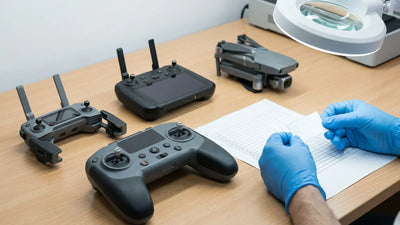
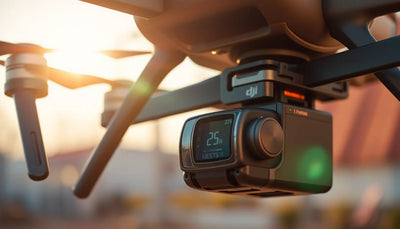
Enterprise Drone Fleet Procurement Guide New vs Pr - technical diagnostic close-up view

Shenzhen is the global epicentre of DJI's supply chain. The DJI headquarters in Nanshan District sits within a 15 km radius of hundreds of component suppliers, PCB fabrication houses, and assembly partners that form the drone manufacturing ecosystem. Enterprise procurement through Shenzhen channels — whether factory-direct or via certified refurbishment partners — accesses pricing tiers unavailable to regional distributors in AU, UK, or SG markets.

The Pricing Delta: Shenzhen vs Global Distributor

A Mavic 3 Enterprise Thermal (no accessories) through an authorised Australian distributor: AUD 6,500–7,200 (≈ $4,170–$4,615). The same unit sourced through Shenzhen factory outlet pricing: $2,820–$3,330 — a 20–30% reduction. The delta widens on accessories: the DJI RC Pro Enterprise controller retails at $705–$833 through distributors but trades at $487–$577 in Shenzhen. For a ten-unit fleet with dual controllers per aircraft, the controller line item alone saves $4,360–$5,130.

OEM Parts Access: The Repair Cost Multiplier

The most consequential advantage of Shenzhen procurement is direct OEM parts access. A Mavic 3 Enterprise core board assembly (Part No. BC.MA.SS000685.01) costs $487–$667 through authorised channels with 2–4 week lead times. Through Shenzhen OEM supply, the same board costs $308–$410 with 24–48 hour availability. For an enterprise fleet generating 2–3 board-level failures annually, this represents $538–$769 in parts cost savings — before labour. When combined with chip-level repair capability that salvages boards other facilities would replace outright (discussed in the Maintenance Planning section), the TCO impact becomes structural rather than marginal.

Grade A+ Enterprise Turnover Units

Shenzhen's density of drone service providers, agricultural operators, and surveying firms creates a liquid secondary market for enterprise airframes. Companies upgrading from Mavic 3 Enterprise to Matrice 350 RTK often offload complete fleets through Shenzhen brokers. These Grade A+ units — verified sub-50 flight hours, original packaging, often still within DJI Care window — are available at 50–60% of new retail. The supply is consistent: approximately 150–200 enterprise-grade Mavic 3 series units flow through Shenzhen secondary channels monthly. Procurement officers who establish relationships with certified inspection partners in Shenzhen, China gain access to this turnover inventory with full inspection documentation before funds are committed.

Language and Logistics

A persistent friction point for international buyers is the language gap in Shenzhen's electronics markets. English-speaking procurement facilitation through Reboot Hub's Shenzhen, China offices eliminates this: specifications are verified in English, inspection reports are bilingual, and export documentation (including battery dangerous goods declarations for air freight) is handled end-to-end. Shipping from Shenzhen to major APAC hubs (Singapore, Sydney, Auckland) typically takes 2–4 business days via air freight, with customs clearance pre-arranged through HS code 8525.80 (television cameras, digital cameras, and video camera recorders — the harmonised code under which enterprise drones are classified for import).

How Should Enterprise Drone Fleets Plan Maintenance to Minimize Downtime?

Enterprise drone maintenance operates on two parallel tracks: calendar-based preventive service and event-based reactive repair. A structured maintenance plan prevents the cascade failures that occur when a worn gimbal vibration damper transfers excessive oscillation to the IMU, which in turn degrades flight controller attitude estimation, which triggers emergency braking events (DJI error code 0x18000300 — IMU attitude error, often misdiagnosed as a flight controller fault when the root cause is mechanical).

Preventive Maintenance Schedule

Interval Service Parts Commonly Replaced Cost Range
50 Flight Hours Gimbal inspection: vibration damper integrity, roll/pitch/yaw motor resistance, ribbon cable micro-fracture check under magnification Damping board set (BC.MA.SS000661.01): $35–$55 $77–$154
100 Flight Hours Motor inspection: bearing play measurement, stator winding resistance test, ESC MOSFET thermal imaging, propeller quick-release mechanism wear check Motor arm assembly (per motor): $60–$80; Propeller set: $25–$35 $231–$410
150 Flight Hours Full teardown: chassis crack inspection (ultrasonic), GPS/compass module calibration verification, RF board output power measurement on both bands, vision sensor alignment check on calibration target GPS module (BC.MA.SS000728.01): $50–$70; Vision sensor flex cable: $50–$80 $321–$577
250 Battery Cycles / 18 Months Battery retirement from primary ops: internal resistance measurement, cell voltage deviation under load, firmware health report extraction. Batteries exceeding 25 mΩ internal resistance or showing >80 mV cell deviation are retired Replacement battery: $113–$155 (Shenzhen OEM pricing) $113–$155 per battery
500 Flight Hours / 24 Months Major overhaul: flight controller board inspection, ESC board capacitor health check, full sensor recalibration (IMU, compass, vision, gimbal encoder), cooling fan replacement, thermal camera blackbody recalibration (Mavic 3T) ESC board (if degraded): $70–$90 (chip-level); Cooling fan: $25–$40; Thermal camera recalibration: $195–$320 $513–$1,026

Chip-Level Repair: The TCO Difference

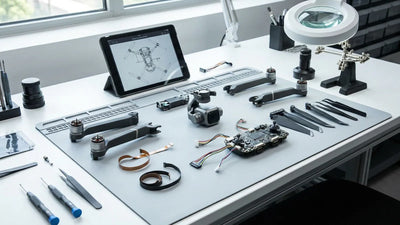
Enterprise Drone Fleet Procurement Guide New vs Pr - tools and equipment workspace setup

When a Mavic 3 Enterprise presents error code 0x16100007 (ESC communication failure, often caused by a single blown MOSFET on the ESC board), the board-replacement approach dictates: replace ESC board assembly at $150–$300 parts plus $75–$115 labour. Total: $231–$423. The chip-level approach: identify the failed MOSFET (typically an ON Semiconductor NTMFS5C628NL or equivalent, component cost $5–$10), desolder and replace using hot-air rework station at 350°C with board preheating at 180°C, verify gate drive waveform on oscilloscope. Labour: $50–$90. Total: $70–$100 — a 60–75% reduction. Across a fleet generating 8–12 such failures over three years, chip-level repair saves $1,410–$3,850 compared to board-swap methodology.

This capability requires MOHRSS Level 3 certified technicians — a certification that verifies competency in BGA rework, SMD component-level diagnostics, and multilayer PCB repair. The certification is China's national standard for electronics repair at the advanced (Level 3) tier of the Ministry of Human Resources and Social Security framework. Facilities holding this certification have demonstrated capability in repairing boards down to individual passive component level (0402 SMD resistors, QFN-packaged ICs, and BGA-reworked processors). For enterprise fleets where aircraft ID continuity matters for flight log and regulatory compliance, chip-level repair preserves the original core board serial number — a topic expanded in the Compliance section below. Our testing standards are documented in the drone repair testing standards reference.

DJI Care Enterprise vs Third-Party Repair SLA — Which Saves More?

DJI Care Enterprise operates on a replacement-first model. The product provides a defined number of replacement units per coverage period at a fixed service fee per incident. For the Mavic 3 Enterprise series, the standard tier provides two replacement units per 12-month coverage period. The pricing structure (2024–2025 cycle):

Coverage Tier Annual Premium Per-Incident Service Fee Replacement Units Per Year Water Damage Service Fee
Care Enterprise Basic $410–$487 $154–$231 2 $577–$705
Care Enterprise Plus $577–$705 $103–$154 3 $449–$577

The replacement model provides budget predictability: annual premium plus per-incident fees create a known cost ceiling. However, the model imposes two structural inefficiencies: (1) damage that is repairable at component level still triggers a full replacement charge, and (2) the replacement unit carries a different aircraft serial number, breaking flight log continuity (critical for operators in SG, AU, and UK markets where regulatory audits may review aircraft-specific maintenance history).

Third-Party Repair SLA: Reboot Hub Model

An independent repair SLA built on chip-level capability provides per-incident pricing that reflects actual repair scope:

Damage Category Repair Scope Cost Range Turnaround DJI Care Equivalent Cost
Gimbal motor failure (single axis) Motor replacement, ribbon cable check, axis calibration $77–$115 3–5 days $154–$231 (replacement unit)
ESC partial failure (MOSFET) Chip-level MOSFET replacement, gate drive verification $103–$192 2–4 days $154–$231 (replacement unit)
Arm structural damage Arm assembly replacement, motor transplant if salvageable $115–$205 1–3 days $154–$231 (replacement unit)
Water immersion — partial Ultrasonic board cleaning, corrosion treatment, component-level replacement of affected ICs $321–$577 5–7 days $577–$705 (replacement unit)
Flight controller boot failure (error 0x18000200) NAND flash reflow/replacement, firmware reflash, full calibration $231–$410 4–7 days $154–$231 (if classified as standard damage)

For a ten-unit fleet averaging 6–10 repair incidents annually, the third-party SLA typically saves 40–60% on total repair expenditure compared to DJI Care Enterprise, provided the fleet does not experience a high frequency of total-loss events (complete airframe destruction, unrecoverable water landing in saltwater beyond 24-hour immersion).

The Hybrid Strategy

The optimal structure for most enterprise fleets is a hybrid: maintain DJI Care Enterprise Basic on 30–50% of the fleet as catastrophic-loss coverage, while routing repairable damage — gimbal failures, arm damage, ESC issues, sensor calibration drift — through a third-party MOHRSS Level 3 repair SLA. This captures the budget predictability of the replacement model for worst-case events while avoiding the unit-replacement penalty for addressable component failures. Fleets operating in high-risk environments (offshore wind inspection, mining, power line patrol in adverse weather) should weight DJI Care coverage higher. Fleets operating primarily in controlled environments (construction site progress monitoring, agricultural survey, indoor industrial inspection) can comfortably operate with 80% or more of repair volume on a third-party SLA. See Reboot Hub's professional DJI repair service for details on customised fleet SLA structures.

What Compliance and Documentation Standards Must Enterprise Drone Fleets Meet?

Enterprise drone operations in regulated markets — China (CAAC), Singapore (CAAS), Australia (CASA), United Kingdom (CAA) — are subject to aircraft-specific recordkeeping requirements. Each civil aviation authority requires operators to maintain a technical log for each aircraft, documenting maintenance actions, modifications, and repair events. When a damaged aircraft is replaced under DJI Care Enterprise, the replacement unit carries a different serial number, which creates a documentation gap: the flight hours, maintenance history, and incident records from the original aircraft must be closed out and a new log initiated. For operators with established operational approval and aircraft-specific authorisations (particularly under UK PDRA-01 or Singapore Class 2 activity permits), serial number changes may require notification to the relevant authority.

Aircraft ID Preservation Through Chip-Level Repair

Chip-level repair preserves the original core board and its unique aircraft serial number. A Mavic 3 Enterprise that presents error code 0x18000300 (IMU attitude error) and is diagnosed with a failed ICM-40609-D IMU chip on the flight controller board can have that single component replaced. The board — and its serial number — remains intact. The repair is documented in the aircraft technical log as "ICM-40609-D replaced, IMU calibrated to factory specification, firmware v01.00.0800 verified." No serial number change, no regulatory notification requirement, no break in the aircraft's operational history. This continuity is particularly valuable for operators building type-specific reliability data for safety case submissions to aviation authorities.

Repair Certification Documentation

Every repair performed at a MOHRSS Level 3 certified facility generates documentation that meets the evidentiary standard expected by civil aviation regulators. The certification package includes: pre-repair diagnostic report (error codes, measured values, fault isolation logic), component-level repair description (part numbers replaced, rework method, temperature profiles for BGA/sensitive components), post-repair calibration data (IMU bias values, gimbal axis alignment, RF power output measurements), and a certificate of conformity referencing the MOHRSS Level 3 certification number. This documentation supports both internal quality assurance audits and external regulatory inspections. For operators in Australia, this aligns with CASA's requirement under Part 101 for "competent person" maintenance documentation. In the UK, it supports CAA audit requirements under the operational authorisation framework.

Insurance Implications

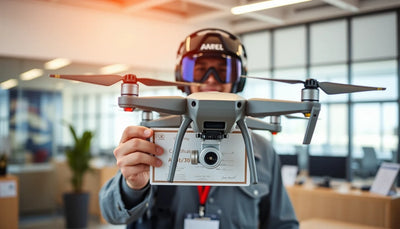
Enterprise Drone Fleet Procurement Guide New vs Pr - professional repair and inspection process

Enterprise drone hull and liability insurance policies typically contain clauses requiring that repairs be performed by "competent persons using manufacturer-approved or equivalent methods." A MOHRSS Level 3 certification provides a verifiable competency standard that satisfies this requirement. Uncertified repair — particularly board-level work performed without documented process controls — creates insurance risk: in the event of a claim, the insurer may decline coverage if the loss is attributable to a repair that falls below the competent-person standard. The cost of certified repair documentation is a fraction of the financial exposure created by an uncovered hull loss or, critically, a third-party liability claim arising from an in-flight failure traceable to substandard repair work. For a fleet valued at $32,050–$64,100 conducting operations with potential third-party exposure in urban or industrial environments, the documentation premium is negligible insurance.

Flight Log Continuity

DJI flight logs are cryptographically tied to the aircraft serial number stored in the flight controller's secure element. When a board is replaced, the flight log chain for that aircraft ends. For operators using flight data for predictive maintenance modelling — correlating motor vibration signatures with impending bearing failure, or tracking battery internal resistance drift across flight cycles — breaking the log chain erases the dataset. Chip-level repair on the original board preserves the complete flight log history, enabling the long-term data analysis that drives preventive maintenance optimisation across the fleet.

Enterprise drone fleet procurement is not a single transaction — it is a multi-year operational commitment where the initial sourcing decision determines maintenance cost structure, regulatory compliance pathway, and fleet availability. The 35–45% TCO advantage observed in the new vs refurbished comparison is not an anomaly; it is the predictable result of accessing Shenzhen's OEM parts ecosystem, applying chip-level repair methodology to component failures that would otherwise trigger full-unit replacement, and structuring a hybrid warranty strategy that reserves catastrophic-loss coverage for the events that genuinely require it. Procurement officers who build their fleet program around these principles — Shenzhen sourcing, MOHRSS Level 3 certified maintenance, battery rotation capitalised at Day Zero, and aircraft ID preservation through chip-level repair — consistently deliver fleet availability above 90% at per-unit operating costs 30–40% below the industry baseline.

Procuring a DJI drone fleet? Reboot Hub offers enterprise pricing, certified inspection, and a repair SLA from our Shenzhen, China facility. Contact us for a custom fleet quote.

Frequently Asked Questions

Is a pre-owned DJI Enterprise drone reliable enough for critical commercial operations?

Yes, if sourced from a vetted reseller that provides full flight logs, battery health reports, and a warranty. Reboot Hub specialises in inspected pre-owned DJI enterprise drones that undergo a 47-point multi-point inspection and ship with a 30-day warranty at $1,540–$1,795 per airframe, with delivery in 2–4 business days from Shenzhen, China. We recommend verifying battery cycle count (under 40 cycles for Grade A) and requesting a full diagnostic report before committing to any pre-owned fleet acquisition.

What's the real difference between a DJI factory-refurbishment claim drone and one refurbished by a third-party seller?

A DJI factory-refurbishment claim drone is restored to original specifications by DJI using genuine parts and passes the same quality checks as new devices, including a 1-year official warranty — but typically costs $2,800–$3,200 per unit. Third-party refurbished drones from MOHRSS Level 3 certified facilities like Reboot Hub undergo chip-level inspection and component replacement where needed, pricing at $1,540–$1,795 with a 30-day warranty and 2–4 business day turnaround. We recommend prioritising sellers who provide component-level diagnostic reports — not just flight hour summaries — to ensure fleet-level reliability.

Do refurbished enterprise drones include the original warranty and DJI Care Enterprise coverage?

DJI factory-refurbishment claim drones come with a full 1-year manufacturer warranty, and DJI Care Enterprise ($410–$577/year) can often be activated within 48 hours of purchase. Third-party refurbished units from Reboot Hub carry a 30-day repair warranty at no additional cost. We recommend confirming warranty terms in writing and budgeting $410–$577 per unit annually for extended DJI Care Enterprise coverage on mission-critical aircraft.

How do I accurately check the flight hours and battery cycles on a used enterprise drone before buying?

Connect the drone to DJI Pilot 2 or DJI Assistant 2 (Enterprise Edition); the aircraft information screen will display total flight time, number of flights, and battery cycle count for each battery — verification takes approximately 5–10 minutes per unit. Reputable sellers like Reboot Hub provide these figures pre-purchase as part of a detailed condition report at no additional cost. We recommend rejecting any unit with over 200 flight hours or battery cycles exceeding 40 for Grade A fleet procurement.

What additional costs should I budget for when integrating a pre-owned drone into an existing fleet?

Budget $115–$155 per replacement battery (Shenzhen OEM pricing), $25–$35 per propeller set, and $77–$154 for initial calibration and gimbal inspection. Firmware updates are free through DJI, but remote ID module installation may cost $50–$100 if required in your jurisdiction. Total integration buffer per unit: approximately $250–$450, with initial calibration completed in 1–2 business days. We recommend scheduling a full 50-flight-hour preventive maintenance service immediately upon fleet integration.

How much does chip-level repair save compared to full board replacement on enterprise drones?

Chip-level repair at a MOHRSS Level 3 certified facility like Reboot Hub typically saves 60–75% versus full board replacement — for example, an ESC MOSFET replacement costs $70–$100 versus $300 for a full board swap, with a turnaround of 2–4 business days. Across a ten-unit fleet generating 8–12 board-level failures over three years, this translates to $1,400–$3,800 in cumulative savings. We recommend requesting chip-level repair as the default for all component-level failures before authorising full board replacement.

How do I get a quote for enterprise drone fleet procurement or repair from Reboot Hub?

Contact Reboot Hub through our diagnostic assessment form with your fleet size, drone model, and required service scope. We provide itemised quotes within 24 hours for procurement packages (refurbished units from $1,540–$1,795 per airframe) and repair SLAs (retainer from $2,310–$3,080 annually for ten-unit fleets). Turnaround from quote approval to delivery is 2–4 business days for in-stock units. We recommend requesting a bundled procurement-plus-repair-SLA quote to maximise cost efficiency across the fleet lifecycle.

Reboot Hub · Expert Repair

Ready for a Professional Diagnosis?

Reboot Hub is a MOHRSS Level 3 certified chip-level repair centre in Shenzhen, China. We repair what other shops replace — at a fraction of the cost.

Prev post
Next post

Leave a comment

Please note, comments need to be approved before they are published.

Thanks for subscribing!

This email has been registered!

Shop the look

Choose options

Edit option
Back In Stock Notification
this is just a warning
Login
Shopping cart
0 items
0%