Support & Learning / Module 7 branch
Pre-flight, Condition and Care
Before this lesson: Preserve the exact symptom and stop when structure, battery or powered propulsion may be unsafe.
What you will understand
- Separate the visible symptom from the system domains that can produce it.
- Understand which repair-bench observations support a conclusion and which remain hypotheses.
- Move from concern to written findings, approval and staged return-to-service evidence.
Exact-unit inspection before a used DJI purchase
A polished shell and a short test flight cannot prove ownership, battery condition, hidden impact history, controller compatibility or repair quality. Reboot Hub treats a used DJI drone as an exact unit with evidence to verify, not as a model name with a generic grade.
Quick answer
Verify identity, ownership, condition and function as separate gates
Start with the serial identity and supplied kit, confirm account status with the seller present, inspect the aircraft and every battery, preserve warnings and available records, then use a controlled function test. If a material concern cannot be resolved, record it as an unknown and price or reject the unit accordingly.
What evidence should be captured before the customer acts?
How does repair-bench experience map the fault domains?
What should be matched before the drone is powered on?
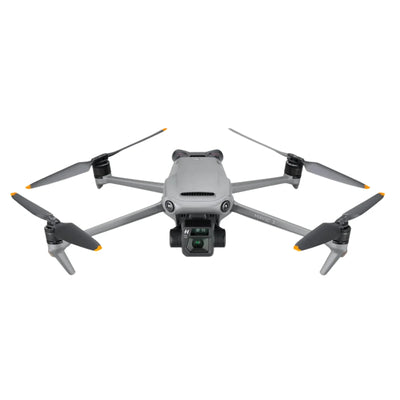
Match the listing, serial identity, controller, batteries, charger, cables, propellers and promised accessories to the physical handover. Photograph identifiers and the full kit. Adjacent DJI models can share a family name while using different controllers, visual modules, batteries or accessories, so model-level familiarity is not enough. A missing item is a commercial fact; an unexplained identity mismatch is a risk that must be resolved before payment.
Confirm the seller's purchase evidence and reason for sale without treating one document as absolute proof. The useful question is whether the serial identity, account status, physical unit and story agree. Reboot Hub records the exact supplied kit and visible condition so the customer can compare what is being offered with what will appear in the written order.

How should account status and activation be verified?
Ask the seller to demonstrate the supported account-transfer or unbinding path while both parties are present. Do not accept a screenshot alone when the unit can be checked directly. Account status, aircraft activation, controller pairing and local flight eligibility are different questions. A successful controller link does not prove that the aircraft is free of a previous account relationship.
Keep the inspection on supported DJI account and app paths. A used aircraft that cannot complete the supported ownership and account verification path is not a normal purchase candidate. If the transfer cannot be completed, document the result and stop. The buyer should not inherit a technical and ownership dispute merely because the exterior looks clean.
What does the exterior reveal about impact or prior repair?
Inspect arm roots, hinges, motor mounts, shell seams, battery bay, landing surfaces, gimbal mounts and fasteners under angled light. Look for mismatched gaps, stress whitening, displaced dampers, tool marks, missing adhesive and uneven screw condition. Model-specific training materials also identify anti-tamper and water indicator locations; their condition can guide a deeper inspection without pretending they tell the whole history.
Impact energy travels through the frame, so the visible crack may not be the only concern. Repair experience shows that connectors, harnesses and board-mounted parts can be disturbed on the opposite side of a load path. That is a case-level hypothesis to investigate, not a universal diagnosis. The written inspection should separate confirmed damage, credible risk and areas that could not be seen.

How should a used DJI battery be assessed?
Record the exact pack model, serial identity where available, latch security, case shape, terminals, impact marks, odor, heat and reported storage history. Review supported app information and warnings for that model. Cycle information can add context, but chemistry, age, storage, temperature, load history and cell behavior all matter. Reject a pack with swelling, deformation, damaged terminals, liquid evidence or repeatable abnormal warnings.
A full-charge display is not a load test, and an old universal cycle threshold is not a safety standard. Controlled evaluation should be proportionate, use an appropriate environment and stop on abnormal heat, voltage behavior, communication loss or rapid deviation. The buyer should know which batteries were actually tested, which observations were recorded and whether replacement was already assumed in the value.
What should a controller, gimbal and camera test prove?
Verify the exact controller model and supported pairing, then observe startup, command response, image transmission, camera recording and gimbal initialization. A gimbal warning does not identify one motor or cable by itself; mechanical alignment, dampers, axis freedom, ribbon routing, communication and calibration state can produce overlapping symptoms. Do not force an axis or use calibration to hide visible mechanical damage.
Record whether the camera focuses, records to known-good media and produces a stable image. Test the functions the buyer needs, including orientation, zoom or payload behavior only where the exact model supports them. A short successful preview is useful evidence, but it does not erase intermittent history or prove that every mode and accessory is healthy.

How are positioning, vision and flight-control concerns separated?
Review the exact startup warnings in a suitable low-interference environment. Positioning, compass, IMU, barometer and vision sensing are related through the flight controller but remain distinct evidence domains. Dirty lenses, poor light, magnetic interference, an installation issue, a damaged module or a core-board relationship can surface as similar user complaints.
Use supported status screens and safe ground observations first. A controlled flight belongs after structure, propellers, battery, controller link and sensing status are credible. Do not treat a simulator, one calibration or an improvised tether hover as proof of airworthiness. The inspection report should say what was tested, under what conditions and what remained outside scope.
What seller red flags should stop the purchase?
Stop when the seller will not show serial identity, cannot complete account transfer, substitutes a different unit or battery, blocks a reasonable inspection, pressures immediate payment or offers unsupported modification as the solution to a warning. Also stop when material damage is explained only by a cosmetic story and no repair evidence is available. One unresolved issue may be enough when it affects ownership or safe flight.
A lower price is not compensation for an undefined fault unless the buyer deliberately accepts a repair project with a written diagnosis path. For a normal purchase, unknown board history, questionable batteries and an incomplete kit can erase the apparent saving. Reboot Hub's role is to remove reasonable concerns with evidence, not ask the buyer to trust a polished listing.

How should repair history and component provenance be judged?
Ask what failed, which board revision or component was involved, where the part came from, what work was performed and which post-repair tests passed. A genuine service part, OEM-pulled component and third-party substitute have different provenance; the correct choice depends on exact compatibility, condition, calibration and the written repair scope. Packaging alone cannot prove what is installed inside the aircraft.
Exact chip names, measurements or prices from a repair record can be useful when tied to that board revision, date and case-level evidence. They should not be generalized into a claim that every similar warning has the same cause. A credible seller or repairer can state the known and unknown findings and show why the completed test addresses the original concern.
What should appear in the final used-drone decision record?
The final record should list identity, account status, grade evidence, exterior findings, batteries, controller, accessories, warnings, tested functions, repair history and every unresolved unknown. It should also state the exact return, warranty and delivery terms that apply to the offered unit. This makes the decision auditable and protects both the buyer and seller from a vague handover.
Reboot Hub approaches the purchase from the customer's point of view: each reasonable concern is either answered with evidence, declared as an unknown or removed by changing the unit, kit or scope. The customer can then compare a documented pre-owned aircraft with repair or replacement alternatives rather than gambling on a marketplace headline.
How does Reboot Hub remove the customer's concerns before approval?
Reboot Hub starts with the customer's concern, the exact aircraft and every reasonable question that can affect the decision. We preserve the reported symptom, event history, supplied kit and visible condition; separate confirmed findings from repair-bench hypotheses; name the known and unknown items; and return written findings before asking for approval. Where a board revision and measured repair evidence identify a particular chip or component, that case-level experience can be stated directly. It is not silently expanded into a claim that every aircraft with a similar warning has the same fault.
Repair work normally takes 1-3 business days after quote approval. That workshop period is separate from inbound transit, parts availability, customs handling where relevant and return transit. A diagnostic fee applies to the inspection and written findings. When an eligible repair is approved, that diagnostic fee is credited toward labor or eligible service charges under the written quote. If the customer declines, the diagnosis still explains what was found and what remains unknown.
Eligible completed repair work has a 30-day repair warranty under the written terms. That is separate from the 180-day product warranty for qualifying complete pre-owned products. Neither term is a promise about unrelated later impact, liquid exposure, consumable wear, misuse or work outside the approved scope. The repair record should identify the exact work and acceptance evidence to which the repair term applies.
This is the commercial difference between a generic marketplace instruction and a Reboot Hub path. The customer sees the exact-unit evidence, the concern-by-concern response, the proposed scope, the parts path, the testing and the written terms before commitment. If replacement is stronger, the comparison uses a documented unit and kit rather than an anonymous headline listing. The purpose is not merely to share repair information; it is to turn technical uncertainty into a transparent decision the customer can trust.
Keep exploring
Further reading
From The Reboot Hub Chronicle














From Drone Guides