Support & Learning / Module 8 branch
Symptoms, Evidence and Diagnosis
Before this lesson: Drone Repair Complete Guide
What you will understand
- Know what to record, when to stop and when service begins.
- Separate observable evidence from assumptions before choosing an action.
- Continue through the main lesson path or enter a focused topic branch when needed.
Module 8 / Model-specific repair and evidence branch
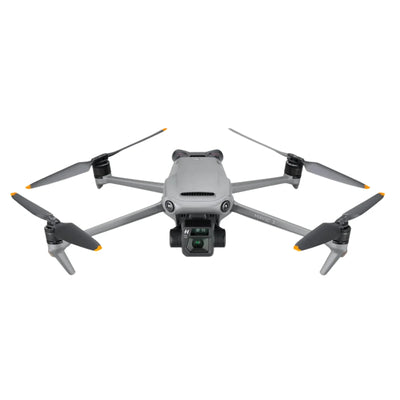
This page is specific to DJI Air 3. It is not a generic drone teardown and it does not turn one warning into a guessed part. The Air 3 combines the aircraft, dual-camera gimbal, vision and positioning systems, intelligent flight battery, controller, software state and recorded history. A useful repair decision therefore begins with the exact symptom and the complete kit, then separates safe owner checks from work that requires proper service equipment, post-repair calibration and full-system acceptance. The goal is to remove the customer's uncertainty before any repair, replacement or purchase decision is approved.
Quick answer
Preserve the symptom, stop unsafe testing and ask for a written Air 3 diagnosis before approving parts
Record the exact aircraft, controller, battery and symptom; save the complete on-screen warning; photograph the aircraft from every side; and note impact, moisture, storage, update or previous-service history. The warning is evidence, not a parts diagnosis. If the aircraft is wet, structurally distorted, has a damaged battery, produces unusual heat or smell, or cannot establish a stable normal state, keep the aircraft grounded. A DJI Air 3 repair cost cannot be trusted until the service path identifies the affected assembly, calibration needs, post-repair tests and owner-approved scope in writing.
DJI Air 3 · series repair estimates by path
Each USD figure is a historical series-level estimate for the listed repair path, not a quote for this exact aircraft. Diagnosis determines the parts, labor, calibration, and testing needed.
| Repair path | Estimated USD range | When to consider it |
|---|---|---|
| Ribbon / flex cable | $50-$80 | Camera signal, gimbal tilt, image loss, or impact-damaged cable routing. |
| Complete gimbal module | $200-$280 | Camera, lens, motor, or stabilization damage beyond a cable-only repair. |
| ESC module / board | $70-$90 | Propulsion warnings, motor-control faults, water exposure, or ESC-stage damage. |
| Motor arm replacement | $60-$80 | Structural damage involving an arm, hinge, landing point, shell, or motor mount. |
| Main board (chip-level) | $150-$180 | A board fault can be isolated at component level before full-board replacement. |
| Complete board replacement | $300 | The board is physically unrecoverable or component-level repair is not practical. |
| IMU sensor / calibration path | $50 | Calibration loops, drift, sensor errors, or unstable attitude require diagnosis. |
| Battery management board | $60-$80 | Charging, balancing, BMS, or battery power-path faults require diagnosis. |
What evidence should exist before an Air 3 repair decision?
What is the fastest safe way to assess a DJI Air 3 problem?
Start with a no-disassembly intake. Photograph the folded and unfolded aircraft, the dual-camera gimbal, each arm and motor, the battery bay, battery case, controller and supplied accessories. Preserve the exact DJI Fly message instead of shortening it to phrases such as motherboard fault or sensor broken. Note whether the symptom appeared before takeoff, during startup, after an update, after transport, after a hard landing or after exposure to moisture. That sequence is often more useful than a guessed component name because it establishes what changed and whether another power-on attempt is appropriate.
This page is specific to DJI Air 3 and should not be applied as a parts map for another model. Keep the aircraft grounded whenever structure, battery condition, moisture, abnormal heat, smell, repeated control warnings or unstable behavior is uncertain. Safe observation can include exterior condition, clean unobstructed sensor surfaces, correct battery seating and a supported status check. It does not include opening the shell, probing an energized board, forcing movement through a blocked gimbal or conducting a test flight merely to reproduce a safety-critical warning.
What evidence should be captured before an Air 3 repair decision?
Build one evidence packet around the exact aircraft, controller, battery and symptom. Include the aircraft serial reference for internal tracking, the controller type, the battery used when the event occurred, the current app or integrated-controller context, the complete warning, photographs of physical condition and a short account of what the pilot observed. If the issue is intermittent, record the ordinary sequence that triggers it without deliberately creating a hazardous condition. A video of startup behavior or a stable camera artifact can be useful; a risky range flight, obstacle challenge or repeated crash-damaged power cycle is not.
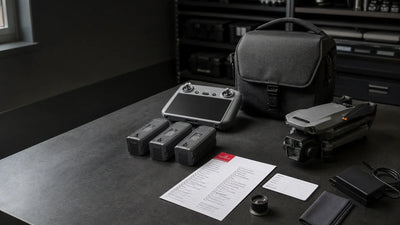
The evidence packet should also identify what was already tried and what changed afterward. Record only supported actions such as a normal restart, visual cleaning, correct re-seating or the exact model's supported software route. Do not hide a prior impact, water exposure, third-party opening or unsuccessful repair. Those facts affect diagnosis, calibration scope, warranty or service eligibility and the confidence of any quote. Reboot Hub uses this evidence-first handoff so the customer can see what is known, what remains unknown and why a particular next step is being recommended.

Which DJI Air 3 symptom family are you actually dealing with?
Group the observation before discussing parts. A no-power or unstable-power symptom belongs first to the battery, contact, power-path and history branch. A clear image with abnormal gimbal movement is different from a stable gimbal with blurred, distorted or missing image output. Positioning or obstacle-sensing warnings require clean-surface and environmental context before any sensor conclusion. Motor noise, blocked rotation or arm damage belongs to a propulsion and structure branch. Link loss belongs to the aircraft-controller-software system, while a repeatable startup error may require the full warning and exact system state.
This classification is not a diagnosis. It is a way to keep unrelated symptoms from being bundled into a convenient motherboard label. More than one family may be involved after impact or moisture, which is why the intake should record every abnormal behavior before a quote is approved. A professional diagnosis should then explain which observations support the chosen assembly, which alternatives were ruled out, what cannot yet be known without service testing and whether the proposed work creates additional calibration or acceptance requirements.
How should power or battery symptoms be separated safely?
Inspect the Air 3 battery and bay without opening either one. Look for swelling, deformation, leakage, moisture, damaged contacts, unusual odor, abnormal heat or a latch that does not hold correctly. If any of these conditions is present, isolate the battery from normal use and do not power it on again. Do not repeatedly charge a visibly damaged battery to see whether it recovers. If there is no physical hazard, record the indicator behavior, whether another known-compatible healthy battery changes the symptom, and whether the aircraft and controller report a specific message.
A battery that appears unresponsive does not automatically prove an aircraft motherboard fault, and an aircraft that will not start does not automatically prove the battery is the only problem. The purpose of a safe comparison is to narrow the boundary, not to authorize internal repair. A service handoff should state which battery was used, its external condition, the observed indicators, any app warning and whether the issue follows one battery or the aircraft. Internal battery work, energized probing and undocumented recovery methods are outside this customer-safe path.
What does a gimbal or camera symptom prove and not prove?
Separate image quality from movement. A dirty protective surface, damaged filter, transport lock, physical obstruction, abnormal startup sweep, horizon error, vibration, focus concern, missing image or visual artifact are different evidence patterns. Photograph the gimbal at rest and record a short stable clip when it is safe to do so. Never force an Air 3 gimbal through resistance and do not assume that a calibration command can correct impact damage. The dual-camera assembly, its movement and its image path must be evaluated as a connected system.
A repair proposal should identify whether the recommendation addresses image output, mechanical movement, physical support or a broader communication concern. It should also state what calibration and image acceptance will follow the work. Changing an assembly is not the end of the repair. The customer needs evidence that both camera views, gimbal movement, horizon behavior, recording, controller preview and relevant warnings were checked after the work. If the page or quote jumps directly from one symptom to one part, the diagnostic reasoning is incomplete.

How should obstacle-sensing or positioning warnings be triaged?
Begin with the complete warning and the conditions in which it appears. Clean the external vision surfaces gently, confirm that no accessory or residue blocks them and compare an appropriate well-lit textured environment with the original setting. Very dark, reflective, transparent or low-texture surfaces can affect vision-based behavior, so an environmental comparison matters. The warning is evidence, not a parts diagnosis. A repeated warning in suitable conditions, especially after impact or moisture, should move to professional evaluation rather than a test flight through obstacles.
The Air 3 uses multiple sensing and positioning inputs, and the owner should not infer an internal assembly from one app label. Record whether the warning appears at startup or only in a particular environment, whether positioning status is normal, whether the aircraft reports more than one sensor family and whether physical history is relevant. Keep the aircraft grounded when reliable positioning, attitude or obstacle-awareness status cannot be established. Service acceptance should document the affected functions in controlled conditions instead of relying on the absence of a warning during one casual startup.
Does a DJI Air 3 motherboard search mean the core board is faulty?
A motherboard search does not prove a core-board fault. Owners often use motherboard as a catch-all for no power, link loss, storage errors, camera communication, repeated warnings or a previous shop's verbal opinion. Those symptoms can involve different parts of the Air 3 system, connections, software state, physical damage or more than one assembly. Ordering an expensive board from a keyword alone can preserve the original fault, create compatibility or calibration work and remove the evidence needed to understand what actually failed.
Ask for the observation chain that supports any core-board conclusion. The written diagnosis should list the exact symptom, external and system checks, relevant history, alternatives considered, why the proposed assembly best fits the evidence, what remains unconfirmed and which post-repair procedures are required. It should never present an internal board as a certainty merely because the aircraft does not power on or because a generic error appeared. If a shop cannot explain the evidence boundary, pause before approving the part.
What actually determines DJI Air 3 repair cost?
DJI Air 3 repair cost is not one universal number. It depends on the observed symptom, affected assembly, physical and moisture history, whether the aircraft was previously opened, availability and provenance of the exact replacement, required calibration, controller or battery involvement, post-repair testing, shipping and the customer's chosen scope. A low headline estimate that excludes diagnosis, calibration or return-to-flight evidence is not directly comparable with a complete service proposal. The useful comparison is like-for-like scope, not the smallest number in a search result.
Request a written diagnosis and quote before authorizing work. It should separate inspection findings, proposed parts, labor or service work, calibration, acceptance testing, shipping, exclusions, unknowns and the approval boundary. Reboot Hub does not use a fabricated public price matrix because the same visible symptom can lead to different supported outcomes. The customer should know what would cause the quote to change and must approve that change before additional work proceeds. This is how a repair-cost question becomes a transparent decision rather than a sales estimate.
What should a written diagnosis and quote contain?
A useful Air 3 quote names the exact unit and kit, repeats the customer-reported concern, summarizes verified findings and links each proposed action to evidence. It distinguishes confirmed damage from suspected damage and from items that could not be evaluated. It identifies the replacement-part condition and provenance, states whether data, settings or accessories may be affected, and describes the calibration and testing needed afterward. It also records exclusions, shipping responsibility, authorization limits and what happens if the observed condition changes after deeper inspection.
The quote should create an owner-approved scope, not an open-ended permission slip. The owner must be able to approve, decline or ask for clarification before parts are committed. Reboot Hub's customer-first approach is to surface the worries that normally appear later: whether the exact unit is being returned, whether the part is appropriate, whether the symptom was reproduced, whether secondary damage exists, whether software and calibration are complete and what evidence will accompany the finished aircraft. Unknowns are written down instead of being hidden behind confident language.
When should you repair or replace the DJI Air 3?
Repair can make sense when the diagnosis is bounded, the airframe and major systems remain suitable, the required parts and calibration are available, and the complete service scope is proportionate to the customer's intended use. Replacement can be the stronger decision when damage spans multiple safety-critical systems, moisture creates broad uncertainty, structure is compromised, the exact repair cannot be validated, repeated prior work reduces confidence or the complete supported scope approaches the value of a more suitable replacement. Sentimental attachment and sunk cost should not override flight safety.
Compare the decisions using evidence rather than a single repair number. Consider the aircraft's verified condition, batteries and controller that remain useful, intended workload, downtime tolerance, availability of an exact replacement and the value of a documented acceptance result. The repair-or-replace decision should also state what happens to the unrepaired unit and its data. Reboot Hub can help the customer compare a written repair scope with an accurately described replacement path without pretending that one answer fits every Air 3.
What post-repair calibration and testing should be documented?
The acceptance plan must match the work performed. It may include supported software and linking checks, camera and gimbal behavior, relevant calibration, image capture, storage, battery and charging behavior, controller operation, positioning, obstacle-sensing status, motor behavior and the absence of the original warning under appropriate conditions. Some replacements require service procedures or tools that an ordinary owner cannot reproduce. A finished-looking aircraft is therefore not proof that the system is ready to fly.
The release record should identify the exact aircraft and controller, the work completed, calibration result, static checks, any controlled flight acceptance, remaining cosmetic or functional limitations and the date of the result. Full-system acceptance matters because changing one part can affect communication, alignment or calibration elsewhere. The first customer flight is not the repair shop's missing test. If the service provider cannot explain how the Air 3 was validated after repair, the owner should keep the aircraft grounded until that evidence exists.
How does Reboot Hub remove uncertainty from an Air 3 repair?
Reboot Hub approaches the problem from the customer's point of view: what could make this aircraft unsafe, what could make the quote change, what evidence proves the recommended action, what is still unknown and what result will the customer receive. We preserve the exact-unit record, review the complete kit, separate confirmed findings from assumptions and put the scope in writing before work is approved. Where professional service is needed, the customer receives a clear handoff rather than a list of risky experiments.
The practical route is simple. Use the connected Support & Learning lessons to understand the symptom family, use the Air 3 Wiki to confirm model context, submit the evidence packet for diagnosis and compare the written repair scope with the replacement path if needed. The Reboot Hub Standard explains how exact-unit evidence, transparent condition, written terms and acceptance results address the worries a marketplace listing or informal repair quote often leaves unanswered. That is how technical information becomes a trustworthy next action instead of another isolated article.
Keep exploring
Further reading
From The Reboot Hub Chronicle



From Drone Guides