Mastering DJI Obstacle Avoidance: How APAS, Sensors & Settings Keep Your Drone Safe
DJI's obstacle avoidance technology has transformed consumer and professional drone flying from a high-stakes gamble into a remarkably safe experience. Whether you're a filmmaker threading a camera through a forest canopy or a real estate photographer orbiting a property, understanding how these systems work—and more importantly, when they fail—can mean the difference between a flawless flight and a costly repair. At Reboot Hub, our technicians have diagnosed and repaired over 800 DJI drone units with sensor and obstacle-avoidance failures since 2022, holding MOHRSS Level 3 Advanced Technician certification recognised by China's Ministry of Human Resources and Social Security. This guide breaks down the engineering behind DJI's Advanced Pilot Assistance Systems (APAS), explains how vision sensor configurations differ across the product lineup, and provides actionable recommendations for optimizing your settings in every environment you'll encounter.
By the end of this article, you'll know exactly what your drone can and cannot detect, how to test your obstacle avoidance system before every flight, and when experienced pilots choose to disable these features entirely. Let's dive in.
How DJI APAS Obstacle Avoidance Works

DJI's obstacle avoidance ecosystem relies on a layered approach that combines multiple sensor technologies, onboard processing algorithms, and real-time path planning. Understanding each layer helps you make smarter decisions in the field.
The Sensor Stack
Modern DJI drones use a combination of three primary sensor types to perceive their environment:
- Binocular Vision Sensors: These stereo cameras capture overlapping images from slightly different angles, allowing the onboard processor to calculate depth through parallax—much like how human eyes work. They operate in visible light and require adequate illumination and visual texture to function.
- ToF (Time-of-Flight) Sensors: Emitting infrared light pulses, these sensors measure the time it takes for the signal to bounce back from a surface. They work independently of ambient lighting conditions and are particularly effective for detecting flat, textureless surfaces that vision sensors struggle with.
- 3D Infrared Sensors: Found on models like the Mavic 3 Pro and Air 3, these sensors project a structured infrared pattern and analyze its deformation to build a depth map. They function well in low-light environments and provide additional redundancy.
The combination of these technologies creates overlapping fields of coverage. When one sensor type fails or produces ambiguous data, the others compensate. This sensor fusion approach is why DJI's obstacle avoidance performs significantly better than systems relying on a single technology.
The APAS Algorithm Pipeline
Raw sensor data means nothing without sophisticated software interpreting it. DJI's APAS (Advanced Pilot Assistance System) processes obstacle data through a multi-stage pipeline:
- Data Acquisition: Sensors capture frames at 30–60 Hz, generating thousands of depth measurements per second.
- Depth Map Construction: The vision processing unit (VPU) stitches sensor data into a unified 3D representation of the environment surrounding the drone.
- Obstacle Classification: The system identifies discrete objects, estimates their size, velocity (for moving obstacles), and proximity using machine learning models trained on millions of flight scenarios.
- Path Planning: APAS calculates alternative trajectories in real time. Depending on your selected mode, the drone will either stop in place, slow down and maneuver around the obstacle, or follow a smooth avoidance arc.
- Flight Controller Integration: The avoidance commands are fed into the flight controller, which executes the maneuver while maintaining GPS hold, altitude stability, and camera gimbal orientation.
This entire cycle—from sensor input to motor response—happens in under 50 milliseconds on newer models like the Mavic 3 series and Air 3. That latency is fast enough to react to unexpected obstacles at speeds up to approximately 15 m/s in ideal conditions.
APAS Versions: 4.0, 5.0, and Beyond
DJI has iterated on the APAS platform significantly over the years. Each version brings measurable improvements:
- APAS 1.0 (Mavic Air, 2018): Forward and backward sensing only. Basic stop-and-avoid behavior with limited lateral awareness.
- APAS 3.0 (Mavic Air 2, 2020): Added forward, backward, and downward sensing. Introduced smoother avoidance trajectories but still lacked lateral coverage.
- APAS 4.0 (Air 2S, 2021): Four-directional sensing (forward, backward, upward, downward). Improved obstacle mapping accuracy and introduced environment-adaptive sensitivity.
- APAS 5.0 (Mavic 3 series, 2021–present): Omnidirectional sensing with eight vision sensors. Introduced advanced environment mapping that remembers obstacle positions and enables proactive route planning rather than purely reactive avoidance.
- APAS 5.0+ (Air 3, Mavic 3 Pro, Mini 4 Pro): Enhanced with improved low-light detection, faster processing, and better handling of thin obstacles like power lines.
Always check your firmware version in DJI Fly (Settings > About) to ensure you're running the latest APAS implementation. DJI frequently pushes algorithm improvements through firmware updates that meaningfully improve detection reliability.
Which DJI Drones Have Obstacle Avoidance — and Where Are the Blind Spots?
Not all DJI drones are created equal when it comes to obstacle avoidance. The number, placement, and type of sensors vary dramatically across the lineup, and understanding your specific model's blind spots is essential for safe flying.
Omnidirectional Sensing Models
These drones provide the highest level of environmental awareness with sensors covering all six directions:
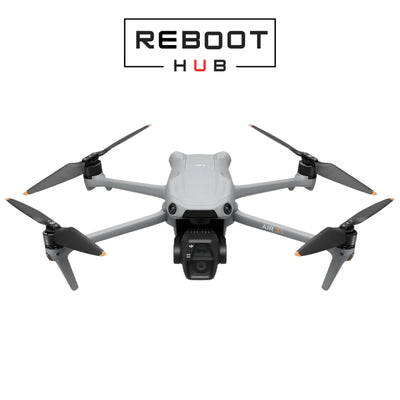
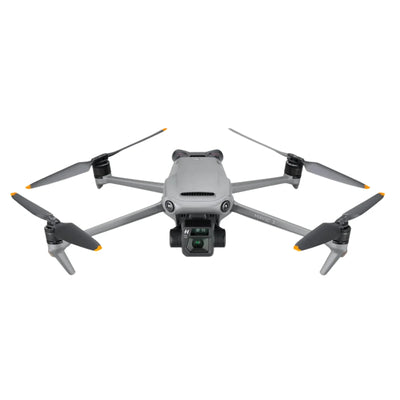
- DJI Mavic 3 / Mavic 3 Pro / Mavic 3 Classic: Eight vision sensors providing true omnidirectional coverage—forward, backward, left, right, upward, and downward. APAS 5.0 with advanced environment mapping. The Mavic 3 Pro's additional telephoto cameras do not contribute to obstacle avoidance; only the wide-angle and mid-range cameras participate in the stereo vision system.
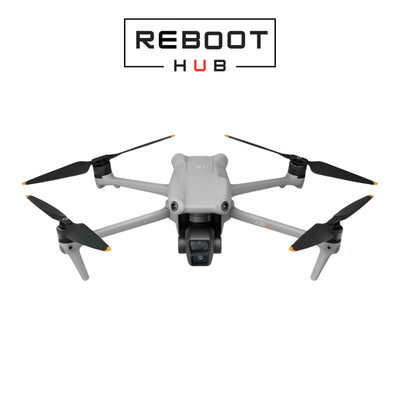
- DJI Air 3: Omnidirectional sensing with binocular vision sensors and a downward ToF sensor. APAS 5.0 with enhanced lateral detection. Particularly strong at detecting obstacles during lateral tracking shots.
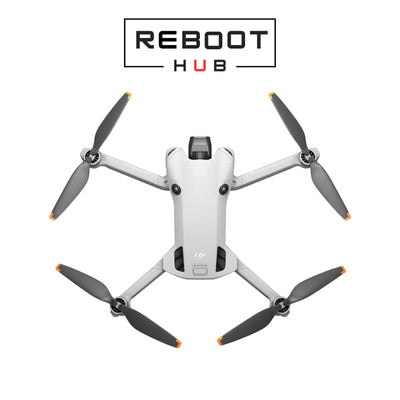
- DJI Mini 4 Pro: Omnidirectional sensing in an ultralight sub-249g package. Forward, backward, and downward binocular sensors plus dual-vision downward sensors. APAS 5.0. Note that the Mini 4 Pro's upward sensing is more limited than the Mavic 3 series due to the absence of dedicated upward-facing sensors.
- DJI Avata 2: Downward and backward sensing with a binocular vision system. However, in full manual FPV mode, obstacle avoidance is disabled by design—you're flying by skill alone.
Partial Coverage Models
These models have significant blind spots you need to account for:
- DJI Air 2S: Forward, backward, upward, and downward sensing. No lateral (left/right) obstacle avoidance. APAS 4.0. This is a critical blind spot during orbit shots and lateral tracking.
- DJI Mini 3 Pro: Forward, backward, and downward sensing. No lateral or upward sensing. APAS 4.0.
- DJI Mini 3: Forward, backward, and downward sensing. Similar limitations to the Mini 3 Pro but with a less refined APAS implementation.
- DJI Mini 2 SE / Mini 2: Downward sensing only (for landing and hover stability). No obstacle avoidance in any direction during forward flight.
Legacy and FPV Models
- DJI FPV: Forward and downward sensing only. Obstacle avoidance is available in Normal mode but disabled in Sport and Manual modes. Given this drone's speed capabilities (up to 140 km/h), the limited sensor coverage makes it one of the riskier models to fly in obstacle-rich environments.
- DJI Mavic Air (original): Forward, backward, and downward sensing. APAS 1.0 with basic avoidance. Largely considered outdated by current standards.
For a complete breakdown of sensor specifications and how they relate to your specific flight environment, see our DJI drone sensor troubleshooting guide.
What Are the Best DJI Obstacle Avoidance Settings for Each Environment?
Default settings work adequately for open-field flying, but most real-world environments demand tailored configurations. Here's how to optimize your APAS settings for the scenarios you'll actually encounter.
Open Areas and High-Altitude Flights
When flying above tree lines, over open water, or in wide-open spaces with minimal nearby obstacles:
- APAS Mode: Set to "Bypass" (available on APAS 4.0+). This allows the drone to maneuver around obstacles automatically rather than stopping.
- Obstacle Avoidance Action: Choose "Bypass" over "Brake" for smoother, more cinematic footage. Braking mode causes abrupt stops that can ruin shots.
- Max Altitude: Set conservatively. Even with omnidirectional sensing, obstacles like cell towers, cranes, and tall trees can appear above your flight altitude if you're not careful.
- Wind Awareness: In winds exceeding 30 km/h, increase your obstacle avoidance buffer. Wind-induced drift can push the drone closer to obstacles than your flight path intends.
Forest and Wooded Areas

Flying among trees is one of the most demanding scenarios for obstacle avoidance systems:
- Switch to "Brake" mode rather than "Bypass." In dense forest environments, the drone's attempt to bypass one tree may put it on a collision course with another. Stopping is safer.
- Reduce your maximum speed to 8–10 m/s. Obstacle avoidance effectiveness decreases significantly at higher speeds because the system has less time to react.
- Fly in Cine mode (available on Mavic 3 and Air 3 series). This automatically limits speed and acceleration, giving APAS more processing time.
- Approach obstacles head-on whenever possible. Forward sensors are typically the most capable in the DJI lineup, with the widest field of view and highest frame rate.
- Avoid flying directly toward thin branches. Vision sensors can miss branches thinner than approximately 2–3 cm in diameter, especially against complex, textured backgrounds like dense foliage.
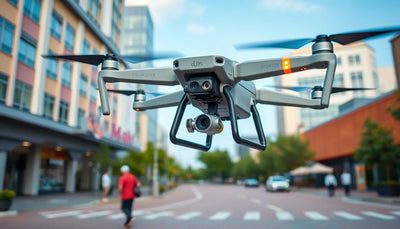
Urban and Built-Up Environments
City flying introduces unique challenges including glass surfaces, thin wires, and complex geometries:
- Enable all obstacle avoidance directions if your model supports it. Urban environments have obstacles at every angle.
- Be extremely cautious around glass buildings. Binocular vision sensors and ToF sensors can fail to detect transparent or highly reflective surfaces. This is one of the most common causes of urban drone crashes.
- Manually survey the area for power lines before takeoff. Power lines remain the single most dangerous obstacle type for drones of all brands. They are thin, often lack visual contrast against the sky, and may not generate strong enough returns for ToF sensors.
- Set your RTH (Return to Home) altitude higher than the tallest nearby structure. If you lose signal and the drone initiates automatic return, it must clear all obstacles on its ascent path.
- Avoid flying near cell towers and antennas. These structures can cause electromagnetic interference that affects both GPS and sensor performance.
Indoor and Confined Space Flying
Indoor flying is possible with certain DJI models but requires special attention:
- Use a model with downward ToF sensors (Mavic 3, Air 3, Mini 4 Pro). GPS is unreliable indoors, so these drones rely on visual positioning and ToF for hover stability.
- Turn off "Propeller Guards Required" warnings in DJI Fly if you're flying indoors without guards, but understand the added risk. Propeller guards are strongly recommended for indoor flight.
- Fly in ATTI mode awareness. Indoors, you may lose GPS. The drone may switch to ATTI (attitude) mode, where it holds altitude but drifts horizontally. Obstacle avoidance still functions in ATTI mode on most recent models, but behavior may be less predictable.
- Reduce lighting-dependent concerns. Vision sensors require adequate light to function. In dimly lit indoor environments, obstacle avoidance reliability drops significantly.
Low-Light and Night Flying
Obstacle avoidance performance degrades substantially in low-light conditions:
- Vision sensors (binocular cameras) require ambient light to calculate depth through parallax. In near-darkness, these sensors effectively become blind.
- ToF and infrared sensors continue to function regardless of ambient light, providing a fallback layer of protection—but with narrower coverage areas.
- The Mavic 3 series and Air 3 handle low-light conditions better than the Mini lineup due to their additional infrared sensor arrays.
- Fly slower at night (5 m/s or less) and rely more on visual line-of-sight (VLOS) and a visual observer if regulations permit night operations.
If you're experiencing sensor errors or calibration issues, consult our DJI sensor calibration and fix guide for step-by-step troubleshooting instructions.
What Are the Known Failures and Limitations of DJI Obstacle Avoidance?
No obstacle avoidance system is perfect. Understanding the known failure modes helps you anticipate and mitigate risks rather than blindly trusting your drone's sensors.
Thin and Wire Obstacles
This is the number one failure scenario across all DJI models. Power lines, guy wires, antenna guy ropes, and even thin tree branches can slip through the sensor resolution gap. The stereo vision system requires a certain number of pixels to resolve an obstacle, and objects thinner than approximately 2–3 cm at distances beyond 10 meters often fall below that threshold. Even the Mavic 3 Pro's advanced sensor suite struggles with power lines in many conditions.
Transparent and Reflective Surfaces
Glass windows, mirrors, calm water surfaces, and polished metal can produce false readings or no readings at all. ToF sensors may pass through transparent glass, and reflective surfaces can confuse the stereo matching algorithm by returning inconsistent depth data. This is particularly dangerous during automated QuickShot maneuvers where the pilot may not be directly monitoring the flight path.
Low-Contrast and Textureless Surfaces
Binocular vision sensors rely on visual texture to calculate depth. A smooth white wall, a fogbank, or a snow-covered field can appear as an empty void to the stereo matching algorithm. ToF sensors partially compensate for this, but their range is typically limited to 10–20 meters, depending on the model.
High-Speed Flight
Obstacle avoidance effectiveness drops sharply above approximately 14–15 m/s (roughly 50–54 km/h). At these speeds, the drone's stopping distance exceeds the sensor detection range, meaning the system may detect the obstacle but cannot physically stop or maneuver in time. In Sport mode on most DJI models, obstacle avoidance is either disabled entirely or significantly reduced.
Environmental Interference
- Strong infrared light sources (direct sunlight at low angles, spotlights, other drones' IR sensors) can blind ToF and infrared depth sensors.
- Rain, fog, and heavy mist scatter both visible and infrared light, reducing sensor range and accuracy. DJI officially rates most drones for operation in dry conditions only.
- Dust and sand near propellers can create visual noise that confuses downward-facing vision sensors.
- Temperature extremes (below 0°C or above 40°C) can affect sensor calibration and processing performance.
Moving Obstacles

While APAS 5.0+ includes some ability to detect and track moving objects, the system is not optimized for fast-moving obstacles like birds, other drones, or vehicles. The processing latency and prediction models work best for stationary or slowly moving objects. Expect limited effectiveness against obstacles moving faster than approximately 5 m/s relative to your drone.
Firmware and Software Bugs
Occasionally, firmware updates introduce regressions in obstacle avoidance performance. Always check the DJI Fly release notes and community forums before updating. If you notice degraded obstacle avoidance after an update, report it through the DJI Fly app feedback system and consider waiting for a patched version before flying in obstacle-rich environments.
How Do You Test Your DJI Obstacle Avoidance System Before Flight?
Don't wait until you're flying near a building to discover your sensors aren't working. A systematic pre-flight test takes less than five minutes and can save you hundreds in sensor repair costs — for reference, a sensor-related gimbal repair typically runs $200–280 at chip-level, versus $380–520 at US or Western authorized service centres. See the full breakdown in the Reboot Hub DJI Repair Cost Database 2026.
Pre-Flight Sensor Status Check
- Power on the drone and remote controller. Open DJI Fly (version 1.12.0 or later recommended for current models).
- Navigate to Settings (gear icon) > Safety. Verify that "Obstacle Avoidance" is set to your desired mode (Brake or Bypass).
- Check the sensor status indicators. On the main flight screen, look for the obstacle avoidance visualization widget. All sensor directions should show as green/active. Red or grey indicators suggest sensor malfunction or calibration issues.
- Review the Health Management System (HMS) alerts. Any pre-flight warnings related to vision sensors should be addressed before takeoff.
Active Flight Test Procedure
Perform this test in an open area with a clear, large obstacle (such as a wall or building face) that you can approach safely:
- Hover at eye level, approximately 5 meters away from the obstacle.
- Slowly fly toward the obstacle using the right stick (forward). Use a speed of approximately 2 m/s.
- Verify the drone stops or initiates a bypass maneuver at a safe distance (typically 2–4 meters from the obstacle, depending on speed and model).
- Test each direction independently: Fly backward into the obstacle, then sideways (if your model has lateral sensors), then ascend toward an overhead structure.
- Check the DJI Fly app notification area. Successful detection triggers an "Obstacle Detected" warning with a directional indicator.
- Test at increasing speeds. Repeat the forward approach at 5 m/s, 8 m/s, and 10 m/s. Note the distance at which the drone begins its avoidance maneuver—it should increase with speed to maintain safe stopping margins.
Post-Test Inspection
- Review your flight logs in the DJI Fly app (Profile > Flight Data). Obstacle detection events are logged with timestamps and sensor direction information.
- Clean your sensor lenses. Use a microfiber cloth to gently wipe all vision sensor windows. Dust, fingerprints, and water spots are common causes of degraded sensor performance.
- Inspect sensor housings for physical damage. Even minor crashes can misalign stereo vision cameras, breaking the calibration and rendering depth calculation inaccurate.
For more detailed pre-flight checklists and maintenance procedures, see our complete drone pre-flight checklist guide.
When (and How) Should You Disable Obstacle Avoidance?
Experienced pilots sometimes choose to disable obstacle avoidance entirely. This isn't recklessness—it's a calculated decision based on specific flight requirements. Here's when and why you might want to do it, and how to do so safely.
Legitimate Reasons to Disable Obstacle Avoidance
- Tight Proximity Filming: When flying close to structures for architectural or inspection work, obstacle avoidance may prevent you from getting the shots you need. A building facade 1.5 meters from your drone triggers constant braking or bypass maneuvers that make smooth footage impossible.
- Automated Flight Paths: When using Litchi, DJI Waypoints, or similar mission-planning apps for repeatable autonomous flights, obstacle avoidance can cause the drone to deviate from the programmed path, leading to inconsistent results.
- Reduced False Positives: In environments rich with sensor-confusing elements (reflective surfaces, thin structures, low-contrast backgrounds), obstacle avoidance may trigger constant false alarms that are more distracting than helpful.
- Performance Requirements: Cinematic shots requiring high-speed passes, aggressive orbits, or dynamic tracking in close quarters may exceed the capability envelope of the obstacle avoidance system.
- FPV and Acro Flying: Full manual control modes inherently conflict with automated avoidance systems. The drone must obey pilot inputs precisely.
How to Disable Obstacle Avoidance
- Open DJI Fly and connect to your drone.
- Tap the Settings (gear) icon in the upper-right corner.
- Navigate to Safety > Obstacle Avoidance.
- Select "Off" to disable all directions, or choose specific directions to disable (forward, backward, lateral) while keeping others active. This granular control is available on models with APAS 5.0+.
- Alternatively, switch to Sport (S) mode on your controller. On most DJI models, Sport mode automatically disables obstacle avoidance to prioritize speed and responsiveness.
- Verify the change visually on the flight screen. The obstacle avoidance widget should show all sensors as inactive or greyed out.
Safety Protocols When Flying Without Obstacle Avoidance
If you choose to disable obstacle avoidance, adopt these additional safety measures:
- Maintain Visual Line of Sight (VLOS): This is both a regulatory requirement in most jurisdictions and your primary obstacle avoidance method when sensors are off.
- Increase your buffer distances. Without sensor backup, fly at least 10 meters from any obstacle you're not actively monitoring.
- Use a spotter/visual observer. A second person watching the drone's blind spots is invaluable when sensors aren't active.
- Practice the maneuver in a safe environment first. Before flying close to a real building or structure with sensors off, rehearse the same flight path in an open area to build muscle memory.
- Check your RTH settings. Ensure the Return-to-Home altitude is set above all nearby obstacles. Without obstacle avoidance, an RTH triggered by signal loss will fly the drone directly into anything in its path.
- Keep obstacle avoidance enabled during takeoff and landing. These are the highest-risk phases of flight, and re-enabling sensors takes only two taps in the app.
Re-Enabling Obstacle Avoidance

Always re-enable obstacle avoidance after completing the specific task that required it to be off. It's easy to forget after a focused filming session and then fly into an automated QuickShot without protection. Make it a habit to check your safety settings before every distinct flight segment.
How Do You Maintain and Care for DJI Obstacle Avoidance Sensors?
Obstacle avoidance is only as reliable as the hardware behind it. Regular maintenance ensures your sensors perform at their best.
Keeping Sensors Clean
- Clean all sensor windows before every flight. Use a dry microfiber cloth. For stubborn smudges, lightly dampen the cloth with distilled water. Never use alcohol-based cleaners on sensor covers, as they can damage anti-reflective coatings.
- Inspect sensor windows after every landing. Propeller wash can kick up dust, pollen, and moisture that settle on sensor surfaces during flight.
- Store your drone in a case or bag that covers the sensor windows. Pocket lint and debris are surprisingly effective at blocking infrared sensors.
Calibration and Alignment
- Vision sensor calibration is rarely needed under normal use, but it becomes necessary after any crash, hard landing, or firmware update that prompts a calibration request.
- To calibrate: DJI Fly > Settings > Safety > Vision Sensor Calibration. Follow the on-screen instructions, which typically involve rotating the drone slowly in front of a textured surface.
- If calibration fails repeatedly, the sensor housing may be physically damaged or misaligned. This requires professional inspection and repair. Attempting to fly with misaligned sensors is more dangerous than flying with sensors disabled, as the system will produce inaccurate depth estimates. Chip-level sensor component replacement typically costs $50–80 at Reboot Hub's professional DJI repair service, versus $160–220 at US or Western authorized centres. For a full pricing breakdown, see the Reboot Hub DJI Repair Cost Database 2026.
Firmware Updates
- Keep both the drone firmware and DJI Fly app updated. Sensor algorithm improvements are frequently included in firmware releases.
- Update the remote controller firmware as well. Some obstacle avoidance features require coordinated firmware versions between the drone and controller.
- After updating, perform a quick obstacle avoidance test to verify the update didn't introduce regressions.
If you notice persistent sensor errors, erratic obstacle avoidance behavior, or physical damage to any sensor housing, professional service is the safest path forward. Our Schedule a Professional Diagnostic Assessment at Reboot Hub uses genuine DJI parts and certified technicians to restore your sensors to factory specifications.
Which DJI Models Have Full Obstacle Avoidance Coverage?
| Model | Forward | Backward | Lateral | Upward | Downward | APAS Version |
|---|---|---|---|---|---|---|
| Mavic 3 Pro | ✅ | ✅ | ✅ | ✅ | ✅ | 5.0 |
| Mavic 3 Classic | ✅ | ✅ | ✅ | ✅ | ✅ | 5.0 |
| Air 3 | ✅ | ✅ | ✅ | ✅ | ✅ | 5.0 |
| Air 2S | ✅ | ✅ | ❌ | ✅ | ✅ | 4.0 |
| Mini 4 Pro | ✅ | ✅ | ✅ | Limited | ✅ | 5.0 |
| Mini 3 Pro | ✅ | ✅ | ❌ | ❌ | ✅ | 4.0 |
| Mini 3 | ✅ | ✅ | ❌ | ❌ | ✅ | 4.0 |
| Mini 2 SE | ❌ | ❌ | ❌ | ❌ | ✅ | N/A |
| DJI FPV | ✅ | ❌ | ❌ | ❌ | ✅ | 3.0 |
| Avata 2 | ❌ | ✅ | ❌ | ❌ | ✅ | 5.0 |
Frequently Asked Questions
Can DJI obstacle avoidance detect power lines?
DJI's obstacle avoidance systems have improved significantly at detecting power lines, especially on models with APAS 5.0 and later, but they remain unreliable for this purpose. Power lines are typically thin (often under 2 cm in diameter), may lack visual contrast against the sky, and can be oriented in any direction—including parallel to the drone's flight path, which makes stereo depth calculation nearly impossible. Even the Mavic 3 Pro, with its eight vision sensors, regularly fails to detect power lines at distances beyond 15 meters. The safest approach is to manually survey every flight area for power lines before takeoff and treat them as if your drone has no obstacle avoidance at all.
Does obstacle avoidance work in Sport mode?
On most DJI models, obstacle avoidance is significantly reduced or completely disabled in Sport (S) mode. The DJI Mini 4 Pro and Air 3 retain some forward and backward sensing in Sport mode but with reduced sensitivity and longer braking distances. The Mavic 3 series disables lateral sensing in Sport mode while retaining forward, backward, and downward sensors. The DJI FPV and Avata 2 completely disable all obstacle avoidance in Sport and Manual modes. If obstacle avoidance is important for your flight, always fly in Normal mode.
Why does my drone trigger false obstacle avoidance warnings?
False positive obstacle detections are most commonly caused by dirty or smudged sensor windows, flying low over highly textured ground surfaces (which downward sensors can misinterpret as obstacles), strong direct sunlight hitting the sensor windows at an angle, or flying near surfaces that produce confusing infrared reflections (such as dark tinted glass or matte black walls). Cleaning your sensor lenses, adjusting your flight altitude, or changing your angle of approach typically resolves these issues. If false positives persist after cleaning, the sensor may require recalibration or professional inspection.
Is obstacle avoidance disabled when using ActiveTrack or QuickShots?
Obstacle avoidance remains active during most intelligent flight modes, including ActiveTrack, QuickShots, and Hyperlapse, but its behavior may change. During ActiveTrack on models with APAS 5.0, the drone will attempt to bypass obstacles while maintaining subject tracking. However, the system prioritizes tracking the subject over obstacle avoidance, which can lead to situations where the drone gets closer to obstacles than it would in manual flight. During QuickShots like Dronie, Helix, and Asteroid, the drone follows a pre-programmed trajectory and will stop or deviate if an obstacle is detected, potentially ruining the shot. This is why pre-scanning the flight area for obstacles before starting any automated maneuver is essential.
How do I know if my obstacle avoidance sensors are damaged?
Common signs of damaged or misaligned sensors include persistent error messages in DJI Fly indicating sensor obstruction when the sensors appear clean, the drone drifting toward obstacles that should be clearly within sensor range, inconsistent stopping distances during obstacle avoidance tests, the obstacle avoidance visualization in DJI Fly showing sensors as permanently inactive (greyed out) despite clean lenses, and unusual buzzing or clicking from the sensor housing area indicating internal damage. If you've experienced a crash—even a minor one—and notice any of these symptoms, stop flying in obstacle-rich environments immediately and schedule a professional sensor inspection. Attempting to fly with misaligned sensors provides a false sense of security that is more dangerous than knowing you have no obstacle avoidance at all.
How much does it cost to repair damaged DJI obstacle avoidance sensors — and is chip-level repair better than full board replacement?
Chip-level repair surgically replaces only the damaged sensor components on the board rather than swapping the entire module, making it significantly more cost-effective. At Reboot Hub in Shenzhen, China, sensor-related repairs range from $50 for an IMU sensor replacement to $200–280 for a full gimbal module, compared to $160–520 at US or Western authorized service centres. A main board chip-level repair costs $150–180 versus $300 for a full board replacement. Our MOHRSS Level 3 Advanced Technician certified team uses genuine DJI parts and completes most repairs within 2–4 business days. For model-specific pricing, check the Reboot Hub DJI Repair Cost Database 2026.
Can I ship my DJI drone internationally for obstacle avoidance sensor repair?
Yes — Reboot Hub in Shenzhen, China accepts international shipments from drone pilots worldwide. Request a free quote through our website, ship your drone to our facility, and our MOHRSS Level 3 certified team will diagnose the sensor issue within 24 hours of arrival. Most obstacle avoidance sensor repairs are completed and shipped back within 2–4 business days using genuine DJI parts. We handle customs documentation for the return shipment. Visit Reboot Hub's professional DJI repair service page to get started.
Your DJI drone's obstacle avoidance system is an impressive piece of engineering, but it's a tool—not a guarantee. The pilots who get the best results from their drones understand exactly where the technology excels, where it falls short, and when to rely on their own skills and judgment instead. Regular sensor maintenance, firmware updates, and pre-flight testing are the habits that keep your drone in the air and out of the repair shop.
If your drone's obstacle avoidance sensors are showing signs of damage, calibration drift, or inconsistent behavior, don't take chances. Visit our Schedule a Professional Diagnostic Assessment at Reboot Hub to schedule an inspection with certified technicians using genuine DJI parts. Getting your sensors properly serviced is far less expensive than replacing an entire drone after a preventable crash.