Skip to content

Available 24/7: (852) 5537 6652

DJI Mavic 2 Zoom Repair Guide

by LauThomas 29 May 2026 0 comments

Reboot Hub support brief

DJI Mavic 2 Zoom Repair Guide

Reboot Hub repair price matrix

Current DJI Mavic 2 Zoom Repair Cost Matrix

These planning ranges come from Reboot Hub's 2026 repair pricing matrix. The model-level repair span is $40-$240. Use the table below for the common cable, gimbal, ESC, arm, board, IMU, and power-management paths, then confirm the exact fault before selecting parts or service.

Repair path Matrix range When to use this range
Ribbon / Flex Cable $40-$64 Camera signal, gimbal tilt, image loss, or impact-damaged cable path.
Full Gimbal Module $160-$224 Severe camera, lens, motor, or stabilization assembly damage.
ESC Module Replacement $56-$72 Propulsion warning, motor control fault, water exposure, or ESC damage.
Motor Arm Replacement $48-$64 Arm, hinge, landing, shell, or motor impact repair.
Main Board (Chip-Level) $120-$144 Component-level board diagnosis before replacing the full board.
Full Board Replacement $240 Full board path when chip-level repair is not practical.
IMU Sensor $40 Calibration, drift, sensor error, or unstable attitude diagnosis.
Battery Management Board $48-$64 BMS, charging, balancing, or power-path fault diagnosis.

Open the full repair cost database for this model. Open the DJI Mavic 2 Zoom Wiki profile.

Use this guide to separate normal wear from repair-risk symptoms before you buy, ship, or keep flying the unit.

Check first

Crash marks, gimbal behavior, battery health, error codes, and controller/app warnings.

Buyer risk

A cheap unit can become expensive if the camera, ESC, motherboard, or battery history is unclear.

Next step

Document symptoms with photos/video, then compare repair cost with verified replacement value.

Helpful next checks: Repair or replace? Battery and parts Used DJI checks

Whether a DJI Mavic 2 Zoom shows a vibrating gimbal, ESC warning, or unstable flight, the useful first step is to separate the visible symptom from the failed component. This guide maps common symptoms to diagnostic branches, likely repair scopes, and repair-versus-replace decisions. Reboot Hub uses component-level diagnosis when technically appropriate; final cost, timing, and parts are confirmed in a written quote after inspection.

Related: Buying a Used DJI Drone: Complete Pre-Purchase Inspection Gu

Why Is My DJI Mavic 2 Zoom Gimbal Shaking — and How Much to Fix It?

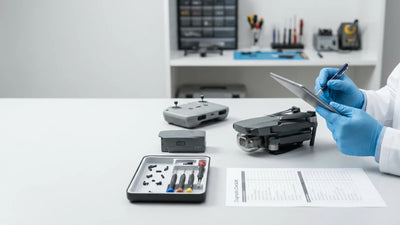
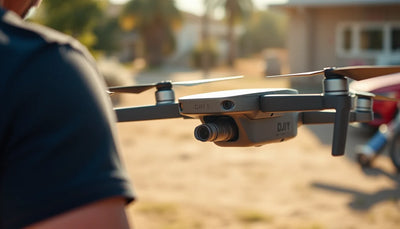
DJI Mavic 2 Zoom Comprehensive Repair Guide Expert - professional cover image
Quick Answer: Chip-level gimbal repair at Reboot Hub costs $40–224 depending on the fault—ribbon cable replacement from $40–64, full gimbal module rebuild from $160–224—compared to $380–520 at US/Western service centres. Most gimbal repairs are completed in 2–4 business days.

The DJI Mavic 2 Zoom's 3-axis mechanical gimbal is one of its most sensitive subsystems, responsible for stabilizing the camera and delivering smooth, cinematic footage. When the gimbal fails, operators typically encounter visual vibrations, unresponsive yaw or pitch motors, horizon drift, or complete camera droop. The DJI Go 4 app will often present specific error codes to aid isolation—codes 40021 (Gimbal IMU Error), 40011 (Gimbal Not Ready/Initialization Failure), 40002 (Gimbal Motor Overload), and 40001 (Gimbal Disconnected) are the most frequent.

Related: DJI Mavic 4 Pro Repair Guide: Comprehensive Diagnostics, Rep

Identifying Common Gimbal Mechanical Issues

Start with an external inspection while the drone is powered off. Gently rotate each gimbal axis by hand; you should feel smooth, slight magnetic resistance. Any grinding, notchiness, or excessive play points to a damaged bearing or a bent motor shaft. Inspect the ribbon cables that run from the camera to the gimbal mainboard. Even a hairline crack in the flexible printed circuit (FPC) can cause intermittent disconnections and error 40001. Look for signs of impact around the yaw arm and the vibration damping board—the rubber dampers can tear after a hard landing, leading to high-frequency jello and eventual motor overload faults.

Power on the aircraft and watch the gimbal initialization sequence. If the camera jerks repeatedly before settling at an off-kilter angle, the problem is usually a stripped motor magnet or a failed Hall sensor on one axis. During flight, note whether the horizon tilts progressively—this often signals a drifting IMU on the gimbal control board, a fault that requires chip-level recalibration or sensor replacement.

Precision Calibration Techniques

Before opening the gimbal, perform a full calibration using DJI Assistant 2 for Mavic. Place the drone on a perfectly level surface and run the automatic gimbal calibration. If the routine fails, manually adjust the yaw, pitch, and roll offsets in 0.1‑degree increments. For advanced drift correction, our technicians use a 6‑axis inertial reference fixture that measures absolute angles while reprogramming the gimbal EEPROM. This restores factory alignment without replacing hardware.

Chip-Level vs. Full Gimbal Replacement Cost Analysis

The Mavic 2 Zoom gimbal assembly comprises the pitch/roll/yaw motors, flexible interconnects, the gimbal mainboard with its own IMU chip, and the vibration isolation mount. Many repair centres default to replacing the entire gimbal module ($380–520 at US/Western service centres) even when the fault is confined to a single component. Chip‑level repair, performed at our Shenzhen, China facility by technicians holding MOHRSS Level 3 Advanced Technician certification, isolates the defective part and restores it at a fraction of the cost. For a full price comparison, see the Reboot Hub DJI Repair Cost Database 2026. The table below contrasts typical jobs.

Repair Type Typical Fault Reboot Hub Chip-Level Cost US / Western Market Rate
Pitch motor seized Gimbal Motor Overload (40002) $160–224 $380–520
Roll FPC torn Gimbal Disconnected (40001) $40–64 $120–200
Gimbal IMU failure Gimbal IMU Error (40021) $40 $160–220
Yaw arm bent Horizon drift, physical asymmetry $48–64 $130–180

Chip‑level repair involves micro‑soldering new Hall sensors, re‑balling the BMI055 IMU chip, or ultrasonically bonding a replacement FPC under a microscope. All work is validated on a 3‑axis gimbal test stand that logs angular deviation, ensuring performance meets OEM specifications before the drone is returned to service.

What Causes DJI Mavic 2 Zoom ESC Errors — and What Does Repair Cost?

The 4‑in‑1 ESC board in the Mavic 2 Zoom controls motor speed, direction, and active braking. Problems here manifest as sudden motor stoppage, uneven thrust, or the dreaded "ESC Error" (code 30085) displayed mid‑flight. Other common codes include 30101 (Motor Blocked) and 30064 (ESC Overheating). Because the ESC sits on the main power distribution board, a single failed MOSFET can cascade into complete power loss.

Detecting ESC Performance Degradation

Begin with a hover test in a safe, open area. Use the DJI Go 4 app's flight log viewer to examine RPM deviation between motors under constant throttle. A healthy Mavic 2 Zoom exhibits less than 5% variation. If one motor consistently draws higher current or dips in RPM, the corresponding ESC phase is degrading. A thermal camera quickly reveals hot spots—normal operating MOSFETs stay below 70°C, while a failing gate driver or shorted winding can spike past 120°C.

For bench diagnosis, we connect the ESC to a programmable load and monitor each phase with a 100 MHz oscilloscope. Missing or distorted PWM pulses confirm a dead MOSFET or a cracked solder joint under the BGA package of the gate driver IC.

Motor Synchronization Problems

Synchronization loss is often misinterpreted as a motor fault. The Mavic 2's ESCs use sensorless field‑oriented control; if the back‑EMF zero‑crossing detection circuit drifts, the motor will jitter or stall during rapid throttle changes. Our Drone Repair Techniques include a proprietary synchronization margin test that measures the phase delay margin across the entire RPM range. When the margin falls below safe thresholds, we replace the precision resistors and capacitors in the sensing network—a job costing $56–72 versus a new ESC board at $200–320.

Chip-Level Repair vs. Complete ESC Module Replacement

Fault Reboot Hub Chip-Level Cost US / Western Market Rate
Single MOSFET dead $56–72 $200–320
Gate driver IC failure $56–72 $200–320
PCB trace delamination $56–72 $200–320

At Reboot Hub, MOHRSS Level 3 technicians replace individual MOSFETs (IRFHM830D or equivalent) under a BGA rework station, then verify each phase with a dynamic load test that simulates in‑flight current demands. This targeted approach restores full ESC functionality while preserving the aircraft's original hardware pairing and calibration.

How Do You Fix a DJI Mavic 2 Zoom IMU Error?

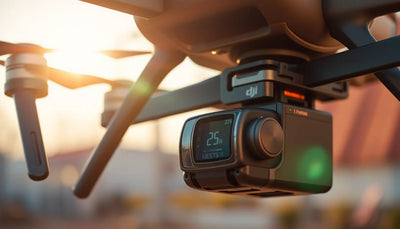
DJI Mavic 2 Zoom Comprehensive Repair Guide Expert - technical diagnostic close-up

The Inertial Measurement Unit (IMU) on the Mavic 2 Zoom comprises dual triple‑axis accelerometers and gyroscopes mounted on a vibration‑isolated PCB. They feed raw motion data to the flight controller's EKF (Extended Kalman Filter). Codes 40011 (IMU Error) and 40021 (IMU Calibration Required) indicate sensor drift, communication failure, or physical damage. If the drone exhibits uncontrolled drift in ATTI mode or refuses to arm with "IMU Error," the IMU subsystem must be examined.

IMU Calibration and Sensor Alignment

Proper calibration corrects for temperature‑dependent bias and misalignment. Using DJI Assistant 2, you can initiate a 6‑point calibration; however, a failed calibration that persists after cooling the drone to room temperature points to a defective sensor chip. Our diagnostic workflow goes further: we read the IMU's raw bias and scale factor data via the serial debug interface. Acceptable zero‑g offset for the ICM‑20602 accelerometer is ±50 mg; anything beyond that triggers a bad‑sensor flag. Similarly, gyroscope bias over 5 dps at rest confirms a damaged MEMS element.

Diagnosing Flight Instability Issues

Intermittent yaw twitches and altitude holding problems often trace back to high‑frequency vibration leaking past the IMU's dampers. We analyse the spectrum using an FFT of the accelerometer output while the motors run at various RPMs. Peaks above 200 Hz exceeding 0.05 g rms indicate compromised dampers or a deformed chassis that is transmitting motor vibrations. Replacing the viscoelastic isolation gaskets (a $40 part) often resolves the issue without touching the IMU electronics. If the sensor itself has developed internal micro‑cracks, chip‑level replacement is required.

Precision Component-Level IMU Repair

Component Reboot Hub Chip-Level Cost US / Western Market Rate
Accelerometer (ICM‑20602) $40 $160–220
Gyroscope reball $120–144 $280–380
IMU flex cable repair $40–64 $120–200

Chip‑level IMU repair requires BGA removal under pre‑heating, meticulous pad cleanup, and placement of a new sensor with <0.05 mm alignment accuracy. All repairs are re‑calibrated on a rate table and temperature‑cycled from -10 °C to +60 °C to confirm bias stability. As described in our DJI Drone Maintenance guide, regular post‑repair vibration checks prevent future drift and improve flight safety.

Why Does My DJI Mavic 2 Zoom Battery Drain Fast — and Can It Be Repaired?

The DJI Mavic 2 Zoom Intelligent Flight Battery (model: MB2PD, 15.4 V, 3850 mAh) uses a 4S LiPo pack with a proprietary BMS (Battery Management System) that tracks cycle count, cell voltages, and temperature. Ageing, deep discharge, and storage at full charge degrade capacity. A healthy battery should deliver at least 90% of its rated capacity after 100 cycles. Below 80%, flight endurance drops noticeably and the battery may trigger an auto‑land prematurely.

Battery Health Diagnostic Methods

Connect the battery to DJI Assistant 2 and read the "Battery Info" page. The app will show full‑charge capacity in mAh, individual cell voltages, and cycle count. A cell imbalance exceeding 0.1 V after a full charge indicates a weak cell. Advanced diagnostics at our facility include a 1C discharge test on an electronic load, measuring actual capacity to within 1% and internal resistance per cell. Cells showing more than 15 mΩ resistance (vs. 8–10 mΩ when new) are candidates for replacement.

Cell-Level Battery Repair Techniques

The intelligent battery is not a sealed unit; with proper technique, the plastic shell can be separated without damage. At our Shenzhen, China centre, MOHRSS Level 3 technicians spot‑weld new matched cells (high‑drain 18650‑format LiPo) using pure nickel strips, then re‑flash the BMS to accept the new pack parameters. All repairs include a full balance charge, followed by a 3‑cycle capacity verification. This service costs $48–64 while a new OEM battery sells for $120–160.

Cost‑Effective Battery Restoration

Condition Repair Method Reboot Hub Cost New OEM Battery
Minor cell imbalance Balanced cycling + BMS reset $48–64 $120–160
One weak cell Single cell replacement $48–64 $120–160
Severely degraded pack Full 4‑cell rebuild $48–64 $120–160

To extend battery life, follow the storage voltage guidelines in our Battery Care Fundamentals article. After any cell‑level repair, we re‑calibrate the fuel gauge so the remaining charge indicator accurately reflects the restored capacity.

Can a Crashed DJI Mavic 2 Zoom Be Repaired?

DJI Mavic 2 Zoom Comprehensive Repair Guide Expert - tools and equipment workspace

The Mavic 2 Zoom's magnesium‑alloy internal frame and carbon‑fibre‑reinforced arms provide excellent rigidity, but high‑energy impacts can cause cracks, deformation, or delamination. Structural integrity is critical for stable flight—even a 0.5° misalignment of a motor mount can induce vibrations that confuse the IMU. After any hard landing, a thorough structural inspection is mandatory.

Comprehensive Damage Assessment

We classify damage into three levels. Level 1 (Minor): scuffs, hairline cracks in the shell, or a single cracked prop guard mount—these can be repaired with structural adhesive and do not affect airworthiness. Level 2 (Moderate): a deformed arm, cracked landing gear leg, or broken gimbal vibration plate. Motor alignment is maintained but the part must be replaced or heat‑straightened. Level 3 (Severe): the central chassis is twisted, multiple arm mounting points are cracked, or the GPS/compass mast is sheared. Such damage often bends the motor shafts and requires a full frame realignment on a precision jig.

Frame and Chassis Repair Techniques

For minor carbon‑fibre arm delamination, we inject aerospace‑grade epoxy under vacuum and cure at 60°C, restoring full strength. Bent magnesium‑alloy arms are cold‑straightened using a hydraulic press with a progressive die, followed by dye‑penetrant inspection to rule out micro‑cracks. If the arm must be replaced, we separate the laminated joint at the center frame using a controlled heat gun and align the new arm to within 0.1 mm using a laser alignment tool. This approach costs $48–64, compared to a complete frame replacement that can exceed $420–580 at US/Western service centres.

Advanced Composite Material Restoration

Damage Class Typical Repair Reboot Hub Repair Cost US / Western Market Rate
Level 1 Adhesive patch, shell section replacement $48–64 $130–180
Level 2 Single arm heat‑straighten + motor alignment $48–64 $130–180
Level 3 Multi‑arm replacement, chassis realignment on jig $120–144 $280–380

All structural repairs are followed by a full 6‑axis vibration test and a 20‑minute hover flight to confirm stability. MOHRSS Level 3 certification ensures that every composite bond and mechanical alignment meets IPC‑7711/7721 rework standards.

What Does Professional DJI Mavic 2 Zoom Diagnostic Repair Involve?

Restoring a Mavic 2 Zoom to factory performance requires a disciplined process that treats the drone as an integrated system. Our workflow at our Shenzhen, China workshop has been refined over thousands of jobs, achieving a first‑time fix rate above 94%.

Professional Diagnostic Protocol

  1. Intake & visual inspection – record all external damage, missing parts, and previous repair evidence.
  2. Functional self‑test – power on and connect to DJI Assistant 2 to capture all error codes and sensor raw data.
  3. Thermal & vibration mapping – a FLIR E8 camera scans the entire electronics stack under load; a laser vibrometer maps motor‑induced resonances.
  4. Targeted disassembly – based on fault isolation, only the necessary modules are opened.
  5. Chip‑level fault finding – oscilloscopes, LCR meters, and logic analyzers probe the signal chain. For intermittent IMU issues, we use a 6‑degree‑of‑freedom vibration stage.
  6. Repair execution – under a 10×–40× stereo microscope, technicians rework SMD components, BGA chips, and flex bonds conforming to MOHRSS Level 3 (IPC‑7711/7721) standards.
  7. Calibration & burn‑in – sensors are recalibrated on NIST‑traceable fixtures, ESC phases are load‑cycled, and the drone undergoes a 1‑hour hover test with real‑time telemetry monitoring.
  8. Final QA – a complete flight envelope check (maximum ascent, descent, full pitch/roll, RTH) confirms that all parameters remain within DJI's tolerance windows.

Chip-Level Repair Methodology

The core philosophy is to preserve the original serialized parts—mainboard, core board, GPS module—to avoid the pairing and license issues that often accompany board‑level swaps. By working at the component level, we can keep repair costs 40–60% below full module replacement while maintaining the exact hardware identity of your drone. This is especially critical for the flight controller's calibration parameters, which are stored in EEPROM and lost when the board is replaced.

Quality Assurance and Testing Procedures

Every repaired Mavic 2 Zoom leaves our lab with a detailed test report that includes:

  • Pre‑ and post‑repair IMU bias and noise figures
  • ESC phase resistance and torque balance
  • Battery capacity and internal resistance per cell
  • Gimbal angular accuracy and stabilization test video
  • Full‑flight log analysis (DAT file) showing attitude, vibration, and motor output consistency.

Our diagnostic equipment includes a Tektronix MDO3000 oscilloscope, a PACE ST 325 BGA rework station, and DJI's official calibration software suite. This investment, combined with MOHRSS Level 3 certified personnel, ensures that every repair – whether a simple arm replacement or a complex IMU reball – meets the same standards as the original production line. As detailed in our Drone Repair Techniques, systematic fault isolation is the difference between a temporary patch and a permanent fix.

Why Choose Reboot Hub for DJI Mavic 2 Zoom Repair?

DJI Mavic 2 Zoom Comprehensive Repair Guide Expert - professional repair process

If your DJI Mavic 2 Zoom is exhibiting any of the symptoms discussed – gimbal jitters, ESC errors, flight instability, reduced battery endurance, or structural damage – a professional chip‑level diagnostic is the most cost‑effective route back to reliable performance. At Reboot Hub, our deep electronics expertise in Shenzhen, China enables us to identify and repair faults that board‑swap services cannot address, often at half the replacement cost. Our chip‑level expertise enables precise, cost‑effective repairs that restore your DJI Mavic 2 Zoom to factory performance standards. Explore Reboot Hub's professional DJI repair service or contact our team today to book an evaluation and get a transparent, no‑obligation quote.

Reboot Hub · Expert Repair

Ready for a Professional Diagnosis?

Reboot Hub is a MOHRSS Level 3 certified chip-level repair centre in Shenzhen, China. We repair what other shops replace — at a fraction of the cost.

Frequently Asked Questions

What are the most common hardware failures of the DJI Mavic 2 Zoom that require repair?

The most frequent failures include gimbal motor overload (error 40002), torn ribbon cables causing gimbal disconnection (error 40001), ESC MOSFET burnout (error 30085), and IMU sensor drift requiring recalibration. At Reboot Hub, gimbal ribbon cable replacement starts at $40–64 and ESC repairs range from $56–72, with most fixes completed in 2–4 business days. We recommend booking a free diagnostic assessment at the first sign of error codes to prevent cascading damage.

Is it safe to repair a water-damaged Mavic 2 Zoom, and what is the process?

Yes, if addressed within 48 hours. The process involves immediate power disassembly, ultrasonic cleaning of all PCBs, corrosion removal from connectors, and chip-level inspection of the ESC and main board. At Reboot Hub, water-damage diagnostics start with a free assessment, and most corrosion-related repairs cost $56–144 depending on affected components. Turnaround is typically 3–5 business days. We recommend removing the battery immediately after any water contact and shipping the drone for professional evaluation within 24 hours.

Where can I find genuine DJI Mavic 2 Zoom replacement parts for a DIY repair?

Authorized DJI resellers, official online stores, and reputable electronics markets like Huaqiangbei in Shenzhen stock OEM arms, gimbals, and cables. Always verify serial numbers and seller feedback to avoid counterfeits. For complex repairs involving the main board or ESC (chip-level work costing $56–144 at Reboot Hub), we recommend professional service rather than DIY—incorrect installation can cause cascading failures that cost significantly more to fix. Visit Reboot Hub's professional DJI repair service for a quote.

How much does a typical DJI Mavic 2 Zoom repair cost at Reboot Hub?

Repair costs depend on the fault. Ribbon cable replacement is $40–64, ESC module repair is $56–72, full gimbal module repair is $160–224, and main board chip-level work is $120–144. These prices are 40–60% below US/Western market rates, which typically run $120–520 for equivalent repairs. Every job includes a free diagnostic assessment and a detailed, no-obligation quote before work begins, usually provided within 1 business day of receiving the drone. See the full breakdown in the Reboot Hub DJI Repair Cost Database 2026.

Can a cracked front arm on the Mavic 2 Zoom be repaired without replacing the entire drone?

Absolutely. A cracked arm can be heat-straightened or replaced with an OEM motor arm for $48–64 at Reboot Hub, typically completed in under 2 hours once approved. US/Western service centres typically charge $130–180 for the same repair. The motors are re-soldered to the main board and the arm is laser-aligned to within 0.1 mm, fully restoring flight stability. We recommend a post-repair hover test to confirm vibration levels are within OEM tolerance.

How long does a DJI Mavic 2 Zoom repair take at Reboot Hub?

Submit clear evidence of the fault and any DJI Fly error codes. Reboot Hub then provides a written diagnosis and quote for the specific unit. The diagnostic fee is charged; when a repair is approved, it becomes a service credit toward eligible labor or service charges only, excluding parts, taxes, and special-order items, and it cannot exceed the labor or service charge. Reboot Hub pays return shipping on an approved repair. If the repair is declined, the diagnostic fee is retained and the customer covers return shipping. Final cost and timing depend on the confirmed fault, parts availability, and destination.

Does Reboot Hub offer a warranty on DJI Mavic 2 Zoom repairs?

Yes. Every chip-level repair at Reboot Hub comes with a 30-day warranty covering the repaired component and related workmanship. If the same fault recurs within the warranty period, we re-repair at no additional cost. This warranty applies to all services from ribbon cable replacement ($40–64) through main board BGA rework ($120–144). We stand behind every repair with documented test reports and a full flight envelope verification before return shipping.

Prev post
Next post

Leave a comment

Please note, comments need to be approved before they are published.

Thanks for subscribing!

This email has been registered!

Shop the look

Choose options

Edit option
Back In Stock Notification
this is just a warning
Login
Shopping cart
0 items
0%