Support & Learning / Module 8 branch
Symptoms, Evidence and Diagnosis
Before this lesson: Preserve the exact symptom and stop when structure, battery, liquid or powered hardware may be unsafe.
What you will understand
- Separate the visible symptom from the functional domains that can produce it.
- Use model- and board-bounded repair experience without turning one case into a universal claim.
- Move from the customer's concern to written findings, approval and staged acceptance evidence.
Mavic 3 Pro three-camera diagnosis
A Mavic 3 Pro repair path must preserve the aircraft's defining three-camera gimbal and the customer's actual shooting or flight concern. The reviewed service architecture separates E2 camera/gimbal functions, E1E flight-control and sensing, P1 image transmission, power management, storage, GPS/IMU/TOF and ESC domains. Training material also identifies OPT3101 in the TOF path plus SPD1178D and AON7544 devices in the documented ESC revision. These details are useful when they narrow exact-unit evidence, not when they are used as automatic answers.
Quick answer
Map the symptom to camera, flight-control, link, power or propulsion before naming a board
Confirm the Mavic 3 Pro three-camera cluster, controller, battery, board revision, event history and affected lens or flight function. Separate E2, E1E, P1, PMIC, storage, TOF, GPS/IMU and ESC evidence. Reboot Hub can disclose a confirmed component from real repair experience, but every conclusion remains tied to case-level evidence, written unknowns and staged acceptance tests.
DJI Mavic 3 Pro · series repair estimates by path
Each USD figure is a historical series-level estimate for the listed repair path, not a quote for this exact aircraft. Diagnosis determines the parts, labor, calibration, and testing needed.
| Repair path | Estimated USD range | When to consider it |
|---|---|---|
| Ribbon / flex cable | $63-$100 | Camera signal, gimbal tilt, image loss, or impact-damaged cable routing. |
| Complete gimbal module | $250-$350 | Camera, lens, motor, or stabilization damage beyond a cable-only repair. |
| ESC module / board | $88-$113 | Propulsion warnings, motor-control faults, water exposure, or ESC-stage damage. |
| Motor arm replacement | $75-$100 | Structural damage involving an arm, hinge, landing point, shell, or motor mount. |
| Main board (chip-level) | $188-$225 | A board fault can be isolated at component level before full-board replacement. |
| Complete board replacement | $375 | The board is physically unrecoverable or component-level repair is not practical. |
| IMU sensor / calibration path | $63 | Calibration loops, drift, sensor errors, or unstable attitude require diagnosis. |
| Battery management board | $75-$100 | Charging, balancing, BMS, or battery power-path faults require diagnosis. |
What evidence should be captured before the customer acts?
How does repair-bench experience map the fault domains?
How do you confirm a Mavic 3 Pro rather than another Mavic 3 variant?
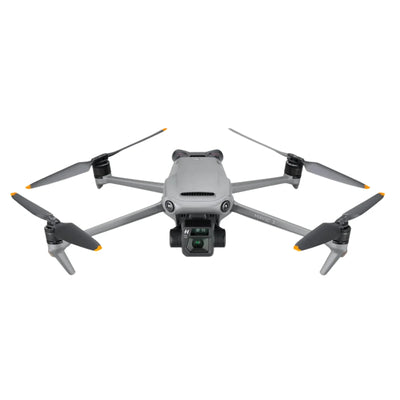
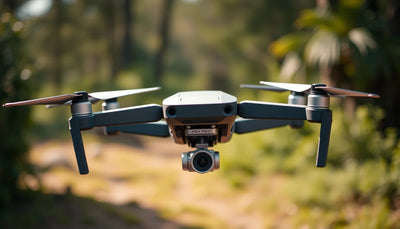
Photograph the product label and the rectangular three-camera gimbal cluster. The Pro combines a large 4/3 Hasselblad main camera with medium-tele and tele optical paths; the Classic carries a single camera, while other variants have different arrangements. Record controller, battery, case, identifiers and visible condition. A family description is not enough for camera, gimbal or parts compatibility.
Use Mavic 3 Pro consistently in the intake, quote and acceptance plan. If the customer has a Cine version or another revision, record that separately because storage and supplied equipment can change the scope. Exact board and component findings should name the observed revision and case evidence, not imply every Pro uses an identical failure path.

What do E2, E1E and P1 establish?
The reviewed Pro training architecture assigns E2 to gimbal control, camera functions, SSD/storage context and Wi-Fi; E1E to flight control including vision, height, TOF, GPS, ADS-B, fill light and fan; and P1 to image transmission. PMIC manages power, DDR supports runtime and cache, and EMMC stores firmware. These roles help locate a boundary before a part is proposed.
A camera that records locally but loses live view points differently from a cluster that produces no file, and both differ from an aircraft with unstable positioning or no power. The written diagnosis should state the reproduced symptom and the domains still interacting. A board map guides tests; it does not prove the whole board is defective.
How should the three camera paths be tested?
Preserve original files and identify whether the concern affects the 4/3 main, medium-tele or tele view. Record focus, exposure, artifacts, color, recording, mode, temperature and repeatability. Separately observe gimbal initialization, axis movement, horizon and vibration. A defect in one optical path does not automatically condemn the other lenses or gimbal mechanics.
Camera modules, E2 control, connections, processing, storage and P1 transmission can overlap. The report should state whether the evidence supports one optical path, the complete camera-gimbal assembly, a connection, processing, storage or link. Acceptance needs sample files and stabilization evidence across the functions the customer actually uses.

Does a gimbal warning prove the three-camera assembly must be replaced?
No. Preserve impact, pressure, liquid and transport history. Inspect the powered-off housing, damping and clearance without forcing any axis. During supported startup, record initialization, axis response, horizon, vibration and whether each camera still produces a usable file. A blocked axis, feedback warning, tilted horizon and lens-specific image fault are distinct branches.
The quote should explain whether evidence supports mechanical correction, damping, feedback or motor, connection, E2 control, camera-gimbal assembly or additional investigation. A complete assembly can be appropriate when the boundary is broad; a bounded local repair can be stronger when structure and adjacent functions are proven.
What belongs in no-power and charging diagnosis?
Record battery identity, latch, terminals, charger, cable, source, LEDs, USB behaviour, startup and abnormal heat. The architecture includes PD/PPS charging, a USB switch, PMIC-managed domains, DDR and EMMC. A port concern, battery communication warning, failed charge and no aircraft startup are not the same problem even when they appear after one event.
Stop on swelling, liquid evidence, burnt odor, deformation or abnormal heat. Bench findings should separate pack, contact or connector, charging control, regulated power and a downstream domain pulling supply down. Exact chip or component experience may be named for the documented board revision and measurements, never as a universal no-power recipe.

How are TOF, vision, GPS and IMU warnings separated?
Record the exact warning, direction, logs, impact history, environment, lighting, surface and whether the concern persists in suitable conditions. The Pro architecture routes vision, height, TOF and GPS through E1E, while the downward TOF board map identifies OPT3101 for the documented revision. That component name explains architecture; it does not prove the device caused one warning.
Connections, supply, contamination, alignment, surrounding components, environment and processing may produce similar symptoms. The report distinguishes those hypotheses and records which supported tests passed. Acceptance reproduces the positioning, sensing and height-control requirement under documented conditions instead of treating one calibration result as proof of the whole aircraft.
How should SPD1178D and AON7544 ESC evidence be used?
The documented Mavic 3 Pro training board map identifies two SPD1178D devices and twenty-four AON7544 power devices in that ESC revision. Record the affected motor position, warning, propeller, arm geometry, harness, impact path, abnormal heat and whether the behaviour follows a channel. The propulsion chain includes control, power stages, motors, connections and structure.
A stopped motor does not prove a particular AON7544 or SPD1178D failed. That conclusion requires the exact board revision and case-level measurements. Reboot Hub can state the confirmed device in a written finding while also recording adjacent risk and the required propulsion tests. Public content does not expose an unsafe component-replacement procedure.

What separates camera capture from P1 image transmission?
Record whether each camera creates a healthy local file, whether gimbal control remains available, whether telemetry and controls are stable, and whether live view fails across one controller or environment. A local file with unstable display differs from corrupted capture or complete disconnect. Preserve the exact controller, antenna and app context along with original files.
The boundary can involve camera output, E2 processing, storage, P1 transmission, controller or environment. A professional finding names the layer that was reproduced and the comparison used. It does not tell the customer to replace a camera cluster or core board because one uncontrolled radio session was poor.
What changes after impact, liquid or earlier repair?
Impact can load the gimbal, lenses, damping, arms, motors, sensors, GPS/IMU and internal connections in one event. Liquid can reach terminals, USB, connectors and board areas beyond the visible entry. Earlier work can alter screws, seals, cables, alignment and board revision. Preserve photos, logs and sequence, then stop repeated power cycles when moisture or abnormal heat is present.
The repair plan separates confirmed damage, credible adjacent risk and inaccessible areas. A local repair is stronger when the fault and structure are bounded. Multi-domain damage, corrosion, major structure or uncertain camera and core-board exposure may justify a wider assembly or documented replacement. The customer receives that tradeoff before approval.
How does Reboot Hub remove the customer's uncertainty?
We start with the customer's concern and account for every reasonable doubt: exact Pro variant, affected lens, board revision, event history, known and unknown findings, proposed work, parts provenance, timing, tests and written terms. Technical depth is used to make the decision transparent, not to overwhelm the customer with chip names.
If repair is stronger, the scope and acceptance plan explain why. If replacement is stronger, the comparison identifies a documented exact unit and complete kit rather than an anonymous marketplace listing. This turns the article from information into a trusted path from concern to action.
What should a Mavic 3 Pro return-to-service gate prove?
Match aircraft, controller, batteries and accessories to intake. Address the original concern, then verify all affected camera paths, original-file recording, gimbal initialization and stabilization, E2 functions, P1 link, controls, E1E positioning and sensing, TOF, charging, propulsion and a staged controlled flight. Add adjacent tests where impact or access could affect them.
The handover lists written findings, known and unknown items, parts provenance, tests and remaining observations. It separates 1-3 business days after quote approval from transit and the 30-day repair warranty from the separate 180-day product warranty. The customer receives evidence for the actual three-camera workflow.
Keep exploring
Further reading
From The Reboot Hub Chronicle

From Drone Guides