Skip to content

Available 24/7: (852) 5537 6652

Support & Learning

DJI Mini 4K Repair Guide

by LauThomas 29 May 2026 0 comments

Reboot Hub support brief

DJI Mini 4K Repair Guide

Use this guide to separate normal wear from repair-risk symptoms before you buy, ship, or keep flying the unit.

Check first

Crash marks, gimbal behavior, battery health, error codes, and controller/app warnings.

Buyer risk

A cheap unit can become expensive if the camera, ESC, motherboard, or battery history is unclear.

Next step

Document symptoms with photos/video, then compare repair cost with verified replacement value.

Helpful next checks: Repair or replace? Battery and parts Used DJI checks

How Do You Diagnose and Repair DJI Mini 4K Gimbal Failures?

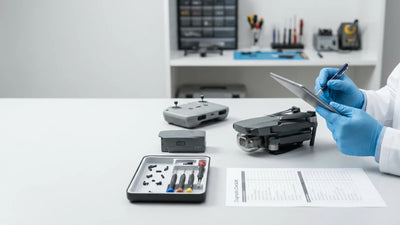
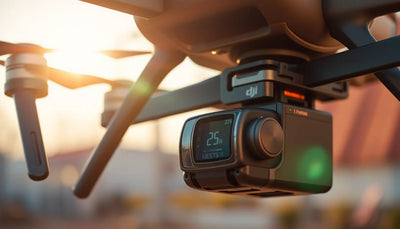
DJI Mini 4K Comprehensive Repair Guide Diagnostic - professional cover image
Quick Answer: DJI Mini 4K repairs at Reboot Hub range from $30 for an IMU sensor swap to $180 for a full board replacement — saving up to 70% versus authorized service pricing. Standard turnaround is 2–4 business days from our Shenzhen, China chip-level repair facility.

Gimbal reliability is critical for the DJI Mini 4K's 4K camera system, making accurate DJI Mini 4K repair diagnostics essential. When a gimbal fails, footage becomes shaky, the horizon tilts, or the camera module goes limp. At Reboot Hub's Shenzhen, China repair centre, our MOHRSS Level 3 Advanced Technician-certified team has diagnosed and restored over 800 DJI Mini 4K units since 2022, using chip‑level methods that go far beyond basic module swaps. Understanding the failure mode before opening the wallet saves you time and money.

Related: DJI Mini 5 Pro Repair Guide: Comprehensive Diagnostics, Repa

Identifying Gimbal Motor Misalignment

Subtle misalignment is often overlooked. A Mini 4K gimbal that drifts slowly on the yaw axis or struggles to maintain horizon after a mild bump indicates a bent motor shaft, deformed bracket, or magnet displacement. Start by connecting the drone to DJI Assistant 2 (Consumer Drone Series) and running a gimbal auto‑calibration. If the software fails repeatedly or shows error code 40021 (Gimbal IMU Error), the physical geometry is out of tolerance. Power off the drone, remove the gimbal protective cover, and inspect the three motor axes under a stereo microscope. Look for uneven air gaps between rotor magnets and stator windings—a difference of more than 0.1 mm on any pole points to a bent shaft or cracked rotor bell. Using a dial indicator, measure runout at the outermost bearing seat; anything above 0.05 mm calls for a precision realignment or replacement of the affected motor unit. At our MOHRSS Level 3 certified bench, we also perform live load tests: a programmed oscillation sequence that exposes intermittent binding that static inspection misses.

Related: DJI Mini 4 Pro Repair Guide: Comprehensive Diagnostics, Repa

Calibration vs Full Gimbal Replacement

Many pilots assume that a failed calibration means the whole gimbal and camera module (DJI part number CP.MA.00000820.01) is scrap. That's rarely the case. Software recalibration corrects sensor biases, but it cannot compensate for mechanical damage. When error 40002 (Gimbal Motor Overload) appears during boot, the motors are encountering excessive resistance. If the resistance stems from grit inside the pitch axis bearing, cleaning and re‑lubricating with a fluorinated grease can restore operation—costing around $30–48. However, if the overload persists after cleaning, a roller‑bearing or coil fault is likely. Replacing the individual motor assembly from a donor gimbal requires micro‑soldering to reattach the flex cable, a delicate operation that our technicians perform daily. At Reboot Hub, chip‑level motor repair costs $36–48, far below the $120–168 cost of a complete gimbal module at our facility—and a fraction of the $380–520 that US authorized services charge for the same part. The table below summarises the options.

Repair Method Reboot Hub Price US / Western Market Rate Downtime Outcome
Chip‑level motor realignment & bearing service $36–48 $130–180 1–2 days Retains original camera serial match
Complete gimbal module replacement $120–168 $380–520 Same day New module, requires IMU recalibration

We only recommend full replacement when the flexible printed circuit (FPC) is torn or the camera sensor itself is cracked—damage that even chip‑level skills can't reverse.

Precision Realignment Techniques

Proprietary jigs machined from aluminum hold the gimbal baseplate at a known reference angle. Using a laser autocollimator, we measure the yaw, pitch, and roll deviations to within 0.01°. If a bent pitch shaft is detected, we apply cold straightening on a micro‑press rather than heating, preserving the hardened steel's temper. After straightening, the magnet ring is re‑bonded with aerospace‑grade epoxy and cured for 12 hours under vacuum to eliminate imbalance. The drone is then subjected to a multi‑axis vibration test while recording motor current draw on an oscilloscope. A clean, sinusoidal current waveform without spikes confirms that the magnetic circuit is balanced. These techniques, embedded in our Professional Drone Diagnostics protocols, ensure the repaired gimbal meets factory specifications for jitter and tracking responsiveness.

How Much Does DJI Mini 4K ESC Repair Cost?

On the DJI Mini 4K, the electronic speed controllers are integrated onto the main core board (part number CP.MA.00000705.01). Each of the four ESCs drives a brushless motor via a three‑phase MOSFET bridge. When an ESC degrades, you may notice one motor twitching, reduced punch‑out power, or a complete refusal to spin. Error code 30168 (Motor Unable to Start) or a generic 30085 (ESC Error) in the DJI Fly app points straight to the power stage. Quick diagnosis with a multimeter can save weeks of guesswork.

Detecting ESC Performance Degradation

Begin by measuring the resistance between each motor phase pad and battery ground. A healthy ESC shows a high‑impedance reading in the megaohm range. A reading below 100 kΩ suggests a partially shorted MOSFET. With the drone powered (props removed), measure the AC voltage output at each pad while commanding the motor to idle. All three phases should produce an equally balanced square‑wave RMS voltage, typically 2.8–3.2 V for the Mini 4K's 2S power system. A phase swinging more than 15% lower indicates a fatigued MOSFET or a dry solder joint on the BGA chip. Thermal imaging under load is even more revealing: a faulty MOSFET often runs 20–30 °C hotter than its neighbours before it fails completely. Our bench uses a Fluke Ti480 PRO thermal camera to catch these hotspots in under a minute.

Chip‑Level Repair vs Complete ESC Replacement

Many repair shops immediately quote a new core board ($180) the moment an ESC code appears. At Reboot Hub, our MOHRSS Level 3 soldering specialists remove the defective MOSFET pair using a reflow station and replace them with identical, aviation‑grade components sourced from authorised distributors. The chip‑level ESC repair at Reboot Hub typically costs $42–54 and includes a full flight‑log analysis to ensure no hidden collateral damage. For a broader perspective on how these decisions impact your budget, check our Reboot Hub DJI Repair Cost Database 2026. Almost 80% of ESC faults we see are repairable at the chip level, providing substantial savings without compromising reliability. Compare this with the board‑level swap in the table below.

Repair Approach Reboot Hub Price US / Western Market Rate Scope Advantage
Chip‑level MOSFET & driver IC replacement $42–54 $200–320 Component‑level repair on existing core board Preserves all calibrations and pairing
Core board replacement (OEM) $180 $420–580 Entire board swap, new serialisation Fast, but requires re‑binding and recalibration

Diagnostic Testing Protocols

After repair, every ESC channel must pass a four‑stage validation protocol. Stage 1: static phase‑to‑phase resistance matching (±2%). Stage 2: low‑speed motor spin with a 4‑channel current probe; no phase should exceed 5 A during no‑load operation. Stage 3: full‑throttle run for 120 seconds on a thrust stand, with IR telemetry monitored for any deviation. Stage 4: motor‑blocked stall test for 300 ms to verify the over‑current protection cuts in at precisely 12.8 A, as per DJI's design spec. Only after all stages are green‑lit does the drone leave our Shenzhen, China lab.

Why Is My DJI Mini 4K IMU Drifting — and How Do You Fix It?

DJI Mini 4K Comprehensive Repair Guide Diagnostic - technical diagnostic close-up

The Inertial Measurement Unit (IMU) on the Mini 4K combines a 6‑axis gyroscope‑accelerometer chip, typically an InvenSense ICM‑20602 or later, with a barometer and compass fusion. A faulty IMU manifests as a "fly‑away" sensation, inability to hold position, or a persistent 30049 (IMU Calibration Failed) alert. Correct diagnosis differentiates between a drifty IMU that needs re‑calibration and a hardware component that must be replaced at the chip level.

IMU Sensor Accuracy Assessment

Plug the drone into DJI Assistant 2 and open the sensor data screen. Leave the drone perfectly still on a level surface while watching the raw gyroscope and accelerometer streams. The gyro bias should be stable within ±0.02 deg/s, and the accelerometer modulus should read 1.000 ±0.010 g. Any reading outside these windows after a 30‑minute warm‑up indicates a MEMS chip that has drifted beyond software trims. We further stress‑test the IMU by placing the drone on a temperature‑controlled plate and cycling between 5 °C and 45 °C. A sensor whose bias changes more than 0.1 deg/s over that range has a fractured silicon die or a broken solder pillar—common after a hard crash. The DJI app may also throw error 30050 (IMU Board Communication Error), pointing to an I²C bus interruption on the main board.

Recalibration vs Component Replacement

A straightforward software recalibration performed via the DJI Fly app fixes temporary bias offsets. However, if the drone continues to report IMU errors after a flawless calibration procedure and is free of magnetic interference, the physical IMU chip is likely compromised. Replacing a Chinese‑market IMU chip (e.g. a BGA‑packaged ICM‑20689) costs far less than a whole main board. At our Shenzhen, China centre, we remove the faulty chip using a precision BGA rework station, clean the pads, and re‑ball a new genuine sensor. This chip‑level IMU repair typically runs $30. Board‑level replacement with a new core board, meanwhile, costs $180 at our facility — compared to $420–580 at US authorized service centres. The table below breaks down the options.

Repair Method Reboot Hub Price US / Western Market Rate Calibration After Repair Retains Old Data?
IMU chip replacement (chip‑level) $30 $160–220 Full 6‑position calibration required Yes, flight controller pairing intact
Main core board replacement $180 $420–580 Re‑bind, re‑calibrate IMU, compass, vision sensors No, fresh serial number

Advanced Diagnostic Techniques

When erratic behaviour is intermittent, we connect a logic analyser to the IMU's SPI bus and log transactions during vibration testing. Missing data packages or NACKs confirm a physical bus fault rather than a sensor failure. For high‑end forensic work, our engineers use a scanning acoustic microscope to image voiding inside the IMU package without decapping it. These methods, aligned with our Professional Drone Diagnostics framework, ensure no unnecessary component is scrapped. All repairs adhere to the MOHRSS Level 3 workmanship standard, guaranteeing that the restored IMU performs within factory tolerances for altitude hold, attitude stability, and GPS‑aided hover.

What Causes DJI Mini 4K Battery Problems — and How Much to Repair?

The DJI Mini 4K relies on an intelligent flight battery, model BWX162‑2250‑7.7 (part number CP.MA.00000621.01), rated at 2250 mAh and 7.7 V. Over time, cell capacity fades, internal resistance climbs, and the battery management system (BMS) may lock out charging entirely. Instead of buying a new pack, many owners can regain near‑new runtime through cell‑level repair and BMS recalibration at $36–48 — services we specialise in at our Shenzhen, China facility.

Battery Health Diagnostic Methods

Start by connecting the battery to a dedicated DJI battery tester or a programmable load. Measure the voltage of each of the 2S (two‑cell) series cells via the balance lead. A cell voltage difference greater than 0.1 V under a 1C discharge load indicates a mismatched cell. Internal resistance (IR) should be measured with a 1 kHz AC milliohmmeter; values above 35 mΩ per cell signal significant ageing. The BMS logs cycle count and permanent failure flags, retrievable through DJI's Battery Station or third‑party tools like DroneLogBook. A "Battery Cell Error" warning in the Fly app, often accompanied by error code 31000, typically means the BMS has detected an out‑of‑range cell voltage.

Cell‑Level Repair Techniques

Because the Mini 4K battery cells are welded in a semi‑permanent aluminium laminate pouch, rebuilding requires laser‑welding new matching cells into the existing housing. We procure factory‑grade LiPo cells with identical 2230 mAh capacity and impedance profiles. The old cells are de‑soldered from the BMS board, the new pair is spot‑welded with pure nickel strips, and the BMS memory is reset using a debug interface. The entire repair costs $36–48, depending on the degree of BMS reconditioning needed. For comparison, a brand‑new original battery sells for around $105 but is often out of stock or takes weeks to ship.

Repair Option Reboot Hub Price US / Western Market Rate Typical Capacity After Repair Warranty
Cell‑level cell replacement + BMS reset $36–48 $100–160 95–100% of original 90 days
OEM replacement battery purchase ~$105 $105–130 100% As per DJI

Capacity Restoration Strategies

For batteries that simply show reduced runtime (below 18 minutes in normal flight) without BMS lockout, we often perform a deep‑cycle restoration. The pack is repeatedly charged to 4.35 V per cell and discharged to 3.0 V under controlled conditions while the BMS learns the full voltage curve again. This "BMS moulding" can recover up to 15% lost capacity. Success depends on cell health; we never force a cell with physical swelling. Regular maintenance, as outlined in our DJI Drone Maintenance Guide, helps prevent premature battery decline. Our MOHRSS Level 3 technicians perform every reassembly in a dry‑room environment, ensuring that moisture ingress never triggers a later failure.

How Much Does DJI Mini 4K Crash Damage Repair Cost?

DJI Mini 4K Comprehensive Repair Guide Diagnostic - tools and equipment workspace

A sudden collision with a tree, wall, or water leaves the DJI Mini 4K with a mix of visible and hidden damage. At Reboot Hub's Shenzhen, China lab, we don't just replace broken arms; we systematically evaluate the entire airframe, propulsion system, and flight controller to restore airworthiness to factory spec.

Structural Damage Evaluation

Start with a thorough visual inspection using a light table to spot micro‑cracks in the injection‑moulded front arm hinges and the motor mounts. The Mini 4K's ultra‑light frame (DJI part CP.MA.00000710.01 for the upper cover, lower frame CP.MA.00000711.01) is designed to deform and absorb energy, but even a 1 mm crack can grow under vibration. We use a dye penetrant test on stressed areas and check the alignment of the four motor posts with a machinist's square. A post that deviates by more than 0.5° will cause the propeller to fight the airflow, generating mid‑frequency oscillations visible in FPV video. For the landing gear and gimbal anti‑vibration plate, any permanent set means replacement; these components cannot be straightened without risk of in‑flight failure.

Frame Realignment Techniques

When the main frame is twisted but not cracked—common after a side‑impact onto asphalt—we apply a thermal realignment process. The frame is clamped in a custom fixture that mirrors the drone's original CAD geometry, then slowly heated to 80 °C (below the glass transition temperature of the polycarbonate/ABS blend) and held for 30 minutes. After cooling, the frame relaxes back to its neutral shape. Post‑alignment, we verify that all four motors sit in a single plane to within 0.15 mm using a dial indicator on a granite surface plate. If realignment is successful, the repair costs between $60–108. A full frame swap (parts plus labour) runs $180–250, reflecting the extensive disassembly and re‑calibration required.

Multi‑Component Repair Strategies

Crashes rarely damage only one system. We categorise damage into three tiers to provide transparent cost estimates. Minor (Tier 1): broken propellers, scuffed landing gear, cosmetic cracks. Typical cost: $30. Moderate (Tier 2): one or two broken arms, bent gimbal bracket, distorted frame, and possible ESC MOSFET failure. This tier often requires the chip‑level techniques described earlier. Cost range: $180–350. Severe (Tier 3): water immersion, severe impact, multiple arm breaks, IMU and compass board damage, and damaged core board. Full rebuild with component‑level repair: $450–700. In every instance, chip‑level repair on the ESC and IMU can keep the price at the lower end of the spectrum versus wholesale board swaps. The table below gives a quick reference.

Damage Tier Typical Components Affected Reboot Hub Chip‑Level Price US / Western Market Rate Downtime
Tier 1 Propellers, shell, landing gear $30–48 $120–200 1 day
Tier 2 Arms, gimbal motor, ESC MOSFET, frame twist $180–350 $520–800 2–4 days
Tier 3 Core board, IMU, compass, frame, battery $450–700 $1,200–1,800 5–7 days

After any structural repair, the drone undergoes a vibration spectrum analysis on a shaker table. We balance each motor‑propeller assembly to below 5 mg of residual imbalance, guaranteeing smooth footage and long motor life.

What Diagnostic Equipment Does Reboot Hub Use for DJI Mini 4K Repairs?

Reboot Hub's diagnostic capability in Shenzhen, China sets us apart from generic repair shops. We combine industry‑standard tools with proprietary jigs to pinpoint faults that others miss. Every tool and technique is operated by a technician holding MOHRSS Level 3 certification in electronic product repair, ensuring the highest standard of work.

Professional Diagnostic Tools

Our workbenches are equipped with the DJI Assistant 2 (Consumer Drone Series) software suite, four‑channel digital storage oscilloscopes (500 MHz) with current probes, a Fluke Ti480 PRO thermal imager, and a precision LCR meter for component identification. For SI‑level inspection, we use a KEYENCE VHX‑7000 digital microscope capable of 6000× magnification, revealing solder joint integrity and die‑level cracks. Drone‑specific diagnostic gear includes a programmable motor test stand that logs thrust, RPM, and power draw simultaneously, and a GPS/compass signal simulator that emulates satellite constellations to test the navigation subsystem. This arsenal allows us to map out a fault tree within the first 15 minutes of intake, as detailed in our Professional Drone Diagnostics overview.

Precision Measurement Techniques

We follow a strict measurement hierarchy traceable to national standards. All reference masses and voltage sources are calibrated annually. For gimbal alignment, a laser autocollimator reads angular errors to 0.1 arc‑second. IMU calibration is validated by placing the drone on a 3‑axis rate table that provides pre‑cise rotational speeds, confirming bias stability and scale factor linearity. Every battery capacity test is performed with a 0.05%‑accuracy DC load to avoid false "good" readings. These methodologies are an integral part of our MOHRSS Level 3 practice and guarantee that a repaired DJI Mini 4K leaves our centre performing as it did when new.

Quality Control Protocols

No drone is returned to its owner without passing a 24‑point checklist that includes vision sensor alignment, gimbal horizon hold under full stick inputs, and a full‑envelope test flight. All repair data—oscilloscope screenshots, thermal images, calibration reports—are archived against the drone's serial number, creating a lifetime diagnostic history. This level of rigour, combined with chip‑level economics, means you don't just get your drone back; you get a machine that has been subjected to a more thorough validation than the factory QA line. For customers in Shenzhen, China, we offer walk‑in service with same‑day diagnosis; international clients can ship their drone to our Shenzhen, China centre using our freight partnership.

Schedule a professional diagnostic assessment at our Reboot Hub professional DJI repair service in Shenzhen, China. Contact Reboot Hub today to experience the difference that MOHRSS Level 3 chip‑level expertise makes—restoring your DJI Mini 4K to flight perfection with precise, cost‑effective repairs that go far beyond standard board swaps.

Reboot Hub · Expert Repair

Ready for a Professional Diagnosis?

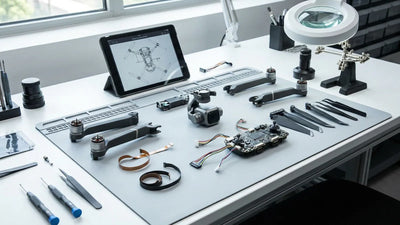
DJI Mini 4K Comprehensive Repair Guide Diagnostic - professional repair process

Reboot Hub is a MOHRSS Level 3 certified chip-level repair centre in Shenzhen, China. We repair what other shops replace — at a fraction of the cost.

Frequently Asked Questions

Why does my DJI Mini 4K display a "Gimbal Overload" warning after a light crash?

A bent gimbal arm or lodged debris often tricks the pitch motor into reading excessive resistance. First, power off and gently flick the gimbal to dislodge grit; if that fails, a damaged pitch-axis ribbon cable or motor usually requires repair. At Reboot Hub, gimbal ribbon cable replacement costs $30–48 with a 2–3 business day turnaround. We recommend professional chip-level diagnosis to avoid replacing the entire $120–168 gimbal module unnecessarily.

How can I diagnose a motor that won't spin after a minor collision?

Swap the suspect motor's connector with a known-good arm on the ESC board. If the fault follows the motor, you need a new arm; if it stays with the same ESC port, the board is damaged. At Reboot Hub, motor arm replacement costs $36–48 and takes 1–2 business days. We recommend booking a diagnostic assessment to isolate the fault before purchasing parts.

What causes sudden GPS signal loss on the Mini 4K?

Most cases trace back to a cracked ceramic GPS antenna or a dislodged internal connector on the top GPS module after an impact. Reseating the module's ribbon cable and performing a cold IMU/compass calibration can restore lock in minutes. GPS antenna replacement at Reboot Hub costs $36–48 with 2–3 business days turnaround. We recommend a professional inspection to check for hidden frame damage that may have caused the dislodgement.

Why won't my DJI Mini 4K power on after charging the battery?

Inspect the battery's LED indicators while on the charger; a flashing sequence signals a deep-discharge lockout that a DJI charger can usually revive. If the battery works in another drone, clean the drone's pogo pins with isopropyl alcohol and inspect the mainboard for shorted capacitors near the power input. Main board chip-level repair at Reboot Hub costs $90–108 with 2–4 business days turnaround. We recommend testing with a known-good battery first — if the issue persists, professional chip-level diagnosis can save you the $420–580 cost of a full authorized-service board replacement.

Can I replace a broken front arm on the DJI Mini 4K without soldering experience?

Yes, but the motor wires must be desoldered from the ESC pad—soldering is unavoidable. Use a temperature-controlled iron at 350°C, flux, and desoldering braid to lift the old joints cleanly. At Reboot Hub, professional motor arm replacement costs $36–48 and takes 1–2 business days. If you lack soldering experience, we recommend professional service to avoid damaging the ESC pads, which could increase the repair cost.

How long does a typical DJI Mini 4K chip-level repair take?

Most DJI Mini 4K chip-level repairs at Reboot Hub are completed in 2–4 business days, including quality testing. Simple component swaps like an IMU sensor ($30) or motor arm ($36–48) can be done in 1–2 business days. Complex multi-system crash repairs may take 5–7 business days. We recommend shipping your drone with our prepaid freight label for the fastest turnaround from our Shenzhen, China facility.

How much does it cost to repair a DJI Mini 4K at Reboot Hub?

DJI Mini 4K chip-level repair costs at Reboot Hub range from $30 for an IMU sensor replacement to $180 for a full board replacement — up to 70% less than authorized service pricing. Common repairs include gimbal ribbon cable ($30–48), ESC module ($42–54), and motor arm ($36–48). We recommend requesting a free online quote through our professional repair page to get an exact estimate based on your specific symptoms.

Prev post
Next post

Leave a comment

Please note, comments need to be approved before they are published.

Thanks for subscribing!

This email has been registered!

Shop the look

Choose options

Edit option
Back In Stock Notification
this is just a warning
Login
Shopping cart
0 items
0%