Support & Learning / Module 8 branch
Symptoms, Evidence and Diagnosis
Before this lesson: Preserve the exact symptom and stop when structure, battery, liquid or powered hardware may be unsafe.
What you will understand
- Separate the visible symptom from the functional domains that can produce it.
- Use model- and board-bounded repair experience without turning one case into a universal claim.
- Move from the customer's concern to written findings, approval and staged acceptance evidence.
DJI Mini 2 exact-model diagnosis
The DJI Mini 2 is small, but its repair decision still spans camera, three-axis gimbal, core board, ESC board, GPS & IMU module, radio, Wi-Fi and structure. The customer's concern may be a no-start, image loss, drift, motor warning or connection problem. This guide uses exact model repair experience and case-level evidence to keep those domains separate and build a transparent written path to repair or replacement.
Quick answer
Confirm Mini 2 identity, event evidence and affected system before replacing parts
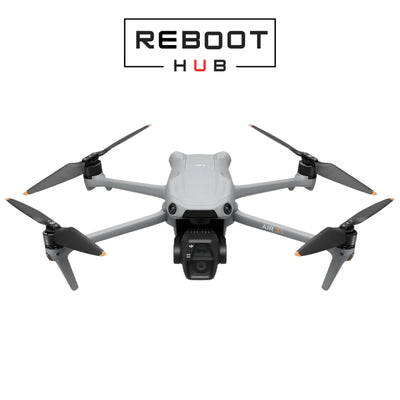
Record the Mini 2 body, front LED and 4K camera identity, controller, battery, supplied kit, warning and event sequence. Separate OcuSync 2.0, Wi-Fi, camera, gimbal, core board, ESC board and GPS & IMU module evidence. Reboot Hub then documents known and unknown findings, board revision, parts provenance and the acceptance tests that answer the customer's concern.
DJI Mini 2 · series repair estimates by path
Each USD figure is a historical series-level estimate for the listed repair path, not a quote for this exact aircraft. Diagnosis determines the parts, labor, calibration, and testing needed.
| Repair path | Estimated USD range | When to consider it |
|---|---|---|
| Ribbon / flex cable | $30-$48 | Camera signal, gimbal tilt, image loss, or impact-damaged cable routing. |
| Complete gimbal module | $120-$168 | Camera, lens, motor, or stabilization damage beyond a cable-only repair. |
| ESC module / board | $42-$54 | Propulsion warnings, motor-control faults, water exposure, or ESC-stage damage. |
| Motor arm replacement | $36-$48 | Structural damage involving an arm, hinge, landing point, shell, or motor mount. |
| Main board (chip-level) | $90-$108 | A board fault can be isolated at component level before full-board replacement. |
| Complete board replacement | $180 | The board is physically unrecoverable or component-level repair is not practical. |
| IMU sensor / calibration path | $30 | Calibration loops, drift, sensor errors, or unstable attitude require diagnosis. |
| Battery management board | $36-$48 | Charging, balancing, BMS, or battery power-path faults require diagnosis. |
What evidence should be captured before the customer acts?
How does repair-bench experience map the fault domains?
How do you distinguish DJI Mini 2 from closely related Mini models?
Photograph the exact label, front aircraft marking, front LED, gimbal face, controller and battery. The Mini 2 carries a 4K-marked camera and uses OcuSync 2.0, while closely related Mini products differ in body details, radio architecture, boards and firmware. Do not accept a generic Mini repair scope or part listing.
Exact identity prevents compatibility errors and misleading conclusions. Reboot Hub records the model, supplied kit and relevant board revision before work. Real repair experience can be shared publicly when it is tied to that exact model and case-level evidence; a board finding from another compact DJI aircraft is not treated as proof for Mini 2.

What do the core board and ESC board each contribute?
The Mini 2 core board processes image-transmission and flight data. The ESC board adapts battery power and supplies the motors and core board, while also participating in front LED operation. A flexible connection joins the power and processing paths. This architecture explains why a no-start, motor warning, LED issue and missing communication require different comparisons.
Naming the boards is not the same as diagnosing them. Record battery behavior, connection evidence, affected motor corners, heat and whether the system communicates before proposing a board. The written finding states which function failed and which supported comparison was used, with parts provenance and unknowns visible to the customer.
How should a no-power Mini 2 be assessed safely?
Record battery identity, latch, terminals, LED response, charger history, storage, liquid evidence, odor and abnormal heat. Stop on swelling, deformation, moisture or heat. The professional evidence path checks whether the symptom follows the battery, the ESC-to-core connection, the ESC board or the core board without publishing owner-level probing or battery revival procedures.
A fixed-price board claim before evidence is not transparent service. Reboot Hub explains what was confirmed, what remains inaccessible and how a revised scope would be approved if the fault boundary changes. A supported replacement path is considered when multi-domain damage or uncertainty outweighs a bounded repair.

What should be checked for GPS, IMU, compass or drift complaints?
The Mini 2 uses a GPS & IMU module and connects compass-related evidence through its 3-in-1 flexible flat cable. Record the exact warning, startup state, environment, nearby metal or electrical interference, impact history and whether satellite, heading and inertial behavior agree. Keep the aircraft grounded when drift or orientation is unpredictable.
A drift symptom does not automatically prove the GPS & IMU module is faulty. Mounting, structure, connection, environment, compass evidence, power and processing can overlap. The report binds any component conclusion to the exact model, board revision and measured case-level evidence, then defines the positioning tests required after approved work.
How are camera, gimbal and recording faults separated?
Preserve original files, live view, affected resolution or mode, recording response, startup movement, horizon and impact evidence. The Mini 2 uses a 1/2.3-inch CMOS camera and three-axis gimbal. Image generation, recording, gimbal movement, connection and calibration data are separate layers even when the owner sees one warning.
A replacement camera-gimbal module can require proper model-specific calibration evidence, but private service procedures are not the public repair path. The customer receives the result: which camera or stabilization function failed, what work is approved, and which image, recording and gimbal tests must pass before handover.

Why must OcuSync 2.0 and Wi-Fi symptoms be kept separate?
OcuSync 2.0 supports the main controller link, while Wi-Fi contributes other device interactions. Record whether controls, telemetry and live image fail together, which controller and device were used, antenna condition, app state and environmental interference. A strong control link with no image differs from a complete disconnect or a Wi-Fi-only concern.
The boundary can include controller, antennas, core-board radio functions, camera output, processing, app and environment. Reboot Hub reproduces the exact symptom with a supported comparison before naming a component. That keeps a weak indoor signal from becoming an unnecessary core-board or controller replacement.
What changes after a Mini 2 crash or water event?
Its low mass does not eliminate damage. Impact can affect arms, motors, propellers, gimbal, GPS frame, flexible cables and shell alignment together. Water can reach power and processing areas beyond a visible mark. Preserve the event, photos and logs, isolate the battery safely and stop repeated power attempts when liquid, heat, odor or deformation is present.
The diagnosis separates cosmetic marks from functional and structural evidence. A local repair is reasonable when the fault is bounded and acceptance can prove the required functions. Corrosion, uncertain geometry or several damaged domains may support a broader assembly or documented replacement. The customer sees that evidence before approval.

When should a Mini 2 be repaired rather than replaced?
Repair is stronger when the exact fault is bounded, structure is acceptable, compatible parts provenance is available and the planned tests can prove image, link and flight behavior. Replacement becomes stronger when several valuable domains are affected, corrosion is broad, compatibility is uncertain or the complete acceptance path cannot support reliable use.
Reboot Hub considers the customer's actual use and concerns. We compare a written repair scope with a documented replacement unit whose condition, included items and product terms are disclosed. We do not direct the owner to anonymous platforms or hide uncertainty behind a low headline price.
What must Mini 2 acceptance and warranty documentation include?
The normal workshop target is 1-3 business days after quote approval, subject to scope, parts and testing. Acceptance should cover the original symptom, battery and power, camera and recording, gimbal, OcuSync 2.0, Wi-Fi as relevant, GPS and inertial behavior, compass, motors, controls and staged flight. The exact completed tests remain written.
Approved repair work carries a 30-day repair warranty. A qualifying complete product follows the separate 180-day product warranty. The handover identifies known and unknown findings, parts provenance and any observation the customer should monitor, so the evidence remains transparent after the aircraft leaves the bench.
Keep exploring
Further reading
From The Reboot Hub Chronicle



From Drone Guides