Original aircraft, exact control kit, written evidence
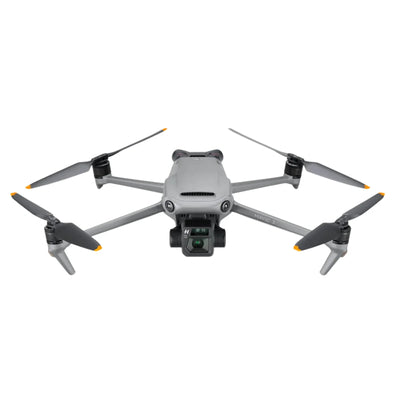
The original DJI Avata is a distinct 2022 aircraft system with an integrated guard, single-axis gimbal, downward binocular vision and ToF, and specific goggles and controller combinations. A useful repair decision must preserve that model boundary. Record the exact aircraft, DJI Goggles 2 or DJI FPV Goggles V2, DJI Motion Controller or DJI FPV Remote Controller 2, battery and symptom before choosing a part or approving work.
Quick answer
Identify the original DJI Avata system before diagnosing the symptom
Keep the aircraft grounded after impact, moisture, battery damage or abnormal heat; document the exact goggles, controller, warnings and what remains normal; and separate camera, single-axis gimbal, positioning, power, propulsion and link evidence. Do not apply guidance from a newer aircraft or order an internal assembly from a broad symptom. Ask for a written diagnosis, customer-approved scope and full-system post-repair acceptance.
DJI Avata · series repair estimates by path
Each USD figure is a historical series-level estimate for the listed repair path, not a quote for this exact aircraft. Diagnosis determines the parts, labor, calibration, and testing needed.
| Repair path | Estimated USD range | When to consider it |
|---|---|---|
| Gimbal upper / lower bracket | $30 | Impact or alignment damage is limited to the gimbal support structure. |
| Signal cable | $21 | The camera or control signal path is interrupted or impact-damaged. |
| Lens frame and motor | $26 | Lens-frame impact, motor load, or stabilization-frame damage is confirmed. |
| Lens rear cover | $13 | Rear-cover or housing damage is limited to the lens assembly area. |
| Lens module | $43 | The optical module is damaged but a complete camera assembly is not required. |
| Complete camera assembly | $68 | The camera stack is damaged as an assembly. |
| Downward vision sensor | $34 | Ground sensing, low-altitude positioning, or downward-vision faults are confirmed. |
| ESC module / board | $60 | Propulsion warnings, motor-control faults, water exposure, or ESC-stage damage. |
| Motor (per unit) | $17 | One motor is confirmed damaged and adjacent systems remain serviceable. |
| Main board | $136 | Main-board fault isolation or replacement planning is required. |
What evidence should exist before an original DJI Avata repair decision?
Why must the original DJI Avata be identified before repair?
The original DJI Avata is a 2022 aircraft with its own camera, single-axis gimbal, integrated guard, downward binocular vision and ToF, power system and compatible control equipment. Those boundaries matter because similar customer phrases can refer to different hardware and operating behavior on another generation. A public guide should not mix parts, sensing descriptions, goggles or controllers simply because the family name is similar. Begin with the exact model and represented kit, then connect every diagnostic statement to that architecture.
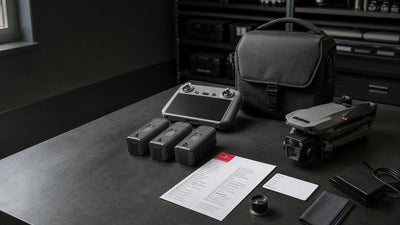
Record whether the customer uses DJI Goggles 2 or DJI FPV Goggles V2 and whether control is through DJI Motion Controller or DJI FPV Remote Controller 2. Include the battery, software context, previous service and incident history. This exact-system record protects the customer from an unsuitable part or unsupported assumption. It also gives Reboot Hub a clear value proposition: we think from the customer's point of view, identify the equipment actually owned, resolve predictable compatibility worries and state unknowns before commitment.
What should be documented at original Avata repair intake?
Photograph the powered-off aircraft from several angles, including the guard, body seams, front camera and gimbal support, motors, propellers, battery bay and exterior downward sensing surfaces. Arrange and document the supplied goggles, controller, batteries, charger and case. Record the complete warning, original media when available, what happened immediately before the concern and what remained normal. Keep serial and account details in the private service record rather than exposing them in public images or copy.
Write observations as a timeline. Note whether the symptom began after impact, moisture, storage, update, battery change or gradual use, and whether the aircraft was powered again. If the concern is intermittent, describe the ordinary sequence without deliberately recreating a dangerous condition. State previous opening or repair honestly. These facts help distinguish confirmed evidence from assumptions and define what needs professional evaluation. A good intake removes reasonable customer concerns without pretending that every hidden condition can be known from the exterior.

When should the original DJI Avata stay powered off?
Keep it grounded if the battery is swollen, deformed, wet, hot, damaged or cannot latch securely; if the guard or body is distorted; if a motor or propeller is obstructed; if the camera support appears displaced; or if there is unusual odor, heat or contamination. Do not restart repeatedly to see whether a warning clears. A normal startup does not prove camera support, structure, battery retention, positioning, propulsion or control readiness after an incident.
Safe evidence remains external and non-destructive. Photograph the condition, preserve the warning and original media, and record the represented goggles and controller. Do not open the aircraft, force the gimbal, run motors against resistance, repeatedly charge a damaged battery or perform a test flight to reproduce instability. If a powered observation is not clearly safe, leave it for qualified intake. Protecting the current state is part of diagnosis because later manipulation can add damage, erase clues or create a false narrative about the original failure.
How should guard, shell and propulsion evidence be assessed?
The integrated guard belongs to the structure and airflow path. Photograph cracks, deformation, abrasion and spacing around each motor. Review body seams, battery retention and visible mounting relationships without opening the aircraft. With power removed, inspect propellers for chips, cracks, deformation or looseness and observe motor areas for contamination or obvious obstruction without forcing movement. A cosmetic mark and a structural concern can look similar in one photograph, so the diagnosis should state the limit of external evidence.
Do not bend, heat, trim or glue a distorted guard as a public shortcut. Do not run motors to grind through contact. The proposed scope should connect structure and propulsion rather than treating one visible mark in isolation. Post-repair acceptance should begin with powered-off geometry, secure battery retention, correct propellers and unobstructed motors before any controlled powered check. The customer needs evidence that the system is coherent, not only that the most visible damaged area has been made to look cleaner.
How should the original Avata camera and single-axis gimbal be evaluated?
Separate image output, preview, recording and physical gimbal behavior. Photograph the camera and support without forcing movement. Preserve sample media when power-on is safe and record blur, artifacts, horizon error, vibration, missing preview, abnormal startup motion or obstruction as separate observations. The single-axis gimbal description is important because guidance should match the actual aircraft rather than imply another mechanical arrangement. A visible image does not prove that the complete camera and support path is normal.
Gentle external cleaning may be appropriate under current product guidance, but a supported calibration action is not proof that collision damage has been corrected. The diagnosis should state whether evidence points to capture, physical support, movement, storage, preview or a broader link concern. Acceptance should cover image clarity under suitable conditions, recording and storage, normal represented gimbal behavior, preview and the original warning. If one function cannot be assessed, the limitation should remain in the written result rather than being hidden behind a general camera passed statement.

What do downward binocular vision and ToF warnings mean?
The original aircraft's downward binocular vision and ToF contribute to positioning and environmental awareness within supported operating limits. Preserve the full warning, external condition and environment. Check only whether visible surfaces are clean and unobstructed. Dark, reflective, transparent or low-texture surfaces can affect visual systems, but that possibility should not dismiss a persistent warning after impact or moisture. Record whether the concern appears at startup, on the ground or only in ordinary operation and note related attitude or positioning messages.
Do not fly toward a surface or obstacle to prove a sensing issue. Begin with safe ground evidence and move persistent symptoms to qualified diagnosis and model-appropriate testing. The result should explain which environmental factors were considered and what remains unknown. Post-repair acceptance should use a suitable controlled condition and document the original warning state. One warning-free startup does not prove positioning behavior for every surface, light level or flight environment, and the article should never imply that technical behavior replaces local operating rules.
How should DJI Goggles 2 and DJI FPV Goggles V2 evidence be separated?
Identify the actual goggles in the customer's kit. Record power, supported linking, preview, warnings, controls and whether the concern follows one represented setup. Keep private account information out of shared screenshots. A missing or unstable preview can involve the goggles, aircraft, link environment, software state or camera path; it does not automatically prove one failed part. Likewise, a stored recording can remain intact while the live viewing path has a separate concern.
Use controlled ground observations before any flight. If comparison equipment is used, record exactly what changed. The written diagnosis should state which goggles were represented and which functions were observed. After repair, confirm supported linking, stable preview, recording and warning state on the agreed kit before controlled flight. This prevents a customer from receiving an aircraft that was accepted with different viewing equipment while the supplied goggles remain unresolved. The exact-kit boundary is central to a transparent support experience.
How should DJI Motion Controller and DJI FPV Remote Controller 2 be included?
Record whether the represented setup uses DJI Motion Controller or DJI FPV Remote Controller 2 and describe the symptom in that context. Confirm power, supported linking, control response, warnings and what remains normal during safe ground observation. Do not assume one control method proves the other, and do not conduct a distance or aggressive flight test when command response is uncertain. Controller identity also matters when a customer purchases or receives a replacement kit.
The diagnosis should explain whether the concern follows the controller, goggles, aircraft, battery or environment and whether another supported setup was used for comparison. Post-repair acceptance should return to the represented control path or clearly disclose any difference. Reboot Hub should show the customer the exact supplied equipment, written compatibility boundary and tested configuration before commitment. That removes a practical worry that generic repair pages often ignore: an aircraft can be functional while the customer's actual controller path is still not ready.
How should battery and no-power symptoms be handled?
Inspect the battery case, contacts, retention surfaces and aircraft bay externally. Stop ordinary use for swelling, deformation, leakage, moisture, unusual odor, abnormal heat, damaged contacts or uncertain retention. Record indicator behavior and the full warning without repeatedly charging or power cycling a damaged battery. A no-power aircraft does not prove that the battery is the only concern, and an unresponsive battery does not prove a specific aircraft assembly is damaged.
A controlled comparison can be considered only when equipment is physically suitable and known compatible. Record whether the symptom follows one battery and what remains normal. The quote should state whether batteries are included, excluded or require separate handling and how stable power, charging context and retention will be accepted. Shipping may impose additional battery boundaries, so the route should be confirmed before dispatch. Customers should not discover after approval that the battery was outside the represented scope.
What determines original DJI Avata repair cost?
Cost depends on the exact symptom, incident and moisture history, affected and connected systems, previous opening, replacement condition and availability, supported calibration, represented goggles and controller, battery handling, acceptance testing, shipping and approved scope. A camera concern without impact can require a different process from an incident involving guard, propulsion and positioning. One public price cannot honestly describe every combination and may encourage the customer to compare incomplete work with full-system service.
Request a written diagnosis and quote that separates findings, parts, service work, calibration, acceptance, shipping, exclusions, unknowns and renewed-approval triggers. It should explain why the recommendation fits the exact aircraft and kit. Reboot Hub should not use a low-information number to win the first click. We build trust by showing evidence, tailoring the path to the customer's concerns and making unknowns visible before commitment. That transparency gives beginners clarity and gives professional operators an audit trail.
What should a written diagnosis and approval boundary contain?
The document should identify the exact aircraft, goggles, controller and represented battery; restate the concern; summarize verified findings; and connect each proposed action to evidence. Distinguish confirmed damage from suspected areas and untested functions. Include part condition and provenance, supported procedures, acceptance requirements, shipping responsibility, exclusions and what happens if deeper qualified inspection changes the scope. A generic repair line does not tell the customer which connected systems are represented.
The approval boundary should let the owner accept, decline or request clarification before parts are committed. It should proactively address likely concerns: hidden incident extent, compatibility, camera and gimbal behavior, positioning evidence, battery retention, controller and goggles relationship, return evidence and written support terms. Unknowns remain visible rather than being converted into promises. This customer-first process is how Reboot Hub differentiates a premium, customized service from an anonymous marketplace or a one-size-fits-all repair listing.
When is repair stronger than replacement for the original Avata?
Repair may be stronger when the concern is bounded, structure and connected systems remain suitable, exact parts and required procedures are available, and the complete scope fits intended use and downtime. Replacement may be stronger when impact or moisture creates broad uncertainty, multiple safety-relevant paths are affected, previous work reduces confidence, compatible parts or validation are unavailable, or the full repair path no longer fits the owner's mission. Familiarity and sunk cost should not override evidence.
Compare complete documented alternatives. Include goggles, controller, batteries and accessories that remain useful, exact replacement condition, compatibility, delivery time, acceptance evidence and written terms. Reboot Hub can support a transparent repair proposal or show an exact-unit replacement path with visible condition and supplied-item disclosure. The recommendation should remove the customer's reasonable worries instead of simply transferring them. A strong decision explains why one path is more defensible for this owner and this represented system.
What belongs in original DJI Avata post-repair acceptance?
Start with exact-unit identity, powered-off inspection and confirmation of approved work. Ground checks should address battery retention and power, guard and body geometry, propellers and motors, warnings, represented goggles and controller linking, control response, camera preview, recording and storage, single-axis gimbal behavior, and downward binocular vision and ToF indication under suitable conditions. State which equipment and battery were represented and preserve every limitation in writing.
Only after safe ground evidence is satisfactory should a controlled flight be considered in a suitable legal low-risk environment. Define stop conditions before takeoff, begin with limited exposure relevant to the original concern and preserve the result. Acceptance does not certify every site, maneuver, controller or future battery. It shows that the exact repaired system met a documented boundary under stated conditions. That evidence supports a responsible return-to-service decision and gives the customer a clear reference if the symptom returns.
Keep exploring
Further reading
From The Reboot Hub Chronicle

From Drone Guides