Support & Learning / Module 9 of 9
Mission Systems and Field Applications
Before this lesson: Drone Repair Complete Guide
What you will understand
- Connect systems to mapping, inspection and agriculture work.
- Separate observable evidence from assumptions before choosing an action.
- Continue through the main lesson path or enter a focused topic branch when needed.
Enterprise drone mission and procurement decision
Enterprise drone procurement begins with the mission output and operating system, not a model name or a fixed saving percentage. The buyer must connect site conditions, payload, data, positioning, controller, software, batteries, service eligibility, regulatory duties, staff capability and support continuity to an exact configuration. Every purchased unit then needs its own evidence and written scope.
Quick answer
Procure the mission system and its evidence, not an isolated airframe
Define the required deliverable, environment and operating constraints; map them to an exact aircraft, payload, controller, positioning and software configuration; verify version and region, supplied items, unit condition and service eligibility; then price acquisition, training, batteries, maintenance, downtime exposure, logistics and replacement risk in one written procurement record.
What should be visible before the customer acts?
What mission output should the fleet produce?
Begin with the deliverable that the organization must hand to its customer, engineer, regulator or internal team. That could be an inspection record, mapped surface, thermal observation, repeatable site model or documented response. Define required accuracy, coverage, revisit frequency, environment, data format and acceptance boundary before selecting the aircraft. A visually impressive drone is not a procurement requirement unless it reliably supports the final output.
Separate the aircraft task from the complete operating system. Payload, positioning, controller, software, network, batteries, charging, data custody and trained people can decide whether the deliverable is possible. Field conditions such as heat, dust, wind, rain, altitude, electromagnetic environment and access constraints also shape the decision. Record assumptions as assumptions, and validate the exact model against current DJI documentation and local operating requirements.
How should aircraft, payload and controller be matched?
Build a configuration matrix that names the exact aircraft, payload, lens or sensor, controller, positioning equipment, software and physical accessories. Confirm which combinations are supported together and which require separate licenses, accounts or site infrastructure. Do not treat the Matrice, Mavic Enterprise, Dock and consumer families as interchangeable because they share a brand. Their activation, payload, data and support arrangements can differ materially.
Use a representative mission to test the system boundary before scaling. The purpose is not to prove that one demonstration flight works; it is to confirm that the required output can be produced, stored, reviewed and handed over through the intended process. Record limitations, unsupported combinations and dependencies. A procurement document should make it obvious which component must change if the mission, country, payload or deployment model changes.

Why do version and region need written confirmation?
Version and region are product and support questions; DJI GEO and local airspace rules remain separate requirements. Confirm the exact sales version, activation route, language and software context for the destination and operating organization. DJI GEO can apply independently of product version, while local registration, operator authorization and airspace approval remain external legal responsibilities. Do not buy first and expect an unofficial modification to resolve an unclear configuration.
Write the version and destination into the quote and delivered-unit record. Service-plan availability, maintenance routes and model support can differ by country or region, and the current terms control. Enterprise and consumer products also use different applications and service structures. Reboot Hub should state what can be verified for the actual offered unit and identify what the customer must confirm with DJI or the relevant authority before deployment.
What evidence should accompany every enterprise unit?
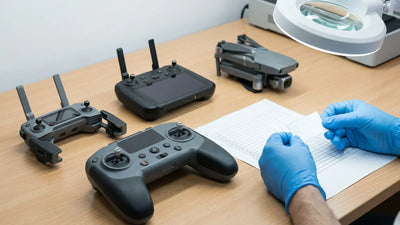
Each unit needs its own identity and scope: aircraft serial, controller, payload, batteries, charger or station, accessories, version, activation state, visible condition and known service history. Current photographs should show the actual supplied equipment. If the unit is pre-owned or OEM-pulled, that condition must be stated plainly. A fleet-level inspected label cannot replace exact-unit evidence or erase an unknown history.
Functional observations should name what was checked and what was not. One startup, calibration or hover cannot guarantee performance across every mission. Preserve app warnings, repair evidence and meaningful unknowns in the written procurement record. If a payload, battery or controller belongs to a different system, resolve it before delivery. The receiving team should be able to reconcile the physical kit to the commercial record without relying on memory or a seller's private spreadsheet.
How should service eligibility and support continuity be planned?
Check service eligibility for the exact model, serial, region and proposed plan. DJI Care Enterprise, DJI maintenance, standard warranty and Reboot Hub's written product or repair warranties are different scopes. Current DJI service guidance controls supported models and regions. Do not describe one plan as globally transferable or assume that an included first year applies to every sales version. Record the plan status and the process for confirming it.
Continuity also requires trained operators, documented preflight and post-flight checks, battery rotation, approved software, spare parts or replacement decisions, repair escalation and data recovery planning. Identify what happens when the primary aircraft, controller, payload or charger is unavailable. A support partner should expose that downtime exposure before the project starts. The plan must fit the customer's mission rhythm rather than force every organization into one stock service package.

What belongs in a defensible cost comparison?
Compare acquisition, payloads, software, training, batteries, charging, cases, positioning, maintenance, inspection, repair, shipping, customs handling, staff time and downtime exposure. Use the organization's actual mission rate and consequence of delay. Do not publish a fixed three-year TCO or saving percentage without the underlying fleet, region, utilization and service assumptions. A cheaper airframe can produce a more expensive mission when required components or continuity are missing.
Separate one-time costs from recurring and event-driven costs. Include the written delivery term and destination responsibilities. Reboot Hub's shipping policy explains eligible DDP personal-use orders, while enterprise and other orders should follow checkout or a written confirmation for the exact transaction. Keep tax, customs and logistics assumptions current and destination-specific. The procurement record should show which number is a quote, which is an estimate and which remains unknown.
How does Reboot Hub support a customized enterprise procurement?
Reboot Hub begins with the customer's concerns, intended project and destination. We ask what output must be delivered, which system is already in place, what downtime is unacceptable and what evidence the receiving team needs. We can show the actual available unit, condition, supplied configuration, version context and written terms. Unknowns are disclosed before commitment rather than buried behind a generic enterprise or refurbished label.
The customer can move from this guide to the scenario hub, Enterprise inventory, Drone Wiki, battery collection, repair service, warranty, standard and shipping policy. That creates an action path from mission definition to evidence and support. A beginner buyer receives a structured decision, while a professional procurement team receives the exact-unit and continuity detail needed for internal approval, deployment and later service.
Keep exploring
Further reading
From The Reboot Hub Chronicle



From Drone Guides