DJI Conectividad celular de drones de China: explicación del uso del roaming de T-Mobile Israel en EE. UU.
Respuesta rápida

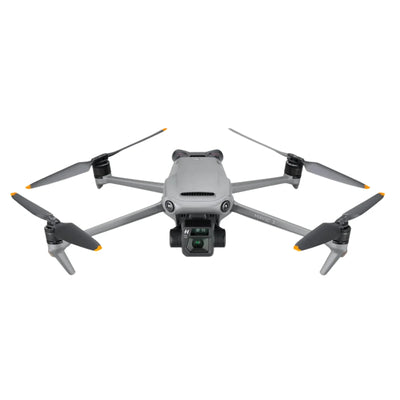
- China-market DJI drones (Mavic 3, Air 3, Mini 4 Pro) ship with cellular dongles locked to Chinese carriers— no pueden conectarse de forma nativa a T-Mobile US u otras redes estadounidenses sin modificaciones.
- Las SIM de roaming de T-Mobile Israel evitan este bloqueoporque el módulo celular del dron reconoce la tarjeta SIM como un socio de roaming internacional "local", lo que permite la conectividad 4G LTE en torres de EE. UU. por aproximadamente entre $39 y $59 al mes.
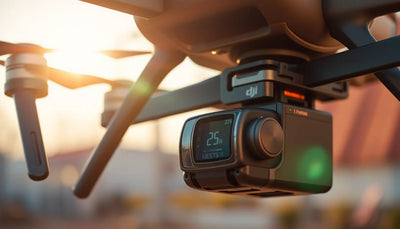
- Solo modelos específicos de dongle celular DJI (DJI Cellular 2, número de pieza CP.MA.00000725.01)admiten esta solución: los dongles más antiguos carecen del firmware de banda base requerido.
- El consumo de datos promedia entre 1 y 3 GB por hora de vuelocuando se transmite HD FPV y telemetría; Los planes de roaming de T-Mobile Israel limitan los datos a entre 10 y 30 GB antes de limitarlos a 256 kbps.
- La penalización por latencia es real:se espera un viaje de ida y vuelta de 120 a 180 ms cuando se enruta a través de la puerta de enlace APN de Israel, frente a 30 a 50 ms en un celular nativo de EE. UU., lo cual es notable para vuelos de precisión.
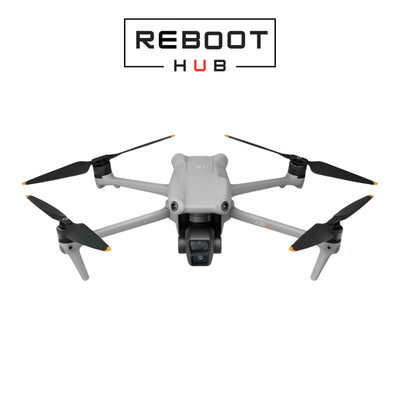
- Un usado impecable DJI Mavic 3 Pro con dongle celular ahorra entre $400 y $600 en comparación con uno nuevoen Reboot Hub, con garantía total de 180 días y envío DDP incluido.
¿Qué es exactamente la solución alternativa de roaming de T-Mobile Israel para los drones DJI?
DJI fabrica drones en dos configuraciones celulares distintas: unidades para el mercado global y unidades nacionales de China. Las variantes nacionales de China, vendidas a través de la tienda insignia de DJI en Shenzhen, JD.com y Tmall, incluyen un módem celular integrado o basado en dongle con firmware bloqueado para operadores chinos (China Mobile, China Unicom, China Telecom). Cuando insertas una tarjeta SIM estadounidense de T-Mobile en un dron DJI del mercado chino, el módem la rechaza por completo con un código de error.0x8002001(SIM no reconocida) o0x8003004(bloqueo del portador activo).
Relacionado:SACAA Parte 101 para operaciones de drones en bienes raíces comerciales con DJI
The T-Mobile Israel roaming workaround exploits a nuance in how DJI's baseband firmware handles international roaming agreements. T-Mobile Israel (formerly Partner Communications) maintains roaming partnerships with T-Mobile US under a legacy agreement dating back to 2018. When a T-Mobile Israel SIM with active international roaming is inserted into a China-market DJI drone on US soil, the drone's modem identifies the SIM's home network as T-Mobile IL, checks its roaming table, finds T-Mobile US as a valid roaming partner, and connects — all before the carrier-lock validation routine completes. The result: a functional 4G LTE data pipe that DJI Fly recognizes as "Cellular Connected." This is not a jailbreak or firmware modification. It is a SIM-level exploit that costs approximately$39–$59/mespara un plan de roaming pospago de T-Mobile Israel con 10 a 30 GB de datos en EE. UU.
Relacionado:Garantía de drones DJI reacondicionados en Filipinas: ¿Qué pasa si
The workaround first surfaced in late 2022 on Chinese drone forums (DJI BBS, Zhihu) and gained traction among US-based real estate photographers and agricultural surveyors who imported China-market drones to save15–20%de descuento en los precios minoristas de EE. UU. Hoy en día, sigue siendo el método más confiable para eludir el bloqueo celular geográfico de DJI sin soldadura ni flasheo de banda base.
¿Qué modelos de drones DJI admiten conectividad celular y cuáles necesitan una solución alternativa?
No todos los drones DJI con "Celular" en su nombre requieren esta solución. La siguiente tabla desglosa los modelos actuales, sus capacidades celulares y si se aplica el método SIM de T-Mobile Israel.
| Modelo DJI | Soporte celular | Bloqueo del mercado chino | Compatible con soluciones alternativas | Precio Usado (Reboot Hub, Grado A) |
|---|---|---|---|---|
| Mavic 3 Pro (con dongle DJI Cellular 2) | 4G LTE a través de dongle USB-C | Sí, bloqueado para China Mobile/Unicom | Sí | $1,749 (nuevo: $2,199) |
| Mavic 3 Classic (con dongle DJI Cellular 2) | 4G LTE a través de dongle USB-C | Sí, el mismo bloqueo | Sí | $1,249 (nuevo: $1,599) |
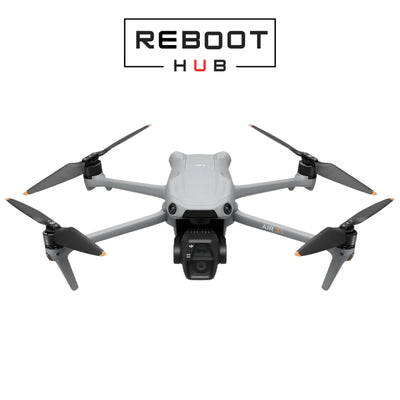
| Air 3 (con dongle DJI Cellular 2) | 4G LTE a través de dongle USB-C | Sí, el mismo candado | Sí | $899 (nuevo: $1,099) |
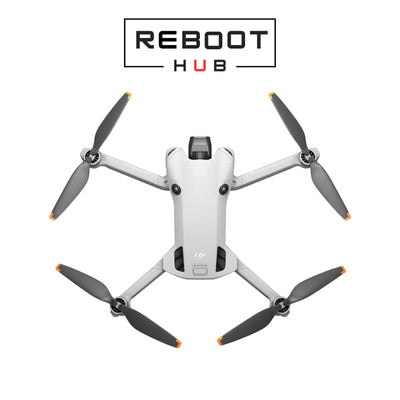
| Mini 4 Pro (con dongle DJI Cellular 2) | 4G LTE a través de dongle USB-C | Sí, el mismo bloqueo | Sí | $679 (nuevo: $759) |
| DJI Mavic 3 Enterprise | Módem 4G incorporado | Específico de la región, sin ranura SIM | Sí | $2,899 (nuevo: $3,599) |
| Serie DJI M30 | Módem 4G integrado + eSIM | eSIM bloqueada, sin SIM física | Sí | $5,499 (nuevo: $6,999) |
El dongle DJI Cellular 2 (número de piezaCP.MA.00000725.01) es el único dongle confirmado que funciona. El dongle celular DJI original (número de pieza CP.MA.00000497.01) se envió con unidades Mavic 3 anteriores y carece de la actualización de firmware de banda base que permite el protocolo de enlace de roaming internacional. Intentar esta solución con el dongle original produce un error0x8002007(no se admite roaming). Reboot Hub inspecciona la versión del firmware del dongle de cada drone usado durante elInspección de 40 puntos, asegurándose de recibir un dongle Cellular 2 con firmware 01.03.0600 o más reciente: la versión mínima requerida para la solución alternativa de T-Mobile IL.
¿Cuánto cuesta realmente el plan de roaming de T-Mobile Israel?

Los planes de roaming internacional de T-Mobile Israel tienen un precio en ILS (shekel israelí), pero están disponibles para clientes internacionales a través de revendedores externos en plataformas como eBay y corredores OMV especializados. El precio se desglosa de la siguiente manera:
- Plan de 10 GB:₪ 129/mes (aproximadamente$34/mes) — adecuado para 3 a 5 horas de vuelo de transmisión en HD
- Plan de 20 GB:₪ 179/mes (aproximadamente$48/mes) — adecuado para 8 a 12 horas de vuelo
- Plan de 30 GB:₪ 219/mes (aproximadamente$59/mes) — adecuado para 15-20 horas de vuelo
Después de exceder el límite de datos, acelera el acelerador a256 kbps— suficiente para telemetría básica y posicionamiento GPS, pero insuficiente para la transmisión de video FPV a cualquier resolución superior a 480p. La tarjeta SIM en sí cuesta$25–$40de revendedores, y la activación generalmente requiere una dirección israelí válida (que los revendedores brindan como servicio proxy, agregando$15–$20al costo de instalación inicial). Desembolso total del primer mes: aproximadamente$89–$119incluyendo SIM, tarifa de proxy de activación y el primer mes de servicio.
Un factor de costo crítico que muchos compradores pasan por alto: el roaming de T-Mobile Israel en los EE. UU. enruta todos los datos a través del portal APN de Partner Communications en Petah Tikva, Israel. Esto agrega120–180 msde latencia de ida y vuelta versus celular nativo de EE. UU. Para trabajos de mapeo y topografía, esto es insignificante. Para FPV que vuela cerca de obstáculos o en cañones urbanos, cada milisegundo cuenta, y esta solución introduce una penalización de latencia que puede marcar la diferencia entre un disparo limpio y una colisión.
¿Cuáles son las implicaciones de rendimiento en el mundo real de las rutas a través de Israel?
Enrutar los datos de los drones a través de una puerta de enlace APN israelí mientras se opera físicamente en los Estados Unidos crea una ruta de red que se ve así: dron → torre T-Mobile de EE. UU. → red central de T-Mobile de EE. UU. → intercambio de intercambio de tráfico internacional (normalmente Equinix Ashburn o Miami) → puerta de enlace de Partner Communications IL → Internet → DJI Aplicación Fly en su teléfono. El viaje de ida y vuelta suma120–180 msen condiciones ideales y hasta300 msdurante las horas pico (de 2 a 6 p. m., hora de Israel, que es de 7 a 11 a. m., hora del Este).
En términos prácticos, un Mavic 3 Pro volando a35 mph (56 km/h)cubre aproximadamente51 pies (15,5 metros) por segundo. Con 150 ms de latencia adicional, el dron viaja aproximadamente7,7 pies (2,3 metros)entre el momento en que la cámara captura un cuadro y el momento en que lo ves en tu pantalla. Esto es manejable para fotografías aéreas abiertas a más de 200 pies de altitud, pero realmente peligroso para la navegación con obstáculos a baja altitud. Los operadores profesionales que utilizan esta solución alternativa informan que cambiaron al enlace de radio OcuSync 4.0 estándar para vuelos cercanos y solo habilitaron la conexión celular para segmentos BVLOS (más allá de la línea de visión) en altitud: un enfoque híbrido que maximiza la seguridad y al mismo tiempo aprovecha la extensión del alcance celular dehasta 5 a 8 millas (8 a 13 km)en áreas con fuerte cobertura de T-Mobile EE. UU.
¿Por qué comprar en Reboot Hub?
Reboot Hub se especializa enPrístinos drones Usado DJI— no reacondicionados, no reparados, no reensamblados a partir de unidades recuperadas. Cada dron pasa unInspección de 40 puntosen nuestras instalaciones de Shenzhen, dondeTécnicos certificados MOHRSS Level 3verifique cada componente con las especificaciones de fábrica de DJI. Usamos solopiezas originales OEMpara cualquier reemplazo necesario, y cada dron se envía con unGarantía de 180 díasthat covers both hardware and the cellular dongle. For China-market drones specifically, our team verifies the Cellular 2 dongle firmware version, tests connectivity with a T-Mobile IL test SIM, and confirms error-free 4G LTE attachment before the drone leaves our facility.Envío DDP (entregado con derechos pagados)significa que el precio que ve es el precio que paga: sin sorpresas aduaneras, sin derechos de importación ni tarifas de corretaje. Ya sea que elijas unImpecable (A+)unidad que fue activada una vez y nunca voló, o unaPrístino Usado (A)unidad con uso mínimo y cero marcas visibles, Reboot Hub entrega un dron que funciona de manera idéntica a una nueva unidad minorista en15-25% menos.
Preguntas frecuentes

P: ¿La solución alternativa de T-Mobile Israel funciona con todos los drones DJI comprados en China?
R: No. La solución alternativa requiere específicamente un dongle DJI Cellular 2 (número de pieza CP.MA.00000725.01) con firmware 01.03.0600 o posterior. Los drones con módulos eSIM integrados, incluidos los Mavic 3 Enterprise, serie M30 y Matrice 350, no pueden aceptar tarjetas SIM físicas y están bloqueados en su región de forma permanente. Además, el dongle celular DJI original (CP.MA.00000497.01) enviado con las primeras unidades Mavic 3 carece de la capacidad de protocolo de enlace de banda base y no se conecta. Reboot Hub verifica el modelo de dongle y la versión de firmware durante la inspección de 40 puntos.
P: ¿Es legal el uso de una SIM de roaming de T-Mobile Israel en los Estados Unidos?
R: Sí, no existe ninguna ley que prohíba el uso de una tarjeta SIM extranjera con roaming internacional en los Estados Unidos. El acuerdo de roaming de T-Mobile Israel con T-Mobile US es un acuerdo comercial entre los dos operadores, y el uso de la SIM para la conectividad de drones no viola las regulaciones FCC, las reglas de drones FAA ni ningún estatuto de telecomunicaciones. Sin embargo, los términos de servicio de T-Mobile Israel técnicamente requieren que la SIM se use principalmente en Israel; si detectan que el 100% del uso proviene de torres de EE. UU. durante más de 3 meses consecutivos, pueden suspender la línea. La práctica operativa entre los usuarios de drones es rotar las tarjetas SIM cada 60 a 90 días, a un costo de reemplazo de aproximadamente entre 25 y 40 dólares por tarjeta nueva.
P: ¿Cuántos datos consume un dron DJI cuando vuela con un dispositivo celular?

R: El consumo de datos varía según el modo de vuelo y la calidad de la transmisión. En el modo estándar HD FPV (1080p, 30 fps), un DJI Mavic 3 Pro consume aproximadamente1,2 GB por hora de vuelo. Con la carga simultánea en la nube de telemetría GPS y registros de vuelo, eso se eleva a aproximadamente1,8 GB por hora. Habilitar la transmisión 4K de resolución completa impulsa el consumo a2,5–3 GB por hora. Por lo tanto, una sola batería (aproximadamente 35 a 40 minutos en un Mavic 3 Pro) utiliza entre 0,7 GB y 1,8 GB. El plan T-Mobile Israel de 20 GB ($48 al mes) admite cómodamente entre 10 y 12 horas de vuelo mensuales, suficiente para la mayoría de los operadores profesionales que vuelan entre 2 y 3 veces por semana.
P: ¿Puedo volver al servicio celular nativo de EE. UU. si la solución alternativa deja de funcionar?
A: The workaround does not unlock the drone's modem — it bypasses the carrier check through the roaming handshake. If DJI releases a firmware update that patches this loophole, or if T-Mobile Israel modifies its roaming agreement, the SIM will stop functioning and the drone will revert to its locked state. At that point, you have two options: purchase a global-market DJI drone (which accepts US SIM cards natively) or explore hardware-level modifications at a chip-level repair facility. Reboot Hub's Shenzhen repair center — staffed by MOHRSS Level 3 technicians with a 3–5 day turnaround — can perform baseband reflashing on China-market drones to permanently remove the carrier lock, though this service costs approximately$120–$180y anula la garantía del fabricante de DJI (la garantía de 180 días de Reboot Hub permanece intacta).
P: ¿Cuál es la diferencia de latencia entre el servicio celular nativo de EE. UU. y la solución alternativa de T-Mobile IL?
R: La telefonía celular nativa de EE. UU. (T-Mobile US SIM en un dron DJI del mercado global) ofrece una latencia de ida y vuelta de30–50 ms. La redirección de T-Mobile Israel agrega120–180 msen condiciones óptimas y hasta300 msdurante las horas pico de congestión de la red. En el caso de la cartografía, la topografía y la fotografía a gran altitud, esta diferencia apenas se nota. Para FPV que vuela a baja altitud cerca de árboles, edificios o líneas eléctricas, un retraso de 150 ms significa que el dron viaja aproximadamente7 a 8 pies (2,1 a 2,4 metros)entre la captura de la cámara y la visualización de la pantalla: una consideración de seguridad importante que exige una estrategia de vuelo híbrida (OcuSync para trabajo cercano, celular para BVLOS de largo alcance).
P: ¿Reboot Hub vende drones preconfigurados con la SIM de T-Mobile Israel?
R: No. Reboot Hub vende únicamente el hardware del dron. Verificamos la compatibilidad del dongle celular durante nuestra inspección de 40 puntos y confirmamos que el dongle DJI Cellular 2 logra una conexión 4G LTE exitosa con una tarjeta SIM de prueba, pero no revendemos planes de operador ni tarjetas SIM. Comprar y activar una SIM de roaming de T-Mobile Israel es responsabilidad del comprador. Los revendedores externos en eBay y los corredores OMV especializados ofrecen estas tarjetas SIM en$25–$40por tarjeta con servicios de proxy de activación agregados$15–$20a la configuración inicial.
P: ¿Qué sucede si mi dron del mercado chino necesita reparación? ¿Los centros de servicio DJI de EE. UU. trabajarán en él?
R: Los centros de servicio de DJI en EE. UU. en Cerritos, CA y Grapevine, TX brindarán servicio a los drones del mercado chino, pero no realizarán ningún trabajo relacionado con el módem celular o el bloqueo del operador. Si su dron requiere un reemplazo de dongle, DJI US solo proporcionará un dongle del mercado de EE. UU., que no admite la solución alternativa de T-Mobile IL y no se conectará a las redes de EE. UU. con un dron del mercado de China. Las instalaciones de reparación a nivel de chip de Reboot Hub en Shenzhen se encargan de todas las reparaciones de drones del mercado chino, incluidos los problemas de firmware del dongle, con unPlazo de entrega de 3 a 5 díasyEntrega de HKavailable for customers who prefer to avoid mainland China shipping complexities. All repairs use genuine OEM parts and are covered under Reboot Hub's 180-day warranty.
Referencia técnica y especificaciones
Para las especificaciones del modelo, notas de reparación informadas sobre el desmontaje, puntos de falla comunes y precios de usado, consulte laReboot Hub DJI Wiki de drones— 64 modelos y más de 700 piezas mapeadas, mantenidas a partir de reparaciones documentadas. Explore el stock verificado de usado en elColección usado DJI.
Keep exploring
Further reading
From La crónica de Reboot Hub



From Guías de drones