SACAA Part 101 for Commercial Real Estate Drone Ops with DJI Air 3 in Johannesburg
Quick Answer

- SACAA Part 101 is mandatory for all commercial real estate drone operations in Johannesburg — operating without it risks fines up to ZAR 50,000 and equipment confiscation.
- A full Part 101 certification pathway (RPL + ROC + medical) costs approximately ZAR 28,000–42,000 total, with timelines spanning 6–14 weeks depending on application backlog.
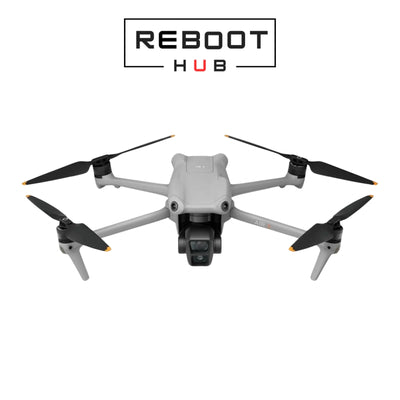
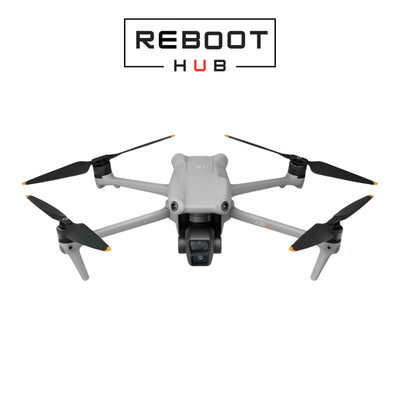
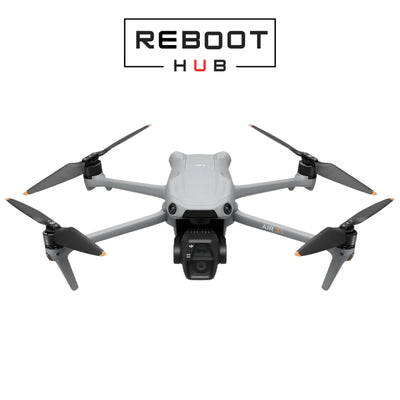
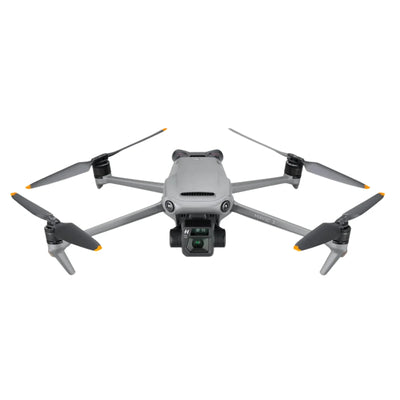
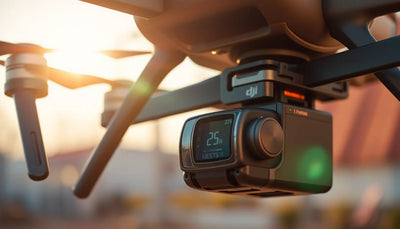
- The DJI Air 3 is the optimal mid-tier platform for property shoots: dual-camera system (24mm wide + 70mm telephoto), 46-minute flight time, and omnidirectional obstacle sensing — all critical for tight Johannesburg suburbs.
- A pre-owned DJI Air 3 Flawless (A+) from Reboot Hub costs USD 849 (approx. HK$6,620) — roughly 23% below new retail — with full 180-day warranty and 40-point inspection.
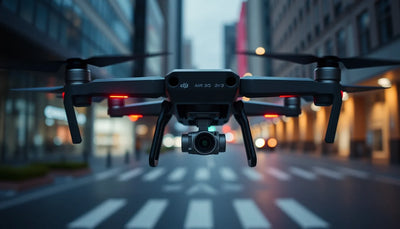
- Part 101 operational limits include: 50m minimum from structures not under your control, 30m from persons, and strict no-fly within 10km of any aerodrome without prior written approval.
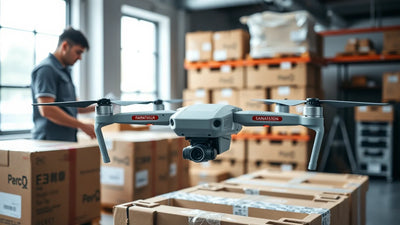
- Reboot Hub ships DDP to South Africa — no surprise customs duties on delivery. Typical transit from Shenzhen/HK to Johannesburg is 8–12 business days.
What Is SACAA Part 101 and Who Needs It for Real Estate Drone Work?
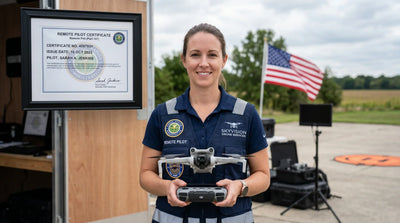
Part 101 of the South African Civil Aviation Regulations governs all remotely piloted aircraft systems (RPAS) used for commercial, corporate, and non-recreational purposes. If you are receiving any form of compensation — whether direct payment from a property agency, in-kind trade from a developer, or even using drone footage to enhance a listing you personally stand to profit from — you fall squarely under Part 101 jurisdiction. There is no grey area here. The SACAA has consistently enforced this since the regulations were gazetted in July 2015, and Johannesburg's dense urban airspace makes it a priority enforcement zone. To comply, an operator needs three things: a valid Remote Pilot License (RPL) issued by a SACAA-approved training organisation, a Class 4 medical certificate from a designated aviation medical examiner, and a Remote Operator Certificate (ROC) for the business entity conducting the flights. The RPL alone takes 4–6 weeks of ground school and flight training, with a practical skills test administered by a Designated RPAS Examiner. Real estate photographers often underestimate this requirement, believing a sub-7kg drone flown below 45m on private property is exempt — it is not. SACAA makes no weight-based exemption for commercial intent.

How Much Does SACAA Part 101 Certification Cost in Johannesburg?
The all-in cost for a single operator with one drone ranges between ZAR 28,000 and ZAR 42,000 depending on the training provider and the speed of ROC processing. Here is a realistic breakdown: RPL training and examination averages ZAR 15,000–18,000 at Johannesburg-based schools like UAV Industries or Drone Crew. The Class 4 medical runs ZAR 800–1,200. The ROC application itself costs ZAR 2,500 in SACAA fees, but the real expense is compiling the operations manual — unless you draft it yourself (which requires deep regulatory knowledge), a consultant charges ZAR 8,000–14,000. Recurring costs include annual ROC renewal (ZAR 1,500), medical renewal every 24 months, and recurrent training every 24 months. If you already own a drone, factor in the cost of a pre-owned backup unit for redundancy during maintenance cycles — a Pristine Pre-Owned (A) DJI Air 3 from Reboot Hub at USD 749 (HK$5,840) keeps a second airframe ready without the full retail burden. The table below compares new versus Reboot Hub pre-owned pricing for the DJI Air 3, which is rapidly becoming the standard real estate platform in Gauteng.
| DJI Air 3 Option | Condition | Price (USD) | Price (HKD) | Warranty | Inspection |
|---|---|---|---|---|---|
| New (DJI Retail) | Factory sealed | 1,099 | 8,570 | 12 months | Standard QC |
| Flawless A+ (Reboot Hub) | Activation-only, never flown | 849 | 6,620 | 180 days | 40-point |
| Pristine Pre-Owned A (Reboot Hub) | Minimal use, zero visible marks | 749 | 5,840 | 180 days | 40-point |
Why Is the DJI Air 3 the Right Drone for Johannesburg Real Estate?

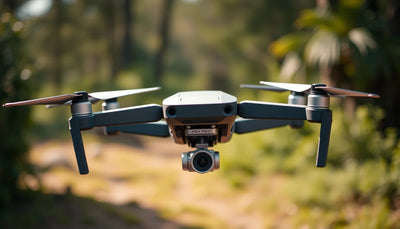
Johannesburg property shoots demand a specific combination of portability, image quality, and wind resistance. The DJI Air 3 delivers across all three. Its dual-camera system — a 1/1.3-inch sensor 24mm equivalent wide camera and a 70mm equivalent medium telephoto — lets operators capture full facade shots and detailed architectural close-ups without repositioning the drone. This matters when shooting in suburbs like Sandton or Bryanston, where mature tree canopies and boundary walls create tight manoeuvring corridors. The Air 3's O4 transmission system provides a stable 1080p/60fps live feed at ranges up to 20km, though Part 101 mandates visual line of sight (VLOS) at all times — realistically capped at 500m in built-up areas. Omnidirectional obstacle sensing uses six fisheye sensors and two downward sensors to build a real-time 3D map of surroundings. This is not a luxury feature; it is a liability reducer when flying 15m above a R12-million property in Houghton with zero margin for error. Battery life is another practical advantage: 46 minutes of hover time per charge means a single battery can cover a full exterior shoot for a standard four-bedroom home, including multiple orbital passes, nadir roof inspection shots, and low-altitude garden sweep sequences. For agents needing same-day turnaround on listing media, eliminating battery swaps mid-shoot saves 7–10 minutes per property — compounding across a day of 6–8 shoots.
What Are the Operational Limits Under Part 101 for Property Shoots?
Part 101 imposes hard boundaries that directly shape how you plan a real estate shoot in Johannesburg. You must maintain a minimum horizontal distance of 50 metres from any structure, road, or building not under the control of the property owner or agent who commissioned the flight. For a freestanding home with a 2-metre boundary wall, this is manageable. For a cluster development or sectional title complex in Fourways, it becomes genuinely restrictive — you cannot overfly neighbouring units or common property driveways without written consent from the body corporate. The 30-metre distance from persons rule means you must cordon off the property or ensure all individuals (garden staff, domestic workers, occupants) are briefed and positioned inside the structure during low-altitude passes. No night operations are permitted under a standard ROC unless you hold a specific night rating, which adds another ZAR 7,000–9,000 to your certification cost. Flights within 10km of an aerodrome — which includes Rand Airport, Lanseria, and multiple smaller airfields ringing Johannesburg — require prior written approval from the air traffic service unit. This is not a rubber stamp. Approvals typically take 48–72 hours and require submitting coordinates, altitudes, and time windows. Operating a pre-owned DJI Air 3 with Reboot Hub's OEM-grade battery health (each cell tested to within 2% of factory specification during the 40-point inspection) gives you predictable flight times you can cite accurately in these applications.
Why Buy from Reboot Hub?
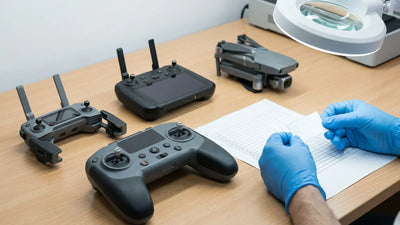
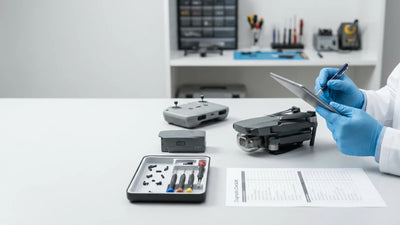
Reboot Hub occupies a distinct position in the drone market: every unit sold is pre-owned but graded with precision that makes the distinction from new nearly academic for working professionals. A Flawless (A+) DJI Air 3 has been activated — often by a retailer for inventory purposes — but never airborne. A Pristine Pre-Owned (A) unit shows zero visible marks under 10x loupe inspection. Both grades pass the same 40-point checklist covering gimbal calibration, IMU drift tolerance, GPS lock speed, battery internal resistance across all cells, and full-throttle ESC response. All replacement parts are genuine OEM — no third-party props, no aftermarket charger boards. The 180-day warranty covers defects that affect airworthiness, including gimbal motor failures, barometer drift exceeding ±1.5m, and transmission module faults. DDP shipping means the price you see at checkout is the price you pay — Reboot Hub handles South African import duties and VAT clearance before the package reaches OR Tambo. For Johannesburg operators whose income depends on drone availability, the Shenzhen repair facility offers 3–5 day turnaround on chip-level repairs by MOHRSS Level 3 technicians, with a HK drop-off option if you happen to be transiting through Hong Kong.
Frequently Asked Questions

Q: Do I need Part 101 if I only shoot drone photos for my own property listings as an estate agent?
A: Yes. The SACAA defines commercial operations as any flight conducted for financial gain or in furtherance of a business activity. If the drone footage enhances a listing that generates commission for you or your agency, it is a commercial flight. This holds true even if you are not separately invoicing the client for the drone work. Enforcement in Johannesburg has become more active since 2023, with inspectors monitoring property portals and social media for drone-origin images. The fine for a first offence starts at ZAR 10,000 if settled without litigation, and repeat violations can trigger equipment seizure under Civil Aviation Regulation 101.02.2. The cost of compliance — starting around ZAR 28,000 — is roughly equivalent to 3–4 forfeited commission splits on mid-market properties, making it a straightforward business decision for any agent shooting more than one listing per month.
Q: How long does the full SACAA Part 101 certification process take from start to finish?
A: Plan for a minimum of 6 weeks and a realistic maximum of 14 weeks. The RPL phase — ground school, flight training, and the practical skills test — consumes 4–6 weeks if you train on a full-time basis. The Class 4 medical can be secured in a single day if no underlying conditions require specialist referral. The bottleneck is invariably the ROC application at SACAA headquarters in Midrand. Straightforward applications with a properly drafted operations manual are processed in 4–8 weeks. Complex applications — those involving multiple drone models, night rating requests, or operations near controlled airspace — can extend to 12 weeks. There is no expedited pathway. Submit your ROC documentation only when it is complete; SACAA rejects incomplete submissions and resets the queue position.
Q: Can I use a DJI Air 3 purchased from outside South Africa for Part 101 commercial work?

A: Yes, provided the drone is type-accepted or recognised by SACAA. The DJI Air 3 falls within the sub-7kg category and does not require a separate type acceptance certificate. However, you must register the specific airframe on your ROC via the aircraft schedule, including the serial number, firmware version, and remote ID compliance status. A pre-owned DJI Air 3 from Reboot Hub — whether Flawless A+ at USD 849 or Pristine Pre-Owned A at USD 749 — arrives with a documented serial number and firmware stability report from the 40-point inspection, which simplifies the registration process. DDP shipping ensures the unit clears South African customs fully duty-paid, so the import documentation trail is clean when SACAA reviews your ROC aircraft schedule during an audit or ramp inspection.
Q: What are the insurance implications of flying without Part 101 certification in Johannesburg?
A: Flying commercially without Part 101 voids virtually every aviation liability policy. Standard drone insurance policies from South African underwriters — including those offered through Sasria-linked providers — contain explicit exclusions for flights conducted in breach of civil aviation regulations. If your uncertified DJI Air 3 strikes a vehicle on William Nicol Drive or damages a solar array on a neighbouring Sandton property, you bear the full liability out of pocket. Claim values in urban Johannesburg drone incidents have ranged from ZAR 18,000 (cracked vehicle windscreen) to ZAR 320,000 (damaged roof-mounted telecom equipment on a commercial building in Rosebank). Properly certified operators with an ROC can secure annual liability coverage for approximately ZAR 4,500–6,000 per year with ZAR 5-million aggregate limits. The premium difference alone pays for the certification within two renewal cycles.
Q: Is the DJI Air 3's camera quality sufficient for high-end real estate photography deliverables?
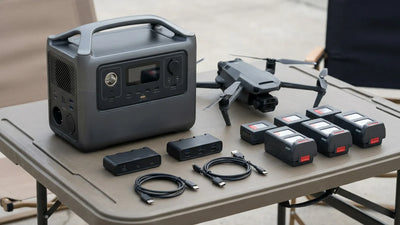
A: For 95% of Johannesburg property listings — including luxury homes in the ZAR 8-million to ZAR 25-million range — the Air 3's dual-camera output is entirely sufficient. The 1/1.3-inch sensor produces 48MP stills with enough dynamic range for blending window-pull exposures in post-production. The 70mm telephoto camera (f/2.8) compresses perspective beautifully for driveway approach shots and pool-pavilion hero angles that mimic the look of a 50mm lens on a full-frame DSLR. Where the Air 3 hits its ceiling is ultra-high-end video work requiring 5.1K RAW or ProRes — for that, you would step up to a Mavic 3 Pro or Inspire 3. But for real estate stills and 4K/60fps HDR video delivered to agency portals within 24 hours, the Air 3 is the pragmatic choice. At Reboot Hub's pre-owned pricing, the body-only cost leaves budget for additional batteries or a tablet with a bright screen for Johannesburg's harsh midday sun.
Q: What does Reboot Hub's 180-day warranty actually cover for commercial drone operators?
A: The 180-day warranty covers any defect that renders the drone unairworthy or unsafe to operate — gimbal motor seizures, barometer drift exceeding ±1.5 metres at hover, ESC failures causing uneven motor output, transmission module dropouts exceeding 3 signal interruptions per 10-minute flight, and battery cell voltage deviations greater than 0.08V under 50% load. It does not cover crash damage, water immersion, or wear items such as propeller blades and landing gear pads. For commercial operators in Johannesburg, this warranty is meaningful because it covers the precise failure modes that ground a drone mid-season. Reboot Hub's Shenzhen repair facility staffs MOHRSS Level 3 technicians — the highest certification tier under China's Ministry of Human Resources and Social Security — who perform chip-level board repairs rather than full module swaps. Turnaround is 3–5 days from receipt, with a Hong Kong drop-off point available if you want to avoid international courier logistics. For South African operators, this means a realistic 10–14 day total turnaround including shipping, versus 3–5 weeks for manufacturer warranty claims routed through local distributors.
Q: What is the actual difference between Flawless A+ and Pristine Pre-Owned A grades at Reboot Hub?
A: The distinction is exceptionally narrow — narrower than most operators will perceive in daily use. A Flawless (A+) DJI Air 3 has been activated (the battery has been inserted and the drone powered on, registering with DJI's servers) but has never left the ground. Think of it as a display unit that sat in a retail cabinet — all protective films intact, zero flight cycles, motors that have never spun under load. A Pristine Pre-Owned (A) unit has been flown, typically accumulating 5–25 flight cycles, but shows absolutely no visible marks under 10x loupe magnification. Propeller mounts have no scoring, landing gear has no abrasion, and gimbal isolator plates show no compression deformation. Both grades undergo the identical 40-point inspection covering all sensor arrays, transmission link stability, and battery health. The price difference — USD 849 vs USD 749 — reflects the flight-cycle delta alone. For Johannesburg real estate work where the drone will accumulate its own cosmetic wear within the first 30 shoots, the Pristine Pre-Owned A grade represents the sharper value proposition.
Q: Can I get a DJI Air 3 repaired at Reboot Hub's Shenzhen facility if I damage it during a Johannesburg property shoot?
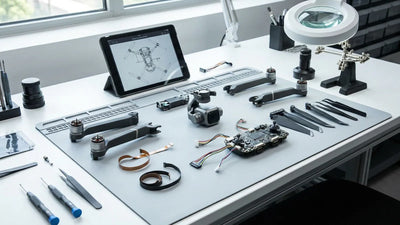
A: Yes, and this is one of the structural advantages of buying through Reboot Hub. The Shenzhen facility accepts out-of-warranty repairs on any unit originally sold by Reboot Hub, using the same MOHRSS Level 3 technicians who handle warranty claims. Common real-estate-shoot damage — gimbal ribbon cable tears from branch strikes, ESC burnout from sand ingestion during low-level garden passes, or cracked arm assemblies from tip-overs on uneven paving — is assessed within 24 hours of receipt. Repair quotations are sent with a line-item breakdown of parts (genuine OEM only) and labour. Typical costs: gimbal ribbon cable replacement runs USD 65–85, single arm assembly replacement runs USD 45–60, and full shell replacement after a hard impact runs USD 120–150. Turnaround is 3–5 working days once the quotation is approved. The Hong Kong drop-off point eliminates outbound international shipping uncertainty — if you or a colleague are transiting through HKG, you can deliver the unit directly. For Johannesburg operators without regular Asia travel, DHL/FedEx shipping from OR Tambo to Shenzhen adds approximately 4–5 business days each way.