Support & Learning / Module 9 branch
Mission Systems and Field Applications
Before this lesson: Enterprise Drone Procurement: Evidence and Fleet Support
What you will understand
- Connect systems to mapping, inspection and agriculture work.
- Separate observable evidence from assumptions before choosing an action.
- Continue through the main lesson path or enter a focused topic branch when needed.
Enterprise fleet cost and continuity
Enterprise drone total cost of ownership is the cost of maintaining useful mission capability, not the purchase price of an aircraft. The complete system includes payload compatibility, battery pool, controllers, software and data workflow, planned maintenance, unplanned repair, downtime, shipping and customs, training, insurance and compliance, plus the asset's residual value.
Quick answer
Model the complete operating system before choosing repair or replacement
Define the mission and readiness target, inventory the complete configuration, map recurring and event-driven cost drivers, measure downtime as lost capability, and compare three documented outcomes: repair, replace or retire. Use actual quotations, current authority requirements and exact-unit evidence rather than generic percentages or assumed service life.
What should be visible before the customer acts?
A trustworthy support page connects the customer's concern to exact-unit evidence, a written decision boundary and a useful next action. This table is the decision spine for the topic.
What does total cost of ownership mean for an enterprise drone?
Total cost of ownership begins with the capability the organization must keep available. An aircraft that is inexpensive to acquire but cannot carry the required payload, integrate with the data process or remain available during the operating season is not a lower-cost solution. Define the task, output, environment, crew and required readiness before comparing assets. Then treat the aircraft as one part of a system that includes controller, batteries, charging, payloads, accessories, software, records, training, logistics and support.
The model should have a time horizon and a decision owner. Finance may need cash timing, operations may need days of availability, and technical staff may need configuration and supportability. Keep assumptions visible and replace them with real evidence as quotations, service history and utilization records arrive. Do not force every cost into one precise number when the evidence is not yet available. A range, an unresolved variable and a trigger for review are more honest than invented precision.
How do acquisition and readiness differ?
Acquisition is the transaction for the aircraft or complete kit. Readiness is the additional work and equipment required before the system can perform the intended mission. It can include compatible payloads, controllers, batteries, charging capacity, cases, cables, storage media, account and software setup, internal documentation, training and mission acceptance. Two listings with similar aircraft names can produce very different readiness costs if one omits a required controller, payload interface or battery pool.
For a pre-owned or replacement unit, exact-unit evidence matters. Confirm identity, version context, supplied items, visible condition, battery evidence, controller relationship, service history and the supported configuration. For a new enterprise system, confirm what the quoted bundle includes and which operating requirements remain with the customer. Reboot Hub should make those boundaries visible before commitment, because the strongest cost reduction is often preventing a mismatch rather than negotiating a lower headline price.

Why do payload compatibility and data workflow belong in TCO?
An enterprise aircraft is useful only when it can support the required capture and deliver usable data. Verify the exact payload interface, supported payload or integrated camera, controller and software relationship, positioning requirements and downstream data process. A payload that physically mounts but does not fit the intended workflow can create training, licensing, processing or rework costs. A future software change or account boundary may also affect the operating plan, so current official compatibility information should be retained with the asset record.
Map the full handoff from mission request to delivered output. Identify where data is stored, who reviews it, which files the customer expects and how the organization preserves evidence. This does not require promising a universal output standard. It requires stating the intended result and confirming that the proposed system can support the documented process. When a repair or replacement changes payload, controller or software context, include the revalidation work in the comparison rather than treating the aircraft swap as complete.
How should the battery pool be costed?
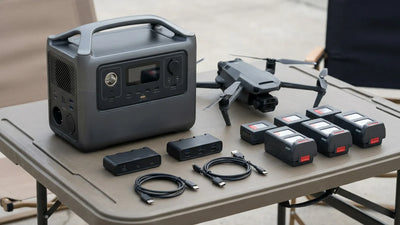
Treat the battery pool as a managed operational resource, not a fixed accessory count. Record the exact batteries assigned to the fleet, their compatibility, visible condition, available history and role in the mission schedule. Include charging equipment, safe storage, transport requirements, rotation, quarantine decisions and replacement planning. The correct pool size depends on flight pattern, environment, charging opportunity, turnaround, contingency and exact product guidance, so a generic number should not be copied across teams.
Battery evidence also affects acquisition and repair decisions. A replacement aircraft that requires a different battery family can strand otherwise usable inventory; an older aircraft may appear economical until the available pool can no longer support the operating schedule. Stop-use decisions belong to current DJI guidance and qualified assessment, not a homemade threshold in a TCO spreadsheet. The financial model should show the uncertainty and the operational consequence of insufficient energy availability without encouraging risky attempts to extend battery life.
What is the difference between planned maintenance and unplanned repair?
Planned maintenance is scheduled activity intended to preserve readiness and evidence: inspection, cleaning, supported updates, battery and accessory review, recordkeeping and any model-specific service action. Unplanned repair begins with a symptom, incident or failed acceptance and introduces diagnosis, approval, service, shipping, return and reacceptance time. Separate the two in the ledger. A team that hides unplanned work inside a general maintenance line cannot see repeated faults or the true interruption burden of a particular asset.
For each repair event, record the symptom, asset, configuration, mission context, approved scope, returned evidence and downtime. Avoid comparing providers only by a headline figure. The useful comparison includes communication, evidence quality, parts and scope clarity, shipping route, support boundary and the time until the aircraft is genuinely usable again. Reboot Hub's repair path should remove uncertainty before approval and provide a written route if the concern returns, while the policy pages remain the source for actual terms.

How should downtime be valued?
Downtime is the period in which the required capability is unavailable or available only through a workaround. It may begin before a unit leaves the site, because diagnosis, internal approval, parts planning and mission rescheduling consume time. The impact can include delayed inspection, hired equipment, staff idle time, missed weather windows, subcontracting, repeated travel or lower data quality from a substitute. Use the organization's real operating consequences rather than a generic daily loss claim.
Fleet design changes downtime. A compatible spare aircraft, shared controller, adequate battery pool and documented configuration can reduce the effect of one failure. A fleet of incompatible one-off systems may increase it. The TCO model should therefore compare resilience as well as average cost. If a critical mission has no fallback, the decision threshold for replacement may differ from a noncritical training asset. Make the service-level expectation explicit so finance and operations evaluate the same problem.
Where do shipping, customs, training, insurance and compliance fit?
Shipping and customs belong in both acquisition and service events. Record origin, destination, delivery term, required recipient or importer information, handling boundary and time risk. For eligible personal-use Reboot Hub orders and destinations shown at checkout, the shipping policy explains the standard DDP arrangement and its written exceptions; enterprise procurement may require a separately confirmed route. Do not turn a general article into a tax promise for every order or destination. Use the checkout and written confirmation for the actual transaction.
Training, insurance and compliance also follow the operation rather than the aircraft label. Include onboarding for pilots and data staff, internal procedures, current local operating requirements, registration or authorization where applicable and the organization's insurance decision. Rules and insurer terms can change, so preserve the authority or policy date and the person responsible for verification. The purpose is to prevent an apparently ready aircraft from waiting unused because the people, records or operating permissions were not part of the plan.
How should residual value support repair, replace or retire?
Residual value is not only a resale estimate. It includes the remaining usefulness of the aircraft, batteries, controller, payloads, accessories, training and data process. A technically repairable aircraft may have weak residual value for the current role if compatibility, supportability or mission demand has moved on. Conversely, a well-documented asset with a supported configuration and useful battery or payload ecosystem may justify repair even when a newer model exists.
End each review with a clear action. Repair when the approved scope and evidence can restore the required capability within an acceptable continuity plan. Replace when another documented system provides a stronger operating outcome after readiness work is included. Retire when the asset no longer has a defensible role, support path or risk boundary. Record what evidence would reopen the decision. This turns total cost of ownership into management practice rather than a one-time spreadsheet.
How does Reboot Hub support an enterprise TCO decision?
Reboot Hub begins with the customer's mission, concerns and destination. We can show exact available equipment, supplied items and visible condition, state what is known and unknown, and put the offered scope and terms in writing. That evidence lets a team compare a real configuration with its procurement, continuity and service plan. We do not ask the customer to infer readiness from a stock image or assume that one aircraft family fits every industry workflow.
Use the fleet procurement guide to define the complete system, the Drone Wiki for model context, the scenario hub for mission fit, the enterprise collection for available options and the shipping and policy pages for transaction boundaries. The result should be a documented path from business need to equipment evidence and then to a purchase or service decision. That is how educational traffic becomes brand trust: the page resolves real worries and gives the reader a transparent next action.
Keep exploring
Further reading
From The Reboot Hub Chronicle













From Drone Guides