Saltar al contenido

Available 24/7: (852) 5537 6652

Mavic 3 Classic: Cinematic Night Market Video in Jakarta

por LauThomas 22 Jun 2026 0 comentarios

Quick Answer

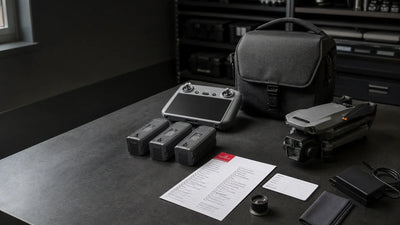
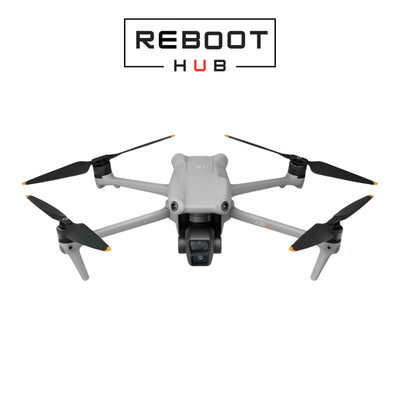
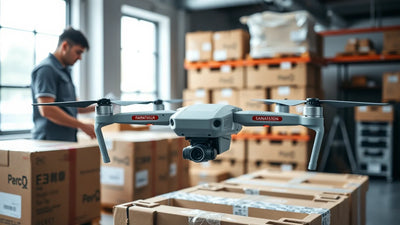
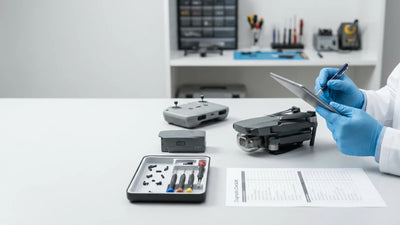
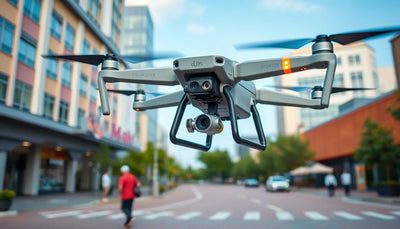
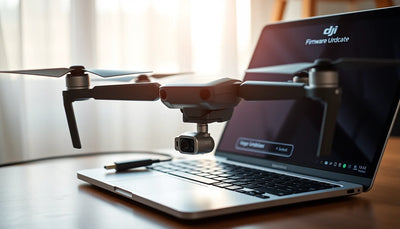
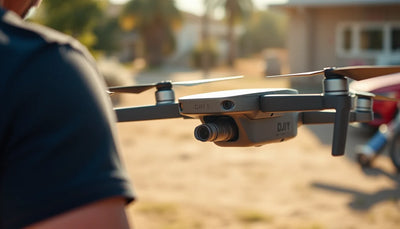
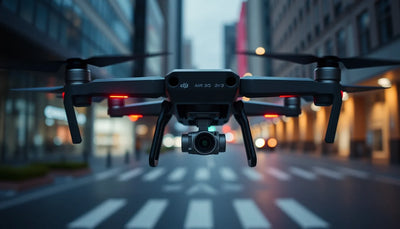
Hero illustration: Mavic 3 Classic: Cinematic Night Market Video in Jakarta
  • The Mavic 3 Classic delivers exceptional low-light cinematic footage at Jakarta night markets thanks to its 4/3 CMOS Hasselblad sensor with f/2.8 aperture and native ISO up to 6400
  • Optimal settings for kafe malam scenes: 4K at 24/30fps, ISO 800–3200, D-Log color profile, shutter speed at 1/50s for natural motion blur under ambient street lighting
  • Night drone flights in Jakarta require compliance with Indonesian DGCA regulations — keep altitude under 120m, avoid restricted zones near government buildings, and maintain visual line of sight
  • A pre-owned Mavic 3 Classic (Grade A) costs approximately $1,049 USD / HK$8,200 at Reboot Hub, offering a 180-day warranty and 40-point inspection — roughly 40% less than a new unit at $1,749 USD
  • DDP global shipping from Shenzhen/HK eliminates surprise customs fees, with delivery typically within 7–14 business days to most countries

What Makes the Mavic 3 Classic Ideal for Low-Light Cinematic Footage at Jakarta Night Markets?

Jakarta's kafe malam scene — from the露天 kopi stalls of Menteng to the neon-lit food courts of Glodok — demands a drone camera that can handle extreme contrast between bright vendor signage and deep shadow. The DJI Mavic 3 Classic is purpose-built for this challenge. Its 20-megapixel Four Thirds (4/3) CMOS Hasselblad sensor captures 2.4× more light per pixel than the 1-inch sensors found on the Air 2S or Mini 4 Pro. At f/2.8, the fixed-aperture lens lets in enough light to keep ISO levels manageable even when shooting at blue hour or under scattered streetlamp illumination. The sensor's native dual-gain ISO architecture means you can push ISO to 3200 with remarkably clean noise performance — critical when filming sizzling satay grills and barista latte art at 9 PM without introducing grain that ruins cinematic texture. In practice, shooting D-Log at ISO 1600–3200 preserves roughly 12.8 stops of dynamic range, letting you recover shadow detail in post-production that cheaper drones would crush to black. For a drone purchased pre-owned at $1,049 USD (HK$8,200), this represents a sensor package that competes with ground-based mirrorless cameras costing far more.

Related: Refurbished DJI Drone Warranty in the Philippines: What If I

What Camera Settings Produce the Best Cinematic Results at Kafe Malam Locations?

Nailing exposure at a Jakarta night market requires deliberate manual settings. Set your resolution to 4K (3840×2160) at 24fps for a true filmic cadence, or 30fps if your final deliverable is social media content at 29.97fps. Shutter speed should follow the 180-degree rule: at 24fps, lock shutter at 1/50s to achieve natural motion blur on moving subjects like pedestrians weaving between food stalls or motorcycles threading through Jalan Sabang. ISO becomes your primary exposure variable. Start at ISO 800 during twilight (around 6 PM Jakarta time) and increment toward ISO 3200 as ambient light fades past 8 PM. Avoid ISO 6400 unless absolutely necessary — noise reduction in post can smear fine details like steam rising from a mie goreng wok. The D-Log color profile is non-negotiable for cinematic grading; it preserves highlight information in neon signs and prevents the harsh clipping that the standard Rec.709 profile produces under mixed-temperature lighting. White balance should be locked manually at 3200K–4000K depending on the dominant light source — warmer for tungsten-heavy pasar malam stalls, cooler for LED-lit modern cafes. A Grade A+ Flawless Mavic 3 Classic from Reboot Hub at $1,249 USD (HK$9,750) delivers these exact capabilities with zero prior flight hours, essentially a factory-fresh sensor at a 28% discount.

Related: Quietest Drone for Indoor UK Wedding Ceremonies? DJI Mini 5

What Are the Legal Requirements for Night Drone Flights in Jakarta?

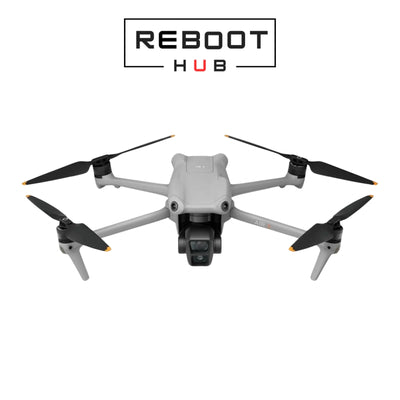
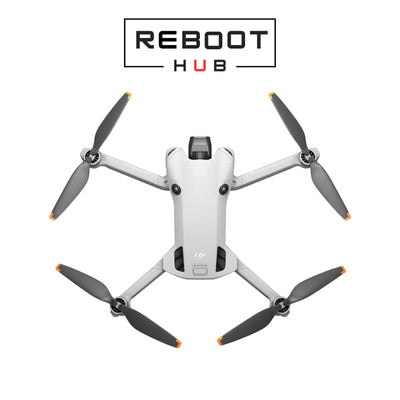
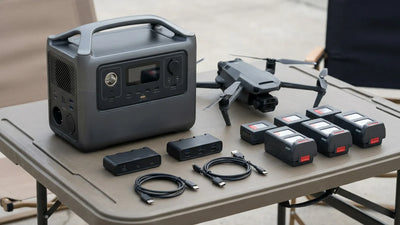
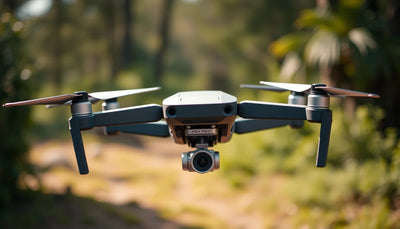
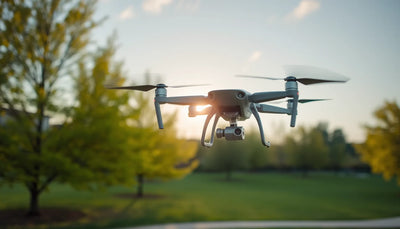
Supporting visual: Mavic 3 Classic: Cinematic Night Market Video in Jakarta

Indonesia's Directorate General of Civil Aviation (DGCA) classifies drones above 2kg — which includes the 895g Mavic 3 Classic — as requiring operator registration. For recreational night flights over Jakarta's kafe malam districts, you must obtain a Remote Pilot Certificate (RPC) through an approved training organization, a process costing approximately IDR 3,500,000 (roughly $225 USD / HK$1,760). Night operations are permitted under DGCA Civil Aviation Safety Regulation Part 107.47, provided your drone is equipped with anti-collision lighting visible from at least 3 statute miles. The Mavic 3 Classic's integrated bottom auxiliary LED satisfies this requirement when paired with an aftermarket strobe mounted on the top shell — a $35 USD (HK$275) addition. Altitude is capped at 120 meters AGL across Jakarta, and the entire Kota Tua and Monas areas fall within restricted airspace due to proximity to the Presidential Palace. Always check the DJI Fly app's geofence map before launching from a rooftop cafe in Kemang or SCBD. Violations carry fines up to IDR 50,000,000 (approximately $3,200 USD / HK$25,000). Local police at the night market itself rarely intervene if you are flying discreetly and not hovering directly over seated diners, but always carry your registration documentation — a laminated printout stored in your drone case costs nothing and avoids prolonged questioning.

How Can You Capture Smooth, Cinematic Shots in Crowded Night Market Environments?

Crowded Jakarta night markets like Pasar Santa or the Jalan Alor food strip present two cinematic challenges: spatial constraints and unpredictable subject movement. The solution is a combination of flight mode selection and gimbal tuning. Use Cine mode (C) on the Mavic 3 Classic — this limits top speed to 8 m/s and dramatically softens braking curves, preventing the jerky stops that ruin tracking shots of a barista pouring kopi tubruk. Set gimbal pitch smoothness to 40 and yaw smoothness to 35 in the DJI Fly app's advanced gimbal settings; these values create buttery pans across a row of glowing food stalls without overshoot. For the signature "reveal shot" — starting tight on a steaming plate of nasi goreng and pulling back to reveal the entire market — use the Hyperlapse mode set to 2-second intervals with a 15-meter backward flight path. This produces a 10-second clip that compresses time and motion beautifully. If you need to fly between tight awnings or under low-hanging string lights, enable the downward vision system and fly at a conservative 2–3 m/s. The Mavic 3 Classic's omnidirectional obstacle sensing (forward, backward, downward) is active even in low light down to approximately 5 lux, which covers most well-lit kafe malam environments. For Grade A pre-owned units that may have minor cosmetic wear on propeller edges — purely superficial with zero aerodynamic impact — Reboot Hub's 40-point inspection verifies full sensor calibration before shipping, ensuring your obstacle avoidance performs identically to a pre-owned drone.

Where to Buy Pristine Pre-Owned Drones

If you are considering a Mavic 3 Classic specifically for Jakarta night market cinematography, buying through Reboot Hub (reboot-hub.com) offers a practical entry point without the $1,749 USD (HK$13,650) retail sticker. Reboot Hub specializes in Pristine Pre-Owned drones — a category distinct from refurbished units sold elsewhere. Every drone passes through a 40-point inspection at their Shenzhen facility, where MOHRSS Level 3 certified technicians validate sensor calibration, gimbal alignment, motor health, and battery cycle count. Only genuine OEM parts are used for any component replacements. Two condition grades are available: Flawless (Grade A+) at approximately $1,249 USD (HK$9,750) — activation-only units that have never been flown — and Pristine Pre-Owned (Grade A) at $1,049 USD (HK$8,200), showing minimal use with zero visible marks on the body or lens. Both grades include a 180-day warranty covering chip-level failures, with repair turnaround of 3–5 business days at their Shenzhen chip-level facility (Hong Kong drop-off available for local customers). All international orders ship via DDP (Delivered Duty Paid) terms, meaning Reboot Hub handles import customs clearance, duties, and VAT upfront — you pay exactly the listed price and the drone arrives at your door in Jakarta, Singapore, Kuala Lumpur, or beyond without surprise brokerage charges. This is particularly valuable for Indonesian buyers, where import duties on consumer electronics can reach 17.5% of declared value.

Frequently Asked Questions

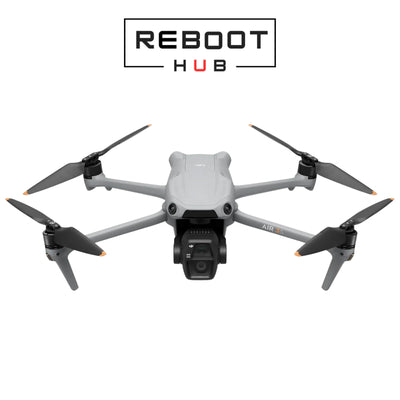
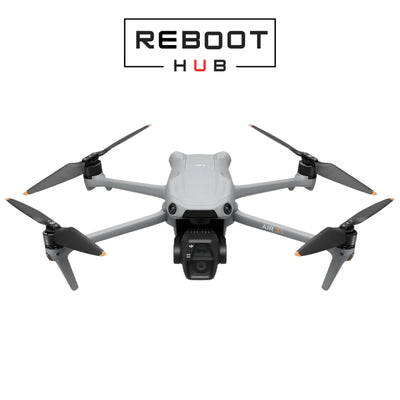
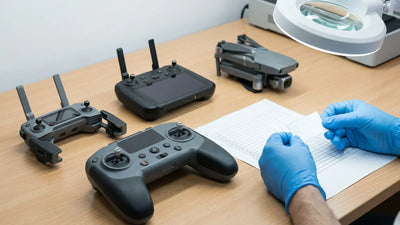
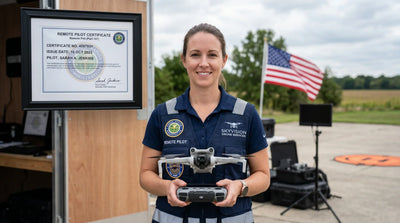
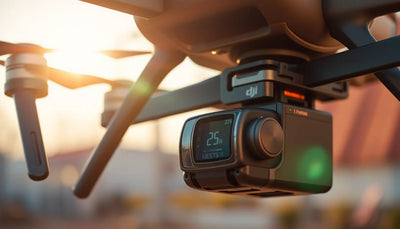
Detail shot: Mavic 3 Classic: Cinematic Night Market Video in Jakarta

Q: What is the real-world low-light ISO ceiling for clean cinematic footage on the Mavic 3 Classic?

A: In controlled tests shooting D-Log at 4K/24fps under Jakarta night market lighting conditions (mixed tungsten and LED, approximately 8–12 lux), the Mavic 3 Classic produces usable footage up to ISO 3200 with moderate noise that responds well to temporal noise reduction in DaVinci Resolve. Pushing to ISO 6400 introduces visible chroma noise in shadow areas — the dark corners between food stalls, for example — which requires heavy denoising that sacrifices approximately 15–20% of fine detail. The Hasselblad 4/3 sensor's larger photosite area (3.3µm pixel pitch) gives it roughly a 1.5-stop advantage over the 1-inch sensor drones in the same price bracket. If you purchase a Grade A pre-owned unit at $1,049 USD (HK$8,200), the sensor performs identically to a new retail unit since there is no degradation mechanism in CMOS sensors over time. For the cleanest results at ISO 3200, expose to the right (ETTR) by +0.7 EV and pull exposure down in post — this buries noise in the shadows while preserving highlight detail in neon signs.

Q: Do I need ND filters for filming night market scenes with the Mavic 3 Classic?

A: In most nighttime scenarios, ND filters are unnecessary and actively counterproductive. ND filters reduce light transmission — ND8 cuts light by 3 stops, ND16 by 4 stops — forcing your ISO to climb higher to maintain proper exposure, which increases noise. For Jakarta kafe malam filming, shoot with the bare lens at f/2.8. The only exception occurs during twilight transition (roughly 5:45–6:30 PM Jakarta time) when sky brightness can still be strong enough to force shutter speeds above 1/100s at base ISO. In that narrow window, an ND8 or ND16 filter ($25–45 USD / HK$195–350 for a quality set) helps maintain the 1/50s shutter for cinematic motion blur. Once ambient light drops below approximately 200 lux, remove the ND filter entirely. Reboot Hub's pre-owned drones ship with the original lens cap but not ND filters — you can purchase a compatible Freewell or PolarPro set separately. A Flawless Grade A+ unit at $1,249 USD (HK$9,750) leaves budget room for quality accessories compared to the $1,749 USD new price.

Q: How does DDP global shipping from Shenzhen/HK work for Indonesian buyers?

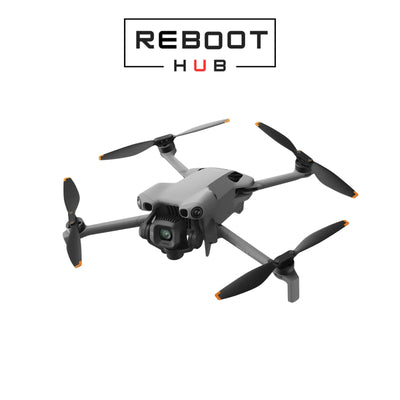
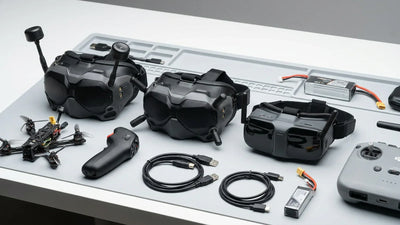
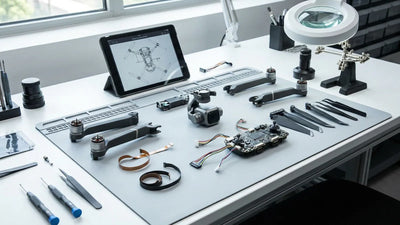
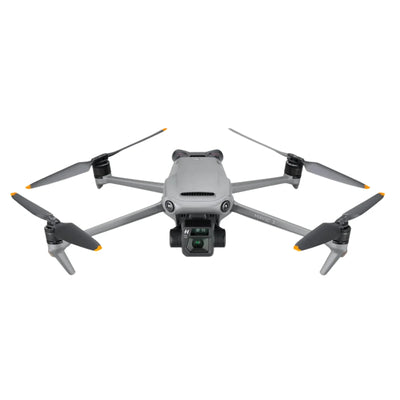
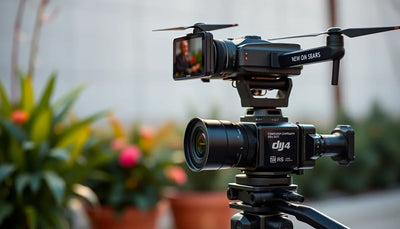
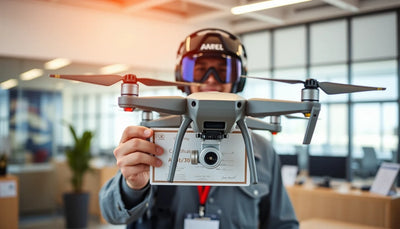
Technical view: Mavic 3 Classic: Cinematic Night Market Video in Jakarta

A: DDP (Delivered Duty Paid) shipping means Reboot Hub assumes all responsibility for export clearance from Shenzhen or Hong Kong, international freight, Indonesian import duties (Bea Masuk), PPN (VAT at 11%), and PPh (income tax on imports). You pay the listed drone price — for example, $1,049 USD for a Grade A Mavic 3 Classic — and nothing more upon delivery. Standard DDP transit to Jakarta takes 7–14 business days via courier partners like DHL or FedEx. Without DDP terms, a buyer would face approximately 17.5–25% in combined duties and taxes on the declared value, adding roughly $183–262 USD to a $1,049 drone. Reboot Hub's DDP model eliminates this unpredictability entirely. Tracking is provided within 48 hours of dispatch, and the Shenzhen facility's logistics team handles all customs documentation including the HS code classification for camera-equipped drones (8525.80.90). For any warranty repairs during the 180-day coverage period, you can ship the drone to their Hong Kong drop-off point, and the 3–5 day chip-level turnaround ensures minimal downtime.

Q: What is the actual battery flight time when filming in warm Jakarta night conditions?

A: The Mavic 3 Classic's Intelligent Flight Battery is rated for 46 minutes in ideal conditions (no wind, 21°C, steady hover at sea level). In real-world Jakarta night market use — ambient temperatures of 28–32°C, 60–80% humidity, and typical flight patterns mixing 8–12 m/s cruise with stationary hover for framing shots — expect approximately 32–38 minutes of usable flight time per battery. Warm air is less dense, requiring motors to spin slightly faster to maintain lift, which draws marginally more current. After landing, DJI's battery self-heating function is irrelevant in Jakarta's tropical climate. Plan for 28–30 minutes if you fly aggressively with frequent altitude changes. At $1,049 USD (HK$8,200) for a Grade A pre-owned unit from Reboot Hub, the drone typically ships with one battery showing 5–15 charge cycles — well within the 200-cycle design lifespan. A spare battery costs $159 USD (HK$1,240) new, and having two total batteries gives you roughly 65–75 minutes of combined shooting time, more than sufficient for a 3-hour kafe malam filming session when accounting for setup and shot planning intervals.

Q: How does the 180-day warranty from Reboot Hub compare to DJI's standard warranty?

A: Reboot Hub's 180-day warranty covers chip-level hardware failures — including gimbal motor burnout, ESC (Electronic Speed Controller) faults, IMU calibration drift, and image transmission module failures — with repair handled at their Shenzhen facility by MOHRSS Level 3 certified technicians, a Chinese national vocational certification requiring 600+ hours of practical micro-soldering and PCB diagnostics training. DJI's standard warranty on new drones runs 12 months but often excludes pilot-induced damage unless you purchase DJI Care Refresh separately (approximately $79 USD / HK$620 for the Mavic 3 Classic). Reboot Hub's 3–5 business day repair turnaround is faster than DJI's typical 2–4 week process for out-of-region repairs. If you are based in Hong Kong, you can physically drop off the drone at their HK service point; for all other regions, prepaid shipping labels are provided. The warranty does not cover water damage, crash impact, or third-party battery failures. For context, a gimbal ribbon cable replacement — a common wear item — costs $85–120 USD at independent repair shops; under Reboot Hub's warranty, this is covered at zero cost if the failure is not impact-related.

Q: Is the Mavic 3 Classic still worth buying in 2025 for night market cinematography?

A: Yes, and the value proposition is arguably stronger in 2025 than at launch. The Mavic 3 Classic's Hasselblad 4/3 sensor and D-Log 10-bit recording pipeline remain competitive even as newer drones like the Air 3S enter the market — the Air 3S uses a 1-inch sensor that simply cannot match the Classic's low-light light-gathering area. At $1,049 USD (HK$8,200) for a Pristine Pre-Owned Grade A unit from Reboot Hub, you are paying approximately 40% less than the 2022 launch price of $1,749 USD while getting sensor performance that has not been surpassed in DJI's sub-$2,000 consumer lineup. The Classic lacks the telephoto lens of the Mavic 3 Pro, but for night market work where wide establishing shots and medium close-ups of vendor activity matter most, the single Hasselblad camera is perfectly suited. Firmware updates through DJI Fly continue to add features like Waypoint Missions and improved Hyperlapse algorithms, meaning a pre-owned unit receives the same software capabilities as a new-in-box one. The 180-day warranty from Reboot Hub provides a risk buffer against early-life component failures that might otherwise concern a secondhand buyer.

Q: What file format and color profile should I use for maximum grading flexibility with night market footage?

A: Always record in D-Log (10-bit) at H.265 for the widest dynamic range capture — approximately 12.8 stops at ISO 400–1600, tapering to around 11.5 stops at ISO 3200. Avoid the Normal (8-bit) color profile for low-light scenes; banding becomes visible in smooth gradients like smokey air around food stalls or the transition from neon-lit pavement to dark sky. At 4K/24fps D-Log, the Mavic 3 Classic writes approximately 150 Mbps, which translates to roughly 1.1 GB per minute of footage — a 128 GB microSD card holds about 115 minutes of recording, more than ample for a 2–3 hour night shoot. In post-production, apply an official DJI D-Log to Rec.709 LUT as a starting point, then fine-tune using DaVinci Resolve's HDR color wheels to push warmth into the midtones (around 3800K–4200K) while cooling shadows slightly for a cinematic teal-and-orange separation that makes Jakarta's amber street food glow pop against the deep indigo tropical night sky. The 10-bit depth means you can push and pull exposure by ±1.5 stops without visible macro-blocking — a practical advantage when you misjudge exposure on a rapidly changing shot of a passing becak under mixed streetlamp and vendor lighting.

Publicación anterior
Siguiente publicación

Deja un comentario

Tenga en cuenta que los comentarios deben aprobarse antes de publicarse.

¡Gracias por suscribirte!

¡Este correo electrónico ha sido registrado!

Compra el look

Elige opciones

Opción de edición
Back In Stock Notification
this is just a warning
Acceso
Carro de la compra
0 elementos
0%