Support & Learning / Module 5 branch
Camera, Gimbal and Payload
Before this lesson: How Drone Cameras and Gimbals Work: Sensors and Payloads
What you will understand
- Understand imaging, stabilization and payload roles.
- Separate observable evidence from assumptions before choosing an action.
- Continue through the main lesson path or enter a focused topic branch when needed.
Module 5 / Camera and gimbal error branch
DJI error 40011 or 40021 can appear beside a gimbal warning, failed calibration or abnormal camera movement, but the number alone is not a parts diagnosis. Model, software state, impact history, transport condition and the exact wording shown by the supported app all matter. This guide protects the customer's evidence, separates appropriate external checks from unsafe software or disassembly, and creates a clear path from a warning to a controlled calibration decision or professional diagnosis.
Quick answer
Record the exact warning, remove simple obstructions and never force a calibration
Keep the complete error text, aircraft model, controller, app state and the moment the warning appeared. Power down before checking the gimbal guard, visible debris, impact marks and free clearance; never force the camera assembly. Use only the supported calibration offered for that exact model. If movement is blocked, noisy, repeated, impact-related or still abnormal after a supported check, keep the aircraft grounded and move to diagnosis.
What should be visible before the customer acts?
A trustworthy support page connects the customer's concern to exact-unit evidence, a written decision boundary and a useful next action. This table is the decision spine for the topic.
What do DJI errors 40011 and 40021 actually tell you?
They tell you that the represented DJI system has reported a gimbal-related condition that needs attention. The code does not by itself identify the failed part, prove that a ribbon cable is damaged or establish that a motor or control board must be replaced. DJI products, app releases and service contexts can present warnings differently, so a copied code table is weaker evidence than the complete live message on the customer's exact aircraft.
Treat the number as an index into an evidence process. Record the full wording, aircraft and controller model, app or controller interface, software state and whether the message appeared at startup, after transport, after a software change or after an impact. A warning that clears after a guard is removed is a different case from one accompanied by grinding, a tilted horizon, no camera image or repeated calibration failure.
What evidence should be saved before changing anything?
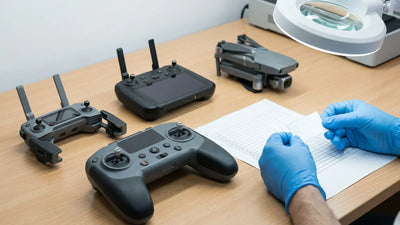
Photograph the aircraft as received, including the gimbal guard, camera position, shell seams, arms and any impact marks. Preserve a screenshot or photograph of the full warning rather than typing only the number. Note whether the aircraft was recently shipped, dropped, exposed to moisture, repaired or updated, and whether the camera still produces a stable image. Keep the exact supplied controller and accessories with the case.
A short powered-on video can be useful only if the gimbal is visibly unobstructed and the aircraft can sit safely on a level surface. It should document startup behavior without touching the camera assembly. Stop immediately if the gimbal strikes the body, chatters, grinds, becomes hot, repeatedly snaps to a hard limit or shows another safety warning. Evidence gathered before repeated resets is usually more useful than a long sequence of unrecorded attempts.

Which powered-off checks are safe for an owner?
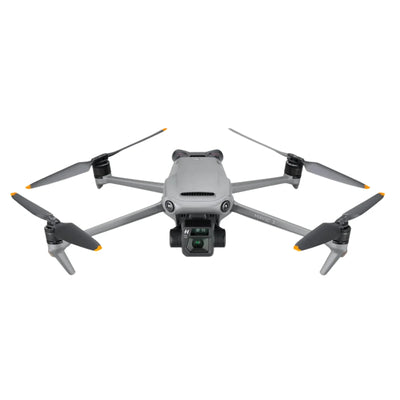
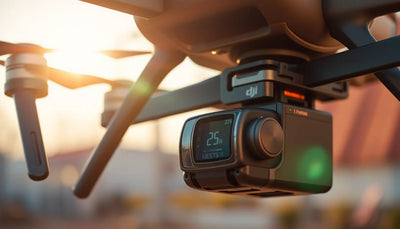
Power the aircraft off and remove the battery if the exact product instructions call for that handling. Remove the transport guard and check that foam, straps, labels or case material are not contacting the camera. Look for dirt around the external mechanism, a displaced damping element, a cracked shell, a bent arm or signs that the camera has struck the airframe. Do not pull a ribbon cable, open a cover or use the camera as a lever.
The gimbal is a delicate stabilized assembly, not a joint to exercise by hand. Do not force it through its travel or try to straighten a tilted camera. If visible structure is displaced, the camera does not sit freely, moisture is suspected or the mechanism resists normal clearance, stop before power-on. The right result of an external inspection can be a documented no-go decision rather than a home fix.
When is supported gimbal calibration appropriate?
Calibration is appropriate only when the current interface or exact product documentation provides that route, the aircraft has no visible impact or moisture concern, the gimbal is unobstructed and startup is not mechanically abnormal. Place the aircraft on a stable level surface, remove the guard, keep the complete kit adequately powered and follow the on-screen sequence without handling the aircraft during the process.
A completed progress bar is not the entire acceptance test. Review the live camera view, horizon, commanded tilt, warning state and whether movement is smooth through ordinary supported control. If calibration cannot start, stops repeatedly or completes while the camera remains tilted, noisy or unstable, preserve that result. Do not substitute unofficial calibration utilities, unknown firmware files or instructions written for a different model.
How do software state, environment and physical history change the decision?
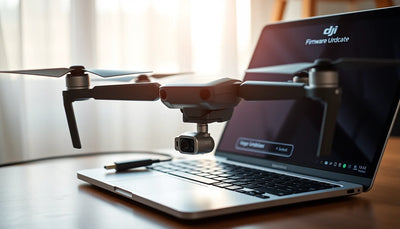
A supported firmware or app mismatch can affect communication with the gimbal, while a poor resting surface can undermine a calibration attempt. Confirm the exact aircraft-controller pairing and current supported software route before concluding that hardware has failed. Make one controlled change at a time and record the result. A general firmware lesson can guide evidence and supported update boundaries without promising that an update will repair a physical fault.
Physical history carries different weight. A warning that begins immediately after impact, liquid exposure, rough transport or an earlier camera repair should not be erased by repeated calibration attempts. Likewise, a pre-owned unit with unknown repair history needs that uncertainty stated plainly. Software can be checked safely; it should not be used to explain away visible damage, abnormal sound, intermittent image loss or a gimbal that cannot move freely.

When should 40011 or 40021 move to professional diagnosis?
Move to diagnosis when the warning repeats after a supported check, the gimbal cannot complete calibration, camera movement or image output is abnormal, impact or moisture history exists, or the aircraft shows additional power, sensor or startup warnings. Keep the aircraft grounded if a safe pre-flight state cannot be demonstrated. The owner does not need to identify a ribbon, motor, sensor or board before requesting service.
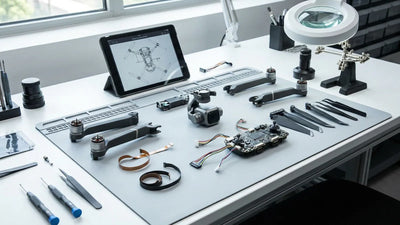
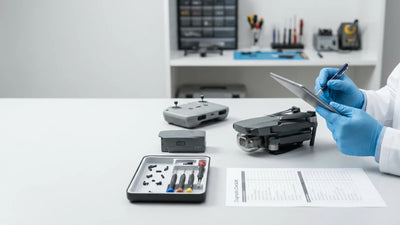
A professional intake should preserve the exact kit and symptom, then separate external obstruction, mechanical damage, connection, power, calibration and electronic possibilities. The customer should receive a written finding, proposed scope, parts route, approval boundary and any uncertainty that remains. Component-level procedures and hidden software tools belong in a controlled service environment, not in a public owner guide.
What should return-to-service evidence include?
The record should connect the original warning to the confirmed finding and approved work. It should identify the aircraft and controller, describe the supported calibration or service performed and document camera image, horizon, ordinary commanded motion and warning state. If only an obstruction was removed, say that. If a component was replaced or repaired, identify the scope without claiming that one bench check proves every future flight condition.
The aircraft then returns to the main pre-flight lesson for a controlled go or no-go decision. A low-risk function check should occur only in a suitable legal environment after the full aircraft, controller, battery and sensor state are reviewed. Reboot Hub's written 30-day repair-warranty terms apply to eligible completed repair work, separately from the 180-day product warranty for qualifying complete pre-owned products.
How does Reboot Hub remove the customer's gimbal-repair worries?
We start from the customer's point of view: whether the camera can be trusted, what happened before the warning, what the aircraft must do next and which uncertainties need to be removed before money is approved. We show the exact-unit condition, preserve warning and image evidence, explain what is confirmed versus still unknown and provide written scope and terms. A confident code-to-part guess is not treated as proof.
Continue through the camera and gimbal lesson for calibration fundamentals, the error-code reference for evidence handling, the firmware lesson for supported software boundaries, Drone Wiki for exact-model context and the pre-flight lesson for return to service. When persistent evidence remains, the professional repair path and Reboot Hub Standard turn it into a transparent customer decision rather than another anonymous repair claim.
Keep exploring
Further reading
From The Reboot Hub Chronicle


From Drone Guides