DJI Drone FCC or CE Mode: What to Confirm Before Buying
China-market DJI buyer brief
Quick answer
- FCC and CE are labels buyers often see in product specifications, but the meaning for an exact aircraft and controller depends on the real kit and destination.
- Ask for evidence from the offered aircraft, controller, batteries, app state, serial and seller record rather than accepting a broad regional claim.
- Keep a configuration question separate from import, telecom and flight-permission questions. A positive answer to one does not settle the others.
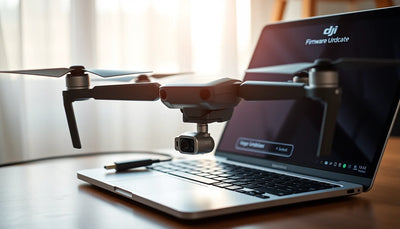
- Do not make an unofficial location, firmware or software change part of the purchase plan. Preserve the normal state and ask the manufacturer or responsible authority about the exact facts.

Which buyer question belongs to which decision layer?
| Buyer question | Evidence to collect | Who can clarify it | Do not assume |
|---|---|---|---|
| Exact radio specification | Aircraft model, controller model and current official product material | Manufacturer support for the exact kit | A label on another model describes this kit |
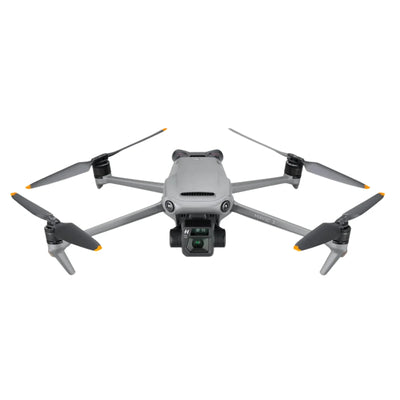
| Unit identity | Aircraft serial, controller identity, batteries and live demonstration | Seller and buyer before payment | A catalogue image proves the shipped unit |
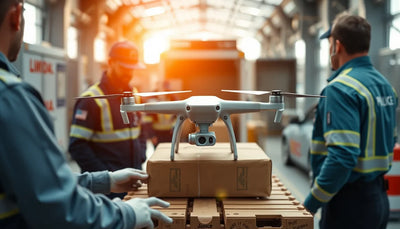
| Import and delivery | Seller identity, invoice, contents, batteries and carrier facts | Carrier, broker and relevant import route | A configuration claim replaces shipping records |
| Planned flight | Location, purpose, people, timing and operator facts | Relevant aviation, spectrum and location authorities | A product setting grants flight permission |
| Support after purchase | Condition record, account state and written seller terms | Manufacturer support or qualified diagnosis | An informal seller promise is a universal remedy |

Why do FCC and CE become a buyer question?
Buyers often see FCC or CE in a product specification and try to turn those labels into one simple answer about distance, legality or a China-market unit. That shortcut is unreliable. The manufacturer specification can depend on the exact aircraft, controller, frequency band and market context, while the buyer still has separate questions about the particular unit, the destination and the planned operation.
Use the labels as a prompt to request evidence, not as a promise about what a used aircraft will do. Record the exact model and controller, then compare the official material for that same equipment. If the seller cannot identify the actual kit or demonstrate normal operation, the regional claim should not carry the purchase decision.
What should a seller demonstrate before payment?
Ask for a continuous demonstration of the offered aircraft, controller and normal app connection. The purchase file should connect the serial, controller, batteries, included accessories, seller identity, invoice, account status, visible condition and known repair history. This is more useful than a statement that a drone is configured for a named region.
Keep the evidence unit-specific. A video of another drone, a general screenshot or a product-box label does not show the condition of the aircraft that will be shipped. A pre-owned purchase becomes easier to support when its identity, condition and handover record tell one consistent story.
- Match the aircraft serial to the invoice and the live demonstration.
- Identify the controller and batteries as separate parts of the kit.
- Ask the seller to state what is known about the account and prior repair history.
- Preserve the carrier and payment record with the same purchase file.

Why should configuration, import and flight be separated?
A device question is not an import decision, and neither is a flight decision. Import depends on the actual transaction and shipment facts. A flight depends on the planned location, purpose, pilot, people nearby, airspace and current local route. Treating a radio label as the answer to all three can leave a buyer with a documented product but an unresolved operation.
Describe the real use before seeking clarification. State where the aircraft will be used, whether the flight is recreational or commercial, what the aircraft will carry and who will operate it. The responsible authority or manufacturer support team can then respond to the question in front of them rather than a vague request to make a drone work globally.
What should not become part of the buying plan?
Do not rely on an unofficial location, firmware or software method to produce a desired regional result. It does not make the purchase evidence clearer, and it can complicate future support or diagnosis. A buyer should be able to explain the normal condition and history of the unit without relying on a modification story from a marketplace listing.
If the normal app, controller or connection behaviour raises a question, capture the observed state and ask about the exact kit through the supported route. A responsible answer may be narrower than a seller advertisement, but it gives the buyer a record that can travel with the unit after delivery.

How does a documented pre-owned path reduce uncertainty?
A documented pre-owned path starts with the exact unit, not with a headline about its region. Compare model facts through the Drone Wiki, inspect the serial and condition record, then connect the purchase to a seller, invoice, payment route and delivery record. This lets a buyer evaluate an aircraft as an actual piece of equipment rather than a regional promise.
Use the seller-verification, shipping and warranty guides to decide whether the record is strong enough for the intended use. For an event or paid job, keep a separate operational plan and a backup option. The buying decision is stronger when the evidence supports both the kit in hand and the route that follows after purchase.
Use the Drone Wiki for model and compatibility context, then return to the action path above.
Keep exploring
Further reading
From The Reboot Hub Chronicle


From Drone Guides