Support & Learning / Module 4 branch
Command, Radio and Video Link
Before this lesson: How DJI Drones Transmit Commands, Telemetry and Live Video
What you will understand
- Understand command, telemetry, video and interference evidence.
- Separate observable evidence from assumptions before choosing an action.
- Continue through the main lesson path or enter a focused topic branch when needed.
Module 4 / Mavic 3 command and video link branch
A Mavic 3 link-loss event is a safety concern, but it is not automatically a failed transmission board. The same visible symptom can come from obstruction, interference, antenna orientation, controller state, incompatible software state, impact history or aircraft hardware. This guide keeps the customer's exact event intact, explains the supported ground checks and defines when repeatable evidence justifies professional diagnosis instead of a risky maximum-range test or an assumed repair.
Quick answer
Preserve the event, remove environmental variables and never chase maximum range
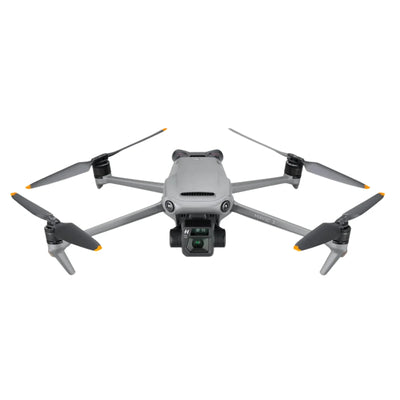
Mavic 3 uses DJI O3+ for its command and video transmission system, although many customers search for the broader OcuSync name. Record the exact warning, location, line of sight, obstruction, controller, aircraft state and return behavior. Re-test only in a legal low-risk open area at ordinary working distance, with the correct antenna orientation and supported software state. Persistent close-range loss, controller damage, impact history or abnormal aircraft behavior should move to diagnosis.
What should be visible before the customer acts?
A trustworthy support page connects the customer's concern to exact-unit evidence, a written decision boundary and a useful next action. This table is the decision spine for the topic.
Is OcuSync the correct name for the Mavic 3 link?
OcuSync is the familiar family name many owners use for DJI's digital command and video transmission. Mavic 3 uses DJI O3+ according to DJI's product documentation. The distinction matters when checking compatible controllers, exact-model manuals and current support information, but it does not change the customer's immediate problem: the aircraft and controller did not maintain the expected link in a real environment.
Avoid copying a headline maximum distance into a diagnostic article. Published performance conditions are not a promise for every country, site, obstruction, interference level or aircraft state, and local operating rules still apply. The useful question is whether the exact kit maintains a stable legal working link under controlled conditions suitable for the intended job.
What can cause Mavic 3 signal loss without a hardware failure?
Terrain, buildings, trees, vehicles, the operator's body and other obstacles can weaken or block the path between the controller and aircraft. Dense wireless activity and local radio conditions can also change the result. Antenna orientation, controller handling, aircraft attitude and the exact site geometry matter. A link-loss event therefore does not automatically prove a hardware failure, even when it feels sudden or occurs closer than the operator expected.
Software and system state can contribute as well. The exact aircraft, controller and current supported software need to remain compatible, and a warning or abnormal restart should be recorded before changes are made. A pre-owned kit also needs clear evidence of the supplied controller, prior impact, moisture exposure and earlier repair. Unknown history should remain written as unknown rather than being filled with a confident module diagnosis.

What should be recorded immediately after a link-loss event?
Keep the exact on-screen wording, time, location, height and distance shown by the supported interface, line-of-sight condition, major obstructions, aircraft orientation, controller used, battery, weather context and what the aircraft did afterward. Preserve the flight record through supported methods and note whether control, video or both were affected. Do not edit the description into a claim that the O3+ module failed.
If the event involved an uncontrolled landing, impact, moisture, unusual heat, controller damage or abnormal motor behavior, keep the aircraft grounded. The mid-flight signal-loss lesson covers the immediate operator decision, while this page begins after the event and focuses on evidence, controlled comparison and the repair boundary.
Which ground checks are appropriate before a service decision?
Inspect the controller and aircraft externally for damage, especially around antennas, arms, shell joints and ports that were involved in an impact. Confirm the exact controller-aircraft pairing and the supported software state. Restart through ordinary supported controls and reconnect the complete kit. Review the warning state without opening the aircraft or controller and without changing several settings at once.
Check antenna orientation against the current controller manual and repeat the setup away from obvious obstruction and dense electrical activity. Keep the aircraft grounded while connection stability and status are reviewed. If the controller, aircraft or app cannot establish a normal supported connection at close range, record that behavior and stop; forcing a flight is not a diagnostic requirement.
How should a controlled Mavic 3 signal assessment be designed?
Use a legal open area with clear line of sight, ordinary working distance and enough margin to land safely. Keep the exact aircraft and controller configuration, make one controlled change at a time and record the result. The objective is to see whether a known environment removes the symptom, not to discover the farthest point at which the link can fail. Never use a range challenge as proof of repair quality.
Compare the result with the original event carefully. A stable open-field check can support an environmental explanation but does not guarantee every urban, industrial or terrain-heavy site. A repeated loss under suitable close-range conditions is stronger evidence of an equipment or compatibility concern, but it still does not identify the failed component.

When should Mavic 3 transmission loss move to professional diagnosis?
Move to diagnosis when the link cannot be established normally at close range, the concern repeats in a suitable open environment, the controller or antennas show damage, the aircraft has impact or moisture history, or link loss appears with power, sensor, startup or warning abnormalities. Stop before disassembly, unknown software, hidden settings or repeated flight attempts destroy the evidence or increase risk.
Professional intake should connect the reported event to the exact kit, visible condition and controlled observations. A qualified service process can isolate controller-side, aircraft-side, antenna, connection, power or board-level possibilities without publishing component-level instructions for the customer. The customer should receive the finding, proposed scope, parts path, test boundary and remaining uncertainty before approval.
What should a repair and return-to-service record prove?
A repair record should identify the reported link symptom, the confirmed finding, approved work and the checks tied to that work. It should not claim that one bench observation certifies every possible range or environment. After return, reconnect the exact controller and aircraft, review warnings and settings, then use the pre-flight and controlled signal-assessment paths in a suitable legal area.
The result should show what was tested and what remains dependent on environment, local rules and the customer's operating distance. Reboot Hub's repair work is covered by the written 30-day repair-warranty terms for eligible completed work; that is separate from the 180-day product warranty for qualifying complete pre-owned products. Neither term turns a repaired link into an unlimited performance promise.
How does Reboot Hub turn a signal concern into a transparent decision?
We begin from the customer's point of view: what happened, what they need the aircraft to do, which exact kit is involved, what evidence exists and which worries can be removed before they spend money or put the aircraft back into service. We show the confirmed condition, state unknowns plainly and provide written scope and terms. A generic repair label or anonymous marketplace claim is not treated as proof.
Continue through Support & Learning for the main course, Drone Wiki and the Mavic 3 page for model context, the controller lesson for the command path, the mid-flight lesson for immediate loss behavior, the signal-assessment lesson for controlled comparison and the error reference for warning evidence. If the concern persists, the professional repair path and Reboot Hub Standard connect that evidence to a customer-specific next decision.
Keep exploring
Further reading
From The Reboot Hub Chronicle



From Drone Guides