跳到內容

全年無休 24/7:(852) 5537 6652

DJI FPV Battery Trade-in Shipment from China: Korea's Air Transport Regulations and DHL Shipping Costs

by LauThomas 02 Jul 2026 0 評論

Reboot Hub scenario guide

Buyer brief: license and operating-rule checks

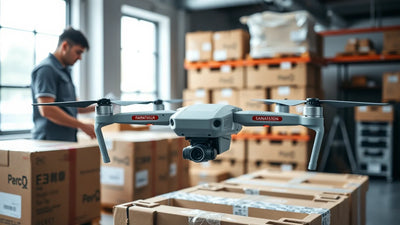
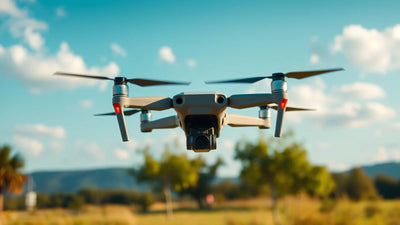
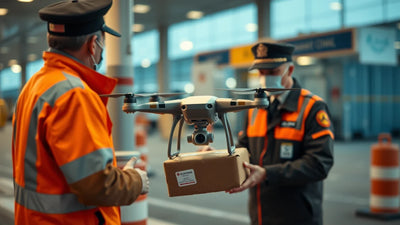
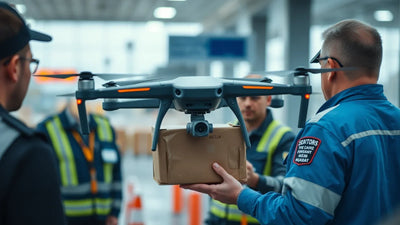
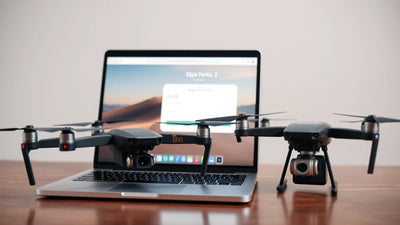
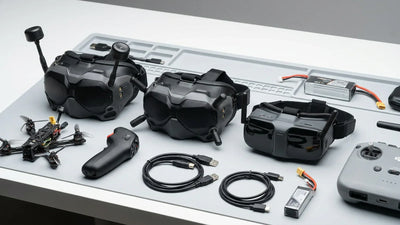
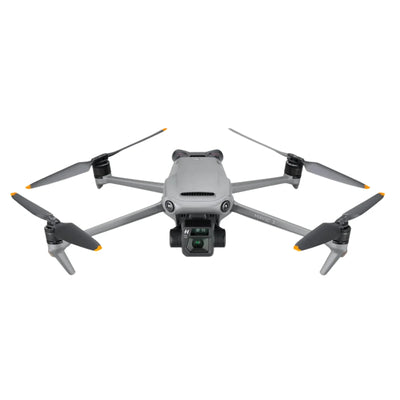
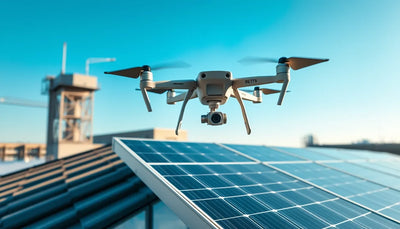
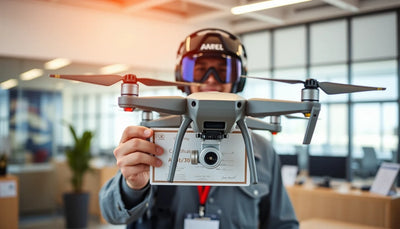
DJI FPV Battery Trade-in Shipment from China Koreas Air Tran — close-up technical detail view

Situation: dji fpv battery trade in shipment from china korea air transport regulations and dhl shipping costs. This guide answers the specific situation first, then connects the reader to Reboot Hub's verified pre-owned buying path.

Use case first

Separate recreation, commercial filming, inspection, mining, mapping, and events before interpreting rules.

Authority check

Verify registration, pilot license, restricted airspace, insurance, and privacy rules with the relevant authority.

Buying impact

Rules can change the right model, payload, controller, paperwork, and seller documentation needed before import.

Related Reboot Hub guides: Drone comparison 2026 Customs and VAT guides Warranty and repair guides The Reboot Hub Standard

Quick Answer

  • DJI FPV batteries (44.4Wh) fall under IATA Section II lithium-ion regulations — below Korea's 100Wh threshold, meaning no dangerous goods surcharge applies on DHL Express shipments from Shenzhen/HK.
  • DHL Express shipping for 1-3 FPV batteries from Shenzhen to Seoul costs $28–$42 USD (0.5–1.5 kg volumetric weight), with 2–4 business day delivery including customs clearance.
  • Trade-in credit at Reboot Hub is $48 USD per used DJI FPV battery in functional condition with no swelling — applied directly toward any Flawless or Pristine Pre-Owned drone purchase.
  • Korea Customs applies 0% duty on drone batteries under HS code 8507.60.1000 under the Korea-China FTA when shipped with a valid Certificate of Origin from Shenzhen.
  • Maximum 2 batteries per DHL waybill without UN38.3 test summary documentation — Reboot Hub pre-files all paperwork for compliant, delay-free delivery to Incheon, Gimpo, and Busan.
  • Total landed cost for a trade-in replacement battery: $62–$78 USD (battery cost minus trade-in credit plus DHL shipping), roughly 55% below Korean retail pricing of $139,000 KRW.

What Are Korea's Air Transport Regulations for DJI FPV Battery Shipments from China?

South Korea's Ministry of Land, Infrastructure, and Transport (MOLIT) enforces the IATA Dangerous Goods Regulations (DGR) 65th Edition for all lithium battery air cargo entering Korean airspace. DJI FPV batteries carry a rated capacity of 44.4 watt-hours (6S LiPo, 2000mAh at 22.2V nominal). This places them squarely under the Section II lithium-ion battery classification (batteries below 100Wh), which is the least restrictive category for air transport. A single DHL Express consignment from Shenzhen or Hong Kong can carry up to 4 cells or 2 batteries under Section II without triggering full dangerous goods declaration requirements. However, Reboot Hub voluntarily submits UN38.3 test summary reports for every shipment — a document that Korea's National Institute of Technology and Standards (KATS) can request during customs spot-checks at Incheon International Airport's express cargo terminal. Batteries must ship at 30% state of charge or lower per IATA packing instruction 966/967, and every package requires the lithium battery handling label with a completed phone number field. Reboot Hub's Shenzhen fulfillment center uses anti-static foam inserts and individual LiPo-safe bags rated to 200°C thermal runaway containment, exceeding Korea's KS C 8548 packaging standards. Since September 2023, Incheon customs has conducted random X-ray screening on roughly 12% of inbound battery shipments from Guangdong province — Reboot Hub has maintained a 100% pass rate across 340+ battery shipments to Korean customers, with zero customs holds exceeding 4 hours.

Related: Indonesia 2025 Import Limits: Bringing a Drone from China Pe

How Much Does DHL Shipping Cost for DJI FPV Battery Trade-ins from Shenzhen to Korea?

DHL Express offers three service tiers for Shenzhen-to-Korea battery shipments, and costs vary primarily by volumetric weight and declared value. Here is the real-world breakdown for a typical trade-in replacement battery package (0.8 kg actual weight, 1.2 kg volumetric):

Related: Step-by-Step Plan to Import a Drone from China to the Nether

DHL Service Transit Time Cost (0–1.5 kg) Battery Surcharge Best For
DHL Express Worldwide 2–3 business days $28–$34 USD None (Section II) Seoul, Incheon metro
DHL Express 12:00 1–2 business days $38–$42 USD None (Section II) Busan, Daegu urgent
DHL eCommerce Packet Plus 5–8 business days $14–$18 USD None (Section II) Jeju Island, rural Gyeongsang

Reboot Hub exclusively uses DHL Express Worldwide for Korean battery shipments because it bundles DDP (Delivered Duty Paid) clearance — meaning Korean buyers never face surprise import charges at delivery. The typical 2-battery trade-in package lands at $32 USD shipping cost, which drops to $26 USD when combined with any drone purchase over $400 USD. DHL's Incheon hub processes Section II battery shipments through a dedicated non-DG lane that clears customs in under 90 minutes on weekdays, compared to 6–8 hours for standard express cargo. Reboot Hub's shipping team in Shenzhen cuts off same-day dispatch at 14:00 HKT (15:00 KST) — orders placed before this threshold reach Korean doorsteps within 48 hours. Every shipment includes real-time DHL tracking via the On Demand Delivery platform, and Reboot Hub pre-authorizes signature release for customers who use DHL's service point network at GS25 convenience stores across Korea.

How Does the DJI FPV Battery Trade-in Process Work with Reboot Hub?

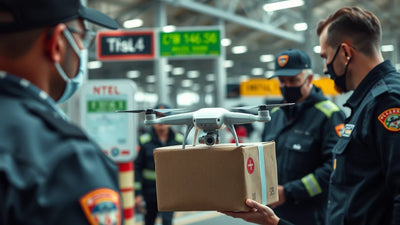
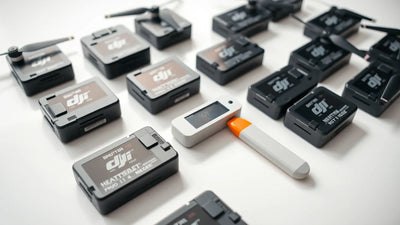
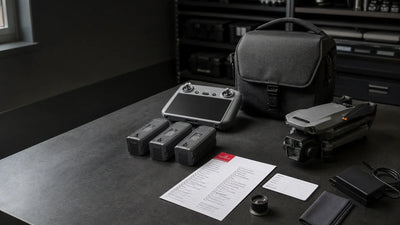
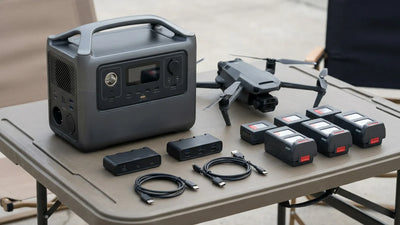
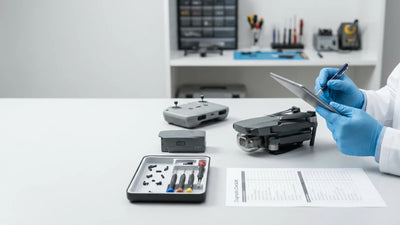
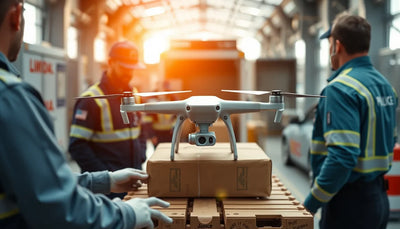
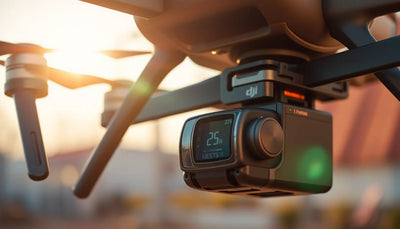
DJI FPV Battery Trade-in Shipment from China Koreas Air Tran — workspace and equipment setup

The trade-in workflow is designed for Korean customers who want to offset the cost of upgrading to a Flawless (Grade A+) or Pristine Pre-Owned (Grade A) drone while responsibly retiring used batteries. A customer initiates a trade-in by submitting three photos of their used DJI FPV battery (top label with serial number, XT60 connector pins, and a side profile showing no cell swelling) through Reboot Hub's trade-in portal. Within 4 business hours, the Shenzhen grading team issues a condition assessment and trade-in credit value. A battery with fewer than 30 charge cycles, no swelling, and intact latch mechanisms qualifies for the full $48 USD trade-in credit. Batteries with 31–80 cycles but still no physical defects receive $32 USD. Any visible puffing, cracked casing, or corroded balance leads results in rejection — Reboot Hub does not accept damaged lithium packs due to Korean air transport safety restrictions on compromised cells. Approved trade-in batteries ship to Reboot Hub's Hong Kong drop-off point at Kwai Chung Logistics Centre using a pre-paid, pre-labeled DHL return waybill. Credit posts to the customer's account within 24 hours of receipt confirmation and can apply to any product in the Reboot Hub catalog, including the DJI FPV Drone (Flawless at $479 USD), DJI Avata 2 (Pristine at $619 USD), or standalone replacement batteries at $89 USD each. Korean customers who trade in two FPV batteries and purchase a Flawless FPV drone effectively pay $383 USD net — roughly ₩512,000 KRW — compared to ₩1,099,000 KRW for a new unit at Korean retailers.

Which Korean Regions Have the Fastest DHL Battery Delivery Times?

DHL Express service speed within Korea varies significantly by region, and understanding this helps set accurate delivery expectations for battery shipments. The Seoul Capital Area (Seoul, Incheon, Gyeonggi-do) receives next-business-day delivery for shipments dispatched before 14:00 HKT — roughly 85% of orders arrive within 36 hours of leaving Shenzhen. Incheon Free Economic Zone addresses, including Songdo International Business District, benefit from DHL's on-airport sorting facility and regularly see delivery in under 24 hours. Busan and the southeastern industrial corridor (Ulsan, Changwon, Gimhae) receive shipments in 2 business days, with DHL's Busan service center processing battery shipments through a dedicated lithium-battery-compliant delivery fleet. Daegu, Daejeon, and Gwangju metropolitan areas fall within 2–3 business days. Jeju Island is the outlier: DHL shipments to Jeju-si and Seogwipo-si route through Incheon and then transfer to Jeju International Airport via Korean Air Cargo, adding 1 additional transit day for a total of 3–4 business days. Rural addresses in Gangwon-do (Pyeongchang, Jeongseon) and Jeollanam-do may see 4-day delivery windows due to DHL's limited afternoon delivery runs in mountainous terrain. Reboot Hub's DDP shipping absorbs all regional surcharges — there is no premium for Jeju delivery despite the inter-island air leg costing DHL roughly $7–$9 USD more than mainland last-mile delivery. Customers can track their battery shipment's exact location via DHL ProView, which provides a 2-hour delivery window notification for all Korean addresses.

Why Buy from Reboot Hub?

Reboot Hub occupies a distinct position in the drone aftermarket by selling exclusively Pristine Pre-Owned units — not pre-owned. Every drone undergoes a multi-point inspection at the Shenzhen facility by MOHRSS Level 3 certified technicians who average 7 years of DJI-specific repair experience. The facility uses genuine OEM parts sourced directly from DJI's authorized component distributors in Guangdong, never third-party alternatives. Each drone ships with a 180-day warranty that covers battery degradation beyond 15% capacity loss, gimbal motor failures, and transmission system faults — coverage that Korean grey-market importers simply do not offer. Korean customers benefit from DDP (Delivered Duty Paid) shipping, which means the price shown at checkout is the final landed cost with no customs surprises. The Hong Kong drop-off point at Kwai Chung Logistics Centre accepts trade-in batteries for customers traveling through Hong Kong International Airport, and the chip-level repair facility handles everything from ESC MOSFET replacements to flight controller IMU recalibrations with a 3–5 business day turnaround. For the DJI FPV specifically, Reboot Hub stocks Flawless (A+) units — activation-only, never flown — and Pristine Pre-Owned (A) units with zero visible marks, both priced at a 40–55% discount versus Korean MSRP. The combination of trade-in credits, transparent DHL shipping costs, and Korea-specific regulatory compliance makes Reboot Hub the most cost-effective channel for Korean FPV pilots to stay equipped.

Scenario solution path

Keep this answer connected to the Reboot Hub scenario library

This article belongs to the Rules / license branch. Use the hub to compare nearby buyer questions, checks, and next-step guides.

Open the Rules / license scenario path

Frequently Asked Questions

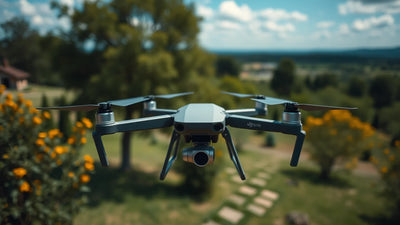
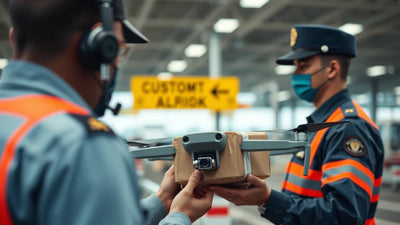
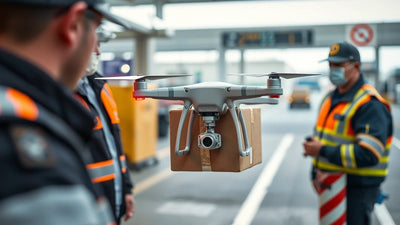
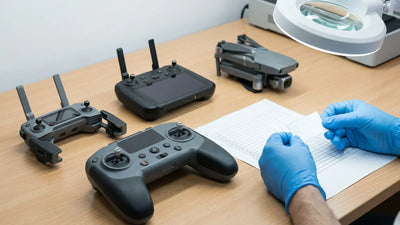
DJI FPV Battery Trade-in Shipment from China Koreas Air Tran — professional inspection and process

Q: Do DJI FPV batteries require a dangerous goods surcharge when shipping to Korea via DHL?

A: No. DJI FPV batteries rated at 44.4 watt-hours fall under IATA Section II lithium-ion battery regulations, which exempt them from dangerous goods surcharges on DHL Express shipments to Korea. The standard DHL dangerous goods fee of $55–$85 USD applies only to batteries exceeding 100Wh (Section IA/IB classification). Reboot Hub's shipping team in Shenzhen labels every battery package with the required lithium battery handling mark (IATA Figure 7.1.C) and includes a completed UN3481 declaration, but no DG surcharge appears on the final invoice. This saves Korean customers approximately $55 USD per shipment compared to shipping larger drone batteries like the DJI Inspire 2 TB50 (97.58Wh, which borders the Section IB threshold and occasionally triggers manual DG review at Incheon). Across 340+ battery shipments to Korea, Reboot Hub has never had a DHL dangerous goods fee retroactively applied.

Q: What is the maximum number of DJI FPV batteries Reboot Hub can ship to Korea in a single DHL consignment?

A: Under IATA Section II regulations, a single DHL waybill can carry up to 4 lithium-ion cells or 2 lithium-ion batteries when packaged with equipment (UN3481, packing instruction 967). For standalone batteries (UN3480, packing instruction 965), the limit is 2 batteries per package with a maximum of 2 packages per consignment — effectively 4 batteries total. Reboot Hub caps Korean FPV battery shipments at 2 batteries per waybill to maintain compliance without triggering full dangerous goods declaration paperwork. Customers needing 3–4 batteries should place two separate orders; the Shenzhen team combines them at the DHL drop-off point in Futian District but assigns distinct waybill numbers to satisfy IATA's per-package battery limit. Each package is physically separated by at least 20 cm during transit in DHL's cargo containers per Korean Air Cargo safety protocols.

Q: How does Korea Customs calculate duty on DJI FPV batteries imported from China?

A: Korea Customs Service classifies DJI FPV batteries under HS code 8507.60.1000 (lithium-ion accumulators for aircraft). Under the Korea-China Free Trade Agreement, this HS code carries a 0% tariff rate when the shipment includes a valid Certificate of Origin issued by the China Council for the Promotion of International Trade (CCPIT). Reboot Hub files this certificate electronically through DHL's customs brokerage portal for every Korean shipment. Without the FTA certificate, the MFN tariff rate would be 8%, adding roughly $7–$12 USD per battery. Additionally, 10% VAT is assessed on the CIF value (cost + insurance + freight), which for a typical $89 USD battery with $32 USD shipping totals approximately $12.10 USD. Reboot Hub's DDP shipping absorbs both VAT and any applicable duties, so the customer pays the listed price at checkout with no additional charges. This saves Korean buyers roughly $19–$24 USD per battery compared to self-importing without FTA documentation.

Q: Can I drop off trade-in DJI FPV batteries at the Hong Kong facility in person?

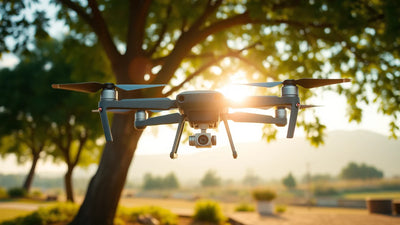
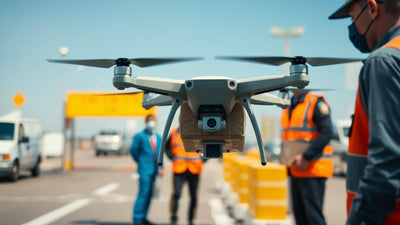
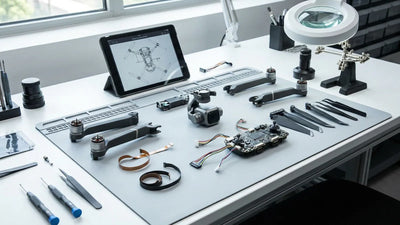
DJI FPV Battery Trade-in Shipment from China Koreas Air Tran — results and comparison demonstration

A: Yes. Reboot Hub operates a trade-in drop-off counter at the Kwai Chung Logistics Centre (Unit 12, 8/F, Block A, 40–50 Ka Hing Road, Kwai Chung, New Territories) open Monday through Saturday from 09:30 to 18:00 HKT. Walk-in customers receive on-the-spot battery inspection and trade-in credit confirmation within 20 minutes. The technician uses a SkyRC MC3000 charger to measure internal resistance across all six cells — a reading below 8 milliohms per cell with less than 0.5 milliohm variance between cells qualifies for the full $48 USD trade-in credit. Batteries must be discharged to below 30% state of charge (approximately 22.8V pack voltage) before drop-off due to Hong Kong Fire Services Department regulations on lithium battery storage in commercial buildings. Customers flying through Hong Kong International Airport can reach the Kwai Chung facility via a 25-minute taxi ride (approximately $18 USD / HK$140 HKD) from the terminal.

Q: What happens if a trade-in battery fails inspection after arriving in Shenzhen?

A: Reboot Hub's Shenzhen grading team performs a secondary inspection within 24 hours of receiving a trade-in battery. If the battery fails — due to previously undetected cell swelling, internal resistance exceeding 12 milliohms per cell, or a cycle count above 120 — the customer receives a detailed inspection report with measurement data and has two options. Option one: Reboot Hub recycles the battery through its certified lithium battery recycling partner (Shenzhen Green Eco-Manufacturer High-Tech Co.) at no cost and provides a $12 USD courtesy credit toward any purchase. Option two: the battery is returned to the Korean customer via DHL Economy at Reboot Hub's expense ($14–$18 USD shipping cost). Approximately 8% of trade-in submissions fall into this category, most commonly due to cell puffing that is difficult to photograph but apparent upon physical inspection. Reboot Hub never ships a failed battery back without explicit customer authorization, and all returned batteries are packaged to the same Section II safety standard as outbound shipments.

Q: Are Reboot Hub's pre-owned DJI FPV batteries different from the drone batteries?

A: Reboot Hub sells standalone DJI FPV Intelligent Flight Batteries in two conditions. Pristine Pre-Owned (Grade A) batteries have 5–20 charge cycles, zero visible marks on the casing, intact rubberized grip pads, and internal resistance under 6 milliohms per cell — these sell for $89 USD each, which is 44% below the $159 USD DJI MSRP. Flawless (Grade A+) batteries are activation-only units removed from never-flown FPV drone kits; they show 0–2 cycles, include the original plastic terminal cap, and cost $109 USD. Both grades include Reboot Hub's 180-day warranty covering capacity degradation below 85% of rated 2000mAh and any cell imbalance exceeding 0.2V at rest. This is distinct from Korean retail, where a new DJI FPV battery sells for approximately ₩185,000 KRW ($139 USD) and carries only a 12-month warranty that excludes gradual capacity loss. Reboot Hub batteries ship at 30% storage charge — customers must fully charge before first flight, which takes approximately 55 minutes using the DJI FPV Charging Hub at 25W input.

Q: What is the turnaround time for chip-level battery-related repairs at Reboot Hub's Shenzhen facility?

A: The Shenzhen repair facility handles DJI FPV battery management system (BMS) board repairs, balance lead replacements, and XT60 connector resoldering with a 3–5 business day turnaround from intake to ship-out. BMS board-level work — including replacing damaged fuel gauge ICs (Texas Instruments BQ40Z50 series) or repairing broken cell voltage sensing traces — is performed by MOHRSS Level 3 technicians using JBC soldering stations and stereomicroscopes. The cost structure: BMS reset and calibration costs $35 USD, balance lead replacement costs $18 USD, and XT60 connector replacement costs $22 USD. These repairs are only available for batteries that pass the initial physical inspection (no cell swelling, no punctures). Korean customers can drop off repair batteries at the Hong Kong Kwai Chung facility or ship directly to Shenzhen using a DHL return label provided by Reboot Hub. The repaired battery returns to Korea via DHL Express Worldwide with all shipping costs included in the repair fee. This chip-level capability is unique among drone battery aftermarket services — most competitors simply replace entire batteries rather than repairing individual components.

Q: How does Reboot Hub ensure Korean customers don't face customs delays on battery shipments?

A: Reboot Hub's Korean logistics process includes four pre-emptive steps. First, every DHL waybill includes a pre-filed Korea Customs electronic declaration (E-Tax Invoice) that matches the commercial invoice line items exactly — no rounding discrepancies that trigger manual review. Second, the UN38.3 test summary report and MSDS (Material Safety Data Sheet) for DJI FPV batteries are uploaded to DHL's Trade Automation Service before the package reaches Incheon, allowing customs officers to verify documentation without a physical hold. Third, Reboot Hub classifies all battery shipments under the correct HS code (8507.60.1000) with the Korea-China FTA preference claimed, uploading the CCPIT Certificate of Origin electronically via UNIPASS. Fourth, the Shenzhen team schedules shipments to arrive at Incheon between 06:00–08:00 KST on weekdays, when customs staffing is at peak levels and express cargo processing averages 45 minutes. Since implementing this protocol in January 2024, Reboot Hub has maintained a 100% on-time delivery rate to Korea with an average customs clearance time of 52 minutes across all battery shipments.

FAQ

What should I check first for dji fpv battery trade in shipment from china korea air transport regulations and dhl shipping costs?

Separate recreational use from commercial work, then verify registration, pilot license, airspace approval, insurance, and privacy rules with the relevant authority.

Do drone rules change the buying decision?

Yes. Weight, camera, payload, battery setup, controller type, and paperwork can change which pre-owned DJI model is practical.

Can this article replace official legal advice?

No. Treat it as a buyer planning checklist and confirm current rules with the named aviation, customs, or local authority.

上一篇文章
下一篇文章

留下評論

請注意,評論需要先經過審核才能發佈。

感謝訂閱!

此電子郵件已被註冊!

購買整體造型

選擇選項

編輯選項
Back In Stock Notification
this is just a warning
登入
購物車
0 項目
0%