Support & Learning / Module 8 branch
Symptoms, Evidence and Diagnosis
Before this lesson: Keep the exact model, observed condition and the customer's real concern clear before choosing the next action.
What you will understand
- Separate observable evidence from a general product claim or an untested assumption.
- Understand the decision boundary that applies to the exact aircraft, condition and intended use.
- Continue to the right learning branch or documented Reboot Hub action path.
Exact-model repair branch
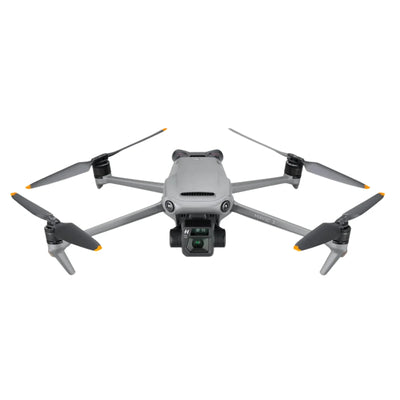
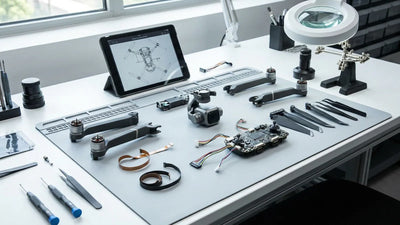
DJI Mini 3 Pro repair starts with the aircraft the customer actually owns, not a generic list of common failures. A power concern, warning, damaged gimbal, weak link, unstable hover or poor image can cross several systems. This guide turns exact-model repair material into a customer-facing evidence path: preserve the event, separate fault domains, approve only a written scope and require complete aircraft acceptance before return to service.
Quick answer
Preserve evidence, identify the exact Mini 3 Pro, then isolate one domain at a time
Keep the aircraft powered off when impact, battery, liquid, motor or gimbal condition may be unsafe. Record the exact Mini 3 Pro, controller, battery, charger, warning text, event history and original media. A professional diagnosis then separates structural, power, propulsion, camera-gimbal, positioning, sensing and link evidence before it proposes a part or repair level. Reboot Hub records confirmed findings, known and unknown risks, parts provenance, written approval and the staged tests that must pass.
What evidence should be clear before the customer acts?
How should the decision remain evidence-bound?
How do you confirm the exact DJI Mini 3 Pro before repair?
Photograph the aircraft label, controller, battery, charger, gimbal camera and supplied kit before diagnosis. DJI Mini 3 and DJI Mini 3 Pro share family resemblance, but an exact-model repair record should not rely on shell shape, a marketplace title or a seller's memory. Compatible assemblies, controller combinations and service evidence must be tied to the unit in front of the workshop.
The CPU999 Mini 3 Pro repair material is useful because it keeps aircraft, controller, gimbal, sensing and power domains distinct. It is not a license to copy a part number or internal procedure across units. Reboot Hub uses model-bounded material to ask better questions, then reports the actual evidence on the customer's aircraft, including any visible part version or board revision where it was genuinely observed.
What should be recorded before the Mini 3 Pro is powered or opened?
Start with the customer's sequence: when the aircraft last worked, which controller and battery were used, the exact app message, whether the fault is constant, and any crash, water, storage, heat or prior-service event. Preserve original photos or video, flight evidence where available and a clear exterior record of all arms, propellers, motors, seams, battery bay, gimbal and sensing areas. State what has already been tried rather than quietly repeating it.
A swollen, leaking, hot, impact-damaged or contaminated battery is a stop-use concern, not a diagnostic tool. Do not open it, charge it or use it to force a startup. Likewise, do not force the gimbal, spin a resistant motor or use repeated power attempts to generate a clearer fault. The first useful output is a written baseline of known facts, safe boundaries and unanswered questions.
Why does a Mini 3 Pro no-start concern need a layered diagnosis?
A no-start symptom can begin at the battery and terminal boundary, then involve connections, the propulsion power path, core processing or another attached domain. Crash evidence, liquid, odor, local heat, abnormal battery behavior and controller response all change which checks are safe and meaningful. It is not responsible to label a core board as failed from one LED pattern or a single message.
Professional service follows the evidence outward from the safe, observable condition to the relevant model-specific electrical and functional boundaries. When an exact assembly, board revision or measured finding is confirmed, it can be recorded as case-level evidence. It should not become a universal claim about every Mini 3 Pro. The customer sees what was proven, what remains unknown and when renewed approval is needed before scope expands.
How should Mini 3 Pro camera and gimbal concerns be separated?
Keep the stored file separate from live view. Record whether blur, a dark image, horizon error, vibration, color change or an intermittent image appears in the original recording, only in live transmission, only during gimbal movement or only after an impact. Observe gimbal startup and range without forcing an axis, and inspect the external camera, gimbal support and visible cable areas only within safe access boundaries.
The Mini 3 Pro service material treats gimbal and camera checks as model-specific work after the relevant evidence is established. Reboot Hub does not expose controlled service packages or present calibration as a cure for structural damage or a failed electrical path. The repair record names the reproduced behavior, the supported test boundary, the approved work and the original-file, horizon, storage and live-view results that must pass afterward.
What do sensing and positioning concerns actually prove?
Warnings involving positioning, altitude, IMU, compass, vision or other sensing systems need their direction, environment and event history recorded. Suitable light, ground texture, interference and the condition of the airframe all matter to a responsible interpretation. A result observed in an unsuitable environment does not automatically prove hardware failure, and a completed supported calibration does not clear a bent arm, impact-damaged component or unsafe propeller.
Diagnosis therefore separates mechanics, site conditions, messages and model-bounded system evidence. Reboot Hub states which direction or domain was checked, what conditions applied and what conclusion the evidence can reasonably support. Customers get a clear distinction between an observed limitation, a repeatable aircraft concern and a component that has been confirmed only after controlled inspection.
How do controller and image-link concerns stay separate from aircraft repair?
Record whether the aircraft links, whether telemetry is present, whether the live image is absent or unstable, and whether controller sticks, buttons and screen behavior are normal. A changing result in an open environment is different from a fixed antenna, controller or aircraft concern. The same is true of a black image: it may be capture, gimbal, cable, radio, controller or display evidence, rather than automatic proof that the camera sensor failed.
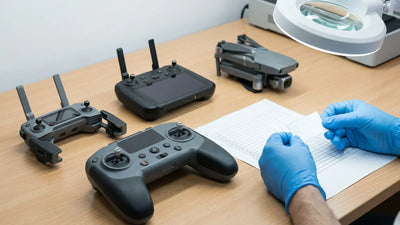
A careful comparison keeps the aircraft, controller, battery and environment in view. Reboot Hub documents what was connected, which behavior repeated, what safe comparison was used and what remains uncertain. That prevents both sides of the link from being quoted as possible replacements without evidence, and it gives the customer an honest basis for choosing diagnostic scope, repair or replacement.
When is Mini 3 Pro repair stronger than replacement?
Repair is strongest when the original concern can be bounded, the airframe has credible structural condition, the compatible parts path is documented and the complete aircraft can pass the tests the customer actually needs. Replacement can be the more responsible path when liquid or heat exposure is broad, several high-value systems are affected, structure is doubtful, an exact compatible path cannot be verified or the final acceptance result cannot support the intended use.
Reboot Hub approaches the comparison from the customer's perspective and works to remove every reasonable concern before approval. We show the exact product, condition, included equipment, known and unknown findings, parts provenance, written scope, timing and terms. Repair work normally targets 1-3 business days after quote approval, subject to scope, parts and testing. Eligible repair work carries a 30-day repair warranty; qualifying complete pre-owned products have a separate 180-day product warranty.
What must pass before a repaired Mini 3 Pro returns to service?
A return-to-service record should connect the customer's original concern to the acceptance evidence. It can include physical condition, propellers and motors, battery and charging boundary, stable startup, thermal behavior, controller link, appropriate warnings, original media, live image, gimbal movement, storage, relevant sensing behavior and controlled hover or flight only after earlier gates pass. The exact sequence depends on the work and the aircraft's condition.
The final result should never be a vague statement that the drone was fixed. Reboot Hub records the conditions, results, remaining observations and the scope that was actually approved. The customer can see what was tested, what is covered by the written repair terms and whether the returned aircraft fits their next flight, purchase decision or professional task.
How does Reboot Hub remove the customer's concerns before approval?
Reboot Hub starts with the customer's concern, the exact aircraft and every reasonable question that can affect the decision. We preserve the reported symptom, event history, supplied kit and visible condition; separate confirmed findings from repair-bench hypotheses; name the known and unknown items; and return written findings before asking for approval. Where a board revision and measured repair evidence identify a particular chip or component, that case-level experience can be stated directly. It is not silently expanded into a claim that every aircraft with a similar warning has the same fault.
Repair work normally takes 1-3 business days after quote approval. That workshop period is separate from inbound transit, parts availability, customs handling where relevant and return transit. A diagnostic fee applies to the inspection and written findings. When an eligible repair is approved, that diagnostic fee is credited toward labor or eligible service charges under the written quote. If the customer declines, the diagnosis still explains what was found and what remains unknown.
Eligible completed repair work has a 30-day repair warranty under the written terms. That is separate from the 180-day product warranty for qualifying complete pre-owned products. Neither term is a promise about unrelated later impact, liquid exposure, consumable wear, misuse or work outside the approved scope. The repair record should identify the exact work and acceptance evidence to which the repair term applies.
This is the commercial difference between a generic marketplace instruction and a Reboot Hub path. The customer sees the exact-unit evidence, the concern-by-concern response, the proposed scope, the parts path, the testing and the written terms before commitment. If replacement is stronger, the comparison uses a documented unit and kit rather than an anonymous headline listing. The purpose is not merely to share repair information; it is to turn technical uncertainty into a transparent decision the customer can trust.
Related Reboot Hub paths
Continue from exact-model evidence to a documented next step
Use the learning, model and service paths below to move from technical evidence to written scope and action.
Keep exploring
Further reading
From Reboot Hub クロニクル
From ドローンガイド