Skip to content

Available 24/7: (852) 5537 6652

The Reboot Hub Chronicle
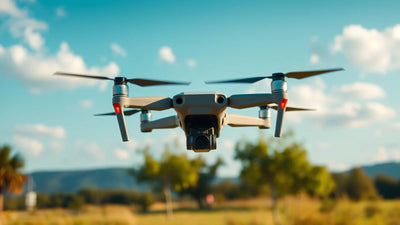
Best CASA-Approved Drones Under 250g for Wedding Photography in Australia

by LauThomas 27 May 2026 0 comments

Quick Answer

  • DJI Mini 4 Pro is the top pick for Australian wedding photography — 4K/100fps, omnidirectional obstacle sensing, and 34-minute flight time at just 249g, available pre-owned from Reboot Hub starting at $599 USD ($4,680 HKD).
  • No CASA licence or registration required for sub-250g drones flown commercially in Australia, saving wedding photographers $160 AUD annually in recurring fees.
  • DJI Mini 3 Pro offers the best value — 4K/60fps vertical video, 48MP stills, and pre-owned A-grade units at Reboot Hub for $489 USD ($3,820 HKD), roughly 35% less than new retail.
  • DJI Neo at 135g is the lightest option for indoor venue fly-throughs — Reboot Hub Flawless (A+) units at $149 USD ($1,160 HKD) with full 180-day warranty.
  • All Reboot Hub drones ship DDP to Australia — no surprise customs fees, duties included, typical delivery in 8-12 business days from Shenzhen.

What Makes a Drone CASA-Approved Under 250g in Australia?

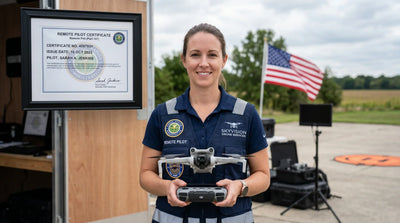
The Civil Aviation Safety Authority (CASA) draws a hard regulatory line at 250 grams take-off weight. Any drone below this threshold — such as the DJI Mini 4 Pro at 249g or the DJI Neo at 135g — falls into the excluded category under Part 101 of the Civil Aviation Safety Regulations. This means wedding photographers operating commercially do not need a remote pilot licence (RePL), do not need to register the drone with CASA, and do not need an operator accreditation. The practical savings are significant: an RePL course in Australia costs between $1,500 and $3,500 AUD, and annual registration fees for sub-2kg drones run approximately $160 AUD per drone. For a wedding photographer shooting 30-40 events annually, using a sub-250g drone eliminates these overheads entirely. However, all standard operating conditions still apply — you must keep the drone within visual line of sight, you cannot fly over crowds of people (individual wedding guests are generally fine with consent), and you must not operate within 5.5 kilometres of a controlled aerodrome. The 250g threshold is measured with battery and propeller guards attached, so the DJI Mini series with their standard Intelligent Flight Battery sit precisely at 249g — deliberately engineered by DJI to meet this global regulatory sweet spot.

Best CASA-Approved Drones Under 250g for Wedding Photography in Australia
Reboot Hub Editorial

Which Sub-250g Drone Delivers the Best Wedding Footage?

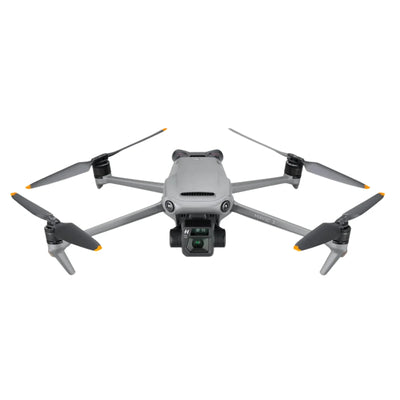
For pure image quality in a wedding context, the DJI Mini 4 Pro leads the pack. Its 1/1.3-inch CMOS sensor captures 48-megapixel stills and 4K video at up to 100 frames per second, enabling buttery slow-motion sequences of veil tosses, first dances, and confetti exits. The f/1.7 aperture gathers roughly 40% more light than the f/2.8 on older Mini models, a critical advantage during dimly lit chapel ceremonies and twilight receptions. Omnidirectional obstacle sensing — a first in the sub-250g category — means the drone actively avoids tree branches, archways, and marquee structures while tracking the couple. The DJI Mini 3 Pro remains a strong contender, offering the same sensor size and vertical shooting mode (perfect for Instagram Reels and TikTok content that wedding clients increasingly request), but with only tri-directional obstacle sensing. At the entry level, the DJI Mini 2 SE shoots competent 2.7K video at 30fps and 12MP stills — adequate for highlight reels but lacking the dynamic range and low-light prowess that professional wedding packages demand. The DJI Neo occupies a unique niche: at just 135g with a fully enclosed propeller guard design, it is safe enough for indoor venue fly-throughs where larger drones would be impractical or hazardous.

Model Weight Max Video Sensor Flight Time New Price (USD) Reboot Hub Pre-Owned (USD)
DJI Mini 4 Pro 249g 4K/100fps 1/1.3" CMOS 34 min $759 $599 (A grade)
DJI Mini 3 Pro 249g 4K/60fps 1/1.3" CMOS 34 min $679 $489 (A grade)
DJI Mini 3 249g 4K/30fps 1/1.3" CMOS 38 min $419 $319 (A grade)
DJI Mini 2 SE 249g 2.7K/30fps 1/2.3" CMOS 31 min $299 $229 (A+ grade)
DJI Neo 135g 4K/30fps 1/2" CMOS 18 min $199 $149 (A+ grade)

How Much Can You Save with a Pre-Owned Drone from Reboot Hub?

Wedding photographers investing in their kit understand that equipment is a depreciating asset the moment it leaves the retail box. Reboot Hub's pre-owned model fundamentally alters this equation. A brand-new DJI Mini 4 Pro Fly More Combo retails at approximately $1,099 AUD ($759 USD) from Australian authorised dealers. The same drone in Pristine Pre-Owned (A) condition — which Reboot Hub defines as having minimal use with zero visible marks on the body, gimbal, or propellers — costs $599 USD ($4,680 HKD), a saving of 21%. Over a three-drone wedding kit (primary, backup, and a lightweight indoor unit), choosing pre-owned can save a photographer upwards of $1,200 USD compared to buying new. These are not refurbished units with third-party components swapped in; Reboot Hub's 40-point inspection verifies that every drone retains genuine OEM motors, ESCs, gimbal assemblies, and battery cells. The 180-day warranty — double the typical 90-day period offered by most second-hand marketplaces — covers any defect that arises post-purchase. For Australian buyers, the DDP (Delivered Duty Paid) shipping means the listed price is the final price. There is no 5% customs duty surprise upon import, no GST handling fee from the courier. A DJI Mini 3 Pro ordered at $489 USD lands at your door in Sydney, Melbourne, or Brisbane with nothing further to pay.

What Camera Specs Should Wedding Photographers Prioritise?

Sensor size is the single most consequential specification for wedding drone work. The 1/1.3-inch CMOS sensor found in the Mini 4 Pro and Mini 3 Pro captures approximately 2.4 times more surface area than the 1/2.3-inch sensor in the Mini 2 SE, translating directly to cleaner images at ISO 800 and above — the range you will be working in during candlelit receptions and dance-floor sequences. Aperture matters equally: the f/1.7 lens on the Mini 4 Pro and Mini 3 Pro admits 150% more light than the f/2.8 on older sub-250g models, reducing the need for noisy high-ISO compensation. Vertical video capability (9:16 aspect ratio) has become non-negotiable in 2024 and 2025, as wedding clients increasingly request short-form content for Instagram Reels, TikTok, and YouTube Shorts. The Mini 4 Pro and Mini 3 Pro physically rotate their gimbal to capture true vertical 4K — not a cropped 1080p section of a horizontal frame. Colour profile support separates professional results from hobbyist footage: the Mini 4 Pro's D-Log M and HLG profiles offer 10-bit colour depth with roughly 1 billion colours, giving editors the latitude to match drone footage seamlessly with ground-camera colour grades from Sony, Canon, or Panasonic bodies. For photographers who deliver both stills and video, the 48MP Quad Bayer output on the Mini 4 Pro produces printable A3 spreads at 300 DPI with sufficient detail for premium wedding albums.

Why Buy from Reboot Hub?

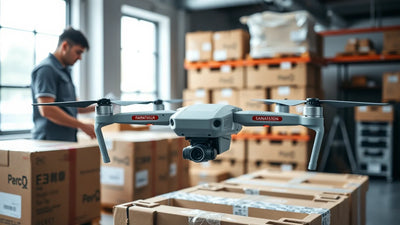
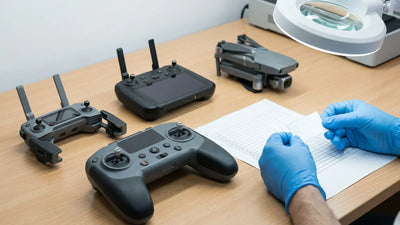
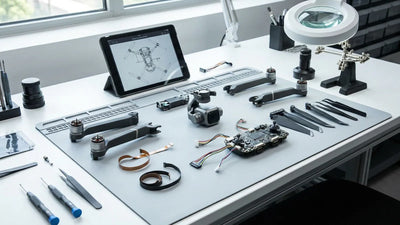
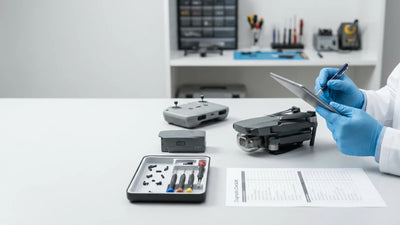
Reboot Hub occupies a distinct position in the drone market: it sells Pristine Pre-Owned drones, not refurbished ones. Every unit undergoes a 40-point inspection at the company's Shenzhen facility — a process that tests gimbal calibration, IMU and compass alignment, motor current draw across all four arms, battery cycle count and internal resistance, GPS acquisition speed, and transmission range at multiple distances. Components that fail any checkpoint are replaced exclusively with genuine OEM parts sourced from the original manufacturers — not aftermarket alternatives. Technicians hold MOHRSS Level 3 certifications, the highest classification under China's Ministry of Human Resources and Social Security for precision electronics repair, and the average turnaround for any repair is 3-5 business days. For Australian wedding photographers, the practical benefits are threefold: a 180-day warranty that covers the entire peak wedding season (October through March in Australia), DDP shipping from Shenzhen or the Hong Kong drop-off point that eliminates all import friction, and pricing typically 20-35% below new retail. A Hong Kong repair drop-off point also exists for clients who prefer to hand-deliver a drone requiring service rather than shipping it.

Frequently Asked Questions

Q: Do I need a CASA licence to fly a sub-250g drone for commercial wedding photography in Australia?

A: No. Under CASA's Part 101 regulations, drones with a take-off weight below 250 grams are excluded from the requirement to hold a remote pilot licence (RePL) or operator accreditation, even when used commercially. This applies to all DJI Mini series drones at 249g and the DJI Neo at 135g. You also do not need to register the drone. However, you must still comply with the standard operating conditions: maintain visual line of sight, do not fly higher than 120 metres (400 feet) above ground level, stay at least 5.5 kilometres from controlled aerodromes, and avoid flying directly over groups of people. For wedding-specific work, capturing the couple and bridal party with their consent does not constitute flying over a crowd, but a reception dance floor packed with 100 guests would require careful positioning from the periphery rather than directly overhead.

Q: What is the difference between Reboot Hub's Flawless (A+) and Pristine Pre-Owned (A) grades?

A: Flawless (A+) units are activation-only drones — they were purchased, unboxed, activated with DJI's Fly app, and then returned or traded in without ever being flown. The motor logs show zero flight time, and the battery will have 0-1 charge cycles. These units are visually indistinguishable from brand-new retail stock and carry the full 180-day Reboot Hub warranty. Pristine Pre-Owned (A) units have been flown but show zero visible marks on the airframe, gimbal, remote controller, or propellers under bright inspection lighting. Typical flight hours on an A-grade unit range from 2 to 15, and battery cycles are capped at 15. Both grades include all original accessories, OEM batteries, and DDP shipping. The price difference between A+ and A is typically $40-$80 USD depending on the model.

Q: How long does DDP shipping from Reboot Hub to Australia actually take?

A: DDP (Delivered Duty Paid) shipments from Reboot Hub's Shenzhen warehouse to major Australian cities average 8-12 business days. Sydney and Melbourne typically see the fastest delivery at 7-9 business days, while Perth and regional Queensland addresses may take 10-14 business days. DDP means Reboot Hub prepays all import duties, Australian GST (10%), and customs clearance fees — the price you see at checkout is the final amount you pay. There are no surprise bills from the courier upon delivery. Tracking is provided within 48 hours of dispatch, and all shipments are insured against loss or damage in transit. For urgent orders, Reboot Hub can arrange expedited shipping via DHL Express at an additional fee, reducing delivery to 3-5 business days to most Australian capitals.

Q: Which sub-250g drone performs best in low-light wedding reception conditions?

A: The DJI Mini 4 Pro is the strongest low-light performer in the sub-250g category, thanks to its f/1.7 aperture and 1/1.3-inch sensor with dual-native ISO. In practical terms, it produces usable footage at ISO 1600 that the Mini 2 SE cannot match even at ISO 400. The 4K/60fps mode with HDR reduces motion blur during slow dance sequences while preserving highlight detail in fairy lights and candle arrangements. The Mini 3 Pro shares the same sensor and aperture and performs nearly identically for static shots, but lacks the Mini 4 Pro's improved noise reduction algorithms and omnidirectional obstacle sensing — the latter being particularly useful when navigating dimly lit marquees with hanging decorations. For genuinely dark venues, pairing either drone with the DJI Fly app's manual exposure controls (locking shutter speed to 1/60 for 30fps footage) yields the cleanest results.

Q: Can I buy spare batteries and accessories from Reboot Hub?

A: Yes. Reboot Hub stocks genuine OEM Intelligent Flight Batteries for every DJI Mini model it sells, with individual batteries priced from $45 USD ($350 HKD) for the Mini 2 SE up to $65 USD ($508 HKD) for the Mini 4 Pro's extended-life cells. The Fly More Kit — which typically includes two additional batteries, a charging hub, a shoulder bag, and spare propellers — is available pre-owned for roughly 30% less than retail when bundled with a drone purchase. All batteries undergo cycle-count verification and internal resistance testing during the 40-point inspection, and any cell showing more than 15 charge cycles on an A+ unit or 30 cycles on an A unit is replaced before sale. ND filter sets, propeller guards, and carrying cases are also available and ship under the same DDP terms.

Q: What happens if my Reboot Hub drone develops a fault during the 180-day warranty?

A: Reboot Hub's warranty covers all hardware defects that arise during normal use within 180 days of delivery. The process begins with a diagnostic video call or email submission to the support team. If a fault is confirmed, you can ship the drone to the Hong Kong drop-off point (typically the fastest option from Australia, with courier transit of 3-4 days) or directly to the Shenzhen repair facility. MOHRSS Level 3-certified technicians handle the repair, and the average turnaround from receipt to dispatch is 3-5 business days. Repairs use genuine OEM components exclusively. Return shipping to Australia is covered by Reboot Hub under the same DDP terms. Common issues such as gimbal horizon tilt, IMU calibration drift, or battery communication errors are typically resolved within the 3-day window, while more complex problems — a mainboard replacement, for instance — may take the full 5 days.

Q: Are sub-250g drones stable enough for outdoor Australian wedding conditions?

A: Yes, with appropriate model selection. The DJI Mini 4 Pro and Mini 3 Pro are rated for wind resistance up to 38 kilometres per hour (10.5 m/s, Beaufort scale 5), which covers the vast majority of Australian outdoor wedding conditions — including coastal breezes at popular venues along the Gold Coast, Mornington Peninsula, and Margaret River. The drones' GPS + GLONASS + Galileo positioning maintains stable hover within 0.5 metres even in gusty conditions, and the 3-axis mechanical gimbal compensates for airframe tilt to keep the horizon level. For particularly exposed clifftop or beachfront ceremonies where wind gusts exceed 30 km/h, switching to Sport mode increases the maximum tilt angle and motor output, though it disables obstacle sensing. The lighter DJI Neo at 135g is best reserved for sheltered outdoor use or indoor venue work, as its wind resistance rating tops out at approximately 18 km/h (Beaufort scale 3).

Q: Does Reboot Hub ship the drone with Australian-compatible chargers and plugs?

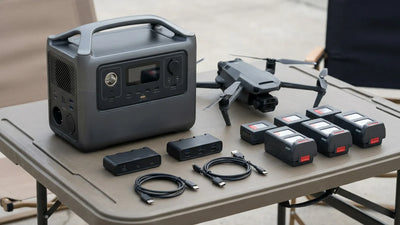
A: All Reboot Hub drone shipments bound for Australia include the appropriate power adapter or a universal charging solution. DJI Mini series drones charge via USB-C, and Reboot Hub includes a genuine DJI USB-C cable and a power adapter compatible with Australian 230V/50Hz mains power and Type I sockets. If the original charger is unavailable for a pre-owned unit, Reboot Hub substitutes a certified third-party adapter rated for Australian voltage. The Intelligent Flight Batteries support PD (Power Delivery) fast charging via any USB-C PD charger rated at 30W or higher, so most wedding photographers can also charge directly from their laptop USB-C power brick or a portable power station on location. This detail is verified during the 40-point inspection process before dispatch.

Prev post
Next post

Leave a comment

Please note, comments need to be approved before they are published.

Thanks for subscribing!

This email has been registered!

Shop the look

Choose options

Edit option
Back In Stock Notification
this is just a warning
Login
Shopping cart
0 items
0%