Enterprise aircraft, controller and account-status buyer brief
Quick answer
- A used Mavic 3 Enterprise purchase should begin with the exact aircraft, controller and included equipment, not a broad claim that its account status is clear.
- Ask the seller to demonstrate normal operation with the actual kit, then retain serial, condition, seller identity, invoice and account-status evidence together.
- An account issue belongs with the rightful holder and the appropriate official account path. Do not rely on an unofficial account solution offered after payment.
- When the exact kit or ownership trail cannot be evidenced, pause the transaction and compare a documented alternative for the enterprise task.
Enterprise buyer route
Treat account status as one part of an evidence file for the exact enterprise kit, not as a device-fix question. Start with the seller and serial evidence guides, establish the aircraft through the Mavic 3 Enterprise model reference, then use the B2B purchase route when the proposed kit needs a documented project discussion.

What should a Mavic 3 Enterprise buyer establish before payment?
| Decision layer | Evidence to collect | Buyer action | Do not assume |
|---|---|---|---|
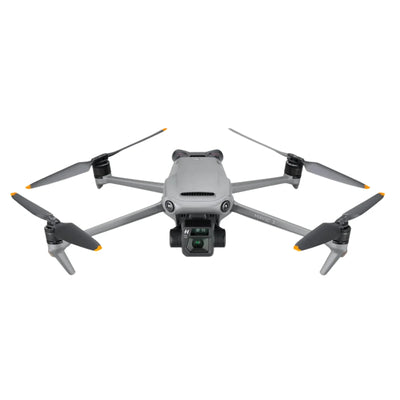
| Aircraft and serial | Aircraft serial, body condition, storage media and included components | Match the evidence to the invoice | A product photo identifies the unit |
| Controller and equipment | The exact controller and accessories offered with the aircraft | Request a same-kit normal-operation demonstration | A similar controller proves compatibility for this sale |
| Seller and payment | Seller identity, invoice, payment record and communication history | Preserve an accountable purchase file | A seller profile proves ownership |
| Account status | A seller explanation connected to the exact kit and official account path | Pause when the evidence is incomplete | A generic account image applies to this aircraft |
| Enterprise task | Client, payload, site and team needs | Keep purchase proof separate from operating approval | A verified purchase record approves an assignment |

What is an enterprise buyer deciding before purchasing a used Mavic 3 Enterprise?
The buyer is deciding whether the actual aircraft, controller and included equipment can be identified well enough for a planned enterprise role. That requires a matched evidence file: the serial, condition, seller, invoice, payment record and the account-status explanation for the same kit.
An enterprise task can add client, payload, site and crew questions, but those are separate from the ownership record. A product listing should not be asked to prove both the used-kit condition and the approval of a future assignment.
Which equipment should be demonstrated as one matched kit?
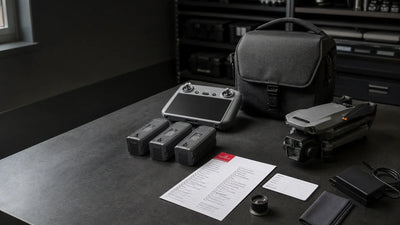
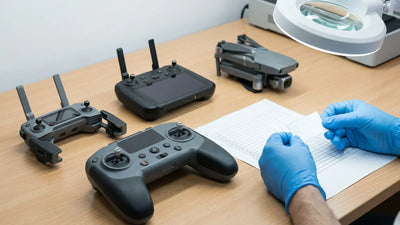
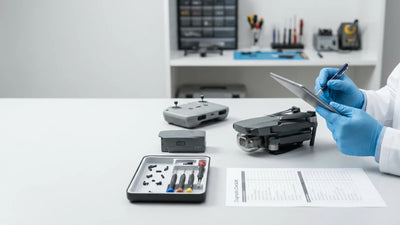
Ask the seller to show the actual aircraft, controller, batteries, storage setup and included accessories in a continuous normal-operation demonstration. Record the serial, visible condition and kit list with the invoice. This lets the buyer compare one offered set rather than relying on separate images or generic model claims.
A demonstration can help identify a mismatch or an unsupported listing claim. It does not determine future flight results, site approval, insurance treatment or client acceptance. Keep the evidence focused on the item being purchased.

How should unclear account or ownership evidence be handled?
Ask the seller to resolve the question through the appropriate official account process for the rightful holder. Keep relevant correspondence with the seller identity and invoice. An unofficial account solution is not a replacement for a clear ownership trail connected to the exact aircraft.
When the explanation cannot be matched to the unit and controller in the transaction, pause the purchase. That is a buyer-risk decision before payment, not a post-delivery task for the operator or client team.
- Keep serial, seller identity and invoice evidence together.
- Record the controller and accessories included in the offered kit.
- Write down open ownership questions before agreeing payment terms.
- Compare a documented alternative when the evidence file remains incomplete.
Why should an enterprise buyer separate purchase evidence from the job plan?
A seller can provide evidence about the offered kit. A client or site may have different questions about the proposed task, people, property, payload, crew and operating method. Keeping those decisions separate prevents a serial record or account statement from being treated as a blanket approval.
Use the model reference and Drone Wiki to understand the product family, then return to the actual job brief. A ground method, another kit or a delayed assignment can be the better answer when the purchase evidence or task conditions remain unclear.

When is another purchase route the better enterprise decision?
Choose another route when the seller cannot demonstrate the exact kit, the invoice does not identify the equipment clearly, or the ownership explanation cannot be linked to the rightful holder. A pause protects the team from scheduling work around a purchase that has not been evidenced.
A documented pre-owned alternative should still be assessed against the actual equipment and task needs. The objective is a clear enterprise purchase record, not a rapid decision based on a broad account-status claim.
How do Reboot Hub resources support the decision?
Use the seller and serial guides to organise the evidence file, then use the Mavic 3 Enterprise reference, Drone Wiki and comparison guide to understand the model family. The buying-risk resources help separate seller evidence from planning an enterprise operation.
A good decision leaves the buyer able to explain the exact aircraft, controller, seller, invoice and remaining questions. That supports a credible purchase choice without promising a particular account, regulatory or operating result.
Use the Drone Wiki for model and compatibility context, then return to the action path above.
Keep exploring
Further reading
From The Reboot Hub Chronicle


From Drone Guides