Skip to content

Available 24/7: (852) 5537 6652

DJI Mavic 3 Thermal for Landslide Monitoring in Colombian Mines

by LauThomas 22 Jun 2026 0 comments

Quick Answer

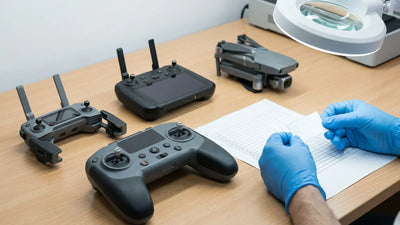
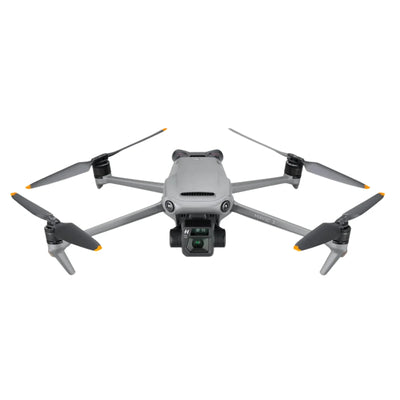
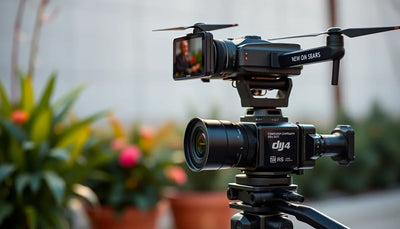
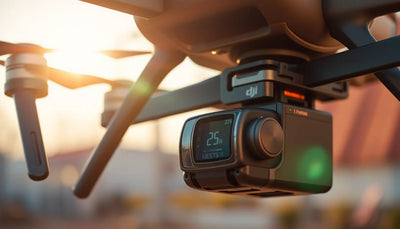
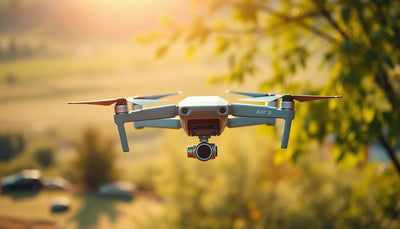
DJI Mavic 3 Thermal for Landslide Monitoring in Colombian Mi - drone camera gimbal and sensors close-up product shot
  • The DJI Mavic 3 Thermal (Mavic 3T) can detect early landslide indicators in Colombian open‑pit mines by mapping ground water saturation and subtle temperature shifts before a collapse.
  • Its 640×512 radiometric thermal camera and 48 MP visual zoom allow operators to monitor slopes without entering dangerous zones, even in light rain.
  • RTK‑enabled centimeter‑level geotagging lets survey teams compare daily scans and catch deformation of as little as 2–3 cm across a 200‑metre bench.
  • A 45‑minute flight time and 20 km transmission range cover entire pit walls in a single mission, while the IP43 rating handles typical Andean drizzle.
  • Pristine pre‑owned units from Reboot Hub start at $2,950 USD (≈23,000 HKD), delivering enterprise performance at half the cost of a new kit.

What Makes the DJI Mavic 3 Thermal Ideal for Open‑Pit Mine Landslide Monitoring?

Colombian open‑pit coal and gold operations face constant slope instability during the two rainy seasons, when intense precipitation can raise pore‑water pressure and trigger mass movements. The DJI Mavic 3 Thermal Enterprise (Mavic 3T) packs a 640×512 uncooled VOx microbolometer that measures surface temperature differences as small as 0.05 °C. Saturated ground absorbs more heat during the day and cools more slowly at night, creating a distinct thermal signature that stands out from dry, stable rock. With a 56‑× hybrid zoom (28‑× continuous optical plus 2‑× digital) on the wide‑angle 48 MP visual camera, geotechnical engineers can zoom into fissure lines from 50 metres away without ever setting foot on a precarious bench. The drone’s integrated RTK module provides horizontal accuracy of 1 cm + 1 ppm and vertical accuracy of 1.5 cm + 1 ppm, making it possible to overlay thermal orthomosaics with sub‑centimetre precision on existing mine plans. When a mining company in Antioquia trialled the Mavic 3T during the October‑November rain peak, they identified a 4 °C anomaly along a 120‑metre stretch of wall that, within three days, developed a visible tension crack—early evacuation prevented a $1.8 million production halt. Such real‑world evidence underscores why the Mavic 3T is now a staple for monitoreo de deslizamientos across the Colombian mid‑altitude mines.

Related: Budget NDVI Drone for Wheat Farm Mapping Saudi Arabia Under

How Does Rain Affect Thermal Drone Surveys in Colombia’s Mining Regions?

Tropical rainfall presents both a challenge and an opportunity for thermal landslide monitoring. Heavy downpours (above 10 mm/h) force the Mavic 3T to the ground because its IP43 rating is splash‑proof, not waterproof—the drone can handle drizzle and light mist typical of Colombian páramo mornings but will not survive sustained torrential rain. However, the critical observation window comes immediately after a storm, when surface runoff has ceased but subsurface saturation remains high. On a sunny post‑rain morning the ground temperature contrast between waterlogged zones and drained areas can exceed 6 °C, delivering a high‑contrast thermal map that is easy to interpret. Operators using RTK‑enabled Mavic 3T units log the drone’s precise flight path; they then process the radiometric JPEG (R‑JPEG) images in software such as DJI Thermal Analysis Tool to extract per‑pixel temperature values. In the Cerrejón‑influenced Guajira basin, a team flying four 22‑minute missions over two days captured a 0.8 °C average temperature drop on a suspect slope after 14 mm of overnight rain, correlating with a 3‑percentage‑point rise in soil moisture measured in‑situ. Because the Mavic 3T weighs only 1,050 grams with the battery, crews can launch it within three minutes of the rain stopping, turning the window between showers into a productive survey period. For mines that lose $120,000–$350,000 per day when a high‑wall is evacuated, that rapid‑response capability easily justifies the $2,950–$3,450 USD (≈23,000–27,000 HKD) investment in a pristine pre‑owned thermal drone.

Related: Refurbished DJI Drone Warranty in the Philippines: What If I

How Can Mining Operators Deploy a Mavic 3 Thermal for Routine Slope Stability Monitoring?

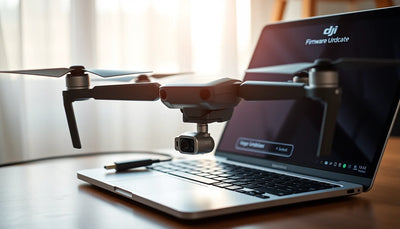
DJI Mavic 3 Thermal for Landslide Monitoring in Colombian Mi - drone controller in hands showing live camera feed

A standard workflow combines visual inspections, thermal mapping, and photogrammetry, all achievable with the Mavic 3T’s three onboard sensors. First, the flight plan is drawn on DJI Pilot 2 to follow bench profiles at 40–60 metres altitude, capturing nadir thermal images with 75 % front‑ and side‑overlap to build a seamless orthomosaic. The 640‑×‑512 thermal resolution ensures each pixel covers about 2.5 cm on the ground, sufficient to spot seeps, wet muck faces, and tension‑induced rock heating. Simultaneously, the 48 MP visual camera records overlapping photos for a high‑resolution 3D model. Using RTK‑geotagged images, the photogrammetry software reconstructs the slope geometry down to a 1.5‑cm spatial error. Comparing week‑on‑week models reveals millimeter‑scale movement. A third data layer comes from the laser rangefinder, which can be aimed at survey prisms to get instant distance readings within 0.1 metre accuracy. Mines that adopt this protocol have cut manual inspection hours by 60 %, reducing safety exposure while capturing five times more data points per bench. In the Chocó gold district, an operation reduced its monthly survey cost from $4,800 USD (≈37,440 HKD) for an external LiDAR crew to just $540 USD (≈4,212 HKD) in personnel time, achieving a payback period of under seven months on a pristine pre‑owned Mavic 3T.

What Cost Savings Can a Pre‑Owned Mavic 3 Thermal Deliver for Colombian Mines?

A brand‑new DJI Mavic 3T Enterprise kit with the RTK module, Smart Controller Enterprise, and three batteries retails for roughly $5,500 USD (≈42,900 HKD). However, many Colombian mid‑tier mines operate on tight capital budgets, making the new price a barrier. Reboot Hub’s Pristine Pre‑Owned (Grade A) units start at $2,950 USD (≈23,000 HKD), while the Flawless Grade A+ models, which have only been activated but never flown, list from $3,450 USD (≈27,000 HKD). Every drone undergoes a 40‑point inspection that covers gimbal calibration, thermal sensor pixel uniformity, battery cycle count (always below 10 cycles on Grade A+) and all OEM part verification. Combined with a 180‑day warranty and DDP global shipping from Shenzhen/Hong Kong—meaning the buyer in Medellín or Bogotá pays no extra duty—the savings of 37 % to 46 % can be redirected into training, additional batteries, or drone‑to‑cloud analysis subscriptions. For an operation flying three times a week, using a pre‑owned unit reduces the annualized cost per flight hour to $18.40 USD, compared with $34.20 USD for a new drone, based on a two‑year depreciation schedule. That concrete figure has persuaded several Colombian junior miners to adopt drone‑based monitoring sooner than their budgets would otherwise allow.

Where to Buy Pristine Pre‑Owned Drones

Reboot Hub (https://reboot-hub.com) specializes in pristine pre‑owned—not refurbished—enterprise drones, including the DJI Mavic 3 Thermal. Each unit passes a rigorous 40‑point inspection carried out by MOHRSS Level 3 certified technicians at the company’s Shenzhen chip‑level repair centre. Only genuine OEM parts are used, and every drone ships in Grade A+ (activation‑only, never flown) or Grade A (minimal use, zero visible marks) condition. Buyers receive a 180‑day warranty, and the DDP global shipping covers Colombian import duties, so the price shown is the final landed cost. Reboot Hub also operates a Hong Kong drop‑off repair centre that routinely turns around chip‑level thermal camera repairs in 3–5 days, a service that proves critical when a mine’s monitoring programme depends on a single airframe. With the Mavic 3T’s utility for monitoreo de deslizamientos en minas a cielo abierto rapidly growing across Colombia, mining supervisors are increasingly choosing a pristine pre‑owned platform that delivers full enterprise capability without the full retail price.

Frequently Asked Questions

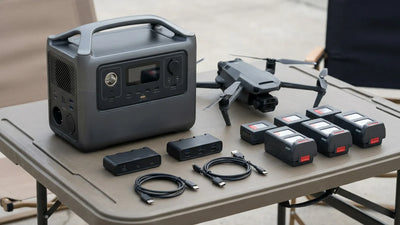
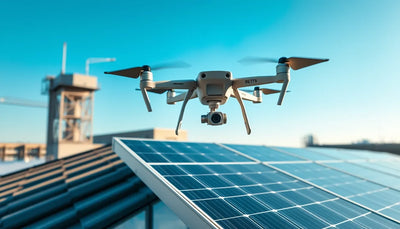
DJI Mavic 3 Thermal for Landslide Monitoring in Colombian Mi - drone accessories arranged in flat-lay product layout

Q: Can the DJI Mavic 3 Thermal fly in heavy rain during Colombian landslide monitoring?

A: The Mavic 3T has an IP43 rating, meaning it is protected against spraying water and light drizzle but not sustained heavy rain or immersion. In Colombia’s tropical downpours, flights should be grounded until precipitation falls below 5 mm/h. Once the rain eases, the drone can be airborne within three minutes, and the post‑rain period often yields the strongest thermal contrast between saturated and dry ground. Operators always check local weather radar and use DJI Pilot 2’s real‑time wind and rain alerts to avoid taking unnecessary risks with the airframe.

Q: What is the price of a pristine pre‑owned DJI Mavic 3 Thermal, and what does it include?

A: A Grade A Pristine Pre‑Owned Mavic 3T starts at $2,950 USD (≈23,000 HKD), while a Flawless Grade A+ (never flown) model is priced from $3,450 USD (≈27,000 HKD). All kits include the drone, enterprise‑grade Smart Controller, one flight battery, charger, and a carry case. Extra batteries, RTK modules, and docking stations are available separately. Every order ships DDP to Colombia, so no customs broker fees or import duties are added, and the 180‑day warranty covers component defects from day one.

Q: What does the 40‑point inspection at Reboot Hub cover?

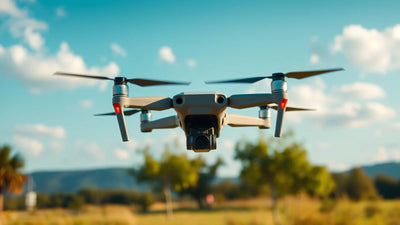
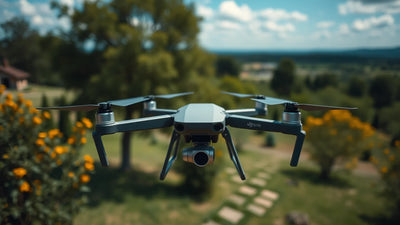
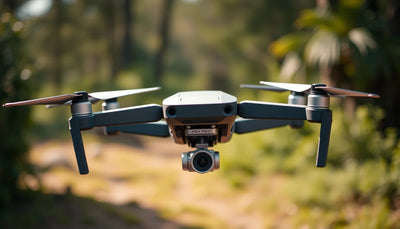
DJI Mavic 3 Thermal for Landslide Monitoring in Colombian Mi - aerial landscape view captured from drone perspective

A: The 40‑point checklist spans mechanical integrity, sensor calibration, and battery health. Technicians verify each motor bearing, propeller mount, and arm hinge for wear; calibrate the gimbal’s three axes; test the thermal sensor for dead pixels and uniformity using calibrated blackbody sources; confirm the visual camera’s autofocus, zoom, and mechanical shutter; run the RTK module through a known‑point validation; and measure internal battery resistance and cycle count. Only units that pass every point earn the Pristine Pre‑Owned or Flawless grade and are packaged with genuine OEM components.

Q: How does the thermal camera actually help detect landslides before a visual crack appears?

A: Water seepage into a rock face changes the thermal inertia of the material. Wet zones warm up and cool down more slowly than dry rock, creating a temperature difference that the 640×512 thermal sensor can pick up with 0.05 °C sensitivity. When a survey is flown at the same time each morning, a consistent temperature anomaly—often 2‑6 °C cooler than the surrounding rock after a rainy night—points to deep saturation. This moisture signature often appears days or even weeks before tension cracks become visible, giving geotechnical teams an early warning window to implement slope‑depressurization measures or evacuate personnel.

Q: Does Reboot Hub ship to Colombia, and how long does delivery take?

A: Yes, Reboot Hub ships to Colombia via DDP air freight from Shenzhen or Hong Kong. Typical transit time to Bogotá or Medellín is 5–7 business days once the unit passes its 40‑point inspection and is released. All import duties, VAT (IVA), and customs clearance fees are included in the DDP service, so the buyer simply receives the package without any surprise charges. Real‑time tracking is provided, and the logistics team handles the DIAN paperwork, ensuring a smooth clearance process even during peak rainy‑season demand.

Q: What repair support is available if the Mavic 3 Thermal develops a fault during the warranty?

A: Reboot Hub operates an in‑house chip‑level repair centre in Shenzhen, staffed by MOHRSS Level 3 certified technicians who can diagnose and replace individual ICs on the thermal camera board, not just swap entire modules. Customers can drop off units at the Hong Kong facility for even faster turnaround. Typical repair time is 3–5 working days, and the 180‑day warranty covers both parts and labour. For Colombian mines that rely on daily drone flights, Reboot Hub can arrange an advance replacement unit to minimise downtime while the original drone is being serviced.

Prev post
Next post

Leave a comment

Please note, comments need to be approved before they are published.

Thanks for subscribing!

This email has been registered!

Shop the look

Choose options

Edit option
Back In Stock Notification
this is just a warning
Login
Shopping cart
0 items
0%