Used DJI Crash Damage: Evidence Before You Fly
Used-drone condition and repair-evidence brief
Quick answer
- A scratch, seam, gimbal movement or flight record does not prove a past crash by itself, and a clean exterior does not prove that a used aircraft has no hidden issue.
- Before paying, connect the actual aircraft, controller, batteries, propellers, serial, seller identity, condition disclosure, repair history, invoice and return terms.
- If a seller cannot demonstrate ordinary operation of the actual kit or explain visible concerns, pause the purchase and compare another documented offer.
- After a known collision or fall, a professional inspection route is more defensible than a buyer trying to diagnose internal structure from a listing image.

What can and cannot support a used-drone crash assessment?
| Evidence layer | What to review | What it helps answer | What it does not prove alone |
|---|---|---|---|
| Actual kit | Aircraft, controller, batteries, propellers and accessories | What is included in the offer | That the kit has no prior impact history |
| Visible condition | Shell seams, arms, gimbal area, mounts and propellers | Whether there is a reason to ask more questions | The cause or severity of a past mark |
| Seller history | Condition disclosure, repair record and previous use explanation | Whether the ownership story is traceable | A complete technical diagnosis |
| Normal operation | Continuous demonstration of the actual kit | Whether the seller can show current ordinary behaviour | That every internal component is unaffected |
| Inspection route | Model-specific support or qualified diagnostic path | How a concern can be assessed responsibly | A cosmetic judgement from a listing photo |

Why should a buyer avoid diagnosing a crash from one sign?
A cosmetic mark can come from storage, transport or ordinary use, while a clean shell can conceal a repair history that a seller has not described. A buyer should treat visible details as prompts for better questions, not as a final diagnosis. This keeps the decision grounded in evidence instead of a dramatic claim about a single photo.
Ask the seller to identify the actual aircraft and controller, disclose known repairs or impacts and show the same kit in ordinary operation. Combine that record with the invoice, serial, condition disclosure and return terms. If the story does not connect, the buyer can pause without needing to prove exactly what happened.
Which visible areas deserve a closer review?
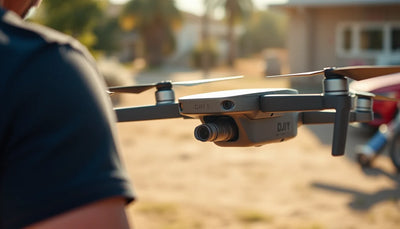
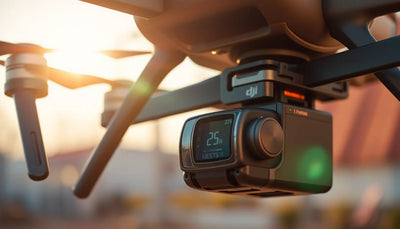
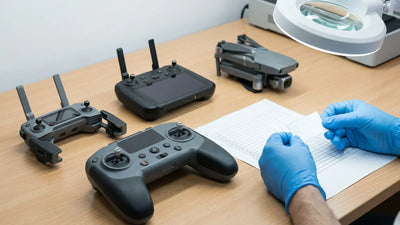
Review the shell, arms, mounting areas, gimbal surroundings, propellers, battery area, controller and included accessories. Look for an inconsistency between the seller description and the real kit, such as unexplained replacement parts, visible damage or a condition that the listing does not acknowledge. Record concerns with clear photographs.
This review is not a substitute for diagnosis. It simply helps a buyer decide whether the offer is documented enough to continue. A pre-owned drone that has a clear condition record may be a better purchase than a cheaper offer where the seller avoids basic questions about visible details.

What should a live seller demonstration show?
Ask for one continuous demonstration of the actual aircraft, controller, included batteries and accessories. The seller should connect the demonstration to the serial and listing record, then explain any known repair or condition note. The buyer is looking for a traceable unit, not a theatrical test intended to hide an unresolved concern.
If the aircraft has experienced a known collision, drop or unusual gimbal behaviour, do not treat a short video as a professional clearance. Use an appropriate inspection route before assigning the aircraft to important work. That protects the buyer from making a client commitment based on an incomplete record.
How should repair history change the purchase decision?
Repair history is useful when it is specific and connected to the real unit. Ask what was repaired, who completed the work, what record remains and whether the aircraft, controller, batteries or propellers were affected. A documented repair is not by itself a reason to reject a drone, but an unexplained repair story is a reason to slow down.
Keep repair questions separate from a seller's warranty language. Manufacturer support, a seller product term and repair-work coverage describe different paths. Read the current terms for the exact offer rather than assuming that a broad label answers the condition of this aircraft.

What is the safer path when evidence remains incomplete?
Choose another documented unit or arrange a qualified inspection before use. The seller and serial guides help build the purchase file; the grading standard helps translate condition language; the repair guide provides a path when a real concern needs assessment. None of them requires the buyer to invent a diagnosis from a photograph.
The stronger pre-owned offer is the one that makes condition, ownership and repair history visible. It gives a buyer a realistic decision path before money moves and helps later support begin from facts rather than from an unsupported claim that the drone had no damage.
Use the Drone Wiki for model and compatibility context, then return to the action path above.
Keep exploring
Further reading
From The Reboot Hub Chronicle




From Drone Guides