China-to-Japan shipping and purchase-evidence brief
Quick answer
- A reference to a free trade zone, bonded route or consolidated shipment does not by itself prove the price, import treatment, delivery outcome or suitability of the exact drone order.
- First identify the exact pre-owned kit, seller, payment record and the parties responsible for export, carriage, import and final delivery.
- Ask the responsible carrier, importer or qualified local source about the current route for the actual item. Keep the reply with the invoice and shipping file.
- When the documentary path cannot be explained clearly before dispatch, pause the order or choose an alternative supported by the evidence you can retain.

What should a buyer establish before a China-to-Japan DJI order?
| Decision layer | Evidence to collect | Buyer action | Do not assume |
|---|---|---|---|
| Exact kit | Aircraft, controller, batteries, accessories, serial and current-condition video | Match the offer to the actual unit | A model name identifies every included item |
| Seller and payment | Seller identity, invoice, payment record and condition disclosure | Keep the commercial evidence together | A low price explains the supply route |
| FTZ statement | The seller's written explanation of what the route description means for this order | Ask which party owns each shipping step | An FTZ reference determines import treatment |
| Japan route questions | Destination, importer role, item description and planned carrier | Ask the responsible party about the current route | Another buyer's route applies to this shipment |
| Fallback | A documented alternative, local supply route or delayed purchase | Retain a pause option before dispatch | A paid cross-border order can be clarified later without cost |

What does a China free trade zone reference actually tell a buyer?
It may describe part of a seller's storage, consolidation or export process. It does not identify the exact aircraft in the order, establish the buyer's importer role, or settle how a route will be treated when the shipment moves. A buyer needs the actual product and commercial record before assessing any route description.
Read a free trade zone statement as a prompt for precise questions. Ask who holds the unit, who prepares export records, who carries it, who is responsible for import steps and what records the buyer will receive. If the answer is broad or changes between messages, treat that as an unresolved purchase risk rather than a logistics benefit.
Which records should identify a pre-owned DJI kit before payment?
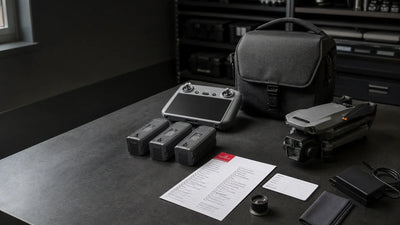
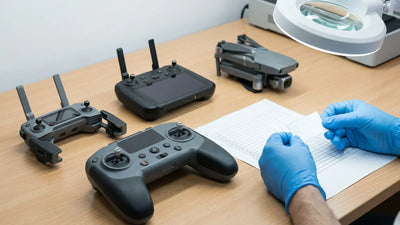
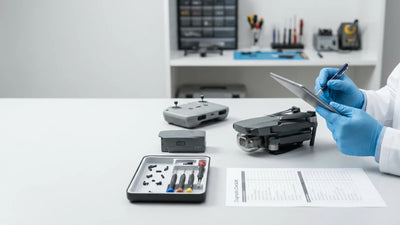
Build a file around the exact aircraft, controller, batteries, charging equipment, included accessories, serial and visible condition. Request a normal-operation demonstration using the same kit. Keep the seller identity, invoice, payment record and condition disclosure with that evidence rather than relying on images copied from another listing.
This file helps a buyer distinguish a documented unit from a generic offer. It does not grant an import, property, insurance or operating approval. Keep those questions separate so an accurate serial record is not turned into a claim it cannot support.

How should shipping roles be made visible before dispatch?
Ask the seller, carrier and any intermediary to state their role in writing: who handles export preparation, carriage, import contact and final delivery. Record the route description with the invoice, not as an informal chat promise. This lets the buyer see where a question belongs before a shipment is already moving.
A shipping label or a delivery phrase is only part of the record. It does not prove tax treatment, customs handling, timing or the ability to use the aircraft for a planned activity. When a role is unclear, ask the party responsible for that stage rather than asking a different party to make a broad assurance.
Which Japan import questions need a current route-specific answer?
Use the exact item description, destination, intended importer and carrier route when asking the responsible party or qualified local source. The question may include the aircraft, controller, batteries and any radio equipment, but the reply should be connected to the actual shipment rather than a generic product category.
Avoid publishing or repeating a fee, classification, approval, tax or time promise as if it applies to every buyer. Those outcomes can depend on details that are not visible in an article or listing. The useful buyer asset is a dated answer retained with the order record.
- Describe the exact kit and included batteries before asking about the route.
- State who is expected to act as importer for the proposed shipment.
- Keep the written answer with the invoice and shipping terms.
- Record any unanswered question before funds move or dispatch is agreed.

Why should price and savings claims stay separate from route evidence?
A price difference can be a reason to investigate a purchase, but it is not evidence that a particular route is complete or that the buyer will receive a defined cross-border outcome. A buyer should be able to explain the item, seller, payment and route even if the advertised saving disappears from the decision.
Compare documented offers on the condition record, included kit, seller accountability and unresolved questions. This keeps a pre-owned purchase grounded in evidence rather than in a broad claim about a warehouse, zone or delivery term.
When should a buyer pause a China-to-Japan order?
Pause when the exact kit cannot be demonstrated, the invoice is incomplete, a seller cannot explain the route roles, or the party responsible for the shipment cannot identify the question it will answer. A pause creates room to choose a documented alternative before the buyer is committed to an unclear cross-border arrangement.
The alternative can be a later purchase, a local option or a different supply route with a clearer evidence file. The goal is not to force every order through one commercial story. It is to let the buyer proceed only when the record matches the actual unit and route.
How do Reboot Hub resources support a documented decision?
Use the seller and serial resources to organise the exact-kit evidence, then use the customs and buyer-risk guides to separate route questions from condition questions. The Drone Wiki and comparison guide help identify the model family and possible accessories; they do not decide an individual import route.
A well-documented pre-owned purchase should leave the buyer with a clear account of the unit, seller, payment and outstanding route questions. That is a more durable decision than an unsupported statement about cross-border savings or delivery treatment.
Use the Drone Wiki for model and compatibility context, then return to the action path above.
Keep exploring
Further reading
From The Reboot Hub Chronicle


From Drone Guides