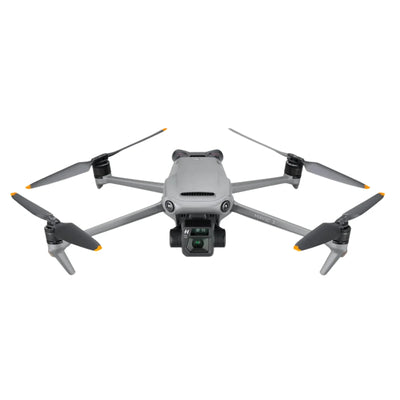
Inspire 3 Battery Planning for Summer Archaeology Sites
Field battery brief
Quick answer: For summer archaeology filming, do not buy or schedule an Inspire 3 around one claimed battery minute number. Plan the route, takeoff surface, crew timing, heat exposure, dust control, seller proof, and spare battery rotation before relying on a pre-owned cinema kit.
Archaeology and heritage sites are not normal video locations. A crew may need repeated grid passes, slow reveal shots, site-permission windows, low-disturbance staging, and careful ground movement around fragile areas. Battery planning is therefore a field process, not a simple spec comparison.
Plan the outdoor archaeology assignment from the required shots, site conditions, crew movement, battery evidence and fallback capture route before deciding whether an Inspire 3 kit is appropriate.

For broader model choice, start with the DJI Drone Comparison 2026. For condition proof, use the Drone Grading Standard and Used DJI Drone Buying Risk and Model Choice Guides. For repair and warranty boundaries, check the Warranty, Repair, and Care Refresh Guides.
Why archaeology battery planning is different
| Field factor | Why it changes the battery plan | Buyer or crew check |
|---|---|---|
| Summer heat | Aircraft, battery, controller, and monitor can heat-soak during repeated takes. | Plan shade, cool-down time, and shorter flight blocks. |
| Dusty ground | Dust can reach contacts, vents, fans, cases, and gimbal areas. | Use a landing pad and inspect battery contacts before packing. |
| Fragile site access | The pilot may not be free to walk anywhere for recovery or relaunch. | Choose safe launch points and keep a larger return reserve. |
| Repeated mapping passes | Grid work can consume more packs than a single cinematic flight. | Separate mapping passes from beauty shots in the schedule. |
| Pre-owned kit risk | Used batteries may look fine but still need cycle and behavior checks. | Ask for cycle screenshots, charger behavior, and a short hover video. |
The pre-owned Inspire 3 proof checklist
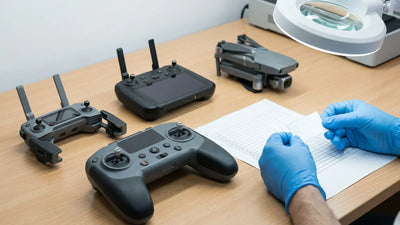
A discounted cinema drone is only useful if the kit can survive the job. Before paying, ask the seller for aircraft serial evidence, battery cycle screenshots, charger behavior, gimbal and camera condition, controller status, landing gear behavior, and any prior repair history. If the seller avoids battery proof, treat the discount as a risk signal.

Build the site plan before choosing the battery count
For archaeology work, the route decides the battery plan. Start with the site map, flight areas, restricted zones, safe launch point, desired shot list, and whether the crew needs mapping, cinematic footage, or both. Then split the day into short flight blocks with cooling and inspection windows between them.
- Route block: group nearby shots so the aircraft is not crossing the site unnecessarily.
- Reserve block: keep a conservative return margin for wind, heat, or route changes.
- Cooling block: give the aircraft and packs time out of direct sun.
- Inspection block: check contacts, vents, shell, propellers, and gimbal after dusty flights.
- Client block: keep one battery reserve for missed takes or curator requests.

Which battery claims need supporting evidence?
Be careful with pages that promise exact summer runtime, exact percentage loss, exact price savings, or fixed battery counts without showing the test method. Real battery planning depends on battery age, cycles, payload, wind, altitude, heat, route length, pilot reserve, and how the crew stages equipment.
A stronger page should state its limits. This article is a planning guide for summer outdoor archaeology work. It is separate from the Berlin winter wedding Inspire 3 battery guide, because winter weddings and summer archaeology sites are different missions.
What should the project team do next?
- Confirm the archaeology site permission and the flight areas before choosing a drone.
- Decide whether the job needs cinema footage, mapping support, or both.
- Check whether Inspire 3 is the right tool against smaller DJI models in the comparison guide.
- Ask for battery cycle and condition proof before buying a pre-owned kit.
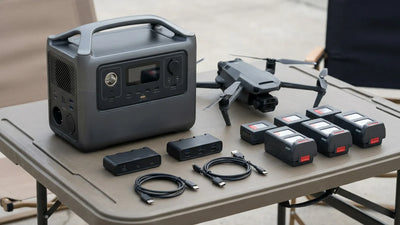
- Plan short flight blocks, shade, spare packs, and dust inspection.
- Use Reboot Hub's inspection standard and warranty policy when comparing verified pre-owned options.

FAQ
Can DJI Inspire 3 batteries be planned from one summer runtime number?
No. Outdoor archaeology work changes with heat, dust, wind, route length, takeoff surface, and repeated passes. Use a staged battery plan and a conservative reserve instead of a single claimed minute figure.
What should an archaeology crew check before buying a pre-owned Inspire 3 kit?
Check aircraft condition, battery cycle evidence, charger behavior, gimbal and camera condition, landing gear, seller proof, warranty limits, and whether the kit includes enough batteries for the site plan.
Is dust a battery issue or only a camera issue?
Dust is also a reliability issue because contacts, vents, cases, fans, and landing surfaces can all carry debris. Use a clean staging area, landing pad, and post-flight inspection routine.
How does summer archaeology battery planning differ from winter event work?
Summer archaeology and winter event work have different site conditions, crew movement, weather stress and capture priorities, so each needs its own evidence-led battery plan.
Technical reference & specs
For full specifications, teardown notes, common failure points and pre-owned pricing on this model, see the DJI Inspire 3 Wiki — part of the Reboot Hub DJI Drone Wiki (64 models, 700+ mapped parts). Browse verified pre-owned stock in DJI inspire inventory.
Keep exploring
Further reading
From The Reboot Hub Chronicle


From Drone Guides