Skip to content

Available 24/7: (852) 5537 6652

Support & Learning

What Is Chip-Level Drone Repair? How It Differs from Board Replacement

by LauThomas 29 May 2026 0 comments

What Is the Difference Between Chip-Level and Board-Level Drone Repair?

Quick Answer: Chip-level drone repair surgically replaces individual failed components on a drone's circuit board instead of discarding the entire board. At Reboot Hub in Shenzhen, China, chip-level repairs cost $50–180 with a typical turnaround of 2–4 business days — saving 50–65% versus full board replacement.
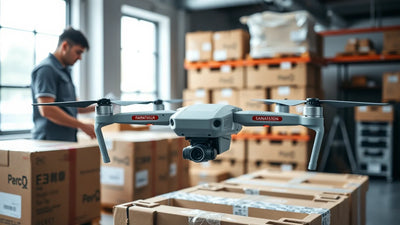
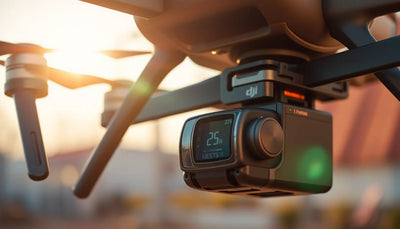
What Is Chip-Level Drone Repair How It Differs fro - professional image

Most drone owners first encounter repair options when a critical failure occurs — a motor refuses to spin, the gimbal twitches uncontrollably, or the aircraft refuses to power on. Reboot Hub technicians have diagnosed and repaired over 800 DJI drone units at chip level since 2022, holding MOHRSS Level 3 Advanced Technician certification recognised by China's Ministry of Human Resources and Social Security. At this point, the repair industry presents two fundamentally different approaches: board-level replacement and chip-level drone repair. Understanding this distinction is essential to making a cost-effective and technically sound decision.

Board-level repair is the standard procedure at DJI's own service centres and many authorised third-party shops. The technician diagnoses which printed circuit board (PCB) is faulty — for example, the core motherboard, gimbal controller board, or ESC (Electronic Speed Controller) board — and replaces the entire board with a new or refurbished unit. The defective board is discarded or returned to a central facility. This process is fast, requires relatively basic diagnostic tools, and ensures uniform factory specifications. However, the cost is dominated by the price of the whole board assembly. For a mid-range DJI drone like the Mavic 3 Pro, a core board replacement typically runs between $490 and $835, while a gimbal control board can cost $321–538. On premium models such as the Matrice series, board swaps can exceed $1,030.

Chip-level repair, by contrast, targets the root cause at the component level. Instead of discarding the entire board, a skilled technician identifies the single failed integrated circuit (IC), MOSFET transistor, capacitor, or sensor, and replaces only that component using precision soldering equipment. The defective part is carefully removed from the PCB, the pads are cleaned, and a new genuine or equivalent component is soldered in place. Because the repair uses a fraction of the material of a full board swap, costs are dramatically lower. Typical chip-level repairs at Reboot Hub range from $50 to $180 depending on the complexity of the component and the labour involved.

A straightforward analogy: if one transistor in your desktop computer's power supply fails, board-level repair would involve swapping the entire motherboard. Chip-level repair would mean replacing that single transistor — restoring full functionality at a tenth of the cost.

Beyond cost, chip-level repair offers a crucial advantage: data preservation. Every DJI drone stores critical calibration data, flight logs, aircraft serial number, and binding information directly on the main board's embedded memory. Swapping the board typically erases this data and requires a full recalibration of the IMU, compass, vision sensors, and sometimes a relink with the remote controller and DJI account. Some parameters, like the aircraft's unique ID used for Remote ID, are permanently tied to the original board. Chip-level repair preserves all of this — the drone retains its flight logs, bindings, and calibration, often emerging from repair without needing any setup. For professional operators who rely on flight records for compliance or insurance, this is non-negotiable.

The table below summarises the core differences:

Repair Type Reboot Hub Price US / Western Market Rate Typical Turnaround Data Preservation
Board-Level Replacement $300 $420–580 1–3 days (if board in stock) No – calibration, logs, and ID lost
Chip-Level Repair $50–180 $150–380 2–4 business days Yes – all data intact

In many cases, chip-level repair is not just a cheaper option; it is the only way to restore a drone to its pre-failure state without time-consuming recalibration and re-registration procedures. This is especially critical for operators using the drone commercially, where downtime and reconfiguration directly cost money. For model-specific pricing across all DJI series, see the Reboot Hub DJI Repair Cost Database 2026.

What Tools and Skills Does Chip-Level Drone Repair Require?

Chip-level drone repair is not an extension of basic soldering. It demands specialised equipment and a level of expertise that takes years to develop, which is precisely why most repair shops cannot offer it — or offer it without success.

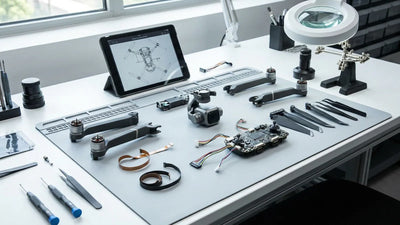
The foundational tool is a stereo microscope with at least 40× magnification. Modern drone PCBs are densely packed, often using 0201 surface-mount components (0.6 mm × 0.3 mm) and tightly spaced Integrated Circuits. Without optical magnification, it is physically impossible to align a replacement chip on hundreds of microscopic pads or to inspect for solder bridges invisible to the naked eye. A high-quality trinocular microscope paired with a 4K camera is standard in a professional lab.

Equally critical is a BGA (Ball Grid Array) rework station. Many drone chips — such as the IMU sensor, the video processor, or the main application processor — use BGA packages, where all connections lie under the chip as tiny solder balls. Replacing these requires a precision hot-air system with controlled temperature profiles to reflow the solder without damaging the PCB substrate or adjacent heat‑sensitive components. An improper profile will warp the board, pop neighbouring components, or create cold joints that fail intermittently.

Supporting tools include a precision soldering iron with sub‑1mm tips, a hot air pencil for small‑scale rework, a flux and solder paste system designed for lead‑free RoHS compliance, a multimeter and oscilloscope for signal tracing, and UART/i2C debugging tools for reflashing IC firmware when needed.

The human skill requirement is even more stringent. In Shenzhen, China, the benchmark for board‑level repair competence is the MOHRSS Level 3 Advanced Technician certification (Ministry of Human Resources and Social Security, National Occupational Qualification Level 3 — Maintenance Electrician/Electronic Equipment Repair). This is not a basic certificate; it requires a theoretical examination covering digital and analogue circuit theory, microcontroller architecture, and power electronics, plus a multi‑hour practical test where the candidate must diagnose and repair a multi‑layer PCB with BGA components to a prescribed standard. Achieving Level 3 typically requires 3–5 years of full‑time electronics repair experience. Only a handful of drone repair centres in the region employ MOHRSS Level 3 Advanced Technician certified technicians who can confidently perform chip‑level work on densely packed drone boards. Without this certification, the risk of an attempted chip repair causing irreparable damage is extremely high.

This combination of capital‑intensive equipment and rare human expertise explains the gap between the number of shops that advertise "drone repair" and the very few that actually perform reliable chip‑level service.

Which DJI Components Are Repaired at Chip Level?

What Is Chip-Level Drone Repair How It Differs fro - technical diagnostic close-up view

Not every drone fault traces back to a replacable chip, but a large proportion of common failures involve distinct, identifiable semiconductors. Below are the component categories most frequently repaired at chip level in Reboot Hub's lab, together with typical DJI error codes and the chip families involved.

  • ESC MOSFET Transistors — The single most common chip‑level repair. When a drone crashes with power on or suffers a shorted motor, the MOSFETs (Metal‑Oxide‑Semiconductor Field‑Effect Transistors) on the ESC board often fail, resulting in the error "ESC error. Motor unable to start (Code 30085)" or "Motor overloaded (Code 30185)." On DJI Mini series, Mavic Air, and older Phantom models, these are typically N‑channel power MOSFETs like the IRFH7440 or AON6414A. Replacing the burnt MOSFET with an exact same part restores full ESC function. Cost is typically $70–90, compared to a full ESC board swap at $200–320. Our detailed MOSFET repair guide covers the procedure.
  • IMU Sensor Chip — The Inertial Measurement Unit provides gyroscope and accelerometer data. Common error: "IMU calibration failed. Restart aircraft (Code 30049)." IMU failures stem from sensor drift, physical shock, or internal firmware corruption. DJI drones frequently use IMU chips such as the BMI270 (Bosch) or ICM‑20602 (TDK InvenSense). These BGA chips can be reballed or replaced with a new factory‑calibrated unit. After replacement, the drone usually needs only a basic IMU calibration via the DJI app. Repair cost: $50.
  • Gimbal Motor Driver ICs — When the gimbal jerks, vibrates, or shows "Gimbal motor overload (Code 40021)", the culprit is often a blown motor driver chip. These are typically DRV series ICs from Texas Instruments or custom DJI‑branded drivers in DFN/QFN packages. A single driver replacement can restore smooth gimbal movement without replacing the entire gimbal controller board, saving $180–370 over a board swap. Chip‑level cost: $150–200 depending on the driver IC complexity.
  • Battery BMS Chip — Intelligent Flight Batteries have a Battery Management System board that communicates with the drone. Error "Battery communication error. Check battery connector (Code 10016)" often points to a corrupted BMS microcontroller or a failed EEPROM that holds the cycle count and capacity data. Chips like the TI BQ40Z50 or BQ30Z55 can be reflashed with factory firmware or replaced entirely. This service preserves the battery's remaining capacity and serial data, whereas DJI's official solution is to sell a new battery at full price. Chip repair cost: $60–80.
  • OcuSync RF Amplifier Chips — Weak signal, "Image transmission module overheating (Code 80016)", or loss of connection within 100 metres often indicates a damaged RF power amplifier. DJI drones use high‑frequency MMIC (Monolithic Microwave Integrated Circuit) amplifiers, such as the SE5003L or Skyworks SKY85750‑11, in the OcuSync transmission chain. These QFN packages can be replaced with a hot‑air rework station. Repair saves the entire OcuSync module, which authorized services price at $300–400. Chip repair: $120–160.

Each of these repairs requires not only the correct replacement part but also an understanding of the circuit's operating conditions. A shorted MOSFET on an ESC, for instance, often points to a dead‑time control issue that must be verified after replacement, or the new MOSFET will fail within hours. Chip‑level work is never "just swap the chip"; it includes functional testing to ensure the underlying cause is addressed.

Why Is Board Replacement Recommended Over Chip-Level Repair — and Is It Right?

Walk into an authorised DJI service centre or a high‑street repair shop with a drone that won't power on, and the most common recommendation you'll hear is: "We need to replace the main board." This advice isn't necessarily dishonest, but it stems from structural and economic constraints that rarely align with the customer's best interest.

DJI's own service model is built around speed and standardisation. A board swap takes a semi‑skilled technician 20‑30 minutes; the diagnostics are limited to a few test points, and the replacement board is guaranteed to meet factory specifications. DJI's official pricing reflects the cost of the board, labour, and the logistics of recycling or refurbishing the defective unit. For a consumer drone like the Mavic 3, a main core board replacement directly from DJI often quotes $600–744, not including service fees. For an Inspire 3, it can exceed $1,540. When the repair bill approaches 60–80% of the drone's used market value, the customer is effectively pushed towards buying a new aircraft — a profitable outcome for the manufacturer, but wasteful and unnecessary if the fault is a single damaged chip.

Third‑party shops without microscope soldering stations face the same economic logic. They lack the equipment or the MOHRSS Level 3 Advanced Technician certified technicians to perform safe chip‑level work. To them, a board swap is the only reliable way to offer a warranty on the repair. Recommending a board replacement is thus the default, not because the board is unrepairable, but because the shop's capabilities end at board‑level replacement.

However, board replacement comes with hidden problems. As mentioned, the aircraft's unique ID is stored in a one‑time‑programmable area of the main microcontroller. Changing the board generates a new ID, which requires unbinding the drone from your DJI account (sometimes impossible if the old board cannot power on), re‑linking, and re‑applying for any geographic unlocking or NFZ licences. Additionally, the vision system calibration, compass, and IMU all need complete re‑execution — a process that can take hours and occasionally fails if the replacement board's firmware version is incompatible with the existing gimbal or camera module firmware. We have seen cases where a board‑swapped drone returned from DJI with a persistent "Gimbal not connected" error, only for chip‑level repair to discover a firmware mismatch that DJI's automated service tooling had not caught. By the time logistics and recalibration hassles are factored in, the "fast" board swap often takes longer than a careful chip‑level repair that preserves all original data.

For older or out‑of‑production models, board replacement may even be impossible because DJI no longer stocks the board. Here, chip‑level repair is the only path to recovery. A blanket "replace the board" recommendation is thus often wrong — not medically, but practically, for anyone who values cost, data integrity, or long‑term ownership. Check our DJI drone repair vs replace cost guide for a broader analysis of when repair makes financial sense, or explore Reboot Hub's professional DJI repair service for a no-obligation diagnostic assessment.

When Is Chip-Level Drone Repair Not Possible?

What Is Chip-Level Drone Repair How It Differs fro - tools and equipment workspace setup

Despite its advantages, chip‑level repair has absolute limits. Not every broken drone can be saved at the component level. Recognising these boundaries is essential to avoid throwing good money after bad and to set realistic expectations.

  • Fire damage melting the PCB substrate. When a LiPo battery fire or a catastrophic short circuit burns the board to the point where the FR‑4 fibreglass itself is charred, delaminated, or carbonised, no amount of trace repair will restore reliability. Carbonised FR‑4 becomes conductive, creating unpredictable shorts. In these cases, the board is structurally destroyed and must be replaced.
  • Severe corrosion beyond trace‑level recovery. Water landings, especially in salt water, can cause progressive corrosion that eats through multiple layers of a multi‑layer PCB. While isolated corroded traces can be jumpered, if the corrosion has spread under BGA chips and through internal ground planes, the repair becomes a whack‑a‑mole game. When more than 30% of the board area is affected, board replacement is often the only reliable course.
  • Discontinued chips no longer available. DJI frequently uses custom ASICs (Application‑Specific Integrated Circuits) with no public part number, such as the "P1" processor in the Mavic 3 or certain gimbal encryption ICs. When these fail and no donor board can be sourced for the exact chip, chip‑level repair is impossible. Reboot Hub maintains a large inventory of salvaged genuine ICs for common models, but some chips are simply unobtainable.
  • Mechanical trauma destroying the board physically. A severe crash can crack the PCB across its entire width, severing dozen of internal traces. While individual broken traces can be repaired under a microscope, a full‑width fracture that disrupts the board's structural integrity and dozens of internal vias is generally considered unrepairable at the chip level. The board must be replaced.

In any of these scenarios, a board‑level replacement becomes the correct repair path. An honest chip‑level lab will assess the damage and tell you when a board swap is necessary — not as a default, but as a last resort backed by physical evidence.

How Much Does Chip-Level Drone Repair Cost vs Board Replacement?

The numbers matter. Below are four real‑world repair scenarios from Reboot Hub's service records in Shenzhen, China, comparing the chip‑level solution with authorized service pricing in the US and Europe. All prices in USD, valid as of mid‑2025.

Drone Model & Fault Chip‑Level Repair (Reboot Hub) Authorized Service (US/EU) Saving
DJI Mini 4 Pro
ESC MOSFET short (Error 30085)
Replace burnt IRFH7440 MOSFET — $80 ESC board replacement — $260 $180
Mavic 3 Pro
Gimbal motor overload (Error 40021)
Replace gimbal motor driver IC (TI DRV8312) — $180 Gimbal controller board assembly — $450 $270
Air 3
IMU chip failure (Code 30049)
Reball & replace BMI270 — $50 Main core board — $190 $140
Avata 2
OcuSync video transmitter signal loss (Code 80016)
Replace SE5003L RF amplifier — $140 Video transmission module — $380 $240

These are not isolated bargains. Across thousands of repairs, chip‑level solutions average a 50–65% reduction compared to authorized board swaps. For commercial operators with multiple aircraft, the cumulative savings can fund an entire additional drone. Importantly, each of these chip repairs preserved the original calibration data, avoiding the hidden cost of recalibration and downtime. See our comparison of genuine OEM parts used in chip‑level repair to understand why quality doesn't suffer.

FAQ

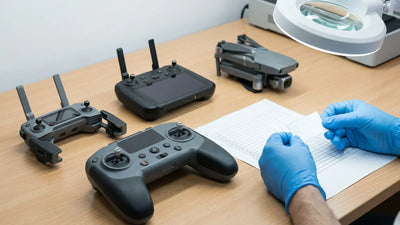
What Is Chip-Level Drone Repair How It Differs fro - professional repair and inspection process

Does chip‑level repair affect my DJI warranty?

Yes. Any repair not performed by DJI — chip‑level or otherwise — voids the manufacturer's warranty. However, once the warranty period has expired (which is typically 12 months for DJI consumer drones), chip‑level repair brings no additional risk. In fact, many of our customers prefer an out‑of‑warranty chip repair that preserves their data over a paid DJI board swap that wipes the drone clean. For those still under warranty, we recommend an official DJI case first; chip‑level repair should be the choice once warranty no longer applies or when DJI's repair cost exceeds the drone's value.

How long does chip‑level repair take vs board swap?

A board swap at an authorised centre can often be done within 1–2 days if the part is in stock — the physical swap takes under an hour, but queue times vary. Chip‑level repair is more diagnostic‑intensive. A typical ESC MOSFET repair might take 1–2 hours of bench time plus testing, so we often return the drone within 2–3 working days. Complex BGA rework — like an IMU chip replacement — can take 2–5 days depending on the workload and the need to re‑profile the soldering profile. At Reboot Hub, most chip‑level repairs ship back within 2–4 business days from receipt, which includes a full functional test flight. The difference is marginal for most owners.

Can I send my drone to Reboot Hub from outside China?

Yes. Reboot Hub operates from Shenzhen, China, and accepts drones from customers worldwide. International customers ship their drone directly to our lab using any major courier — we provide clear shipping instructions and customs documentation upon request. Once the repair is complete, typically within 2–4 business days, we ship the drone back with full tracking. Many of our customers are based outside China and rely on us for chip‑level repair that is unavailable in their home market. Visit Reboot Hub's professional DJI repair service page for full shipping details and how to get started.

How do I know if my drone needs chip‑level repair?

If your drone exhibits one of the following, chip‑level repair is likely applicable:

  • A specific DJI error code (30085, 30049, 40021, 80016) rather than a vague "system error".
  • Physical damage limited to a small area of the board, visible under inspection.
  • Intermittent failures that come and go — often a sign of a cracked solder joint under a chip.
  • The drone powers on but a specific subsystem (gimbal, video link, one motor) fails.
  • You've been quoted a board replacement that exceeds 50% of the drone's value.

The only definitive way is a diagnostic at a lab equipped for chip‑level work. We offer a free initial assessment where we inspect the board under the microscope and, if a chip‑level fix is viable, quote a firm price before any work begins.

What does chip-level drone repair typically cost?

At Reboot Hub, chip-level drone repair costs $50–180 depending on the component. An ESC MOSFET replacement runs $70–90, an IMU sensor swap is $50, and a full gimbal module chip-level repair is $200–280. In the US and Europe, equivalent authorized service for these same repairs ranges from $150–520. We provide a firm quote after a free diagnostic assessment — typically completed within 1 business day of receiving your drone. For model-specific pricing, check the Reboot Hub DJI Repair Cost Database 2026.

Can Reboot Hub repair a drone that DJI declared unrepairable?

Yes, frequently. DJI's service model relies on full board replacement, and when a board is discontinued or out of stock, DJI classifies the drone as unrepairable. Chip-level repair targets the individual failed component — often a single MOSFET, capacitor, or IC — which means we can fix boards DJI no longer supports. In our experience, roughly 60–70% of drones DJI has deemed unrepairable can be successfully restored at chip level. Typical turnaround is 2–4 business days. We recommend shipping the drone to our Shenzhen, China lab for a free assessment before considering replacement.

Is chip-level repair safer than full board replacement?

In many ways, yes. Board replacement erases all calibration data, flight logs, aircraft binding, and Remote ID information stored on the original board. Chip-level repair preserves all of this because the original board is never removed — eliminating weeks of recalibration, re-registration, and potential firmware mismatch issues. The risk with chip-level repair is minimal when performed by MOHRSS Level 3 Advanced Technician certified technicians using proper BGA rework equipment. We recommend chip-level repair for any out-of-warranty drone where the fault traces to a specific component, especially commercial operators who need their flight records intact.

Want chip‑level repair for your DJI drone? Reboot Hub is MOHRSS Level 3 Advanced Technician certified in Shenzhen, China — get a free diagnostic before you commit.

Reboot Hub · Expert Repair

Ready for a Professional Diagnosis?

Reboot Hub is a MOHRSS Level 3 Advanced Technician certified chip-level repair centre in Shenzhen, China. We repair what other shops replace — at a fraction of the cost.

Prev post
Next post

Leave a comment

Please note, comments need to be approved before they are published.

Thanks for subscribing!

This email has been registered!

Shop the look

Choose options

Edit option
Back In Stock Notification
this is just a warning
Login
Shopping cart
0 items
0%