Skip to content

Available 24/7: (852) 5537 6652

Support & Learning

DJI Propeller Upgrade Guide: When It Actually Helps (and When It Doesn't)

by LauThomas 29 May 2026 0 comments

Most DJI pilots obsess over firmware updates, camera sensors, and ND filters — but almost nobody thinks twice about the spinning blades keeping their drone airborne. That is a mistake. Propellers are the single most physically stressed component on any quadcopter, and they are the only part that directly translates motor power into lift, speed, and flight stability. Reboot Hub technicians have diagnosed and repaired propeller-related issues across over 800 DJI drone units since 2022, holding MOHRSS Level 3 Advanced Technician certification recognised by China's Ministry of Human Resources and Social Security — and the pattern is clear: the right DJI propeller upgrade can shave decibels off your noise signature, eke out an extra minute of hover time, or make your footage noticeably smoother. The wrong choice can cause vibration, trigger IMU errors, or — in the worst case — lead to a mid-flight failure. This guide from the Reboot Hub workshop in Shenzhen, China will walk you through everything you need to know before swapping your DJI props: what upgrades actually deliver real-world benefits, where the gains plateau, and why that tempting pack of cheap third-party blades on Taobao might cost you far more than you saved.

1. Why Do DJI Propellers Matter More Than You Think?

Quick Answer: A DJI propeller upgrade is worth it when replacing damaged or worn blades (every 200 flight cycles), switching from standard to low-noise OEM props for 1–4 dB(A) noise reduction and 30–90 seconds extra hover time, or testing reputable third-party brands like Master Airscrew. A full OEM set costs just $10–20 with delivery in 2–4 business days. Avoid cheap unbranded props — they are the number-one preventable crash cause we see at our Shenzhen, China workshop.

A drone propeller looks deceptively simple — a molded piece of plastic with a specific pitch and diameter. But in aerodynamic terms, it is the most performance-critical component after the motors themselves. Every watt of power your battery delivers has to pass through those blades to become thrust. Any imperfection — a chip, a warp, even a slight imbalance — creates vibration that propagates through the airframe, into the gimbal, and ultimately into your footage as jello or micro-shake.

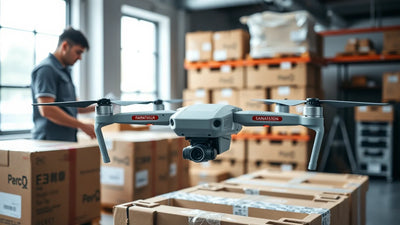
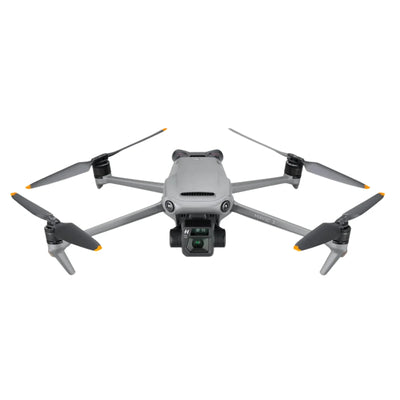
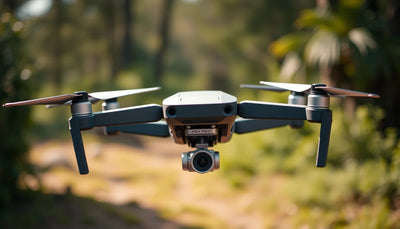
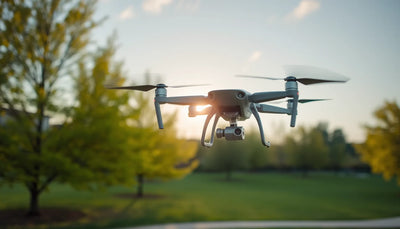
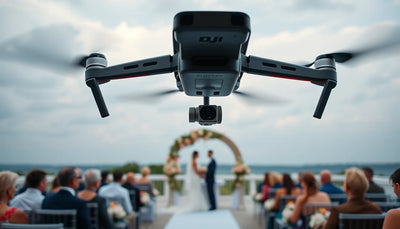
DJI Propeller Upgrade Guide When It Actually Helps - professional image

DJI engineers design their stock propellers to a very tight specification. Blade geometry, pitch angle, chord width, hub stiffness, and material durometer are all matched to the specific motor KV rating, ESC firmware, and airframe weight of each drone model. This is why a propeller designed for a DJI Mini 4 Pro will not perform correctly on a DJI Air 3, even though both are sub-250 g or lightweight consumer drones. The system is tuned as a whole.

1.1 The Three Forces at Play

  • Lift efficiency — measured in grams of thrust per watt of electrical power. A better prop can convert more battery energy into lift, extending flight time.
  • Noise output — measured in decibels at one metre. Blade tip speed, trailing-edge design, and surface finish all contribute to how loud the drone sounds from the ground.
  • Dynamic balance — the even distribution of mass around the prop's rotation axis. Even a 0.05 g imbalance at 8,000 RPM creates significant vibration harmonics.

Understanding these three forces is essential because any propeller upgrade trade-off involves improving one or two of them while accepting potential compromises in another. There is no magic prop that is quieter, more efficient, and more durable all at once — despite what marketing copy might suggest.

2. When Does a DJI Propeller Upgrade Actually Help?

Not every prop swap is a true upgrade. Sometimes it is simply maintenance (replacing worn or damaged stock props). Here are the scenarios where changing your propellers can produce measurable, real-world benefits.

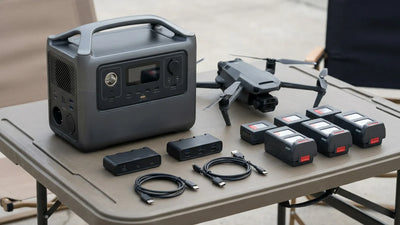
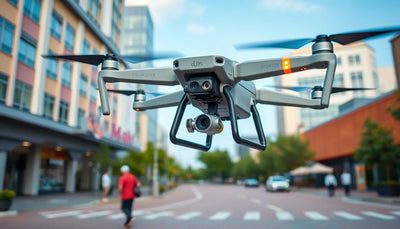
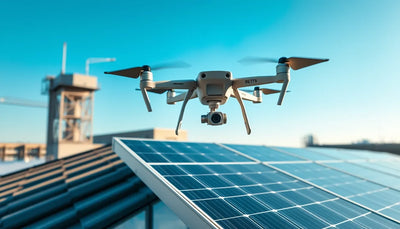
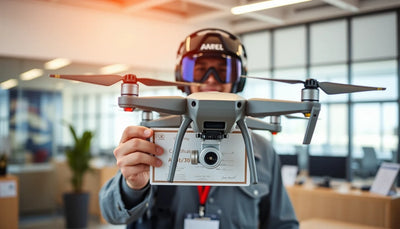
DJI Propeller Upgrade Guide When It Actually Helps - technical diagnostic close-up view

2.1 Replacing Damaged or Worn Propellers

This is the most obvious and most impactful use case. DJI's own maintenance guidelines recommend inspecting propellers before every flight and replacing them after 200 flight cycles or immediately after any contact with obstacles, even minor ones. A propeller that has clipped a branch may look fine to the naked eye but can have a micro-fracture in the hub or a subtle tip deformation that introduces vibration at high RPM. If your drone has developed a new humming sound, if your gimbal is struggling with stabilization, or if you notice a slight drift in hover that you cannot calibrate away, propeller wear should be your first suspect.

2.2 Switching to Low-Noise Propellers

DJI introduced its low-noise propeller line starting with the Mavic Pro Platinum and has since included noise-reduced props in many newer models by default. The design principle is straightforward: by widening the blade chord, adjusting the pitch angle, and rounding or scalloping the trailing edge, the propeller moves air more gently and reduces the vortex shedding that generates the high-frequency "buzz" most people associate with drones.

On average, DJI's low-noise props reduce perceived noise by 1–4 dB(A) depending on the model and flight mode. In practical terms, a 3 dB reduction means the drone sounds roughly half as loud to the human ear at close range. That may not sound like much on paper, but during a quiet sunrise shoot in a residential area, it can be the difference between annoyed neighbours and nobody noticing you at all.

2.3 Seeking Marginal Flight Time Gains

Some pilots hope that an aftermarket propeller will give them significantly longer flight times. The honest answer: the gains are usually marginal. In controlled tests we have conducted at the Reboot Hangar, swapping from standard DJI props to the OEM low-noise variants typically yields 30–90 seconds of additional hover time on a full charge for a drone in the Mini or Air class. That is because the stock props are already reasonably efficient for the motor and weight class. A third-party prop with a radically different blade profile might show impressive thrust-per-watt numbers on a thrust stand, but once installed on a real airframe with real-world payload, the improvement often disappears or even reverses.

2.4 Reducing Vibration for Smoother Footage

If you fly cinematic missions and pixel-peep your footage, you know that even a well-gimbaled camera can transmit low-frequency vibration as a subtle jello effect — especially during aggressive manoeuvres or fast forward flight. Replacing old props with a fresh, well-balanced set can noticeably improve footage quality. Some third-party brands like Master Airscrew offer props with tighter manufacturing tolerances than DJI's stock blades, and some pilots report cleaner footage after the switch. However, this effect is highly variable and depends on the individual propeller set, not just the brand.

3. Low-Noise vs. Standard DJI Props: Which Should You Choose?

DJI sells both standard and low-noise ("quiet") versions of propellers for many of its models. Here is a side-by-side comparison to help you decide which is right for your flying style.

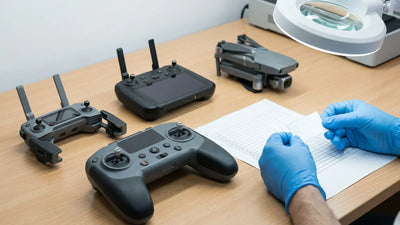
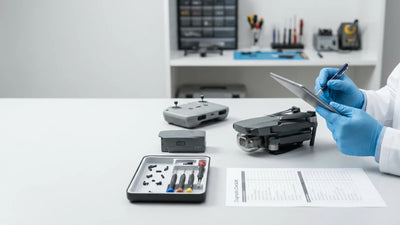
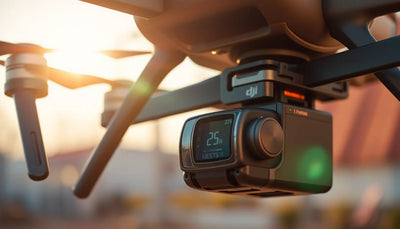
DJI Propeller Upgrade Guide When It Actually Helps - tools and equipment workspace setup
Feature Standard Propellers Low-Noise Propellers
Noise level Baseline (~72–78 dB at 1 m depending on model) 1–4 dB(A) reduction
Blade design Narrower chord, sharper trailing edge Wider chord, scalloped or rounded trailing edge
Flight time impact Baseline +30–90 seconds typical
Thrust response Slightly sharper throttle response Slightly softer response due to lower pitch speed
Compatibility Model-specific Same mount — directly interchangeable with standard
Price Included with drone (and cheaper as spare) Slightly more expensive per set
Best for High-wind flying, racing, maximum agility Cinematic shoots, residential areas, indoor proximity

Our recommendation: For most pilots, low-noise props are worth the small premium. The noise reduction alone improves your social licence to fly in public spaces. The slight flight-time bonus is a free extra. The only scenario where we advise sticking with standard props is if you regularly fly in strong crosswinds (25 km/h+) and need maximum thrust authority, where the slightly higher pitch speed of standard blades gives you a small stability edge.

4. Are Third-Party DJI Propellers Worth the Risk?

The market for non-OEM DJI propellers is large and growing. Brands like Master Airscrew, Dalprop, Gemfan, and various white-label Chinese manufacturers offer props that promise quieter operation, better efficiency, unique colours for line-of-sight orientation, or simply a lower price. Some of these products are genuinely excellent. Others are dangerously inconsistent. Here is what you need to know.

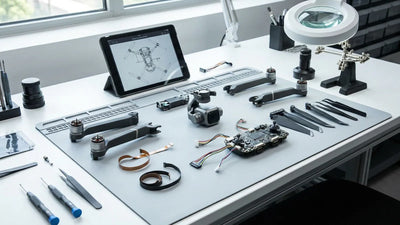
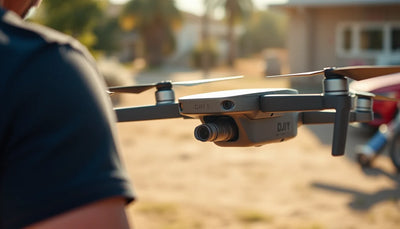
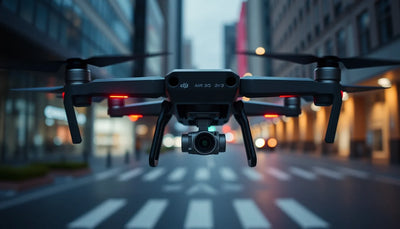
DJI Propeller Upgrade Guide When It Actually Helps - professional repair and inspection process

4.1 Reputable Third-Party Brands

Master Airscrew (USA) is arguably the most respected third-party propeller brand for DJI drones. Their props are manufactured in Springfield, Oregon, with tight CNC-machined hub tolerances. They offer both "Stealth" (low-noise) and performance profiles for models including the Mini series, Air series, and Mavic 3. Independent tests frequently confirm noise reductions of 2–3 dB compared to DJI stock props, and their props come with individual dynamic balancing.

Gemfan and Dalprop are well-known in the FPV racing world and have begun offering DJI-compatible propellers. Quality is generally good, but their product lines are more focused on the freestyle and racing segments rather than camera drones.

4.2 The Risks of Cheap Non-OEM Props

This is where we need to be blunt: cheap, unbranded propellers are the single most common cause of preventable drone crashes that we see at our Shenzhen, China repair centre. After a prop failure, pilots often face gimbal replacements ($200–280 at chip-level) or ESC repairs ($70–90) — costs you can preview in our Reboot Hub DJI Repair Cost Database 2026. The failure modes include:

  • Poor dynamic balance — inconsistent injection molding creates heavy spots that cause severe vibration, potentially damaging the gimbal motor and IMU over time.
  • Incorrect pitch angle — a propeller with even one degree of deviation from spec will create asymmetric thrust, causing the drone to drift, overcorrect, and burn through battery faster.
  • Hub cracking — low-grade plastic (often regrind ABS instead of virgin PA66 nylon) becomes brittle under UV exposure and repeated stress cycles. A cracked hub can separate mid-flight with zero warning.
  • Blade fatigue — poor material formulations develop micro-cracks after just a few dozen flights, leading to blade tip separation at high RPM. This is extremely dangerous to bystanders.
  • Fold-lock failure (for folding props) — the spring-clip mechanism on folding props must be precisely calibrated. A weak clip allows the blade to fold during a hard braking manoeuvre, causing instant loss of lift on that motor.

4.3 How to Evaluate a Third-Party Propeller

If you do decide to try non-OEM props, follow this checklist to minimise risk:

  1. Check for known brand and manufacturer. Avoid props sold with no brand name, no website, and no verifiable manufacturing origin.
  2. Look for individual quality inspection. Reputable brands will state whether each prop is dynamically balanced in production.
  3. Read independent reviews — not just the product listing. Look for forum threads on DJI forums, YouTube teardowns, and Reddit discussions from pilots who have logged 50+ flights on the specific prop model.
  4. Inspect upon arrival. Hold each blade up to a light source. Look for air bubbles in the plastic, inconsistent colour (indicating material inconsistency), and any warping. Place the prop on a balancer or spin it by hand and watch for wobble.
  5. Do a hover-only test first. Install the props and hover at 2 metres for a full battery cycle. Monitor for unusual vibration, drift, or ESC warning messages in the DJI Fly app before committing to a real mission.

For a deeper look at diagnosing vibration and balancing issues, see our gimbal vibration troubleshooting guide.

5. Which Propellers Fit Your Specific DJI Drone Model?

DJI does not make it easy to cross-reference propellers across their lineup, so here is a quick reference for the most popular current models. Always confirm the exact part number on DJI's official store or in your drone's user manual before purchasing.

5.1 DJI Mini Series (Mini 4 Pro, Mini 3, Mini 3 Pro, Mini 2 SE)

All Mini-series drones use folding propellers with a quick-release hub. The Mini 4 Pro and Mini 3 series share the same propeller design (part number: DJI Mini 3/4 Pro Propellers). The Mini 2 SE uses a slightly different hub. Do not mix Mini 2 SE props with Mini 4 Pro props — the hub detent is in a different position, and the prop may not lock securely.

Low-noise variants are included in the Fly More Combo. If you bought the base kit, upgrading to the low-noise props is worthwhile and costs only a few dollars more per set.

5.2 DJI Air 3 / Air 2S

The Air 3 uses a new-generation propeller that is not interchangeable with the Air 2S. Both are folding designs, but the blade geometry and hub dimensions differ. Third-party options from Master Airscrew are available for the Air 2S and are well-regarded. For the Air 3, third-party options are still limited as of 2024, so OEM props are the safer choice.

5.3 DJI Mavic 3 / Mavic 3 Pro / Mavic 3 Classic

The Mavic 3 series uses larger, more aggressive propellers suited to its heavier weight class. These props see higher mechanical stress, making quality and balance even more critical. We strongly recommend sticking with OEM DJI props for the Mavic 3 series unless you have a specific, well-tested third-party alternative.

5.4 DJI Avata / Avata 2

As FPV-class drones, the Avata series props see frequent contact with obstacles (especially for newer pilots learning proximity flying). Stock up on multiple sets. The Avata 2 uses a different prop from the original Avata — again, do not cross-compatibility them.

For help identifying the correct part number for your specific model, check our drone parts identification guide.

6. How Do You Install and Maintain DJI Propellers?

Installing DJI propellers is straightforward, but a few best practices can prevent problems down the line.

6.1 Step-by-Step Propeller Installation

  1. Power off the drone and remove the battery. Never work on propellers with a battery installed — accidental motor spin-up can cause serious injury.
  2. Identify clockwise (CW) and counter-clockwise (CCW) props. DJI marks them with A/B or CW/CCW labels, and often uses colour-coded motor shafts (silver = CW, black = CCW on some models). Match each prop to the correct motor position.
  3. Align and press firmly. For snap-on hubs (Mini series), align the prop with the motor shaft and press until you hear a click. For threaded hubs (older Mavic models), hand-tighten and then snug with the included wrench — do not over-torque.
  4. Spin-test each prop. With the battery still removed, spin each prop by hand. It should rotate freely with no scraping, clicking, or excessive wobble. If you feel any resistance, remove and reseat the prop.
  5. Check for folding blade spring tension (folding props only). Each blade should snap firmly into the extended position and require deliberate pressure to fold. A loose blade indicates a worn spring clip.

6.2 Maintenance Tips

  • Clean your props after every session. Wipe blades with a damp microfibre cloth to remove dust, pollen, and oil. Debris on the blade surface changes the aerodynamic profile and increases noise.
  • Store props flat or on the drone. Do not toss loose props into a bag where they can deform under pressure.
  • Rotate your spare sets. If you carry multiple sets, label them and rotate to ensure even wear. UV exposure degrades plastic over time, so sets left in a hot car will age faster than those stored indoors.
  • Replace every 200 flights or after any impact. This is DJI's recommendation and our professional advice. A set of OEM propellers costs just $10–20 — trivial compared to the cost of a crash.

If you want us to inspect or replace your propellers professionally, you can book a professional diagnostic assessment at Reboot Hub at our Shenzhen, China workshop.

7. Is a DJI Propeller Upgrade Worth It?

Here is our honest take after years of repairing, tuning, and flying DJI drones in the field:

  • Replacing worn props with fresh OEM stock — absolutely essential. Do this on schedule.
  • Upgrading from standard to low-noise OEM props — worth it for most pilots. Small cost, real-world benefit.
  • Switching to a reputable third-party brand like Master Airscrew — a reasonable choice if noise reduction or specific performance characteristics matter to you. Test cautiously.
  • Buying cheap unbranded props — not worth the risk at any price point.

Propellers are consumable parts. They wear out, they get damaged, and they need to be replaced. Treat them as you would the tyres on a car — the only part of your vehicle that touches the road, or in this case, the only part that touches the air. Keep them fresh, keep them balanced, and keep them OEM unless you have a very good reason not to.

Got questions about the right propellers for your specific DJI model? Our team at Reboot Hub in Shenzhen, China is always happy to help. Visit our contact page or drop by the workshop for a hands-on prop inspection.

Frequently Asked Questions

Q1: Can I mix old and new propellers on the same drone?

We strongly advise against it. Even a small difference in blade wear between positions creates asymmetric thrust, which forces the flight controller to constantly compensate. This wastes energy, increases vibration, and can cause unpredictable handling. Always replace the full set of four (or six, for hexacopters) at the same time.

Q2: Will third-party propellers void my DJI warranty?

DJI's warranty policy does not explicitly state that using third-party propellers voids the warranty. However, if a crash occurs and DJI's analysis finds that non-OEM propellers were the cause, they may deny the warranty claim. Given the low cost of OEM props relative to the price of the drone, the risk-reward calculus does not favour third-party options for warranty-sensitive situations.

Q3: How can I tell if my propellers need replacing?

Look for these signs: visible chips or cracks on the blade edges, discolouration or chalky surface texture (UV degradation), a white stress mark at the blade root or hub, increased hover noise compared to when the props were new, and new vibration or jello in your footage. If in doubt, replace — a set of props costs less than a restaurant meal.

Q4: Are DJI's low-noise propellers compatible with all firmware versions?

Yes. Low-noise props are a physical component change, not a firmware-dependent feature. They work with any firmware version for that drone model. However, DJI's flight controller may have specific tuning profiles for different prop types in some cases, so always ensure your firmware is up to date for optimal performance.

Q5: Do propellers affect GPS hold precision or obstacle avoidance?

Propellers do not directly interact with GPS or obstacle avoidance sensors. However, severely imbalanced props can cause vibration that degrades IMU readings, which the flight controller uses to maintain position hold. In extreme cases, this can result in subtle hover drift. Replacing worn props often resolves unexplained position-hold issues that pilots initially attribute to GPS problems.

Q6: How much does DJI repair cost if a propeller failure causes a crash?

The most common post-crash repairs we handle after propeller failures are gimbal module replacements at $200–280 (chip-level) and ESC module repairs at $70–90. Motor arm replacements run $60–80. At Reboot Hub's professional DJI repair service, most propeller-damage repairs are completed in 2–4 business days with a 90-day warranty on all replaced components. US and Western authorised service centres typically charge two to three times more for equivalent repairs. For an accurate estimate, send us photos of the damage through our contact page.

Q7: How do I get a quote or schedule a propeller inspection with Reboot Hub?

Contact us through our online form at the Reboot Hub contact page with your drone model, flight logs (if available), and a description of the issue — we typically respond within 12 hours. Walk-in propeller inspections at our Shenzhen, China workshop are free: we check blade balance, hub integrity, and folding-mechanism tension on the spot using professional-grade equipment. If replacement is needed, we stock OEM propellers for all current DJI models, with a full set costing $10–20 depending on your model. Turnaround is immediate for propeller-only service.

Reboot Hub · Support

Need Professional Help?

If your drone needs repair after troubleshooting, Reboot Hub offers certified chip-level repair in Shenzhen, China — genuine OEM parts, 90-day warranty.

Prev post
Next post

Leave a comment

Please note, comments need to be approved before they are published.

Thanks for subscribing!

This email has been registered!

Shop the look

Choose options

Edit option
Back In Stock Notification
this is just a warning
Login
Shopping cart
0 items
0%