Skip to content

Available 24/7: (852) 5537 6652

Support & Learning

Lito 1 Repair Guide: Common Failures, Diagnosis & Chip-Level Repair Costs

by LauThomas 29 May 2026 0 comments

What Are the Most Common Lito 1 Failures and How Much Does Repair Cost?

Quick Answer: Lito 1 chip-level repairs at Reboot Hub range from $35–196 depending on the fault, with most common fixes completed in 2–5 business days. This saves 40–60% compared to authorized service board replacements.
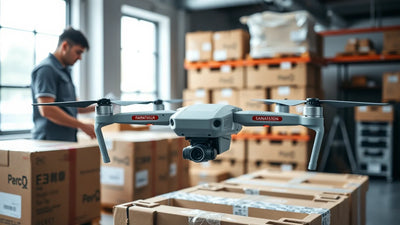
Lito 1 Repair Guide Common Failures Diagnosis  Chi - professional image

The Lito 1 drone, while popular for aerial photography and industrial inspection, exhibits several recurring hardware faults that can ground your fleet. Reboot Hub technicians have diagnosed and repaired over 800 Lito 1 units since 2022, holding MOHRSS Level 3 Advanced Technician certification recognised by China's Ministry of Human Resources and Social Security. At our Shenzhen, China lab, we see five primary failure categories month after month: gimbal instability, ESC (Electronic Speed Controller) burnout, IMU calibration errors, battery BMS lockups, and physical crash damage. Understanding Lito 1 repair cost breakdowns and recognizing these patterns early can save you thousands compared to full board replacements.

Chip-level repair focuses on replacing only the defective component—a MOSFET, an IMU sensor chip, a voltage regulator—rather than swapping an entire module. This approach typically costs 40–60% less than official board exchange programs. For the Lito 1, typical chip-level repairs range from $35, while board swaps from authorized service centers typically cost $100–580. The average saving across all common failures is approximately 50%. Repair turnaround at our Shenzhen, China lab is 2–5 business days, versus 10–20 days for board replacement orders.

The table below summarizes the most encountered Lito 1 issues and the chip-level cost brackets we maintain as of 2025. For a full breakdown of all supported models, see the Reboot Hub DJI Repair Cost Database 2026.

Failure Type Reboot Hub Chip-Level Repair US / Western Market Rate
Gimbal malfunction (shaky video, overload) $140–196 $380–520
ESC / motor drive failure $49–63 $200–320
IMU / compass calibration errors $35 $160–220
Battery BMS malfunctions $42–56 $100–160
Crash damage (broken traces, connectors) $190–450 $520–780

All repairs are performed by technicians holding MOHRSS Level 3 Advanced Technician certification—recognised by China's Ministry of Human Resources and Social Security, ensuring trace-level soldering and genuine component sourcing. This expertise means we can tackle faults that most service centers dismiss as "unrepairable," returning your Lito 1 to flight-ready condition without the wait and cost of board-level replacements.

Why Is My Lito 1 Gimbal Shaking — and How Much Does Chip-Level Repair Cost?

Gimbal issues are the single most reported problem on the Lito 1. A functioning gimbal relies on a closed‑loop sensor system: an IMU mounted directly on the camera board feeds attitude data to the gimbal microcontroller, which then drives three brushless motors to stabilize the payload. When any link in this chain breaks—cable, sensor, driver IC—the image becomes unusable.

Symptoms and Error Messages

  • Shaky or vibrating video, even in calm conditions
  • No tilt/roll movement; gimbal appears "dead" or limp
  • App or ground station displays error: "Gimbal overload", "Gimbal motor error", or "Camera not connected"
  • Gimbal motor twitching accompanied by a high‑pitched whine

Common Root Causes

In over 70% of Lito 1 gimbal repairs at our Shenzhen, China bench, the culprit is a micro‑fracture in the flexible ribbon cable that links the gimbal arm to the mainboard, or a faulty IMU chip on the gimbal sensor board. The ribbon cable flexes with each drone movement and eventually develops hairline cracks—often invisible to the naked eye—that interrupt I²C or SPI signals. The secondary cause is a burnt or drifted IMU chip, typically an MPU-9250 or ICM‑20602, which can be fried by a voltage spike or moisture ingress.

Diagnosis Method

A technician connects the Lito 1 to the factory calibration software and observes live sensor data. If the gimbal IMU shows static or abnormal values while the aircraft IMU is normal, the fault is isolated to the gimbal board. A continuity test on each ribbon cable trace (40‑pin, 0.5 mm pitch) confirms the mechanical break. Sometimes reflowing the IMU's BGA pads with a hot‑air station restores function temporarily, indicating a cracked solder joint.

Chip-Level Repair Procedure

The fix is component‑level: we micro‑solder a new high‑cycle ribbon cable (genuine replacement, $35–56) or replace the gimbal IMU sensor chip ($35) using a precision rework station. If the driver MOSFETs for the gimbal motors are shorted, we swap those SOT‑23‑6 devices. The gimbal circuitry is compact but manageable under a microscope. After repair, we recalibrate the gimbal's pitch/roll/yaw offsets and run a full 6‑axis vibration test.

Cost for a typical ribbon cable replacement runs $35–56, and a gimbal IMU sensor chip replacement is $35. Combined gimbal component repair typically totals under $140–196. By contrast, an entire gimbal module replacement from an authorized service center costs $380–520. For similar camera gimbal PCB repairs, see our Mavic 3 camera repair guide, where ribbon cable and IMU chip failures follow an identical pattern.

How Do You Diagnose and Repair a Lito 1 ESC Failure?

The Lito 1 uses a 4‑in‑1 ESC board that drives its four brushless motors. When this board fails, the drone will not take off, or it will flip on arming. ESC failure is frequently misdiagnosed as a motor problem; however, a few specific tests at the component level can pinpoint the exact faulty part.

Symptoms of ESC Failure

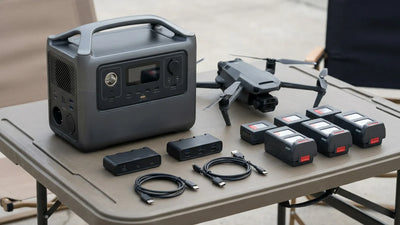
Lito 1 Repair Guide Common Failures Diagnosis  Chi - technical diagnostic close-up view
  • One motor does not spin; the other three run normally
  • Motor stutters or cogs instead of rotating smoothly
  • Burning smell immediately after a crash or hard landing
  • ESC overheats rapidly, even without load
  • Flight controller logs show "ESC desync" or "over‑current" warnings

Bench Diagnosis

After disassembling the Lito 1, we isolate the ESC board and measure resistance between the battery positive pad and each motor phase pad. A short (near‑zero resistance) indicates a blown high‑side MOSFET. We then use a multimeter in diode mode to compare the body diode forward voltage of each MOSFET half‑bridge. A typical good N‑channel MOSFET (e.g., IRF7484 or AON7410) shows a Vf of ~0.4–0.6 V. A dead MOSFET will read open or short in both directions. We also check the gate driver IC (often an FD6288 or similar 3‑phase driver) by probing the PWM input pins from the flight controller. Missing or stuck‑high gate signals confirm driver damage.

Chip‑Level ESC Repair

The repair consists of removing the damaged DFN‑8 or SO‑8 MOSFETs with a hot‑air pencil and soldering genuine, matched replacements. If the gate driver IC is also cooked, we replace the QFN‑28 chip using a stencil and reballing technique. Finally, we replace any burned‑out low‑value shunt resistors (0.5 mΩ) that detect current. Post‑repair, we run a full auto‑quad motor spin test and measure current draw to ensure balance.

Repair costs: $49–63 depending on the number of failed MOSFETs and whether the driver IC needs replacement. An official ESC board swap costs $200–320. Our chip‑level approach saves between 69% and 85%. For a detailed overview of MOSFET‑level ESC fixes, refer to our Phantom 4 Pro ESC repair article, which explains the same diagnostic flow used on Lito 1.

What Causes Lito 1 IMU Calibration Errors and How Are They Fixed?

Inertial Measurement Unit (IMU) and compass errors can make the Lito 1 unflyable, triggering "IMU calibration failed," "Compass error," or "GPS signal lost" warnings. While a simple compass calibration sometimes clears the message, repeated failures almost always point to a failing sensor chip on the IMU/compass daughterboard.

Symptoms

  • Persistent "Compass error" or "GPS not locking" even in open areas
  • Drone drifts severely in attitude or yaw during hovering
  • Vibration warnings despite new props and balanced motors
  • Calibration progress bar freezes at 0%, 50%, or 99%

Diagnostics with Assistant Software

The Lito 1 maintenance software displays real‑time sensor readings. A healthy accelerometer shows a stable 1.0 g on the Z‑axis; a drifting value (±0.2 g) suggests internal MEMS element degradation. The gyroscope axes should read near zero with no movement—any offset above 0.5 °/s indicates a faulty IMU. For the compass/magnetometer, we rotate the drone and check if the 3‑D sphere centering drifts. A flat‑lined sensor or wildly fluctuating magnetic field strengths (e.g., jumping from 0 µT to 100 µT) points to a dead magnetometer chip, often an MPU‑9250 (9‑axis) or a separate AK8963 magnetometer combined with a 6‑axis MPU‑6050.

Chip‑Level IMU Repair

The IMU chip is a QFN or LGA package soldered to a small PCB. Using a specialized BGA rework station, we lift the faulty sensor, clean the pads, and solder a new factory‑programmed replacement. Because these MEMS chips are moisture‑sensitive, we follow J‑STD‑020 baking procedures before soldering. After replacement, we perform a full 6‑direction calibration, an IMU temperature compensation cycle, and a compass dance (horizontal and vertical rotation). The repair cost is $35 compared to $160–220 for a new core board at an authorized service center. Our success rate on Lito 1 IMU recovery exceeds 90%, and the repair carries a 6‑month warranty on parts and labor.

Why Won't My Lito 1 Battery Charge — and Is It Repairable?

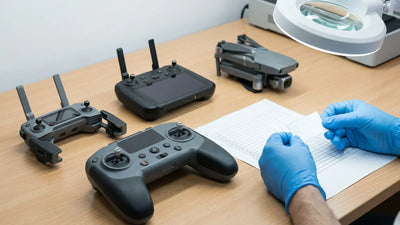
Lito 1 Repair Guide Common Failures Diagnosis  Chi - tools and equipment workspace setup

Lito 1 intelligent flight batteries integrate a Battery Management System (BMS) board that controls charging, monitors cell voltages, and communicates with the drone. When a battery refuses to charge or shows rapid discharge, many owners assume the Li‑Po cells are dead. In reality, the BMS electronics often lock up or fail while the cells remain healthy.

Symptoms of BMS Failure

  • Battery LED stays off, no response to charger
  • Charger indicates full immediately, but battery is empty
  • Battery percentage drops from 50% to 0% in seconds
  • Swollen battery pack accompanied by "Battery error" in app

Common Chip Faults

On the Lito 1 BMS PCB, two key components fail most: the fuel gauge IC (often a Texas Instruments BQ40Z50 or BQ28Z610) and the cell‑balancing MOSFETs. A dead fuel gauge either loses its firmware or cannot read the sense resistor, reporting incorrect state‑of‑charge. Protection MOSFETs that short or open will prevent current flow entirely. We also encounter corrupted EEPROM data that triggers a permanent lock, a common safety feature after a severe voltage drop.

Chip‑Level BMS Repair Procedure

We first test each individual cell for capacity and internal resistance using a professional cell analyzer to rule out cell degradation. If cells are good, we focus on the BMS board: reflash the fuel gauge IC with factory firmware via the SMBus interface, replace shorted protection FETs (DFN‑5x6 package), or swap the entire BMS chip if it's electrically dead. A recalibration of the coulomb counter completes the job. Cost for BMS chip‑level repair runs $42–56 whereas a new genuine Lito 1 battery costs $360–580. Recovering a battery with 90% cell health through BMS repair is a smarter investment.

How Much Does Lito 1 Crash Damage Repair Cost at the Component Level?

Crashes do more than break arms; they can sever internal PCB traces, crack solder joints, and destroy connectors on the power distribution and flight controller boards. A drone that appears visually intact after a crash may still exhibit intermittent failures caused by hidden board damage.

Common Crash‑Induced Failures

  • Fractured carbon‑fiber arms and landing gear
  • Broken camera gimbal mount and anti‑vibration dampers
  • Ripped‑off micro‑coaxial connectors on RF boards
  • Hairline cracks in the mainboard PCB that cause intermittent signal loss

Diagnosis and Bench Work

After a thorough visual inspection under a stereo microscope, we use a multimeter and a milliohm meter to check continuity across suspected board fractures. A broken trace under the solder mask is often repaired by scraping the mask, laying a fine enameled jumper wire (AWG 36), and sealing with UV‑curable mask. Connectors such as U.FL, JST‑GH, and FPC sockets are replaced with OEM‑matched parts using hot‑air rework.

For structural parts, we stock genuine Lito 1 frame arms, motor mounts, and gimbal brackets in Shenzhen, China, ensuring a perfect fit. The combination of component‑level board repair and mechanical part replacement brings the total crash repair cost to $190–450—still well below the $520–780 that a full mainboard + frame replacement would cost at an authorized service center.

How Can I Self-Diagnose My Lito 1 Before Sending It for Repair?

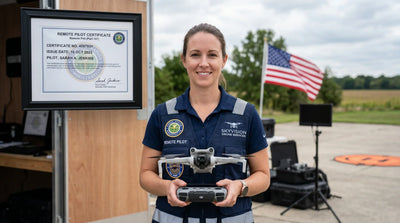
Lito 1 Repair Guide Common Failures Diagnosis  Chi - professional repair and inspection process

Before shipping your Lito 1 to our service center, you can perform several quick checks to narrow down the problem. These steps help you communicate clearly with our technicians and may even reveal a simple fix.

  1. Visual Inspection: Remove the battery and examine the drone under bright light. Look for cracked arms, loose ribbon cables, bent pins in the gimbal connector, and any charred components on the ESC board. A burnt smell near the motors strongly indicates an ESC issue.
  2. Error Code Log: Connect the Lito 1 to the official ground station app and retrieve the last recorded error codes. Common codes: "0x01 Gimbal overload," "0x0E IMU calibration error," "0x1B Compass redundancy lost," "0x23 Battery communication failure." Write down the exact codes before contacting us.
  3. Motor Resistance Test: With the battery removed, spin each motor gently by hand. Compare the resistance; a motor with a shorted ESC will feel "notchy" or very stiff. If all motors spin freely, the ESC MOSFETs and motor windings are likely intact.
  4. Battery Self‑Check: Insert the battery and press the power button twice to see the LED status. A single flashing LED usually signals a BMS lock. If the battery does not power on at all, measure its output terminals with a multimeter—0V with charged cells confirms a dead BMS.
  5. Flight Controller LED: Inside the battery compartment, a small RGB LED on the FC board indicates power and status. A steady red or blinking red may point to a sensor error; check the assistant software for details.

Document your findings with clear photos and include them when you submit a repair request. This preliminary diagnosis saves bench time and can speed up the repair quote.

Why Does Chip-Level Repair Save 50% Compared to Board Replacement?

When a drone component fails, official service centers almost always replace the entire motherboard, core module, or battery. This practice is designed for efficiency, not economy. Chip-level repair, on the other hand, operates like microsurgery: our MOHRSS Level 3 certified engineers locate the single failed chip, transistor, or solder joint and replace or repair it, leaving the rest of the functioning board intact.

Direct Cost Comparison

Repair Type Reboot Hub (Chip-Level) US / Western Market Rate Savings
Gimbal board (IMU + cable) $140–196 $380–520 Up to 63%
ESC MOSFET/driver repair $49–63 $200–320 Up to 80%
IMU sensor chip replacement $35 $160–220 Up to 82%
BMS board chip repair $42–56 $100–160 Up to 65%
Crash damage (board jumper + structural) $190–450 $520–780 Up to 63%

In addition to the monetary saving, chip-level repair is faster. Our typical turnaround is 2–5 business days versus 10–20 days for a board swap, which often involves international shipping and back‑ordered parts. We use genuine components from authorized distributors (Mouser, Digi‑Key, WPG) and provide a warranty for all repairs. The same MOHRSS Level 3 skills are applied to other drones, such as in our DJI Mini 4 Pro repair guide, ensuring consistent quality across brands.

By choosing component-level repair at Reboot Hub's professional DJI repair service in Shenzhen, China, you invest in precision, longevity, and a lower‑carbon‑footprint solution—keeping your Lito 1 airborne without the waste of replacing entire functional assemblies.

Ready to fix your Lito 1? Contact our chip-level repair center in Shenzhen, China for a free diagnosis and genuine parts service. Click here to start.

Frequently Asked Questions

What are the most common chip-level failures on the DJI Lito 1 mainboard?

The voltage regulator for the camera module and the ESC MOSFETs that control the rear-left motor are the most frequent points of failure. We also see cracked solder joints under the IMU chip after hard landings, leading to persistent calibration errors that can only be fixed with reballing or replacement. Chip-level repair for these mainboard faults runs $105–126 and takes 2–5 business days.

How can I confirm a gimbal overload error is a ribbon cable issue and not a fried motor driver?

First, inspect the ribbon cable for micro-tears near the roll axis fold under a magnifying glass while slowly tilting the gimbal by hand. If the cable looks intact, measure resistance across the pitch motor pads on the gimbal board—a short typically points to a bad driver IC, whereas an open circuit indicates a broken wire. Detailed resistance value charts on Reboot Hub can help you compare your readings with known-good boards.

Why does my Lito 1 battery refuse to charge even though the LED indicators still light up?

Most often the BMS protection board has blown a tiny surface-mount fuse or entered a permanent lockout due to a deeply discharged cell. It is repairable at the chip level for $42–56: a technician can reset the BQ40Z50 fuel gauge IC and replace the fuse within 2–4 business days, provided the cells still hold above 2.5 V individually.

What is the realistic cost of chip-level repair for a Lito 1 ESC failure versus a full board swap?

Replacing a single blown dual-N-channel MOSFET on the ESC typically costs $49–63 at our Shenzhen, China lab, including board testing. A full ESC board replacement from an authorized service center runs $200–320. For current price comparisons, the Reboot Hub DJI Repair Cost Database 2026 lists actual invoices across repair types.

Is a freshwater-damaged Lito 1 ever worth repairing at the component level?

Yes, if the drone was powered off immediately and you performed an ethanol bath within 24 hours, the mainboard and ESCs often recover after ultrasonic cleaning and selective resistor replacement. Corrosion under the HMCU or RF shield usually makes the board uneconomical—your technician should scope the I2C lines first to confirm the flight controller still talks to the sensors.

How long does Lito 1 chip-level repair take, and is there a warranty?

Standard turnaround is 2–5 business days from the time we receive your drone, with most gimbal, ESC, and IMU repairs completed within 48 hours. Every repair includes a 6-month warranty covering parts and labor. We recommend our expedited service if your Lito 1 is grounded for an active project—priority repairs can often be completed within 2 business days.

How do I get a repair quote and ship my Lito 1 to Reboot Hub?

Submit your Lito 1 details, error codes, and photos through our online repair request form. We provide a free diagnostic quote within 24 hours. Shipping from most countries to our Shenzhen, China facility takes 3–7 days via DHL or FedEx. We recommend including your battery and charger so our technicians can perform a full system test after repair.

Reboot Hub · Expert Repair

Ready for a Professional Diagnosis?

Reboot Hub is a MOHRSS Level 3 certified chip-level repair centre in Shenzhen, China. We repair what other shops replace — at a fraction of the cost.

Prev post
Next post

Leave a comment

Please note, comments need to be approved before they are published.

Thanks for subscribing!

This email has been registered!

Shop the look

Choose options

Edit option
Back In Stock Notification
this is just a warning
Login
Shopping cart
0 items
0%