Support & Learning / Module 8 branch
Symptoms, Evidence and Diagnosis
Before this lesson: Drone Repair Complete Guide
What you will understand
- Know what to record, when to stop and when service begins.
- Separate observable evidence from assumptions before choosing an action.
- Continue through the main lesson path or enter a focused topic branch when needed.
Exact-model, mode-aware repair decision
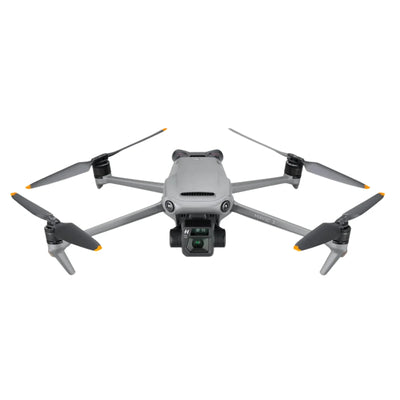
DJI Avata 360 repair starts by identifying the exact current aircraft and the operating mode in which the concern appears. Its dual-sensor imaging system, 360° mode, single-lens mode, virtual gimbal, integrated guard, control method and mode-dependent sensing behavior create a different evidence path from earlier Avata aircraft. The customer needs a written diagnosis that explains the observed symptom, safe stop boundary, proposed scope, unknowns and post-repair acceptance before approving work.
Quick answer
Separate camera mode, sensing mode and physical damage before choosing a repair
Preserve the complete kit and incident history, record whether the concern appears in 360° mode, single-lens mode or both, inspect only safe external surfaces, and stop if the aircraft, battery, guard, camera or propulsion system shows physical risk. Ask for a written diagnosis and customer-approved scope rather than ordering a part from one warning. A reliable release must confirm the represented camera modes, virtual gimbal, link, power, propulsion and suitable controlled-flight behavior.
DJI Avata 360 · series repair estimates by path
Each USD figure is a historical series-level estimate for the listed repair path, not a quote for this exact aircraft. Diagnosis determines the parts, labor, calibration, and testing needed.
| Repair path | Estimated USD range | When to consider it |
|---|---|---|
| Gimbal upper / lower bracket | $40 | Impact or alignment damage is limited to the gimbal support structure. |
| Signal cable | $29 | The camera or control signal path is interrupted or impact-damaged. |
| Lens frame and motor | $35 | Lens-frame impact, motor load, or stabilization-frame damage is confirmed. |
| Lens rear cover | $17 | Rear-cover or housing damage is limited to the lens assembly area. |
| Lens cover plate | $23 | The protective lens-area plate is cracked or impact-damaged. |
| Lens module | $57 | The optical module is damaged but a complete camera assembly is not required. |
| Complete camera assembly | $92 | The camera stack is damaged as an assembly. |
| Downward vision sensor | $46 | Ground sensing, low-altitude positioning, or downward-vision faults are confirmed. |
| ESC module / board | $81 | Propulsion warnings, motor-control faults, water exposure, or ESC-stage damage. |
| Motor (per unit) | $23 | One motor is confirmed damaged and adjacent systems remain serviceable. |
| Main board | $184 | Main-board fault isolation or replacement planning is required. |
What evidence should exist before an Avata 360 repair decision?
Why is DJI Avata 360 repair a separate diagnostic path?
DJI Avata 360 is not simply an older FPV aircraft with a different camera. Its dual-sensor imaging system supports a 360° mode and a single-lens mode, while the virtual gimbal and available control behavior change how an image or stabilization complaint should be described. The same customer phrase, such as unstable video, can refer to capture, stitching, view selection, virtual reframing, recording, link preview or physical camera condition. Model identity and operating mode therefore belong at the top of the intake record rather than being added after a generic diagnosis.
Start with the exact aircraft, compatible control equipment, battery, software context and ordinary sequence that produced the concern. Record what the customer expected and what actually happened without forcing the symptom to repeat. A good service path distinguishes observed evidence from the current official feature boundary and from functions that were not tested. This prevents the repair page from promising that every camera, sensing or control behavior is identical across modes, and it gives both a beginner and a professional operator a clear basis for the next decision.
What should be recorded at Avata 360 repair intake?
Photograph the powered-off aircraft from several useful angles, including the dual-sensor camera surfaces, integrated guard, motors, propellers, battery bay and visible sensing areas. Record the represented goggles or controller, battery identity, storage media, incident history, moisture possibility, previous service and the complete warning or behavior. Preserve original media when available because a saved capture can help distinguish a recorded-image issue from a preview-only concern. Do not expose private account or serial information in a public page; keep it in the customer-specific service record.
Write the symptom as a sequence. Note whether it begins at startup, after mode selection, during recording, after an ordinary impact or only in a particular control context. Include what remains normal. This matters because a broad phrase such as camera failure can hide several separate observations. Reboot Hub's role is to remove predictable customer worries before commitment: identify the exact kit, show what evidence exists, disclose what remains unknown and explain which decision requires professional diagnosis. The record should make the customer feel represented, not processed through a generic parts list.

When should an Avata 360 remain powered off?
Keep the aircraft grounded if the battery is swollen, deformed, wet, unusually hot or cannot latch securely; if the guard or body is distorted; if a propeller or motor cannot move normally while powered off; if a camera surface or support appears displaced; or if there is unusual odor, heat or contamination. Do not repeatedly restart an aircraft to see whether a warning disappears. A successful startup is not evidence that the complete system is ready for flight, especially after impact, moisture or a battery-retention concern.
Safe owner evidence is external and non-destructive. It can include photographs, the full warning, original media, ordinary controller observations and a written event timeline. It does not include opening the aircraft, forcing camera movement, running motors against resistance, repeatedly charging a damaged battery or conducting a flight to reproduce unstable behavior. If a powered check is not clearly safe, preserve the existing state for qualified intake. The stop decision protects people and equipment while keeping the most useful evidence available for a defensible written diagnosis.
How should 360° mode and single-lens mode symptoms be separated?
Record whether the concern appears in 360° mode, single-lens mode or both, and identify what the user sees in saved media versus the live preview. In 360° mode, the relevant evidence may include both sensor views, stitch continuity, capture completion, stored media and the later viewing or reframing path. In single-lens mode, the concern may relate to the selected forward view, framing, recording or supported control behavior. A result in one mode should not automatically be applied to the other without evidence.
Use neutral descriptions rather than naming a failed part. Examples include one side of the captured view is unavailable, a seam appears only in saved media, the preview is interrupted while the file remains intact, or the concern follows one represented control method. The diagnosis should explain which mode and output were assessed, which alternative causes were considered and what could not be reproduced. This mode-aware boundary is essential for customer trust because it avoids replacing a specific observation with a vague claim that the whole camera system was repaired.
What does dual-sensor camera evidence prove?
External inspection can document cleanliness, obvious damage, obstruction, alignment concerns and whether the two visible sensor surfaces appear intact. Original captures can document missing image regions, artifacts, exposure differences, stitching behavior or storage failure under the recorded conditions. Those observations help define the affected path, but they do not prove an internal cause. Surface cleaning should be gentle and limited to current product guidance. Do not press on camera assemblies or assume that a visible mark explains every image symptom.
A written diagnosis should connect the dual-sensor evidence to a proposed action and state the remaining uncertainty. If physical damage is confirmed, the document should describe the supported service scope and any calibration or acceptance need. If no damage is visible, software state, storage, viewing path, link preview and the represented mode may still require evaluation. The customer should see why the recommendation fits this exact unit. A generic camera replacement statement without mode, output and acceptance boundaries is not enough for a system built around coordinated imaging paths.

How should a virtual-gimbal complaint be described?
The virtual gimbal is an image-processing and viewing behavior, so describe the observed result instead of treating it as a conventional moving-gimbal diagnosis. Record the selected mode, control method, saved footage, preview behavior, horizon or framing concern and whether the symptom is repeatable in ordinary safe use. Preserve original files where possible. Do not create an artificial flight challenge or aggressive motion sequence to demonstrate the complaint, and do not assume a supported settings reset will correct damage or every processing concern.
The service record should separate capture integrity, stabilization or reframing behavior, preview and playback. It should state whether the concern follows the aircraft, represented control context, media or viewing path. Post-repair acceptance must repeat the relevant supported workflow and confirm that the original symptom is bounded under the stated conditions. This is stronger than saying stabilization passed because it tells the owner what was actually observed and which use path was represented. Unknown modes or outputs should remain visible rather than being silently converted into a broad promise.
Why is Avata 360 obstacle sensing mode-dependent?
Omnidirectional obstacle sensing must be described with its operating boundary. Current product behavior differs by mode: the wider sensing presentation available in 360° mode should not be assumed to apply identically in single-lens mode, where the relevant sensing boundary is different. A public guide should therefore avoid a universal statement that the aircraft sees every direction in every configuration. Record the mode, control method, environment, warning and which exterior surfaces are clean and unobstructed before drawing any conclusion.
Dark, reflective, transparent or low-texture environments can affect visual systems, but an environmental limitation should not be used to dismiss a persistent warning after impact or moisture. Compare observations only in a suitable, controlled and legal setting, beginning on the ground. Never fly toward an obstacle to test sensing. If the concern persists under appropriate conditions, qualified diagnosis and supported service testing are the next steps. Post-repair acceptance should state the mode and conditions represented so the customer understands what the result does and does not establish.
How should the integrated guard, propellers and motors be assessed?
The integrated guard is part of the aircraft's structure and airflow environment, not merely a cosmetic ring. Photograph cracks, deformation, abrasion, foreign material and changes in spacing around each motor and propeller. With the aircraft powered off and battery removed when appropriate, observe whether propellers are complete and whether any motor shows obvious obstruction or abnormal resistance without forcing it. A guard that looks minor can still matter if it changes clearance, alignment or structural confidence after an impact.
Do not trim, heat, bend or glue a distorted guard as a public repair shortcut, and do not run motors to grind through resistance. The diagnosis should connect any structural finding to propulsion evidence and explain whether the proposed scope includes related parts, calibration or full-system acceptance. After supported service, inspect the complete guard and propulsion path before a controlled flight. The owner needs confidence that the repaired area works as part of the represented aircraft, not a photograph showing only that one visible mark has disappeared.
How should goggles, controller and command-link evidence be handled?
Identify the exact represented goggles, controller or motion-control method and record power, supported linking, control response, preview, warnings and whether the concern follows one component or the aircraft. Keep screens free of private account details in shared evidence. A preview interruption does not by itself prove a camera failure, and an aircraft that records correctly does not prove the represented command and viewing path is stable. Use a controlled ground observation before considering any operational test.
The written diagnosis should say which control path was included and what changed during comparison. Avoid a distance flight to prove link quality, especially when command or preview is unstable. After repair, accept supported linking, controls, preview, recording, mode selection and original warning state on the represented kit before a controlled low-risk flight. If another controller or goggles set was used for service testing, disclose it. Transparency about the represented equipment removes a common customer worry: receiving an aircraft that passed on a different setup but still fails on the supplied kit.
What should be checked about the Avata 360 battery and power path?
Inspect the battery case, contacts, retention surfaces and aircraft bay externally. Stop ordinary use for swelling, deformation, leakage, moisture, unusual odor, abnormal heat, damaged contacts or uncertain retention. Record indicator behavior and the full warning without repeatedly charging or restarting a damaged battery. A no-power symptom can involve the battery, connection, aircraft or more than one path; it does not justify a component conclusion from a keyword alone.
A safe controlled comparison may help only when the aircraft and batteries are physically suitable and the represented equipment is known compatible. Record whether the concern follows one battery and what remains normal. The quote should say whether the battery is included, excluded or requires separate handling, and the acceptance record should cover stable power, charging context, retention and the original warning. The customer needs to understand the boundary before approval, particularly when shipping restrictions or safe battery handling affect the service route.
What determines Avata 360 repair cost without a fabricated price table?
Cost drivers include the exact observed symptom, incident and moisture history, affected and connected assemblies, previous opening, exact replacement availability and condition, calibration, represented control equipment, battery handling, post-repair acceptance, shipping and customer-approved scope. A camera-mode concern without physical damage can require a different evidence path from an impact that affects the guard, propulsion and imaging system together. One public figure would hide those differences and encourage customers to compare unlike work.
Ask for a written diagnosis and quote that separates confirmed findings, proposed parts, service work, calibration, testing, shipping, exclusions, unknowns and the point at which approval is required again. It should explain why the recommendation fits the exact aircraft and what evidence could change the scope. Reboot Hub's value is not a reassuring number before inspection. It is standing on the customer's side, removing predictable worries with evidence and making every unresolved boundary visible before money, parts or downtime are committed.
When should you repair or replace DJI Avata 360?
Repair can be sensible when the concern is bounded, structure and connected systems remain supportable, exact parts and required procedures are available, and the complete scope fits the owner's intended use and downtime needs. Replacement may be stronger when impact or moisture creates broad uncertainty, several safety-relevant systems are affected, exact work cannot be validated, previous service reduces confidence or the supported scope no longer fits the mission. A familiar setup or sunk cost should not hide unresolved risk.
Compare the complete documented paths. Include the represented goggles and controller, batteries that remain useful, compatibility, acceptance evidence, delivery time and the condition transparency of any replacement. Reboot Hub can show an exact available unit and written supplied-item scope when replacement is stronger, or provide a customer-approved service path when repair is defensible. The recommendation should be traceable to evidence rather than sales pressure. The goal is to remove the customer's reasonable concerns instead of moving them into a different transaction.
What belongs in Avata 360 post-repair acceptance?
Begin with powered-off inspection, exact-unit identity and confirmation of the approved work. Ground checks should address battery retention and power, warnings, represented control link, both camera paths, recording and storage, mode selection, virtual-gimbal behavior, exterior sensing indication, motors and propellers. The acceptance plan should name the represented 360° mode and single-lens mode rather than stating that the camera passed. Any limitation or untested function must remain in writing.
Only after the ground evidence is satisfactory should a controlled flight be considered in a suitable legal low-risk environment. Define stop conditions before takeoff and keep the first exposure limited to the repaired concern and essential system behavior. Record the result, represented controller, battery and environment. Post-repair acceptance does not certify every site, control method or future mission. It shows that the exact system met a documented boundary under stated conditions, which is the evidence a customer needs for a responsible return-to-service decision.
Keep exploring
Further reading
From The Reboot Hub Chronicle
From Drone Guides