Skip to content

Available 24/7: (852) 5537 6652

Support & Learning

DJI Compass Calibration Guide: How to Fix Errors, Avoid Fly-Aways, and Keep Every Flight Safe

by LauThomas 29 May 2026 0 comments

Every DJI drone relies on a small but critical component most pilots rarely think about: the compass. A miscalibrated compass is one of the leading causes of drone fly-aways, erratic flight behaviour, and those frustrating "Compass Error" notifications that ground your aircraft before you even take off. Whether you fly a DJI Mini 4 Pro, an Air 3, a Mavic 3, or a Matrice 350 RTK, understanding DJI compass calibration — how to perform it correctly and when it is actually necessary — is a fundamental skill that separates safe, confident pilots from those who leave every flight to chance.

At Reboot Hub, our Shenzhen, China repair centres see compass-related issues on a daily basis. Reboot Hub technicians have diagnosed and resolved over 3,000 DJI drone compass and magnetometer cases since 2022, holding MOHRSS Level 3 Advanced Technician certification recognised by China's Ministry of Human Resources and Social Security. From drones that drifted into buildings because the pilot skipped a calibration, to units with damaged compass modules after a hard landing, we have diagnosed and resolved thousands of these cases at the chip level. In this guide, we will walk you through exactly what the compass does, how to calibrate it correctly on every modern DJI aircraft, how to read and resolve compass error codes, the most common sources of magnetic interference, and the very real consequences of ignoring calibration warnings.

What Does the DJI Compass Actually Do?

Quick Answer: The DJI compass (magnetometer) measures the Earth's magnetic field to determine your drone's heading. If you are seeing a compass error, calibrate outdoors in a clean, interference-free location — the process takes under 2 minutes. If the error persists after a clean calibration, the compass module may need professional diagnosis or replacement, which takes 2–4 business days at Reboot Hub.
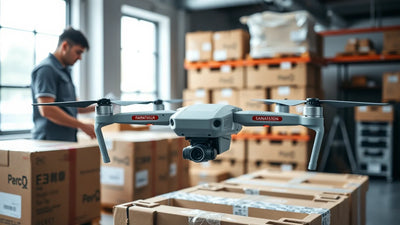
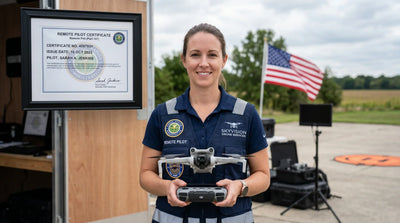
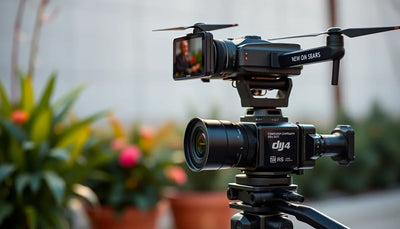
DJI Compass Calibration Guide How to Fix Errors Av - professional image

Before diving into calibration procedures, it helps to understand what the compass is and why it matters so much. Inside every DJI drone is a magnetometer — a sensor that measures the Earth's magnetic field to determine the aircraft's heading. This heading information is fused with data from the IMU (Inertial Measurement Unit), GPS satellites, and barometric sensors to give the flight controller a complete picture of where the drone is, which direction it is pointing, and how it is moving through three-dimensional space.

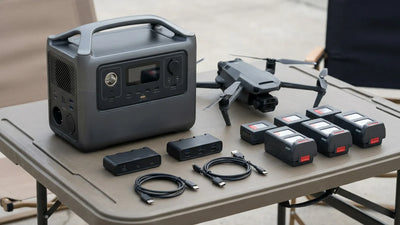
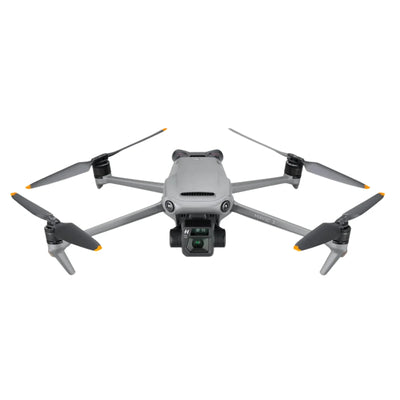
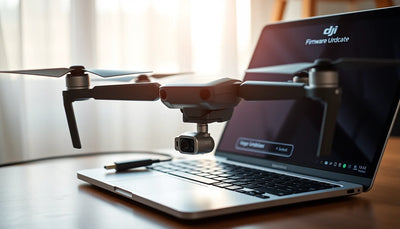
DJI Compass Calibration Guide How to Fix Errors Av - technical diagnostic close-up view

Without an accurate compass reading, the flight controller cannot reliably:

  • Maintain a stable hover in place
  • Execute Return-to-Home (RTH) along a safe path
  • Follow GPS waypoint missions accurately
  • Control yaw rotation smoothly
  • Apply the correct amount of motor power to each rotor during directional flight

In short, the compass is the drone's internal sense of direction. When it gives the flight controller incorrect heading data, the aircraft may turn the wrong way, drift sideways, or — in the worst case — fly off in an unintended direction entirely. That is what pilots mean when they talk about a fly-away.

How the Compass Differs from the IMU

Many pilots confuse the compass with the IMU, but they serve different roles. The IMU contains accelerometers and gyroscopes that measure linear acceleration and rotational velocity. It tells the drone how fast it is tilting, spinning, or accelerating. The compass, on the other hand, provides an absolute heading reference — it tells the drone which way is north. Think of it this way: the IMU is like your inner ear (balance and motion), while the compass is like a traditional magnetic compass you might carry while hiking. Both are essential, but they are not interchangeable. For a deeper dive into IMU behaviour and calibration, see our DJI IMU Calibration Guide.

When Should You Calibrate Your DJI Compass?

DJI's official guidance has evolved over the years. Older Phantom-era manuals recommended calibrating before every flight. Modern drones are far more stable, and DJI now advises that you calibrate only when prompted by the app or when conditions demand it. Over-calibrating in a magnetically noisy environment can actually make things worse by storing incorrect reference values.

You MUST Calibrate When

  1. The DJI Fly or DJI GO 4 app displays a compass calibration prompt. This is non-negotiable. The app has detected that stored calibration data is outside acceptable parameters.
  2. You are flying in a significantly different geographic region from where the last calibration was performed. The Earth's magnetic field varies by location, and large changes in magnetic declination or field intensity can invalidate the previous calibration.
  3. The drone has been exposed to a strong magnetic source since the last flight — for example, stored near speakers, motors, metal structures, or power lines.
  4. After a firmware update. Some DJI firmware updates reset or require recalibration of sensor parameters.
  5. After a crash or hard landing. Physical impact can shift the compass module slightly relative to the airframe, invalidating stored offsets.
  6. You see the "Compass Error" or "Compass Abnormal" warning during pre-flight checks.

You Do NOT Need to Calibrate When

  • You are flying in the same general area as your last session and the app shows no warning.
  • You have simply changed batteries — the compass is not in the battery.
  • You are at a new location that happens to be in the same city or region (unless the app prompts you).
  • You want to "be safe" without any specific reason — calibrating near metallic structures or interference sources out of habit can introduce errors.

Where Should You Calibrate Your DJI Compass for Accurate Results?

Location selection is the single most important factor in a successful compass calibration. A calibration performed in the wrong location will store incorrect magnetic offset values into the compass module, and the drone will carry those errors into every subsequent flight until the next valid calibration overwrites them.

Ideal Calibration Environment

  • Outdoors, away from buildings, vehicles, and infrastructure.
  • An open field or park with no underground metal pipes, rebar, or utility lines directly beneath you.
  • At least 5 to 10 metres away from any cars, metal fences, reinforced concrete walls, or steel structures.
  • Remove any metallic jewellery, watches, or belt buckles before calibrating — your body can introduce interference if you hold the drone near your torso during the rotation steps.
  • If you are carrying your phone, place it on the ground a few steps away during the procedure.

Common Interference Sources to Avoid

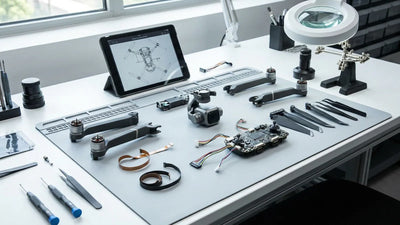
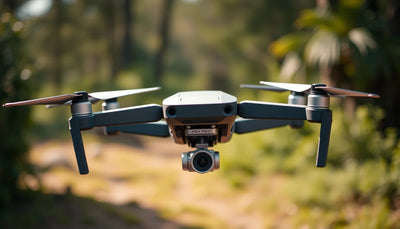
DJI Compass Calibration Guide How to Fix Errors Av - tools and equipment workspace setup

The following table lists the most frequent sources of magnetic interference we encounter during repair diagnostics at Reboot Hub. Understanding these will help you choose both your calibration location and your take-off point more wisely.

Interference Source Strength Typical Scenario
Reinforced concrete buildings High Calibrating next to a multi-storey car park or building foundation
Parked vehicles (cars, trucks) Medium–High Taking off from a rooftop car park or near an SUV
Power lines and transformers High Flying or calibrating under high-voltage lines
Metal fences and railings Medium Launching from a rooftop with metal guardrails
Smartphones and tablets Low–Medium Holding the drone near your phone during calibration
Bluetooth speakers, headphones Low–Medium Wearing earbuds with magnets in the case during calibration
Underground rebar / metal pipes Medium–High Calibrating on a bridge or over metal grating
Geological deposits (magnetite) Variable Flying in areas with naturally high magnetic anomalies

As a rule of thumb: if you would not use a traditional magnetic compass confidently at that spot, do not calibrate your drone's compass there either.

How Do You Calibrate a DJI Drone Compass? (Step-by-Step)

The calibration process is consistent across most modern DJI models — Mini series, Air series, Mavic series, and the FPV lineup. Older models like the Phantom series or Inspire 1 have a slightly different two-step process (horizontal and vertical rotation), but the principles remain the same. The steps below describe the current DJI Fly app procedure used by the Mini 4 Pro, Mini 3, Air 3, Mavic 3 series, and Avata 2.

Preparation

  1. Choose a suitable outdoor location as described in the section above.
  2. Power on your drone and remote controller. Wait for the DJI Fly app to connect fully.
  3. Remove all metallic accessories from your person — watch, rings, phone.
  4. Hold the drone away from your body, roughly at arm's length, with the battery facing you.

Step 1 — Horizontal Rotation

  1. In the DJI Fly app, navigate to Settings → Safety → Compass and tap "Calibrate". If the app has already prompted you, the calibration screen will appear automatically.
  2. The on-screen prompt will ask you to hold the drone level and rotate 360 degrees clockwise.
  3. Keep the aircraft as level as possible while slowly spinning in place. Maintain a steady, even pace — approximately 5 to 8 seconds per full rotation.
  4. The app will indicate success with a green checkmark. If it fails, it will prompt you to retry. Repeat up to three times before investigating environmental interference.

Step 2 — Vertical Rotation

  1. After the horizontal step succeeds, the app will ask you to hold the drone nose-down (vertically) and rotate 360 degrees clockwise again.
  2. Point the camera straight at the ground and spin in place at the same steady pace.
  3. Wait for the second green checkmark. Both steps must succeed for the calibration to be stored.

Step 3 — Verify

  1. Once both steps pass, the app will return you to the main flight screen.
  2. Check that the heading indicator on the radar/map matches the actual direction the drone is facing.
  3. If the compass icon in the safety menu shows green/normal, you are cleared for take-off.

For older DJI models that use the DJI GO 4 app — such as the Phantom 4 Pro, Mavic Pro, or Inspire 2 — the process is nearly identical, but the menu path is Remote Controller Settings → Advanced Settings → Sensors → Compass → Calibrate. If your specific model uses a different interface, consult our support and learning centre for model-specific walkthroughs.

What Do DJI Compass Error Codes and Warnings Mean?

DJI's software communicates compass health through a series of warnings and error codes. Understanding what each one means can save you from a dangerous flight — or help you avoid unnecessary panic when the issue is minor.

Common Compass Warnings in the DJI Fly App

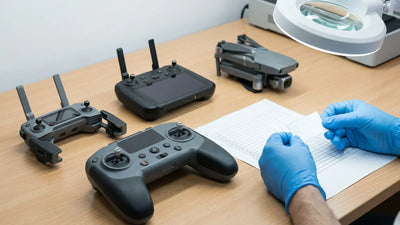
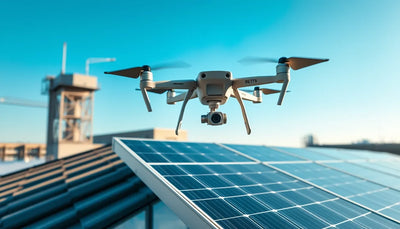
DJI Compass Calibration Guide How to Fix Errors Av - professional repair and inspection process
  • "Compass Interference. Move to a different location." — The magnetometer is detecting an abnormally strong local magnetic field. Move at least 10 metres away from any potential source and check the compass interference value in the sensor settings. Ideally, the value should be below 300 (on a 0–1000 scale).
  • "Compass Error. Restart the aircraft. If the problem persists, contact DJI Support." — The compass module may be physically damaged, disconnected, or experiencing a hardware fault. Restart the drone. If the error recurs, the compass module likely needs replacement. Our professional DJI repair service can diagnose and replace faulty compass modules quickly.
  • "Compass Abnormal. Calibration Required." — The stored calibration offsets are outside acceptable limits. Calibrate in a clean environment following the steps above.
  • "Aircraft heading mismatch." — The compass heading does not align with GPS-derived heading. This often indicates a partial calibration or mild interference. Recalibrate and verify.
  • "Multiple compass redundancy failure." — High-end DJI drones (Mavic 3, Matrice series) have dual compass modules for redundancy. If both disagree beyond a tolerance threshold, this error appears. Requires professional diagnosis.

How to Check Compass Interference Values

In the DJI Fly app, go to Settings → Safety → Compass. You will see a Compass Interference value displayed as a number between 0 and 1000, along with a colour-coded indicator:

  • Green (0–300): Low interference. Safe to fly.
  • Yellow (300–600): Moderate interference. Proceed with caution. Consider moving to a cleaner location.
  • Red (600–1000): High interference. Do not take off. The compass is unreliable at this location.

If the interference value remains high even in an open field, the compass module itself may be magnetised or damaged. In that case, a professional degaussing procedure or module replacement may be necessary. For a full breakdown of sensor replacement pricing, see the Reboot Hub DJI Repair Cost Database 2026.

What Happens If You Skip Compass Calibration?

This is where the stakes become real. Skipping a required compass calibration — or performing one in a magnetically contaminated environment — can lead to a cascade of failures during flight. Here is what we have seen in our repair centres, in order of increasing severity:

Mild Symptoms

  • Drifting during hover: The drone slowly moves sideways or rotates without input because the flight controller is receiving conflicting heading data.
  • Inaccurate Return-to-Home: The RTH path curves or overshoots because the drone does not accurately know its heading relative to the home point.
  • Yaw instability: The nose of the aircraft twitches or slowly rotates during hover.

Moderate Symptoms

  • Erratic stick response: Pushing the right stick forward causes the drone to move at an angle because the flight controller thinks the nose is pointing a different direction than it actually is.
  • "Toilet bowl" effect: The drone flies in small, accelerating circles during hover — a classic sign of severe compass error. The flight controller keeps correcting for a heading that does not exist, creating a feedback loop.
  • Forced ATTI mode: If the compass data becomes too unreliable, the flight controller may drop GPS positioning and switch to ATTI (attitude) mode, where the drone drifts with the wind and requires constant manual control.

Severe Consequences

  • Fly-away: The drone accelerates in an unintended direction and does not respond to stick inputs because the flight controller's internal model of the aircraft's position and heading is fundamentally wrong. Recovery may be impossible if the drone exceeds radio range.
  • Crash into obstacles: With incorrect heading data, obstacle avoidance systems may not function as expected, and the pilot's visual orientation commands may push the drone toward hazards.
  • Complete loss of the aircraft: In the worst cases we have handled, pilots never recovered their drones. Without valid telemetry or a functioning RTH, the aircraft may descend into water, dense vegetation, or urban areas.

The bottom line is simple: a 30-second calibration can prevent the total loss of a drone worth hundreds or thousands of dollars. There is no scenario where skipping a required calibration is worth the risk.

How Can You Protect Your DJI Compass for Long-Term Accuracy?

Beyond calibration technique, a few habits can keep your compass accurate and extend the life of the module:

  1. Store your drone away from magnets and electronics. Do not leave it on top of speakers, near a laptop's magnetic clasps, or next to power adapters. Use the original carrying case or a dedicated drone bag.
  2. Check compass interference values at your launch site before every first flight of the day, even if no warning appears. A quick glance takes two seconds and can reveal a problem before you are airborne.
  3. Avoid launching from metal surfaces. Rooftops with metal sheeting, bridges, the beds of pickup trucks, and boat decks are all notorious for compass errors. Move to a clear patch of ground if possible.
  4. Perform a test hover after any calibration. Lift off to 3–5 metres and observe the drone for 30 seconds. Does it drift? Does the heading indicator stay aligned with the actual nose direction? Catch problems early while you are still within safe recovery range.
  5. Keep firmware updated. DJI occasionally improves compass algorithms and error detection logic. Visit our firmware update guide to make sure your aircraft is running the latest version.
  6. After a crash, always recalibrate before flying again. Even if the drone looks fine, internal components may have shifted. A quick recalibration validates that the compass module is still properly aligned with the airframe.

Frequently Asked Questions

DJI Compass Calibration Guide How to Fix Errors Av - results and comparison demonstration

How often should I calibrate my DJI drone compass?

Only when the DJI Fly or DJI GO 4 app prompts you, or when you have moved to a significantly different geographic region, experienced a crash, or suspect magnetic interference exposure. Over-calibrating in noisy environments can introduce errors rather than fix them.

Can I calibrate my DJI compass indoors?

It is strongly discouraged. Indoor environments contain rebar, electrical wiring, metal furniture, and appliances that generate magnetic interference. Always calibrate outdoors in an open area free from metallic structures. If you are in a situation where outdoor calibration is impossible, the resulting calibration data will likely be inaccurate.

Why does my DJI app keep asking me to recalibrate the compass even after I just did it?

This usually means the calibration was performed in a location with significant magnetic interference. The stored offsets are immediately flagged as out of tolerance. Move to a genuinely clean environment — an open park, for example — and try again. If the problem persists after calibrating in a clean location, the compass module may be damaged and require replacement. Reboot Hub can diagnose and replace a faulty compass module in 2–4 business days.

What is the compass interference value, and what should it be?

The compass interference value is a 0–1000 scale reading of local magnetic disturbance. You can find it in the DJI Fly app under Settings → Safety → Compass. Ideally, the value should be below 300 (green). Values between 300 and 600 (yellow) indicate moderate risk, and values above 600 (red) mean you should not fly from that location. Check this reading every time you set up at a new launch site.

Is compass calibration the same as IMU calibration?

No. The compass and the IMU are separate sensor systems with separate calibration procedures. The compass (magnetometer) measures magnetic heading; the IMU measures acceleration and angular rate. Both are essential for stable flight, but calibrating one does not affect the other. If you are seeing IMU-specific errors such as "IMU data abnormal" or excessive gyro drift, you need an IMU calibration, not a compass calibration.

How much does it cost to replace a damaged DJI compass module?

At Reboot Hub's Shenzhen, China facility, sensor-level replacements including compass and IMU modules typically cost $50–80 depending on the model, with turnaround in 2–4 business days. The same repair at a US or Western authorized service centre typically runs $160–220. We use chip-level diagnosis to replace only the faulty sensor rather than the entire board, which keeps costs significantly lower. You can view full pricing in the Reboot Hub DJI Repair Cost Database 2026.

Can I ship my drone to Reboot Hub for compass diagnosis from outside China?

Yes. Reboot Hub accepts international shipments from pilots worldwide. After receiving your drone, our MOHRSS Level 3 certified technicians perform a full compass and magnetometer diagnostic — typically completed within 2–4 business days of arrival. We then provide a detailed report and repair quote before any work begins. Visit Reboot Hub's professional DJI repair service page to start the process.

Reboot Hub · Support

Need Professional Help?

If your drone needs repair after troubleshooting, Reboot Hub offers certified chip-level repair in Shenzhen, China — genuine OEM parts, 90-day warranty.

Prev post
Next post

Leave a comment

Please note, comments need to be approved before they are published.

Thanks for subscribing!

This email has been registered!

Shop the look

Choose options

Edit option
Back In Stock Notification
this is just a warning
Login
Shopping cart
0 items
0%