Skip to content

Available 24/7: (852) 5537 6652

Support & Learning

Crashed DJI Drone: Triage Guide — Repair vs Replace Decision Framework

by LauThomas 29 May 2026 0 comments

A crashed DJI drone doesn't have to mean a total loss. This triage guide walks you through the crashed DJI drone repair vs replace decision — from the first 60 seconds after impact to the final cost comparison. Reboot Hub technicians have diagnosed and repaired over 800+ crashed DJI drones since 2022, holding MOHRSS Level 3 Advanced Technician certification recognised by China's Ministry of Human Resources and Social Security. Below, you'll find the exact framework we use in our Shenzhen, China workshop to determine whether your aircraft is worth saving.

What Should You Do in the First 60 Seconds After a DJI Drone Crash?

Quick Answer: Most crashed DJI drones are economically repairable. Chip-level repair costs range from $70 (ESC MOSFET replacement) to $180 (mainboard), completed in 2–4 business days at Reboot Hub. Replace only if total repair cost exceeds 60% of a comparable used drone's price.
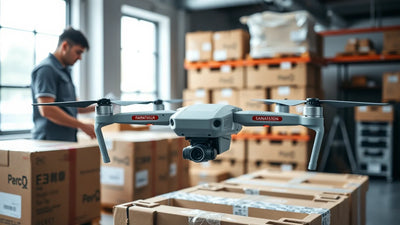
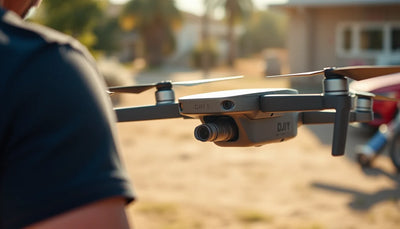
Crashed DJI Drone Triage Guide  Repair vs Replace - professional image

The moments right after a drone crash are critical. Panic leads to bad decisions—like powering it on to "see if it still works." That single action can turn a repairable short circuit into a motherboard meltdown. Follow this sequence exactly.

1. Power Off Immediately

Remove the battery within 5 seconds of coming to a stop. Even if the drone looks dead, residual voltage may still flow across cracked PCB traces or bent pins. If the battery is physically stuck due to frame deformation, do not force it—apply gentle rocking while looking for melted plastic around the latch. Forcing a wedged pack can puncture a lithium polymer cell. If the power button is unresponsive, use insulated tweezers to disconnect the battery's XT60 or DJI intelligent connector from the mainboard side if accessible.

2. Document the Scene

Before you move anything, photograph the drone from six angles: top, bottom, front, back, left side, right side. Include the crash site—terrain marks help us understand impact velocity. Then photograph inside the battery compartment, the gimbal mount area, and all four motor bell housings. This is the only chance to capture evidence of secondary damage like a capacitor that dislodged on impact but fell out later in transport.

3. Check for Battery Swelling and Electrolyte Odour

A damaged LiPo is a fire waiting to happen. Look for:

  • Physical swelling: A cell that has grown more than 3 mm beyond its original flat profile is internally compromised. Do not recharge it.
  • Sweet, solvent-like smell: This is electrolyte leakage. It can ignite on contact with air moisture. Place the battery outdoors on concrete immediately, away from flammable material.
  • Temperature: If any cell surface exceeds 60 °C (feels too hot to hold firmly for 10 seconds), treat it as a thermal runaway risk. In our Shenzhen, China lab, we quarantine such packs in a vented steel ammo can filled with dry sand.

If you see smoke or hear hissing, evacuate the room. A swollen DJI battery can reach 400 °C in under 20 seconds once thermal runaway begins. Do not attempt to "discharge" it yourself.

How Do You Assess Physical Damage After a DJI Drone Crash?

After the aircraft is safe, work through a structured checklist. This separates structural cosmetic damage from internal electronic failure—the difference between a $75 shell replacement and a $515 motherboard rebuild.

Arm and Frame Inspection

DJI arms are engineered to snap in a controlled manner, absorbing energy. Look for:

  • Arm fracture: A clean break at the root near the hinge or motor mount. If both top and bottom shells are cracked through the full thickness, the arm is structurally compromised. Replacing the arm and both shell halves is mandatory—$77–154 depending on model.
  • Hairline crack on the lower shell only: Often cosmetic, but check for stress whitening in the screw bosses. If a boss is cracked, the frame will vibrate and produce Error Code 30085 (motor overcurrent) because the motor's alignment shifts under load. Replace the shell half only—$38–64.
  • LED flex cable tear: DJI's Mavic series routes the arm LED ribbon through a tight channel. A torn ribbon gives no LED, but the motor may still work. However, the exposed copper can short against the carbon fibre frame if the insulation is damaged, causing intermittent ESC communications error 40021. Replace the flex cable before it causes deeper damage.

Gimbal and Camera Assessment

The gimbal assembly is the most fragile subsystem. Perform these tests with the drone powered on (battery installed but props off, on a level surface):

  • Initialisation behaviour: On boot, the gimbal does a dance—pitch, roll, yaw. If it shakes violently and stops with the camera tilted, you have a bent roll arm or cracked yaw motor bearing. Common error: Gimbal IMU calibration error (40011).
  • Camera shake test: Gently tap the camera body with a fingertip while live view is on. If the image jumps or rolls sideways, the vibration damping board and the ribbon cable behind the yaw motor are likely damaged. That ribbon alone costs $15–32, but if the damping board's gyroscope chip is cracked (micro-fractures), the entire gimbal mainboard needs chip-level repair or replacement.
  • No image transmission: If you get a black screen but OSD data (telemetry) is present, suspect the gimbal coaxial cable between the core board and the Anti-Vibration board. The micro-coax connector often unseats partially—reseating it is simple, but a torn internal conductor requires replacing the cable set: $26–45.
  • Ribbon cable integrity: The folded ribbon behind the gimbal is a known Achilles' heel. A single broken trace on the pitch control line causes the gimbal to droop immediately after startup. Under microscope, we often resolder these traces at chip level.

Motor and ESC Diagnosis

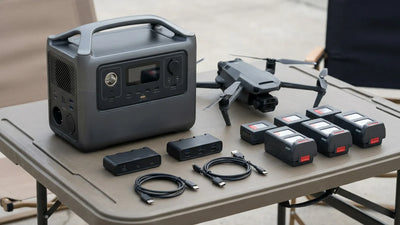
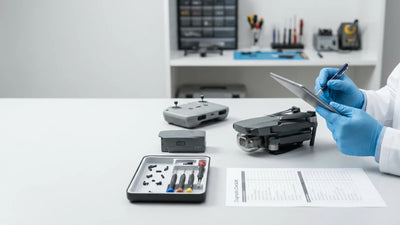
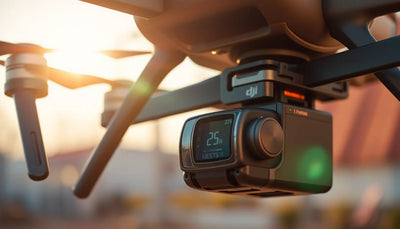
Crashed DJI Drone Triage Guide  Repair vs Replace - technical diagnostic close-up view

Each motor should spin freely with a uniform magnetic cogging feel. If one motor feels gritty or has a distinct "catch" point, the bell housing is likely deformed or a stator winding is dislodged. For the ESC, a burnt electronics smell near the arm root is definitive. The MOSFET drivers are tiny, exposed components:

  • Motor stutter on arming: The motor jitters but won't rotate smoothly. This is a classic dead MOSFET phase on the ESC. DJI's error code 30085 (Motor overload) or 30185 (ESC error) appears. In our lab, chip-level drone repair replaces the specific MOSFET IC on the ESC board instead of replacing the whole arm/ESC assembly.
  • Prop blade deformation: Even a tiny nick on the trailing edge sets up vibrations that the flight controller compensates for by increasing P-gain, which overheats the motor. Replace any prop whose blade tip has lost more than 1 mm of material. DJI's quick-release hub: check that the spring-loaded pins are not bent. A bent hub pin can cause a mid-flight prop separation.

How Much Does Crashed DJI Drone Repair Cost by Damage Type?

All prices are based on Reboot Hub's average invoices from our Shenzhen, China workshop in 2025. For a complete price comparison across all DJI models, see the Reboot Hub DJI Repair Cost Database 2026.

Damage Type Typical Repair Action Reboot Hub Price US / Western Market Rate
Arm + lower shell crack (structural) Replace arm, shell half, LED flex, re-route antenna $77–154 $130–350
Single motor failure (bell or bearing) Replace motor assembly, calibrate ESC $60–80 $130–180
ESC MOSFET burnout (single phase) Chip-level MOSFET replacement, thermal paste $70–90 $200–320
Gimbal mechanical (bent yaw arm, roll motor) Align/replace arm, re-calibrate, vibration board check $100–280 $380–520
Gimbal camera no image (ribbon/cable) Chip-level flex repair or ribbon replacement $50–80 $120–200
Motherboard short circuit (MCU/PMIC damaged) Chip-level rework: PMIC/BGA reball, trace repair $150–180 $280–380
Battery connector/fuel gauge failure Replace intelligent battery board or BMS reset $60–80 $100–160
Complete frame + upper shell + gimbal (severe crash) Full teardown, shell swap, gimbal rebuild, ESC test $450–830 $900–1,600

Note on DJI official service: DJI typically replaces entire modules. A gimbal/camera assembly swap for a Mavic 3 through authorized service is around $380–520. Our chip-level approach fixes the same assembly for $50–280 because we repair the damaged sub-component, not the whole unit.

How Does Chip-Level Repair Compare to Board Replacement for Crashed Drones?

When a drone's main board or ESC board is damaged, the default response from many service centres is a board swap. That's fast—30 minutes—but expensive: $420–580 per board. Board replacement also erases flight logs, calibration data (IMU, compass, vision system), and any custom parameters. You get a blank, unpaired board that requires full set-up from scratch. For enterprise fleets, that downtime costs more than the repair itself.

Chip-level repair, performed by technicians certified to MOHRSS Level 3 (China's national professional qualification for advanced electronic repair), goes down to the semiconductor level. Using microscope soldering stations, we identify and replace only the failed component—a burnt MOSFET, a shorted capacitor, a BGA chip with cracked solder balls. This preserves all original calibration data and flight logs because the paired IC pairings (like the IMU's temperature compensation table) remain intact.

Authorized Service (US/EU) Chip-Level Repair (Reboot Hub)
Cost (mainboard) $420–580 $150–180
Cost (ESC board) $200–320 $70–90
Flight logs & calibration Lost; board needs new calibration Preserved; original data intact
Turnaround Same day if board in stock 1–3 business days (microsoldering, testing)
Warranty Manufacturer warranty on new board 90-day lab warranty on repaired component
Long-term reliability Factory-fresh board As reliable as original if done to MOHRSS Level 3 standard; no latent damage left

Board replacement is unavoidable when the PCB itself is cracked through multiple layers beyond the first two inner planes, or when the main processor's BGA pads are ripped off the board. But in over 70% of crashes we see at our Shenzhen, China workshop, the damage is localised to one or two ICs. Chip-level repair is the economically rational choice. For more details on techniques, see chip-level drone repair, or explore Reboot Hub's professional DJI repair service for a hands-on assessment.

How Do You Decide Between Repairing or Replacing a Crashed DJI Drone?

Use this framework to decide whether to repair your crashed drone or replace it entirely. We've built it from hundreds of post-crash consultations at Reboot Hub.

1. Drone Age and Original Value

If the aircraft is less than 2 years old from the original purchase date, leaning toward repair almost always wins. A Mavic 3 Classic (current model, approx $1285 new) with a motherboard short and gimbal damage that totals $540 to fix still represents a 58% saving over buying the same drone new. For drones older than 4 years, check part availability first. Some DJI Phantom 4 Pro boards are now discontinued; we can still often repair them at chip level, but if three major components are gone, the total cost might approach a used replacement.

2. Repair Cost vs Used Market Replacement Ratio

As a rule: if the total repair cost is less than 60% of the price of a comparable used drone, repair it. For example:

  • Used DJI Air 2S with one battery: $540.
  • Crash damage requiring ESC repair and arm: $282. Ratio = 52%. Repair.
  • Same drone but with motherboard damage and gimbal camera destruction: $705. Ratio = 131%. Replace.

We maintain a current database of local second-hand drone prices in Shenzhen, China to give you real-time advice.

3. Sentimental and Data Value

Some drones have flown over your child's birth, a once-in-a-lifetime trip, or contain calibration settings that took weeks to perfect. Data recovery from a dead flight controller is possible at chip level—we can read the flash memory directly. That alone can tip the decision. Enterprise fleets with documented maintenance histories and paired airframes always choose repair, because the total cost of ownership (TCO) for a new airframe includes re-certification, pilot training, and software integration downtime. Replacing a crashed drone in a fleet costs 2–4x the sticker price in hidden expenses.

4. Break-Even Example with Real Numbers

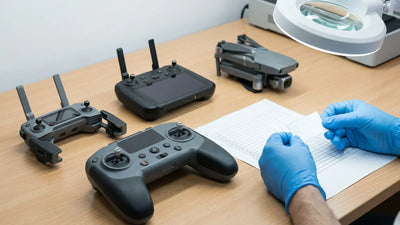
Crashed DJI Drone Triage Guide  Repair vs Replace - tools and equipment workspace setup

Scenario: DJI Mavic 3 Pro, 18 months old, crashed onto concrete.

  • Repair estimate: Replace top & bottom shell, one arm, gimbal roll motor, ESC MOSFET chip-level repair. Total $577.
  • Used Mavic 3 Pro in similar condition: $1,128.
  • New Mavic 3 Pro (drone only): $1,410.
  • Repair cost is 51% of used price, 41% of new price. Clear decision: repair.

Scenario: DJI Mini 2 SE, 3 years old, saltwater immersion and crash.

  • Repair estimate: Corrosion across mainboard, ESC, gimbal board, plus battery kill. Chip-level possible but labour-intensive: $487.
  • Used Mini 2 SE: $154. Ratio = 316%. Replace.

This matrix is the exact same logic our technicians apply before you spend a single dollar. For a comprehensive look at typical costs across all DJI models, refer to the Reboot Hub DJI Repair Cost Database 2026.

When Should You Replace a Crashed DJI Drone Instead of Repairing?

Despite our advanced chip-level capabilities, some crashes are beyond economic salvation. Here's when we recommend a replacement.

Total Motor Housing Destruction Beyond Chip Repair

If all four motors have been physically ripped from their mounts, taking the PCB pads with them, the armature assembly is destroyed. The cost of a complete arm set plus shell plus an ESC board (if the MOSFET pads are gone) approaches the price of a used aircraft. If you see exposed copper windings on more than two motors and the aluminium stator base is cracked, the repair bill will exceed $645 for a Mavic 3 series—impractical.

Combined Water and Fire Damage

Saltwater immersion is aggressive: it corrodes copper traces within days. When a drone that has been submerged is then put in a bag with a damaged battery that later goes into thermal runaway (fire), we get charred, delaminated PCBs and melted connectors. Recovering such a board at chip level is possible only if the board isn't warped and the BGA chips haven't been reflowed by heat. In nearly all such cases, the entire power system is compromised. Costs exceed $770 making replacement the only rational route.

Older Models with Discontinued Parts

DJI officially discontinues support for certain models after they are 5–7 years past end-of-production. For the Phantom 4 series, many spare parts are now only available from salvaged units. While we can resolder BGA chips, if the custom DJI ASIC (the flight controller processor) is damaged, there is no source of new chips except donor boards. At that point, you're building a Frankenstein drone with no guarantee. For models older than the Mavic 2 generation (2018), it's often wiser to upgrade.

Insurance Total-Loss Scenarios

If you have DJI Care Refresh or personal drone insurance and the damage qualifies as a total loss, you'll receive a replacement unit for a service fee. DJI Care Refresh covers crash damage, including water damage, with a replacement service fee of $90 (Mini) to $165 (Mavic 3). In those cases, don't attempt third-party repair; take the replacement. However, note that DJI Care does not cover drones lost at sea or that cannot be retrieved, nor does it cover deliberate damage.

FAQ

Can I fly a crashed drone if it seems to power up?

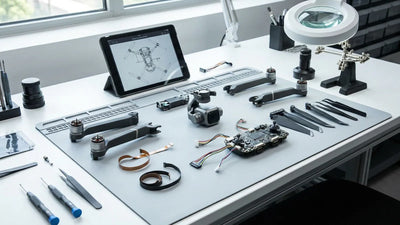
Crashed DJI Drone Triage Guide  Repair vs Replace - professional repair and inspection process

Never. Even a successful power-on does not guarantee safety. Hairline fractures in solder joints under BGA chips can cause intermittent contact that fails suddenly in flight, resulting in a flyaway or uncontrolled fall. At minimum, perform a full IMU calibration and hover test at 1 metre altitude over soft grass for 5 minutes. Watch for any motor stutter or yaw drift. But a proper assessment requires opening the shell and inspecting under magnification.

Does DJI Care Refresh cover crash damage?

Yes, DJI Care Refresh (and DJI Care Enterprise) covers accidental damage including crashes and water damage, subject to a replacement service fee. For a Mavic 3, the replacement fee is $165 for the first incident. There is a limit to the number of replacements per plan. DJI Care does not cover intentional damage, loss, or drones flown beyond visual line of sight without regulatory approval. It also does not cover damage to the battery unless it's part of the aircraft replacement.

How long does crash repair take at Reboot Hub?

Typical turnaround for an arm/shell replacement is 1 business day. Chip-level repair of an ESC or mainboard requires 1–3 business days depending on parts availability. Complex gimbal rebuilds with ribbon repairs can take 2–4 business days. Rush service (same-day) is available for enterprise clients. You get a detailed diagnostic report within 2 hours of drone drop-off at our Shenzhen, China service centre.

Will repair affect resale value?

A professional repair documented with an invoice and before/after photos generally maintains resale value better than selling a "crashed, as-is" listing. However, a drone with a replaced main board (new serial number) will be seen as a repair job. Chip-level repair preserves the original board serial, which is invisible to the next buyer. We provide a repair certificate that reassures used buyers. Cosmetic marks on the shell will lower value, but mechanical integrity is what matters for flight safety.

Is chip-level repair covered by any warranty?

All chip-level repairs at Reboot Hub carry a 90-day warranty on the repaired component and labour. If the same MOSFET fails again within 90 days, we replace it at no charge. The warranty does not cover new crash damage or water damage after the repair. This is standard across all MOHRSS Level 3 certified repair centres in China. Always ask for the warranty terms in writing.

How do I know if my drone is repairable or a write-off?

The simplest way is our free diagnostic service. Bring the drone to Reboot Hub's Shenzhen Huaqiangbei service centre. Within two hours, we perform a full teardown inspection and give you a written repair estimate versus replacement cost analysis. No commitment required. This takes the guesswork out of the decision.

How much does it cost to repair a crashed DJI drone?

Repair costs depend on the damage. A single ESC MOSFET replacement runs $70–90 at Reboot Hub, while a full gimbal module rebuild is $200–280. Mainboard chip-level repair costs $150–180. The same repairs through a US or European authorized service centre typically cost 2–3x more — for example, $200–320 for an ESC swap and $380–520 for a gimbal module. We provide a free diagnostic and written estimate before any work begins, so you know the exact cost upfront. For a full model-by-model breakdown, see the Reboot Hub DJI Repair Cost Database 2026.

What are the most common failures after a DJI drone crash?

The top failures we see in our Shenzhen, China workshop are: (1) gimbal ribbon cable tears — accounting for roughly 35% of crash repairs; (2) ESC MOSFET burnout from arm-mounted impact — about 25%; (3) motor bell housing deformation — around 20%; and (4) mainboard short circuits from frame flex cracking BGA solder joints — approximately 15%. Shell and arm fractures are nearly universal in any crash but are straightforward to replace at $60–154 per section. The critical failures are internal: a torn gimbal ribbon that looks cosmetic can cascade into a dead camera if the exposed copper shorts against the frame.

How do I ship my crashed drone to Reboot Hub for repair?

Remove the battery and pack the aircraft in its original case or a padded box. Photograph the damage before packing (we need these for triage). Ship via any express courier to our Shenzhen, China workshop — we'll provide the exact address when you contact us. Average international transit is 3–7 business days depending on your location. Once received, we complete a full diagnostic within 2 hours and email you a detailed repair estimate. If you approve, most repairs are finished in 2–4 business days and shipped back the same day. Return shipping is included in our repair pricing for orders over $150.

Should I choose chip-level repair or full board replacement?

Chip-level repair is the better option in over 70% of crash cases. It costs $70–180 versus $420–580 for a full board replacement, preserves your flight logs and calibration data, and keeps the original board serial number intact for resale. Full board replacement is only necessary when the PCB itself is cracked through multiple layers or when BGA pads are physically ripped from the board. At Reboot Hub, our MOHRSS Level 3 certified technicians diagnose the damage under microscope first and recommend the most cost-effective path — we never upsell a full board swap when a single IC replacement will do.

Submit your crashed drone for a free diagnostic at Reboot Hub — we'll tell you exactly what it needs before you commit to repair.

Reboot Hub · Expert Repair

Ready for a Professional Diagnosis?

Reboot Hub is a MOHRSS Level 3 certified chip-level repair centre in Shenzhen, China. We repair what other shops replace — at a fraction of the cost.

Prev post
Next post

Leave a comment

Please note, comments need to be approved before they are published.

Thanks for subscribing!

This email has been registered!

Shop the look

Choose options

Edit option
Back In Stock Notification
this is just a warning
Login
Shopping cart
0 items
0%