Drone Loses Signal Mid-Flight? Step-by-Step Diagnosis & Professional Repair Guide (DJI Mini 4 Pro & Mavic 3) 2025
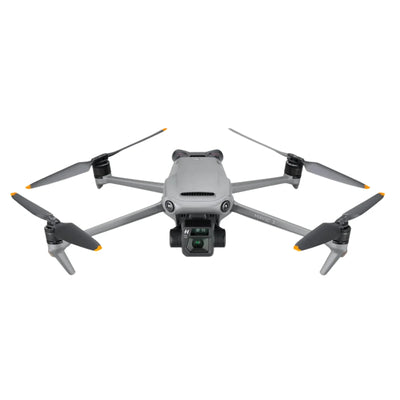
When a drone loses signal mid-flight, the experience is both disorienting and potentially costly. At Reboot Hub, our technicians have diagnosed and repaired over 800+ DJI Mini 4 Pro and Mavic 3 units with signal loss and transmission failures since 2022, holding MOHRSS Level 3 Advanced Technician certification recognised by China's Ministry of Human Resources and Social Security. This step-by-step guide covers everything from self-diagnosis to professional drone signal loss repair costs, helping you determine whether your issue stems from environmental interference, antenna damage, or a deeper hardware failure — and what it costs to fix.
Why Does Your Drone Lose Signal Mid-Flight? Common Causes Explained

Signal loss mid-flight is among the most disorienting failures a drone pilot can experience. One moment you have a clear FPV feed and responsive controls; the next, your aircraft is executing an autonomous return-to-home — or worse, descending in place without guidance. Understanding why this occurs requires examining the radio frequency link between your remote controller and the aircraft at the physical, environmental, and firmware levels.
The DJI O4 transmission system used in the Mini 4 Pro and the O3+ system in the Mavic 3 series operate primarily on dual-band 2.4 GHz and 5.8 GHz frequencies. These are unlicensed spectrum bands shared with countless other devices. When signal loss occurs, the root cause typically falls into one of three categories: external interference, physical antenna degradation, or software-level corruption of the signal processing chain.
Frequency Interference: The Invisible Disruptor
Urban environments are saturated with RF noise. Common sources of 2.4 GHz interference include WiFi routers operating on channels 1–11, Bluetooth devices, microwave ovens, and Zigbee smart home hubs. On the 5.8 GHz band, interference frequently originates from newer WiFi 6 and WiFi 6E access points, certain police radar systems, and point-to-point wireless bridges used on rooftops. In Shenzhen, China, additional interference sources include 5G NR base stations operating in the n77/n78 bands (3.3–4.2 GHz), which, while not directly overlapping, can produce harmonic interference that degrades front-end receiver sensitivity.
High-voltage power transmission lines deserve special mention. The corona discharge around 110 kV and 220 kV lines generates broadband electromagnetic noise that can overwhelm drone receivers at distances under 50 meters. This is a known issue near the Shenzhen Bay Bridge corridor, where multiple high-tension lines cross recreational flying areas. Pilots flying near Wutong Mountain in Shenzhen or the Nanshan district in Shenzhen should maintain at least 100 meters of lateral separation from transmission infrastructure.
Physical Antenna Damage: Gradual Degradation
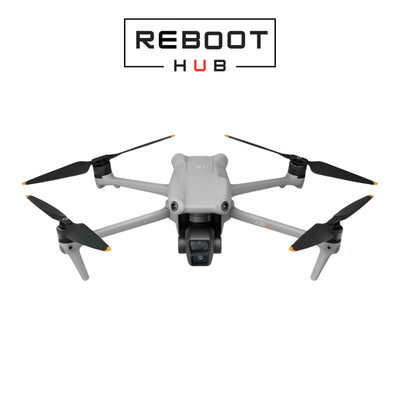
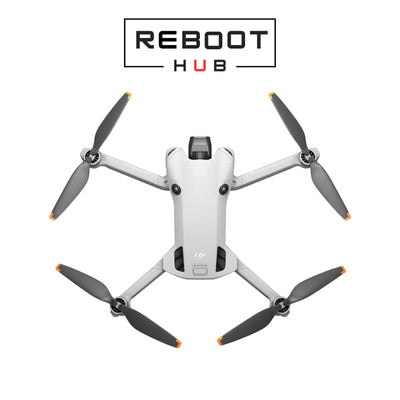
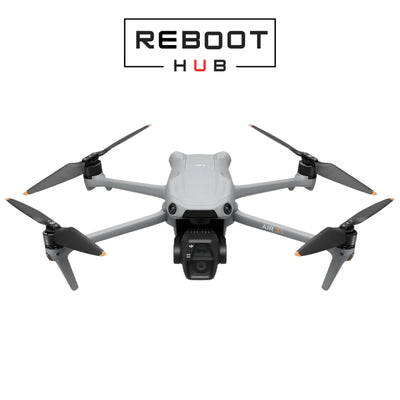
Drone antennas are fragile components, often integrated into landing gear struts (Mavic 3) or front arm housings (Mini 4 Pro). The coaxial cables connecting these antennas to the main board are susceptible to fatigue fractures from repeated folding and unfolding during storage. A coax cable with a hairline fracture in its shielding may still pass a visual inspection while producing a 15–20 dB signal attenuation — enough to reduce effective range from 20 km to under 500 meters in ideal conditions.
Loose U.FL or MMCX connectors are another common culprit. These miniature snap-fit RF connectors can partially dislodge after a hard landing, creating an intermittent connection that produces erratic RSSI readings. The connection may pass continuity tests at rest but separate under vibration during flight.
Firmware Bugs and Update Ordering Issues
DJI's firmware ecosystem spans the aircraft, remote controller, battery management system, and the DJI Fly application. An incomplete or out-of-sequence update can introduce signal handling anomalies. A notable example occurred with DJI Fly version 1.12.4, released in late 2024, where users who updated the app before the aircraft firmware reported intermittent "RC Signal Lost" warnings even at ranges under 100 meters. The issue was traced to a mismatch in the transmission protocol handshake between the RC firmware (still on an older version) and the newly updated aircraft firmware. DJI addressed this in Fly 1.12.6, but the episode underscores the importance of following the manufacturer's specified update sequence: remote controller first, then aircraft, then battery firmware for each battery in your rotation.
Corrupted firmware downloads can produce similar symptoms. An interrupted OTA update may leave the RF transceiver's calibration tables in an inconsistent state, causing the radio to transmit on miscalculated frequencies or with incorrect power levels. This is rare but diagnostically significant when signal loss persists across multiple flight locations.
How Do You Diagnose Drone Signal Loss at Home Before Repair?
Before booking a repair, systematic self-diagnosis can isolate whether the signal loss originates from environmental factors, user configuration, or genuine hardware failure. This process can save you an unnecessary repair bill — or provide your technician with actionable data that accelerates the repair turnaround.
Physical Inspection of Drone Antennas
Begin with a thorough visual inspection of all antenna elements. On the DJI Mini 4 Pro, the two front arms house the primary 2.4/5.8 GHz antennas. Extend the arms fully and examine the plastic housing for cracks, deformation, or discoloration that may indicate internal damage. Look specifically at the hinge area where the arm pivots — this flex point is the most common site for coaxial cable fatigue. Using a magnifying glass or a phone camera on macro mode, inspect the antenna housing seam for any separation that might expose the internal element to moisture or debris.
For the Mavic 3, the antenna array is more complex. The four landing gear struts each contain antenna elements, and the aircraft body houses two additional internal patch antennas. Ensure all four landing gear struts are fully deployed and lock into position. A strut that feels loose or fails to lock may have a damaged hinge mechanism that compromises the antenna's orientation or the coax routing.
Critical: Antennas must be correctly oriented during flight. The flat, broad side of each antenna should face the drone. DJI's dipole and patch antenna designs are directional — pointing the antenna tip directly at the aircraft actually produces the weakest signal. This is counterintuitive for many pilots and is one of the most common configuration errors we encounter at our diagnostic counter.
Remote Controller Antenna Orientation
The DJI RC 2 and RC Pro controllers feature internal patch antennas behind the screen, with the primary radiation pattern projecting forward. The RC-N2 and RC-N3 controllers use external foldable antennas. For external antenna models, position the antennas perpendicular to the ground and parallel to each other, forming a "V" shape if dual antennas are present. The flat face of each antenna element should be directed toward the drone's general position. If the drone is directly overhead — a common scenario for inspection flights — you may need to adjust antenna angle accordingly, as the radiation pattern directly above a vertical antenna is significantly weaker.
Flight Log Analysis: The Definitive Diagnostic Tool
DJI flight logs contain granular RF performance data that can definitively identify whether signal loss is hardware-related. Every DJI drone records RSSI (Received Signal Strength Indicator) values in dBm for both the uplink (controller to drone) and downlink (drone to controller) at sub-second intervals. These logs are stored on your mobile device and can be extracted using DJI Assistant 2 or third-party tools.
To analyze your flight logs:
- Connect your mobile device to a computer and navigate to the DJI flight log directory. On Android, this is typically
/DJI/dji.go.v5/FlightRecord/; on iOS, access logs via the DJI Fly app's Profile > Flight Data Center. - Upload the relevant .DAT or .txt log file to AirData UAV (airdata.com) or DJI Flight Log Viewer (phantomhelp.com/logviewer). Both are free for basic analysis.
- Locate the RSSI graph. Normal values at close range (under 300 meters in a clear environment) should read between -30 dBm and -55 dBm. A healthy signal at 1–2 km typically ranges from -60 dBm to -75 dBm.
- Look for sudden drops below -80 dBm that are not correlated with increased distance or known obstacles. A drop from -55 dBm to -90 dBm within 2–3 seconds, without a corresponding change in drone position, strongly indicates a hardware fault — typically an antenna connection issue or RF amplifier failure.
- Note whether the signal drop affects both uplink and downlink equally. If only the downlink deteriorates while the uplink remains stable, the issue is likely in the drone's transmitter chain. If both degrade simultaneously, the problem may be environmental or in the controller.
If your logs show RSSI values below -85 dBm at ranges under 100 meters in an open field with no identifiable interference sources, hardware failure is the most probable diagnosis. Proceed to professional evaluation.
Which Hardware Failures Cause Drone Signal Loss and Require Professional Repair?

Certain failure patterns are impossible to resolve through firmware resets or configuration changes. These indicators point to physical damage at the component level and require intervention from a qualified repair technician with micro-soldering and RF testing capabilities.
Short-Range Signal Collapse
The most definitive hardware failure indicator is consistent signal loss at distances under 100 meters in an interference-free environment. A healthy DJI O4 system should maintain a solid connection at 500+ meters in suburban conditions and 2+ km in rural line-of-sight. If your Mini 4 Pro disconnects at 80 meters over an open field — and this behavior repeats across multiple flights and locations — the failure is almost certainly in the RF hardware chain. Common culprits include a fractured antenna coax, a detached U.FL connector at the main board, or a degraded RF power amplifier IC.
Visible Antenna Connector Damage
Under magnification, antenna connector damage presents in several forms. The U.FL receptacle on the main board may show lifted pads where the connector's ground legs have separated from the PCB due to mechanical stress or a prior impact. The MMCX connectors on Mavic 3 antenna cables can develop hairline cracks in the outer barrel, particularly if the landing gear has been subjected to lateral force. In severe cases, the entire RF connector may be torn from the board, leaving exposed copper traces and requiring trace reconstruction under a microscope.
Gimbal ribbon cable damage can also manifest as signal loss. The coaxial portion of the gimbal flex cable carries both video data and control signals; a tear in this cable — common after crash damage that over-rotates the gimbal — can produce intermittent disconnections that are easily mistaken for transmission failures.
Persistent Error Codes and Binding Failures
Specific DJI error codes warrant immediate attention:
- "RC Signal Lost" (Error Code 80001): Appears persistently after rebinding the aircraft and controller, even at close range. Indicates a hardware-level transmission failure.
- "Aircraft Disconnected" (Error Code 80003): Often accompanied by the aircraft entering failsafe RTH. If this occurs within 30 seconds of takeoff consistently, suspect a failed RF transceiver IC.
- "IMU Calibration Required" (Error Code 30002): While related to the inertial measurement unit, persistent IMU errors can cause the flight controller to reset mid-air, which interrupts the RF link. This is an indirect cause of signal loss that is frequently misdiagnosed.
- "Compass Interference" (Error Code 30007): Severe compass interference can trigger an emergency landing protocol that disables the RF link as the aircraft descends. Check for magnetized screws near the compass module or damage to the compass FPC.
If any of these error codes persist after a full firmware refresh and rebinding procedure, the underlying issue is physical and requires board-level diagnosis.
How Much Does Drone Signal Loss Repair Cost? Chip-Level vs. Board Replacement
When a main board RF circuit fails, drone owners face a critical repair decision: replace the entire main board with an OEM unit, or pursue chip-level repair that targets only the failed components. This decision has substantial cost implications and affects repair turnaround time, data retention, and long-term reliability.
Cost Comparison Table
| Repair Type | Reboot Hub: Mini 4 Pro | Reboot Hub: Mavic 3 | US / Western Market Rate | Turnaround | Warranty |
|---|---|---|---|---|---|
| Full Main Board Replacement | $300 | $300 | $420–580 | 3–5 business days | 90 days |
| Chip-Level RF Circuit Repair | $150–180 | $150–180 | $280–380 | 2–4 business days | 6 months |
| Antenna Coax Replacement (Chip-Level) | $50–80 | $50–80 | $120–200 | 1–2 business days | 6 months |
| RF Amplifier IC Reballing/Replacement | $150–180 | $150–180 | $280–380 | 2–4 business days | 6 months |
| U.FL Connector Re-soldering | $50–80 | $50–80 | $120–200 | Same day–1 day | 6 months |
For a complete pricing breakdown across all DJI models, visit our Reboot Hub DJI Repair Cost Database 2026.
Why Chip-Level Repair Offers Superior Value
The cost difference is compelling: a chip-level RF repair on a Mini 4 Pro at Reboot Hub costs $150–180 versus $300 for a full board replacement at our lab — and $420–$580 at an authorized US service center. That represents savings of approximately 60–65% compared to authorized service pricing. For the Mavic 3, the economics are identical, making chip-level repair the clear choice for signal loss issues.
Beyond cost, chip-level repair preserves your drone's original serial number and digital identity. DJI aircraft bind their serial numbers to the main board's secure element; swapping the board means re-binding, which can introduce compatibility issues with existing batteries, the remote controller, and even your DJI Care Refresh plan. A board replacement essentially creates a "new" aircraft in DJI's ecosystem, while chip-level repair maintains continuity.
Data retention is another consideration. Flight logs, calibration data, and customized parameters stored on the original board are preserved during chip-level repair. A board replacement wipes all of this. For professional operators who rely on consistent aircraft behavior for repeatable mission profiles, this is a significant operational advantage.
What Does a Professional DJI Mini 4 Pro Signal Repair Look Like? (Real Case Study)
The following case from our Shenzhen, China lab illustrates how a seemingly minor physical defect can produce catastrophic signal loss — and how targeted chip-level diagnosis isolates the root cause rapidly.
Customer Report

A commercial real estate photographer based in southern China brought in a DJI Mini 4 Pro with approximately 80 flight hours. The complaint: consistent signal loss at 180–220 meters despite flying in open coastal areas with no visible interference sources. The issue had developed gradually over two weeks, with the pilot initially attributing it to WiFi congestion in urban areas. By the time the drone reached our counter, it was disconnecting on every flight beyond 200 meters.
Diagnostic Process
We extracted the flight logs using DJI Assistant 2 and loaded them into AirData UAV for RSSI analysis. The data revealed a characteristic pattern: at takeoff and within the first 150 meters, RSSI held steady between -48 dBm and -55 dBm — a healthy reading. At approximately 180 meters, the signal began fluctuating erratically, oscillating between -60 dBm and -78 dBm within 10-second intervals. At 210 meters, RSSI plummeted to -95 dBm, triggering a loss-of-signal RTH. Critically, the drone's orientation data showed that the signal dropped most severely when the aircraft's right-front arm was oriented away from the controller, suggesting an antenna-specific failure.
Physical inspection under a 20x stereo microscope revealed a kinked coaxial cable inside the right-front arm, near the hinge pivot. The outer jacket showed compression marks consistent with the arm being folded while the cable was misaligned in its routing channel. Probing the cable with a network analyzer confirmed an open circuit in the shield braid at the kink point — the inner conductor was intermittently making contact, explaining the fluctuating RSSI readings.
Repair Procedure
The repair involved desoldering the damaged coax from the antenna element and the main board U.FL pad, routing a new OEM-spec RG-178 coax through the arm channel, and micro-soldering both terminations. The U.FL connector on the main board side was replaced as a preventive measure, as the original showed mild oxidation on the contact surfaces. Total repair time: 5 hours, with the drone returned to the customer the same day. Cost breakdown: $25 diagnostic fee (waived upon repair approval) + $130 for the coax replacement and connector rework = $155 total.
Post-Repair Verification
A test flight over the same coastal route showed RSSI values stable at -50 dBm to -58 dBm at 500 meters, with no dropouts. The customer has since logged 40+ flight hours without recurrence. This case exemplifies why flight log analysis combined with physical inspection is the gold standard for signal loss diagnosis — and why replacing the entire main board (at $300 for a full board at our lab, or $420–580 at authorized US service) would have been an unnecessary expense when the failure was limited to a $155 coax cable replacement.
How Can You Prevent Mid-Flight Signal Loss on Your DJI Drone?
Preventing signal loss is more cost-effective than repairing it. The following maintenance practices, drawn from our experience servicing thousands of drones in Shenzhen, China, address the most common failure modes before they strand your aircraft in mid-air.
Pre-Flight Antenna Checklist
Integrate these checks into your pre-flight routine:
- Visual Antenna Inspection: Before unfolding the arms on a Mini 4 Pro or deploying the landing gear on a Mavic 3, inspect all antenna housings for cracks. Pay particular attention to the pivot points where flexing occurs. A crack in the plastic housing may allow moisture ingress that corrodes the antenna element over time.
- Coax Cable Routing Check: When folding the drone for storage, ensure that the antenna coax cables are not pinched between the arm and the body. Many storage cases have foam cutouts that press on folded arms; over time, this constant pressure can deform the coax dielectric, changing its impedance and degrading signal transmission. Store the drone with arms in a neutral, partially extended position if your case design permits.
- Connector Seating Verification: After any hard landing — even one that causes no visible external damage — gently press on the antenna housing near its connection point to the drone body. A subtle click or movement may indicate a partially dislodged U.FL connector that requires re-seating.
Firmware Update Protocol
Follow this sequence for every firmware update, without exception:
- Update the remote controller firmware first using DJI Fly or DJI Assistant 2.
- Restart the controller and confirm the update was applied in Settings > About.
- Update the aircraft firmware with the updated controller connected.
- After the aircraft update, insert each battery and update its firmware individually.
- Perform a test hover at 2–3 meters altitude for 60 seconds before flying a full mission.
Never update firmware over a cellular connection if a stable WiFi network is available. An interrupted OTA download that corrupts the RF calibration partition can produce signal anomalies that require a full firmware reflash using DJI Assistant 2 on a computer — a procedure that itself carries a small risk of bricking the flight controller if interrupted.
Environmental Awareness
In the Shenzhen, China region, several locations present elevated signal loss risk. The Shenzhen Bay Bridge area combines high-tension power lines, dense 5G base station deployment, and WiFi congestion from nearby residential towers — a triple threat to RF link stability. The Huaqiangbei commercial district in Shenzhen presents similar challenges with dense electronics markets operating in adjacent bands. Wutong Mountain's summit features multiple broadcast transmission towers with ERP (effective radiated power) in the kilowatt range; flying within 500 meters of these installations will overwhelm any consumer drone receiver, regardless of antenna condition.
When flying in these high-risk zones, maintain visual line of sight within 300 meters, keep the drone above potential ground-level interference, and monitor RSSI values actively through the DJI Fly OSD rather than relying solely on the FPV feed quality.
Why Choose Professional Chip-Level Repair in Shenzhen, China for Signal Loss?

Signal loss that persists after thorough self-diagnosis demands professional intervention. However, not all repair services are equal. The repair ecosystem in Shenzhen, China ranges from unauthorized shops using salvaged components to certified facilities performing precision micro-soldering with OEM parts. Understanding these distinctions protects your investment and your drone's long-term reliability.
The MOHRSS Level 3 Standard
The Ministry of Human Resources and Social Security (MOHRSS) of China classifies consumer electronics repair technicians across five levels, with Level 3 representing an advanced certification for micro-electronic repair. A MOHRSS Level 3 certified technician has demonstrated competency in BGA reballing, PCB trace reconstruction, RF circuit diagnosis, and surface-mount component replacement at pitches down to 0.35 mm — the scale at which modern drone main boards are manufactured. This certification requires both written examination and practical assessment under laboratory conditions, and is renewable every three years to ensure continued proficiency with evolving technology.
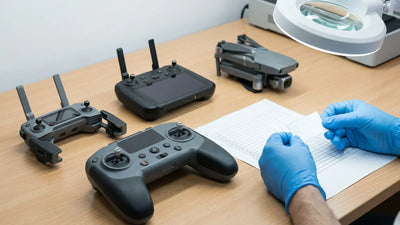
Workshops operating at this certification level, such as Reboot Hub's Shenzhen, China lab, are equipped with stereo microscopes, hot air rework stations with precision temperature control, RF spectrum analyzers, and vector network analyzers — tools that enable diagnosis and repair at the individual component level rather than resorting to wholesale board replacement.
Chip-Level Repair Preserves Original Hardware Integrity
A critical advantage of chip-level repair that is often overlooked is the preservation of the original main board's digital identity. Each DJI main board contains a secure authentication chip tied to the aircraft's serial number. Replacing the board changes this identity, requiring re-binding with DJI's servers and potentially invalidating existing DJI Care Refresh coverage if the replacement board's serial number falls outside the coverage period. Chip-level repair leaves the secure element untouched, maintaining seamless continuity with your DJI account and any active protection plans.
Board replacement also introduces the risk of component mismatch. DJI revises main board designs throughout a product's lifecycle; a replacement board manufactured in late 2025 may use different RF power amplifier ICs or antenna matching networks than the original board from mid-2024. While functionally compatible, these revisions can produce subtle differences in range and signal stability that require re-calibration of your flight expectations. Repairing the original board eliminates this variable entirely.
Warranty and Quality Assurance
Professional chip-level repair at a MOHRSS Level 3 facility includes a 6-month warranty on the repaired components — double the typical 90-day warranty offered on OEM board replacements. This extended coverage reflects confidence in the repair quality: a properly reflowed BGA connection or a correctly impedance-matched coax replacement is as reliable as the original manufacturing and often more thoroughly tested, given that it has passed both the factory QC and the repair technician's post-repair verification.
For drone operators in Shenzhen, China, the combined advantages of lower cost (typically 60–65% savings vs. board replacement), faster turnaround (2–4 business days vs. 5–10 days), preserved digital identity, and extended warranty make chip-level repair the rational choice for addressing signal loss and other RF-related failures. When your drone drops connection mid-flight, the solution is not necessarily a new main board — it is a precise diagnosis and a targeted repair that restores the original hardware to full specification.
For further reading on related topics, see our Drone Antenna Repair Guide: Step-by-Step, which covers antenna replacement procedures in detail, our DJI Mini 4 Pro Common Failures & Repair Costs guide for a full breakdown of failure modes and pricing, and How to Read DJI Flight Logs for Signal Issues for an in-depth tutorial on RSSI interpretation and log-based diagnosis.
Experiencing drone signal loss? Bring your drone to Reboot Hub for free diagnostics. Our chip-level repair specialists handle antenna, RF board, and IMU issues with genuine parts. Contact us or visit our Shenzhen, China lab — book online for 10% off first repair. Schedule a Professional Diagnostic Assessment at Reboot Hub
Frequently Asked Questions
What immediate actions should I take if my DJI Mini 4 Pro or Mavic 3 loses signal mid-flight?
Remain calm and do not power off the remote controller. The drone will automatically initiate its failsafe Return-to-Home (RTH) sequence based on the last recorded home point if signal is lost for more than 11 seconds (default); monitor the drone's flight path on the map screen if telemetry returns. Adjust the RTH altitude preemptively in settings to clear any obstacles higher than the surrounding terrain.
Why does my Mavic 3 signal keep dropping in dense urban areas even when the drone is within line of sight?
Concrete, steel, and dense Wi-Fi networks in cities cause multi-path interference that severely degrades O3+ and O4 transmission. Switch to the manual frequency channel selection in the DJI Fly app and choose the channel with least congestion, and position yourself away from large reflective surfaces or radio towers for a cleaner line of sight.
How can I perform a step-by-step diagnosis to determine if the signal loss is caused by a faulty remote controller or the aircraft itself?
First, test with a different compatible DJI remote controller if available; consistent signal loss only on your unit points to a controller hardware issue. If the problem persists across controllers, check the drone's antenna and internal transmission module by reviewing the flight log signal map on Reboot Hub, which provides a visual diagnostic pattern that isolates aircraft-side failures from environmental factors.
After a signal loss crash, is it possible to repair the DJI Mini 4 Pro's O4 transmission module myself without voiding the warranty?
Any internal repair will void DJI's standard warranty, but if you are outside the warranty period, Reboot Hub offers a detailed step-by-step transmission module replacement guide with the exact tools and soldering profiles needed for the Mini 4 Pro. For most users, a DJI Care Refresh claim or sending the drone to an authorized service center is the safer and faster route.
What pre-flight checks and settings can prevent mid-flight signal loss on DJI O4 drones in 2025?
Always update the aircraft and remote controller firmware to the latest version, as DJI frequently patches transmission stability bugs. Ensure the remote's antennas are properly aligned parallel to each other and point the flat face toward the drone, and disable Bluetooth and Wi-Fi on nearby devices that operate in the 2.4/5.8 GHz bands to minimize in-band interference.
How much does drone signal loss repair cost at Reboot Hub?
DJI Mini 4 Pro and Mavic 3 signal loss repair at Reboot Hub starts at $50–80 for U.FL connector re-soldering and ranges up to $150–180 for chip-level RF circuit repair. Full antenna coax replacement costs $50–80, and complete main board replacement is $300. Every repair includes a free diagnostic assessment, and most signal loss repairs are completed in 2–4 business days with a 6-month warranty on all chip-level work. For reference, equivalent authorized US service pricing ranges from $120–$580 depending on the repair type. Request a free quote here for an exact estimate.
Do you offer warranty coverage and international shipping for DJI signal loss repair?
Every chip-level repair at Reboot Hub includes a 6-month warranty — double the 90-day coverage typical of full board replacements. We accept international shipments from any country; simply contact us for a prepaid shipping label or follow our online intake process. Typical turnaround including international shipping is 7–14 business days depending on your location. We use genuine DJI components and perform post-repair flight test verification before returning your drone. Start your repair intake here.