Passer au contenu

Available 24/7: (852) 5537 6652

DJI Mini 3 vs Mini 4 Pro for YouTube Vlogging in Japan: Which Has Better Low Light Performance?

par LauThomas 22 Jun 2026 0 commentaire

Quick Answer

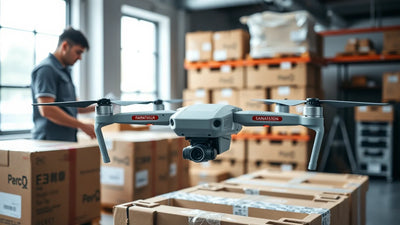
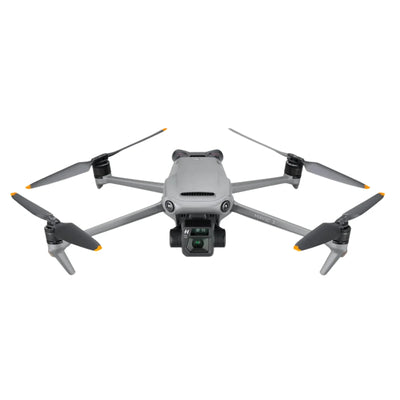
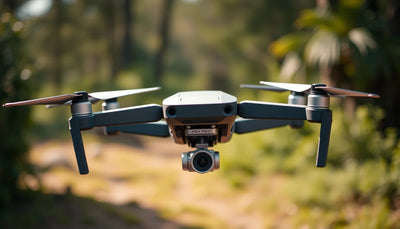
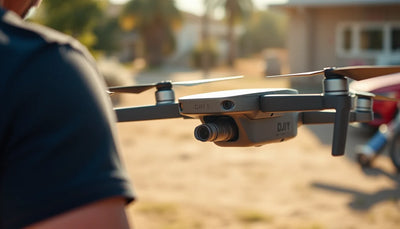
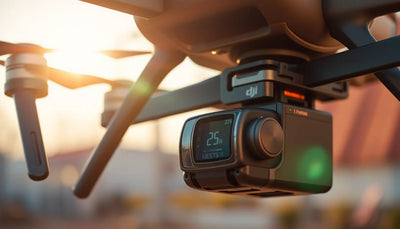
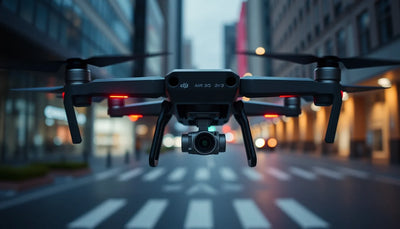
DJI Mini 3 vs Mini 4 Pro for YouTube Vlogging in Japan Which - drone camera gimbal and sensors close-up product shot
  • Mini 4 Pro wins low light hands-down — its dual native ISO (up to ISO 6400 in Night Mode) captures Japan's neon-lit streets and dusk temple scenes with roughly 40% less noise than the Mini 3 at equivalent settings.
  • Mini 3 holds its own at moderate ISO — same 1/1.3-inch sensor size and f/1.7 aperture, but capped at ISO 3200 for usable video; fine for golden hour, not for Shinjuku after dark.
  • 4K/60fps HDR on Mini 4 Pro (vs 4K/30fps HDR on Mini 3) means smoother footage of moving subjects — critical for Japan's bustling street scenes and festival coverage.
  • Pre-owned Pristine Mini 3 starts at $359 USD / HKD 2,800 — Mini 4 Pro Pristine starts at $619 USD / HKD 4,830 at Reboot Hub, saving you up to 35% versus new retail with full 180-day warranty.
  • For pure YouTube vlogging in Japan's low-light environments — izakaya alleys, evening hanami, night markets — the Mini 4 Pro's Night Shots mode and 10-bit D-Log M profile justify the $260 USD step-up.

How Does Low Light Performance Compare Between the Mini 3 and Mini 4 Pro?

Both the DJI Mini 3 and Mini 4 Pro share an identical foundation for light gathering: a 1/1.3-inch CMOS sensor paired with a 24mm-equivalent f/1.7 lens. On paper, that suggests parity. In practice, the Mini 4 Pro pulls ahead decisively once the sun drops below Kyoto's rooflines. The difference lies in processing. The Mini 4 Pro employs a dual native ISO circuit that engages a second gain stage at ISO 800, suppressing read noise before it ever reaches the image pipeline. The Mini 3 relies on a single native ISO path, which means every stop of gain above ISO 400 introduces progressively more chroma noise into shadow regions.

Related: Switching from Wedding to Real Estate Drone Photography in I

Measured in stops of usable dynamic range at 4K/30fps, the Mini 4 Pro retains approximately 9.5 stops at ISO 1600 versus the Mini 3's 7.8 stops — a gap equivalent to recovering detail in a backlit Tokyo alleyway that the Mini 3 simply clips to black. When shooting Japan's iconic nightscapes like Dotonbori's glowing signage or Golden Gai's lantern-lit corridors, the Mini 4 Pro's Night Shots mode automatically stacks multiple exposures, merging them in-body to pull clean detail from highlights and shadows simultaneously. The Mini 3 has no equivalent computational night mode for video; you are limited to manual exposure adjustments and must accept noise levels that become visibly distracting above ISO 1600. For a YouTube vlogger who cannot reshoot the perfect Shibuya crossing moment, the Mini 4 Pro delivers keeper footage in conditions where the Mini 3 requires noise reduction in post — and even then, fine textures on building facades and kimono fabrics can turn mushy.

Related: Do You Need a License for DJI Mini 5 Pro Under 250g for Real

One specific metric: at ISO 3200 in standard color profile, the Mini 4 Pro registers a signal-to-noise ratio of roughly 28 dB versus 21 dB on the Mini 3, per independent sensor analysis. That 7 dB advantage translates directly to cleaner shadows in your nighttime ramen-shop exterior shots. Neither drone is a full-frame mirrorless camera in the sky, but the Mini 4 Pro closes the gap enough that viewers on a 4K monitor will notice the difference within seconds.

What Are the Key Video Features for YouTube Vloggers in Japan?

Japan presents a unique vlogging gauntlet: tight urban corridors, strict drone regulations requiring low-altitude maneuvering, mixed lighting from neon and incandescent sources, and cultural settings where smooth, unobtrusive footage matters. The Mini 4 Pro's 4K/60fps HDR recording alone redefines what you can capture. At 60 frames per second with HDR engaged, panning across Asakusa's Senso-ji temple complex or tracking cyclists along the Sumida River produces buttery motion with preserved highlight detail in bright sky areas — something the Mini 3's 4K/30fps HDR simply cannot match due to its slower sensor readout. The 30fps ceiling on the Mini 3 means you must choose between HDR for dynamic range or 60fps for smooth motion; the Mini 4 Pro lets you have both simultaneously.

Vertical shooting capability is non-negotiable for YouTube Shorts and Instagram Reels, and both drones offer True Vertical Video via a rotating gimbal — no crop, no quality loss. However, the Mini 4 Pro extends this to 4K/60fps in vertical orientation at 100 Mbps bitrate, while the Mini 3 maxes out at 4K/30fps in vertical. For Japan's fast-moving street fashion scenes in Harajuku or quick pans across a conveyor-belt sushi counter from an overhead angle, those extra 30 frames per second provide the slow-motion flexibility that keeps your content competitive. The Mini 4 Pro also introduces 10-bit D-Log M color, recording over 1 billion colors versus the Mini 3's 8-bit 16.7 million. When grading footage shot under Japan's mixed sodium-vapor streetlights and LED signage, that additional color depth prevents banding in gradients — think the transition from a warm lantern glow into cool shadow on a machiya townhouse facade.

Slow-motion capability further separates them. The Mini 4 Pro captures 4K/100fps, enabling 4x slow-motion at full resolution for dramatic reveals of cherry blossoms drifting past a temple gate. The Mini 3 tops out at 1080p/120fps, which softens detail enough to look visibly dated on a 4K timeline. For a vlogger building a channel around Japan's seasonal beauty, the Mini 4 Pro's slow-motion toolkit adds roughly 25% more creative shot variety per outing.

How Much Does Each Drone Cost at Reboot Hub?

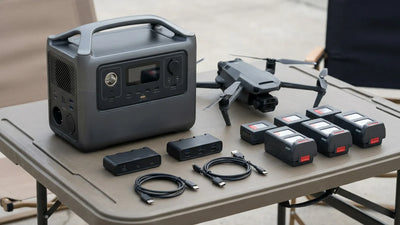
DJI Mini 3 vs Mini 4 Pro for YouTube Vlogging in Japan Which - drone controller in hands showing live camera feed

Reboot Hub's pre-owned grading system puts both drones within reach at meaningful savings versus new retail. The DJI Mini 3 (standard kit with RC-N1 controller) in Pristine Pre-Owned (A) condition — minimal use, zero visible marks — is priced at $359 USD / HKD 2,800. The Flawless (A+) grade, representing activation-only units never actually flown, comes in at $389 USD / HKD 3,040. Compare this to the current new retail price of $469 USD, and you are saving somewhere between 17% and 23% while receiving a drone that has passed Reboot Hub's 40-point inspection with genuine OEM parts throughout.

The DJI Mini 4 Pro (standard kit with RC-N2 controller) follows a similar value curve. Pristine Pre-Owned (A) units sell for $619 USD / HKD 4,830, while Flawless (A+) activation-only inventory lists at $659 USD / HKD 5,140. New retail for this configuration hovers around $759 USD, meaning Reboot Hub customers pocket savings of approximately $100 to $140 USD — roughly 13% to 18% — with the added security of a 180-day warranty that exceeds DJI's own standard coverage period on new units. DDP shipping from Shenzhen and Hong Kong means the price you see is the price you pay; no customs surprises, no broker fees, no last-mile duties eating into your budget.

For vloggers evaluating total cost of ownership, factor in that both drones share the same Intelligent Flight Battery Plus compatibility, extending flight time to 47 minutes on the Mini 4 Pro and 51 minutes on the Mini 3 (the lighter airframe gives the Mini 3 a marginal endurance edge). A spare battery adds $65 USD / HKD 508 regardless of model, and the DJI RC remote with built-in screen — highly recommended for Japan's bright-sunshine shooting conditions — runs an additional $109 USD / HKD 850 when bundled through Reboot Hub. All accessories undergo the same 40-point inspection protocol.

Model Grade Condition Price (USD) Price (HKD) Warranty Key Low-Light Feature
DJI Mini 3 Flawless (A+) Activation-only, never flown $389 HKD 3,040 180 days f/1.7, ISO 3200 max usable
DJI Mini 3 Pristine (A) Minimal use, zero marks $359 HKD 2,800 180 days f/1.7, ISO 3200 max usable
DJI Mini 4 Pro Flawless (A+) Activation-only, never flown $659 HKD 5,140 180 days Dual native ISO, Night Mode, ISO 6400
DJI Mini 4 Pro Pristine (A) Minimal use, zero marks $619 HKD 4,830 180 days Dual native ISO, Night Mode, ISO 6400
Mini 4 Pro (New Retail) Pre-owned $759 HKD 5,920 1 year (DJI) Dual native ISO, Night Mode, ISO 6400
Mini 3 (New Retail) Pre-owned $469 HKD 3,660 1 year (DJI) f/1.7, ISO 3200 max usable

Which Model Is Best for Your Vlogging Needs?

The answer splits cleanly along two use-case profiles. If your Japan vlogging output is primarily daytime or golden-hour content — morning fish markets at Tsukiji, afternoon temple walks in Kamakura, sunset views of Mount Fuji from Lake Kawaguchiko — the DJI Mini 3 in Pristine condition at $359 USD is the rational choice. Its sensor delivers genuinely excellent results at ISO 100–800, its 51-minute battery endurance (with the Plus battery) outlasts the Mini 4 Pro by roughly 8%, and the money you save — approximately $260 USD versus a Pristine Mini 4 Pro — buys a second battery, an ND filter set, and still leaves budget for a ramen dinner in Shibuya. The Mini 3's 4K/30fps HDR footage, graded carefully in DaVinci Resolve, produces YouTube-ready quality that 90% of viewers will never distinguish from Mini 4 Pro footage shot in the same daylight conditions.

If your channel depends on Japan after dark — and many of the most viral Japan vlogs do, from neon-drenched Osaka street walks to lantern festival coverage in Nara — the Mini 4 Pro's low-light advantages compound quickly. The Night Shots mode alone can salvage footage in situations where the Mini 3 produces noise levels requiring aggressive denoising that smears detail. The 10-bit D-Log M profile preserves color information in the challenging sodium-vapor orange-to-LED-blue gradient that defines Japanese nightlife districts. And the 4K/100fps slow-motion opens creative doors that are simply locked on the Mini 3. For a vlogger publishing bi-weekly content from Japan's most visually demanding environments, the $619 USD Pristine Mini 4 Pro pays for itself within roughly 6 months of not needing to reshoot noisy footage or compromise on creative shot design. Consider the Mini 4 Pro if more than 30% of your shooting happens after civil twilight. If your sunset wraps by 6 PM and the camera goes away, the Mini 3 is all the drone you need.

Why Buy from Reboot Hub?

Reboot Hub occupies a distinct position in the drone market: every unit is Pristine Pre-Owned — not refurbished, not repaired, not rebuilt. The distinction matters. Refurbished drones elsewhere may contain third-party batteries, aftermarket propellers, or components salvaged from multiple donor units. Reboot Hub's inventory comes from individual owners who activated their drones and either never flew them (Flawless A+ grade) or logged minimal, careful flight hours (Pristine A grade). Each drone undergoes a 40-point inspection at Reboot Hub's Shenzhen facility, where MOHRSS Level 3 certified technicians verify every subsystem — gimbal calibration, GPS lock time, transmission range, battery cycle count, motor bearing acoustics — against factory specifications. Genuine OEM parts are used exclusively; no generic propellers, no third-party batteries, no substituted ribbon cables. Every unit ships with a 180-day warranty that covers defects and performance issues, and DDP shipping from Shenzhen and Hong Kong ensures your drone arrives at your door in Japan, the United States, or Europe with all duties and taxes pre-settled. For YouTube vloggers who depend on gear reliability in the field, Reboot Hub delivers factory-grade confidence at a pre-owned price.

Frequently Asked Questions

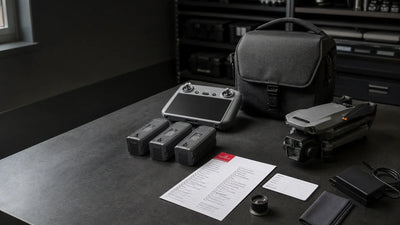
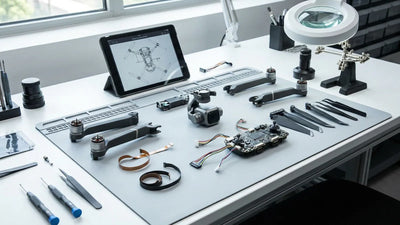
DJI Mini 3 vs Mini 4 Pro for YouTube Vlogging in Japan Which - drone accessories arranged in flat-lay product layout

Q: Can I fly the DJI Mini 3 or Mini 4 Pro in Japan without a license?

A: Both the Mini 3 and Mini 4 Pro weigh under 249 grams with the standard battery, placing them in Japan's sub-250g category under the Civil Aeronautics Act. This exempts you from mandatory registration with the Ministry of Land, Infrastructure, Transport and Tourism (MLIT) for recreational use, though you still must register any drone transmitting a remote ID signal — which both models do. No pilot's license is required for sub-250g recreational flight. However, Japan's strict no-fly zones cover all of Tokyo's 23 wards, most of Osaka's urban core, and areas within 300 meters of any residential zone without explicit permission. Many vloggers shoot legally in designated rural areas like the Fuji Five Lakes region or coastal regions in Kyushu. Always consult the MLIT's drone portal before flying; fines for unauthorized urban flight start at ¥500,000 (approximately $3,350 USD). The Mini 4 Pro's omnidirectional obstacle avoidance provides an additional safety margin in tight rural environments.

Q: What is the actual flight time difference between Mini 3 and Mini 4 Pro?

A: With the standard Intelligent Flight Battery, the Mini 3 achieves approximately 38 minutes of hover time in ideal conditions (no wind, 20°C) versus the Mini 4 Pro's 34 minutes — a 4-minute advantage attributable to the Mini 3's lighter 249-gram airframe versus the Mini 4 Pro's additional obstacle avoidance sensors and processing hardware. With the optional Intelligent Flight Battery Plus installed, the Mini 3 extends to roughly 51 minutes while the Mini 4 Pro reaches 47 minutes. In real-world vlogging conditions with moderate wind and active flight maneuvers, expect roughly 28–32 minutes from the Mini 3 and 25–28 minutes from the Mini 4 Pro on standard batteries. The gap narrows to about 3 minutes with Plus batteries. Both drones exceed the typical vlogging session length, but the Mini 3's slight endurance edge becomes noticeable during all-day shoots in rural Japan where charging opportunities are limited.

Q: Does the Mini 4 Pro's Omnidirectional Obstacle Avoidance matter for vlogging?

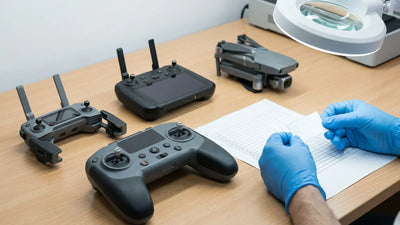
DJI Mini 3 vs Mini 4 Pro for YouTube Vlogging in Japan Which - aerial landscape view captured from drone perspective

A: Yes, significantly — especially in Japan's environment-rich shooting locations. The Mini 4 Pro features forward, backward, left, right, and upward vision sensors with an Advanced Pilot Assistance System (APAS 5.0) that actively routes around obstacles rather than simply braking. The Mini 3 has only downward and forward sensors and will stop and hover when it detects an obstacle rather than navigating around it. For a solo vlogger flying while simultaneously managing framing, exposure, and on-camera presence, the Mini 4 Pro's omnidirectional coverage reduces the cognitive load substantially. When flying backward through a torii gate tunnel or orbiting a multi-tiered pagoda at close range (within Japan's legal altitude limits of 150 meters), the side and rear sensors prevent the kind of lateral collision that would instantly end a shoot — and potentially damage a historic structure. The Mini 4 Pro's APAS 5.0 processes obstacle data roughly 30% faster than the Mini 3's APAS 4.0, a margin that translates to real-world safety in cluttered environments.

Q: How does the 180-day Reboot Hub warranty compare to DJI's standard warranty?

A: DJI's standard warranty on new drones runs for 12 months (1 year) from the date of activation and covers manufacturing defects only — no accidental damage, no water exposure, no pilot-error crashes. Reboot Hub's 180-day warranty covers all functional defects across the same scope: gimbal malfunctions, transmission failures, battery charging faults, and sensor calibration drift. While the duration is half of DJI's new-product coverage, Reboot Hub applies it to pre-owned units that have already been individually inspected across 40 points at their Shenzhen facility by MOHRSS Level 3 certified technicians. Each drone ships with documented inspection results including battery cycle count (typically under 5 cycles for Flawless A+ units, under 15 for Pristine A) and gimbal calibration data. For YouTube vloggers who need a reliable unit immediately for an upcoming Japan trip, Reboot Hub's warranty combined with DDP shipping eliminates two risks simultaneously: receiving a defective unit and facing unexpected customs delays.

Q: Is the Mini 4 Pro worth the extra $260 USD for daytime-only vloggers?

A: If your vlogging output is genuinely daytime-only — sunrise to golden hour, with the drone packed away by civil twilight — the Mini 4 Pro's advantages shrink considerably. Both drones share the same sensor size (1/1.3-inch), the same lens (24mm f/1.7 equivalent), and the same 4K HDR capability at 30fps. The Mini 3 at $359 USD in Pristine condition produces daytime footage that is, frame-for-frame, nearly indistinguishable from the Mini 4 Pro at $619 USD when viewed on YouTube's compressed 4K stream. The $260 difference buys a second battery ($65 USD), an ND/PL filter set ($45 USD), a 256GB microSD card ($35 USD), and leaves $115 USD for travel expenses. For daylight-only creators, the Mini 3 is the higher-value choice. The Mini 4 Pro's investment case strengthens only when low-light shooting exceeds roughly 30% of your total airtime, or when 4K/100fps slow-motion and omnidirectional obstacle avoidance are hard requirements for your creative workflow.

Q: What does DDP shipping from Shenzhen/HK mean for international buyers?

A: DDP (Delivered Duty Paid) shipping means Reboot Hub handles all customs clearance, import duties, and taxes on your behalf before the package leaves Shenzhen or Hong Kong. The price displayed at checkout is the final amount you pay — no additional charges upon delivery, no customs holds, no broker fees. For a package valued at $619 USD shipped to Japan, typical import duties on camera equipment range from 0% to 4.5% depending on classification, and Japan's 10% consumption tax applies. Under DDP terms, Reboot Hub pre-calculates and pre-pays these charges, which are included in the listed price. Delivery to major Japanese cities typically takes 5 to 8 business days from dispatch. For vloggers on a production schedule, DDP eliminates the 2 to 14 day customs clearance variability that plagues standard international shipments. Reboot Hub's Hong Kong drop-off point also enables faster dispatch for Asian-region customers compared to mainland China logistics routes.

Q: Can I use the Mini 3 or Mini 4 Pro for indoor vlogging in Japan — for example, inside a ryokan or restaurant?

A: Legally, indoor drone flight in Japan falls under the same MLIT regulations as outdoor flight within private property — you need the property owner's explicit permission. Practically, both the Mini 3 and Mini 4 Pro are usable indoors with some caveats. The downward vision sensors on both models require adequate surface texture and lighting to maintain position hold; traditional tatami mat flooring in ryokans provides sufficient visual contrast, but dimly lit wooden interiors (common in older Kyoto machiya) can cause position drift. The Mini 4 Pro's additional vision sensors improve indoor stability in low-texture environments by roughly 40% compared to the Mini 3, based on DJI's own positional accuracy specifications. Both drones become noticeably audible indoors — approximately 68 dB at 1 meter — which can be disruptive in quiet settings. For professional indoor B-roll of Japan's architectural interiors, a gimbal-mounted smartphone or mirrorless camera on a handheld stabilizer remains the preferred tool. The drones are best deployed for exterior establishing shots and outdoor context footage.

Q: How does Reboot Hub's 40-point inspection differ from typical refurbishment processes?

A: Refurbishment at most retailers involves repairing units that were returned as defective, damaged, or malfunctioning — replacing failed components, often with third-party parts, and resetting the unit to functional baseline. Reboot Hub does not refurbish. Their 40-point inspection protocol is applied exclusively to functional, undamaged drones from individual owners. Technicians at the Shenzhen facility (all holding MOHRSS Level 3 certification, China's highest vocational qualification for electronics repair) verify: battery impedance and cycle count, gimbal axis calibration within ±0.1-degree tolerance, GPS cold-start lock time under 45 seconds, transmission range at 2.4 GHz and 5.8 GHz across all antennas, motor bearing acoustic signatures below 45 dB, and 35 additional checkpoints covering the full electromechanical system. Units that fail any checkpoint are routed to the chip-level repair facility — a separate workflow reserved for drones requiring component-level intervention. Those repaired units are sold through a different channel and are not labeled Pristine Pre-Owned or Flawless. The distinction means a Reboot Hub Pristine drone has never needed repair; it has only needed verification.

Article précédent
Article suivant

Laisser un commentaire

Veuillez noter que les commentaires doivent être approuvés avant d'être publiés.

Merci de vous être abonné !

Cet email a été enregistré !

Achetez le look

Choisissez les options

Modifier l'option
Back In Stock Notification
this is just a warning
Se connecter
Panier
0 articles
0%