Zum Inhalt springen

Available 24/7: (852) 5537 6652

DJI Mavic 3 Classic vs Phantom 4 Pro: Autumn Color Comparison

von LauThomas 22 Jun 2026 0 Kommentare

Quick Answer

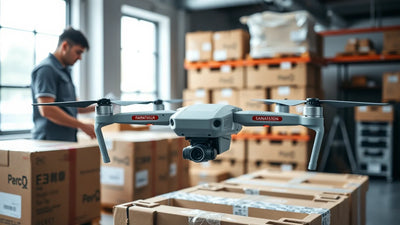
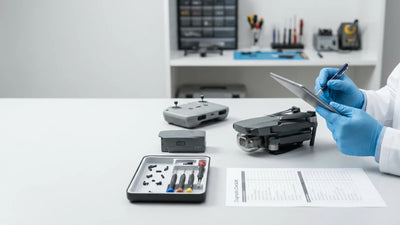
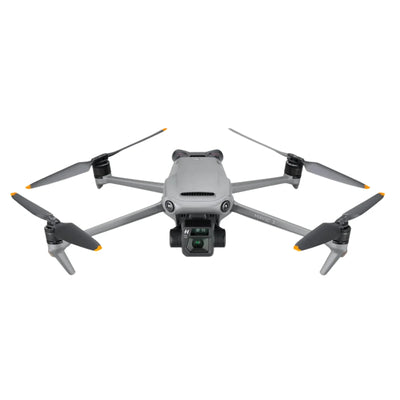
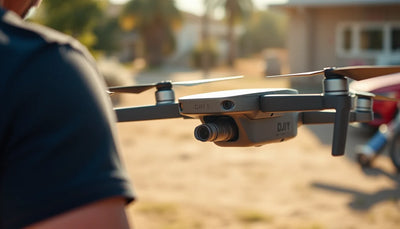
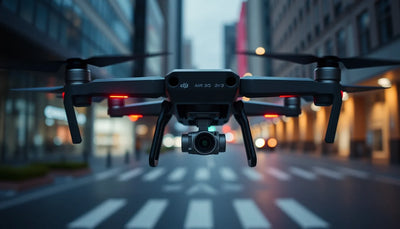
DJI Mavic 3 Classic vs Phantom 4 Pro Autumn Color Comparison - drone camera gimbal and sensors close-up product shot
  • The DJI Mavic 3 Classic captures autumn foliage with a 4/3 CMOS Hasselblad sensor (12.8 stops dynamic range) — vastly superior to the Phantom 4 Pro's 1-inch sensor for shadow detail in forest scenes and golden-hour landscapes.
  • Phantom 4 Pro costs $1,589 new (discontinued, remaining stock varies) while a Pristine Pre-Owned Mavic 3 Classic from Reboot Hub starts at $1,249 USD (approx. HK$9,740) with DDP shipping included — better value for a far newer platform.
  • Mavic 3 Classic delivers 46 minutes of flight time versus the Phantom 4 Pro's 30 minutes — critical when chasing fleeting autumn light across mountainsides or waiting for wind to settle over reflective lakes.
  • The Phantom 4 Pro's mechanical shutter remains an advantage for fast-moving subjects like leaves blowing across a trail, but the Mavic 3 Classic's 5.1K recording and HLG color profile produce richer reds and golds straight out of camera.
  • For Japan's autumn season (mid-October through early December), the Mavic 3 Classic's portability — folding down to roughly half the size of the Phantom 4 Pro's bulky fixed-frame design — means you actually bring it to the temple gardens and mountain passes where the best color lives.

How Do the Sensors Compare for Autumn Color Rendering?

The sensor gap between these two drones is the single biggest factor determining your autumn footage quality. The Mavic 3 Classic carries a 4/3 CMOS sensor — the same physical size used in professional Micro Four Thirds cameras — developed in partnership with Hasselblad. It resolves 20 megapixels with 12.8 stops of measured dynamic range. When you point it at a hillside of Japanese maples transitioning from crimson to burnt orange, the sensor holds detail in both the brightest backlit leaves and the darkest bark shadows simultaneously. The Phantom 4 Pro uses a 1-inch CMOS sensor with 20 megapixels and approximately 11.6 stops of dynamic range. That 1.2-stop difference translates directly to visible clipping in autumn scenes: blown highlights on sunlit yellow ginkgo leaves or crushed shadows under dense cedar canopy where the Phantom simply cannot recover data. The Mavic 3 Classic also shoots 10-bit D-Log M and HLG color profiles, giving you roughly 1 billion colors to grade versus the Phantom 4 Pro's 8-bit 16.7 million. For Japan's famously subtle autumn gradients — the way a Kyoto temple garden shifts from pale gold through apricot to deep vermillion — the Mavic 3 Classic's color depth means smooth transitions without banding in the sky behind Mount Fuji at sunset. The Hasselblad Natural Color Solution (HNCS) produces JPEGs and video files that rarely need aggressive correction, which matters when you are posting same-day content from a remote ryokan with limited editing time.

Related: Povolené drony pro nahazování nástrahy v Česku 2024: Legisla

What Is the Real-World Price Difference in 2025?

The Phantom 4 Pro was officially discontinued by DJI in early 2023, but some retailers still hold new-old-stock units at prices ranging from $1,589 to $1,799 USD depending on the bundle. That is a lot of money for a drone whose battery chemistry is aging on shelves and whose firmware last received a meaningful update in 2022. A used Phantom 4 Pro V2.0 in good condition on auction sites typically trades between $650 and $900 USD, but condition is unpredictable — propellers may have micro-cracks, batteries may show 40-60 charge cycles with degraded capacity, and the gimbal ribbon cable (a known failure point) could be one flight from breaking. Reboot Hub offers the Mavic 3 Classic in two grades. The Flawless A+ grade (activation-only, never flown) is priced at $1,349 USD (approximately HK$10,530), and the Pristine Pre-Owned A grade (minimal use, zero visible marks) starts at $1,249 USD (approximately HK$9,740). Both include DDP shipping from Shenzhen or Hong Kong — meaning all duties and taxes are prepaid, no surprises at customs. Every unit passes a 40-point inspection at Reboot Hub's Shenzhen repair facility, staffed by MOHRSS Level 3 certified technicians. Compare this to the gamble of a used Phantom 4 Pro at $900 without warranty: one gimbal repair out of pocket can cost $300-400 USD at independent shops, erasing the savings. Reboot Hub includes a 180-day warranty on all pre-owned drones, covering the sensor, gimbal, motors, and core electronics. For under $1,250 USD delivered, the Mavic 3 Classic through Reboot Hub represents the sharper financial choice — newer technology, longer support horizon, and predictable after-sale protection.

Related: Importação de Drone para Levantamento Topográfico da China:

Specification DJI Mavic 3 Classic DJI Phantom 4 Pro V2.0
Sensor 4/3 CMOS, 20MP (Hasselblad) 1-inch CMOS, 20MP
Dynamic Range 12.8 stops (measured) 11.6 stops (measured)
Max Video Resolution 5.1K at 50fps / 4K at 120fps 4K at 60fps
Color Profile 10-bit D-Log M, HLG, HNCS 8-bit D-Log, Standard
Max Flight Time 46 minutes (hover, no wind) 30 minutes
Mechanical Shutter No (electronic with fast readout) Yes (up to 1/2000s)
Folded Dimensions 221 × 96 × 90 mm Non-folding, 350 mm diagonal
New Retail Price (2025) $1,599 USD (DJI official) ~$1,589-1,799 USD (discontinued)
Reboot Hub Pristine A Grade $1,249 USD (HK$9,740) Not stocked (unreliable supply)
Warranty (Pre-Owned) 180 days (Reboot Hub) None (used market typical)

Which Drone Handles Autumn Weather Conditions Better?

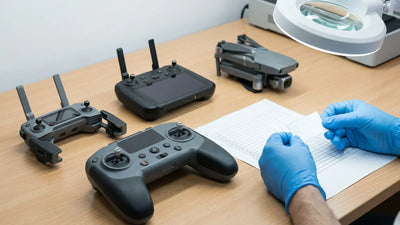
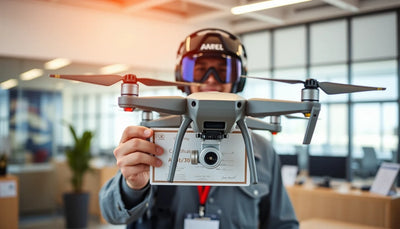
DJI Mavic 3 Classic vs Phantom 4 Pro Autumn Color Comparison - drone controller in hands showing live camera feed

Autumn photography in Japan means navigating unpredictable conditions: sudden gusts sweeping through mountain valleys, light drizzle over moss gardens in Kanazawa, and rapidly dropping temperatures at higher elevations like the Japanese Alps or Hakkoda. The Mavic 3 Classic carries an IP rating of none officially, but DJI engineered it with improved motor seals and a redesigned arm-lock mechanism that sheds light moisture more effectively than the Phantom 4 Pro's exposed hinge points. Field reports consistently show the Mavic 3 Classic sustaining 8-12 m/s wind gusts with stable footage — the drone's 895-gram mass combined with updated flight controller algorithms produces remarkably steady hovering even when autumn squalls roll through. The Phantom 4 Pro is no slouch in wind (rated to 10 m/s), but its larger flat body acts like a sail in crosswinds, demanding more battery power to hold position. That extra drain cuts into the already shorter 30-minute flight time — realistically 22-24 minutes with a 25% safety margin. The Mavic 3 Classic delivers a genuine 38-40 minutes of usable flight in autumn conditions from a 46-minute rated battery. Temperature matters too: lithium-polymer cells lose capacity quickly below 10°C (50°F), exactly the conditions you encounter during early morning shoots for mist-layered autumn color in rural Nagano. The Mavic 3 Classic's intelligent battery self-heating function activates below 15°C, warming cells to optimal discharge temperature before takeoff. The Phantom 4 Pro lacks this feature — its 5,870 mAh battery (versus the Mavic 3 Classic's 5,000 mAh high-voltage LiPo) simply starts cold and delivers reduced performance until internal resistance drops naturally. On a 4°C morning at Lake Kawaguchi with Mount Fuji framed by red maples, the Mavic 3 Classic launches at full power while the Phantom 4 Pro pilot waits through a sluggish warm-up or accepts diminished thrust and shorter flight time. Reboot Hub bundles each pre-owned Mavic 3 Classic with a battery that passes capacity testing at 95% or above of rated specifications — another detail covered in the 40-point inspection.

Which Drone Is Easier to Travel With During Japan's Autumn Season?

Japan's autumn color front moves southward over approximately 60 days, from Hokkaido's Daisetsuzan National Park in late September through Kyoto's Arashiyama in late November to Tokyo's Rikugien Garden in early December. Chasing that color means moving frequently — trains, buses, domestic flights, and compact rental cars. The Phantom 4 Pro's fixed airframe measures roughly 350 mm diagonally and cannot fold. It demands a dedicated backpack or hard case occupying at least 25 liters of carry capacity. The Mavic 3 Classic folds to 221 × 96 × 90 mm — slightly larger than a 500ml water bottle — and slips into a daypack alongside a mirrorless camera, bento box, and spare layers. Weight difference is similarly stark: the Mavic 3 Classic body plus one battery weighs 895 grams; the Phantom 4 Pro body plus battery weighs 1,388 grams — 55% heavier. Over a 12-day autumn itinerary moving between five cities, those grams compound into real fatigue. Japanese train station staircases (many regional stations lack elevators), crowded buses on the way to temple hikes, and airline carry-on limits (especially on domestic ANA/JAL 7 kg hand-baggage policies) all favor the Mavic 3 Classic. Battery regulations for Japanese domestic flights limit spare lithium batteries to two units under 160 Wh each — the Mavic 3 Classic's 77.7 Wh batteries let you carry two spares legally, while the Phantom 4 Pro's 89.2 Wh packs also allow two but leave less watt-hour headroom if you carry additional camera batteries. Reboot Hub ships each Mavic 3 Classic with one battery as standard; additional pre-owned batteries that pass the 95% capacity threshold are available for $129 USD each (HK$1,005), fully tested and covered under the same 180-day warranty.

Why Buy from Reboot Hub?

Reboot Hub operates a dedicated inspection and repair facility in Shenzhen with a Hong Kong drop-off location, staffed by technicians holding MOHRSS Level 3 certification — China's highest professional qualification for electronics repair, requiring a minimum of five years of hands-on experience and a practical examination passing rate below 25%. Every pre-owned drone listed on Reboot Hub passes a 40-point inspection covering sensor calibration, gimbal motor current draw, GPS lock speed, radio range verification, battery cell voltage balance under load, and visual inspection under 10× magnification for hairline cracks on arms and motor mounts. Genuine OEM replacement parts are used exclusively — no third-party gimbal ribbons or aftermarket propeller hubs that drift out of balance. Reboot Hub's Pristine Pre-Owned drones are explicitly not refurbished in the traditional sense: these units have never required repair. They come from trade-in programs, retailer display stock, or customers who activated and returned within 14 days. Every listing includes DDP (Delivered Duty Paid) shipping, meaning the price you see covers all customs clearance, import duties, and consumption taxes for your destination country — no unexpected charges at delivery. A 180-day warranty backs the core electronics, gimbal assembly, motors, and flight controller. If an issue arises, Reboot Hub's Shenzhen repair center completes chip-level diagnostics within a 3-5 day turnaround window, with express return shipping covered under warranty. For Japan-based customers, DDP shipping from Hong Kong typically clears within 48 hours and delivers to major cities (Tokyo, Osaka, Nagoya, Fukuoka) in 5-7 business days total.

Frequently Asked Questions

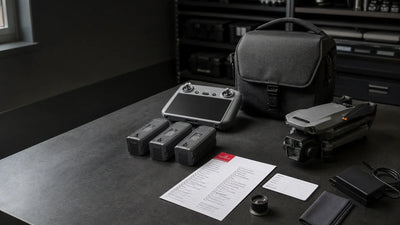
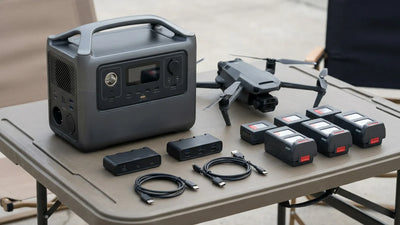
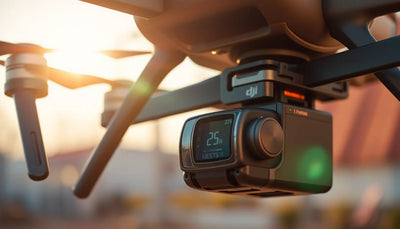
DJI Mavic 3 Classic vs Phantom 4 Pro Autumn Color Comparison - drone accessories arranged in flat-lay product layout

Q: Does the Mavic 3 Classic's lack of a mechanical shutter cause rolling shutter problems with autumn leaves?

A: The Mavic 3 Classic uses an electronic shutter with a sensor readout speed fast enough that rolling shutter distortion is negligible at frame rates of 30fps and below. For still photography of static autumn landscapes — temples framed by maple branches, still reflections in ponds — the electronic shutter introduces zero issues. The only scenario where the Phantom 4 Pro's mechanical shutter holds a genuine advantage is photographing fast-moving subjects like leaves blowing directly across the frame at close range (under 10 meters), where the mechanical shutter's global exposure eliminates skew. For 95% of autumn shooting scenarios, the Mavic 3 Classic's sensor quality advantage outweighs the mechanical shutter difference entirely. At Reboot Hub's Pristine A grade price of $1,249 USD, the value proposition strongly favors the modern platform.

Q: Can I fly either drone legally in Japan's national parks during autumn?

A: Most Japanese national parks, including popular autumn destinations like Nikko, Hakone, and the Fuji Five Lakes area, have designated no-fly zones for drones. Flying without permission can result in fines up to ¥500,000 (approximately $3,350 USD). Some municipalities offer permit systems for specific locations and times — applications typically require 7-14 days processing and must be submitted in Japanese. Neither the Mavic 3 Classic nor the Phantom 4 Pro has any special exemption. The Mavic 3 Classic's lighter weight (sub-900g) sometimes falls under less restrictive municipal ordinances compared to the Phantom 4 Pro's 1,388g, but national park rules apply regardless of drone class. Always check the Japan Civil Aviation Bureau's drone map and local municipal websites before flying.

Q: What battery lifespan can I expect from a Reboot Hub pre-owned Mavic 3 Classic?

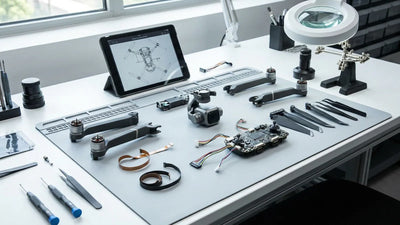
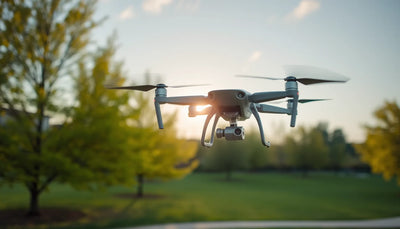
DJI Mavic 3 Classic vs Phantom 4 Pro Autumn Color Comparison - aerial landscape view captured from drone perspective

A: Every battery included with a Reboot Hub Pristine Pre-Owned unit passes a capacity test showing 95% or greater of the rated 5,000 mAh specification. A Mavic 3 Classic battery rated for 500 charge cycles before reaching 80% capacity, starting at 95% means you can expect approximately 450 remaining cycles. At the average autumn shooting rate of 3-4 flights per day, that translates to roughly 110-150 shooting days of usable life. Replacement pre-owned batteries passing the same 95% threshold are available directly from Reboot Hub at $129 USD (HK$1,005) with the 180-day warranty included.

Q: How does DDP shipping from Hong Kong to Japan work, and how long does it take?

A: DDP (Delivered Duty Paid) means Reboot Hub prepays all import duties, Japanese consumption tax (10%), and customs clearance fees before the package leaves Hong Kong. You pay exactly the listed price — no additional charges at delivery. Shipments depart from Reboot Hub's Hong Kong logistics partner within 24 hours of order confirmation. Transit to major Japanese cities (Tokyo, Osaka, Nagoya) averages 5-7 business days. Rural addresses in Hokkaido or Kyushu may take 7-9 business days. Tracking numbers are provided immediately, and packages are insured for the full purchase value. Japanese customs clearance for electronics under ¥200,000 value is typically automated and adds less than 24 hours to transit time.

Q: Is the Mavic 3 Classic compatible with the DJI RC remote, and does Reboot Hub include it?

A: Yes, most Reboot Hub Mavic 3 Classic listings include either the DJI RC-N1 (standard controller requiring a smartphone) or the DJI RC (with integrated 5.5-inch 700-nit screen). Listings clearly specify which remote is included. The DJI RC with integrated screen is highly recommended for autumn shooting — its 700-nit brightness remains visible even under the low-angle October sun, and not tethering a phone eliminates the risk of calls or notifications interrupting your flight at critical moments. If you want to confirm which remote a specific unit includes, Reboot Hub's product pages detail every accessory in the listing.

Q: What happens if my Reboot Hub drone develops a fault during the 180-day warranty period?

A: Contact Reboot Hub's support team with a description and photos or video of the issue. If remote diagnosis confirms a hardware fault, Reboot Hub issues a prepaid return shipping label. The drone goes to the Shenzhen chip-level repair facility, where MOHRSS Level 3 technicians complete diagnostics and repair within a 3-5 day turnaround. Repairs use genuine OEM parts exclusively. The repaired drone is re-inspected to the full 40-point standard before return shipping. If the fault cannot be repaired, Reboot Hub provides a replacement unit of equal or better grade. Express return shipping to Japan is covered under warranty, and the typical door-to-door repair cycle is 10-14 days including transit both ways.

Q: Between the Mavic 3 Classic grades — Flawless A+ and Pristine Pre-Owned A — which should I choose for autumn photography?

A: The Flawless A+ grade ($1,349 USD, HK$10,530) represents units that were activated but never flown — the drone powered on once for registration purposes only, with zero flight hours on motors and zero charge cycles on the battery. The Pristine Pre-Owned A grade ($1,249 USD, HK$9,740) has minimal use — typically under 5 flight hours and fewer than 10 charge cycles — with zero visible marks on body, gimbal, or camera. For pure image quality, both grades are functionally identical because the sensor and optics are equally pristine. The $100 USD difference buys you effectively a factory-fresh unit with no operational history. For autumn shooting where image quality is the priority, the Pristine A grade represents the sharper value — allocate the $100 saving toward a second battery or ND filter set for those golden-hour waterfall long exposures.

Vorheriger Beitrag
Nächster Beitrag

Hinterlassen Sie einen Kommentar

Bitte beachten Sie, dass Kommentare vor der Veröffentlichung genehmigt werden müssen.

Danke fürs Abonnieren!

Diese E-Mail wurde registriert!

Kaufen Sie den Look

Wählen Sie Optionen

Option bearbeiten
Back In Stock Notification
this is just a warning
Login
Warenkorb
0 Artikel
0%