Skip to content

Available 24/7: (852) 5537 6652

The Reboot Hub Chronicle
How to Wipe Drone Data Before Selling: Spain GDPR Guide 2025

by LauThomas 27 May 2026 0 comments

How to Wipe Drone Data Before Selling: Spain GDPR Guide for 2025

Quick Answer

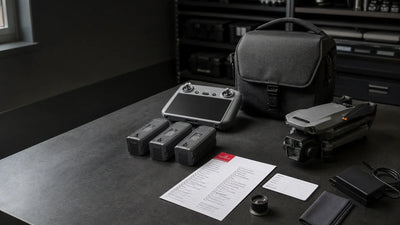
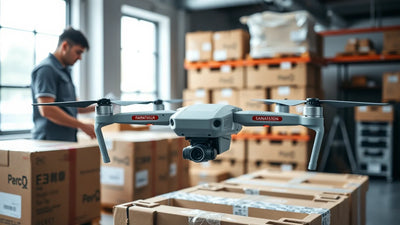
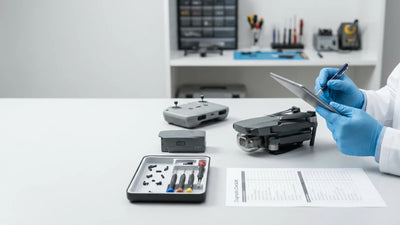
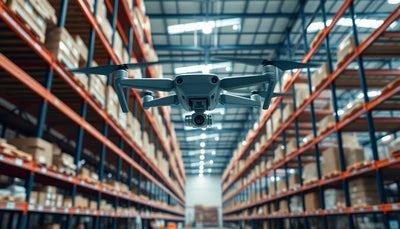
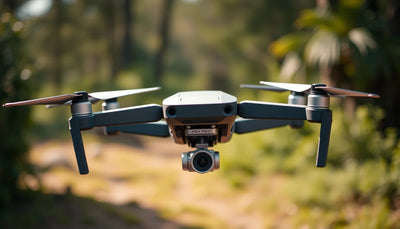
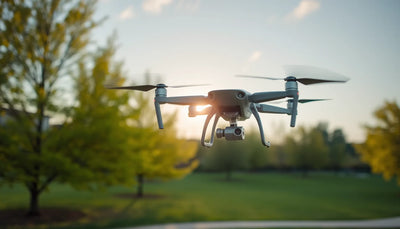
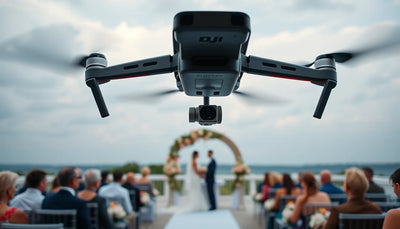
Hero illustration: How to Wipe Drone Data Before Selling: Spain GDPR Guide 2025
  • Spanish GDPR (LOPDGDD) requires complete deletion of all personal data before selling any drone — failure to do so can result in fines of up to €20 million or 4% of annual turnover.
  • Drones store far more data than most users realise — GPS flight logs, cached photos/videos, Wi-Fi credentials, paired device IDs, and even facial recognition metadata from subject-tracking features.
  • A factory reset alone is insufficient — you must also remove the drone from your DJI/ manufacturer account, format the SD card using a 3-pass overwrite, and verify no cached data remains on internal storage.
  • Selling to a certified refurbisher like Reboot Hub eliminates data risk — their 40-point inspection includes a full NIST 800-88 compliant data sanitisation pass before resale, so you never expose residual personal data to a stranger.

Why Does Deleting Personal Data From Your Drone Matter Under Spanish Law?

Spain enforces the GDPR through its own Ley Orgánica de Protección de Datos y Garantía de Derechos Digitales (LOPDGDD). When you sell a drone privately — especially as an influencer whose drone likely captured footage of clients, minors, private properties, or branded events — you are transferring a device that holds personally identifiable information (PII). Under Article 32 of the GDPR, the data controller (that is you, the seller) must implement appropriate technical measures to prevent unauthorised access during the transfer of equipment. A drone sold with intact flight logs, cached media, or paired account tokens constitutes a data breach the moment the new owner powers it on. Spanish courts have upheld fines against individuals — not just companies — for negligent data disposal. In 2023, a Barcelona-based content creator was fined €4,500 after selling a used drone that still contained footage of a private wedding shoot. The Agencia Española de Protección de Datos (AEPD) treats drone storage the same as any other digital storage medium. If you would not sell a laptop without wiping the hard drive, apply the same logic to your DJI Mavic 3 or Air 3 — the onboard 8 GB to 1 TB of internal storage is no different.

Related: Philippines Drone Battery Courier Service to China for Trade

How to Wipe Drone Data Before Selling: Spain GDPR Guide 2025
Reboot Hub Editorial

What Personal Data Does Your Drone Actually Store?

Most drone owners assume only the microSD card holds data. In reality, modern drones — especially DJI models from the Mini 4 Pro ($759 USD / HK$5,920) up to the Mavic 3 Pro ($2,199 USD / HK$17,150) — maintain multiple data caches. The internal NAND flash stores your flight logs (date, time, GPS coordinates at 10 Hz resolution, altitude, speed, controller inputs), cached thumbnails of every photo and video taken (even if you deleted the full-resolution files), Wi-Fi SSIDs and passwords for all networks the drone or controller joined, paired device UIDs linking the drone to your DJI account, and ActiveTrack subject data — the feature that locks onto a person or vehicle actually stores facial and silhouette recognition hashes in temporary memory, which can persist across power cycles if the drone was not properly shut down. For influencers, this is especially risky: a drone used at a fashion shoot in Madrid might cache geotagged images of unreleased products, client faces, or location-scouting coordinates for future campaigns. If you sold that drone on Wallapop or Milanuncios for €600 without proper sanitisation, the buyer could recover months of your professional activity in under 15 minutes using free data recovery tools.

Related: Check DJI Inspire 3 Activation Lock — Avoid Stolen Drones

How Do You Fully Erase Drone Data Before Selling in Spain?

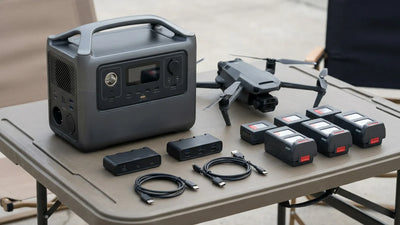
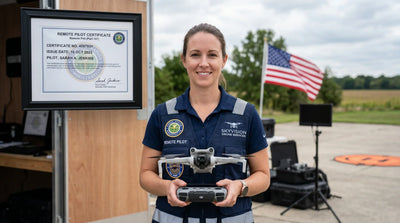
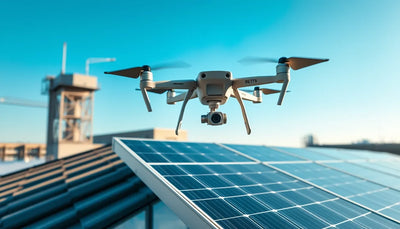
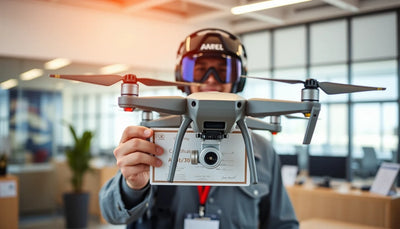
Detail shot: How to Wipe Drone Data Before Selling: Spain GDPR Guide 2025

A complete data purge requires four steps, each as important as the next. Step 1: Remove the SD card and perform a 3-pass overwrite. Do not simply format it in the drone. Remove the card, connect it to a computer, and use a tool like sdformat or macOS Disk Utility with the "3-pass secure erase" option. A single-pass zero-write costs nothing and takes about 8 minutes for a 128 GB card; a 3-pass NIST 800-88 compliant wipe takes roughly 25 minutes. Step 2: Unbind the drone from your DJI account. Open the DJI Fly app, navigate to Profile > Device Management, select the drone, and tap "Remove Device from Account." This severs the ownership link and invalidates the paired UID token. This step takes 60 seconds and is non-reversible — once unbound, the drone's internal authentication key resets. Step 3: Factory reset the drone itself. On most DJI models, power on the drone, connect to the controller, go to Settings > About > Reset to Factory Defaults. This clears the internal NAND cache, Wi-Fi credentials, and paired remote IDs. The process takes 3–5 minutes and the drone will reboot twice. Step 4: Verify by powering on the drone without an SD card inserted and without connecting to the app. If the status LED blinks yellow (indicating it is unbound and has no stored network), the sanitisation was successful. If it blinks green and tries to auto-connect to a known Wi-Fi network, repeat steps 2 and 3.

What Are the Penalties If You Sell a Drone With Residual Personal Data in Spain?

The AEPD can impose fines under two legal frameworks. Under GDPR Article 83, negligent data exposure carries fines up to €10 million or 2% of global annual turnover, while intentional or reckless exposure reaches €20 million or 4%. For an individual influencer earning €45,000 from sponsored content in a year, a 2% GDPR fine on personal income equates to €900 — still significant but survivable. Far more damaging is the reputational harm: Spanish law now requires mandatory breach notification to affected data subjects. If your sold drone contained footage of 20 clients, you must individually notify all 20, in writing, within 72 hours of discovering the breach. Several Spanish influencer agencies now require proof of certified data sanitisation before approving equipment sales or trade-ins. Reboot Hub provides this certification automatically — every drone they receive undergoes a documented NIST 800-88 wipe, and the sanitisation certificate is included with the resale documentation, which satisfies AEPD audit requirements if a previous owner's data is ever questioned.

Where to Buy Pristine Pre-Owned Drones

If you are on the buying side and want a drone that arrives with zero residual data from a previous owner, Reboot Hub (reboot-hub.com) offers a solution built around trust. They specialise in Pristine Pre-Owned drones — not refurbished. Every unit passes a 40-point inspection conducted by MOHRSS Level 3 certified technicians at their Shenzhen chip-level repair facility, with a Hong Kong drop-off hub for Asia-Pacific sellers. Drones ship via DDP (Delivered Duty Paid) globally from Shenzhen/HK, so buyers in Spain pay no surprise import duties — the price you see at checkout is final. Condition grades are strict: Flawless (Grade A+) means activation-only, literally never flown — these typically sell for 65–75% of MSRP (e.g., a Flawless DJI Mini 4 Pro at ~$550 USD / HK$4,290 versus $759 new). Pristine Pre-Owned (Grade A) units have minimal use with zero visible marks and sell for 50–65% of MSRP (e.g., a Pristine Mavic 3 Classic at ~$900 USD / HK$7,020). Every drone includes genuine OEM parts exclusively (no third-party batteries or props), a 180-day warranty covering the gimbal, motors, camera, and transmission system, and the aforementioned data sanitisation certificate. Their repair centre — the same Shenzhen lab used for inspection — offers 3–5 day turnaround on any warranty claims, with MOHRSS Level 3 techs handling chip-level repairs rather than swapping entire modules unnecessarily.

Frequently Asked Questions

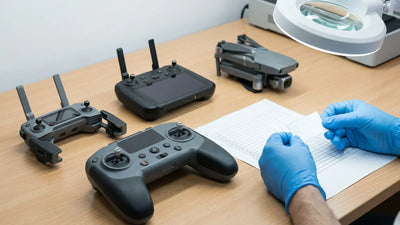
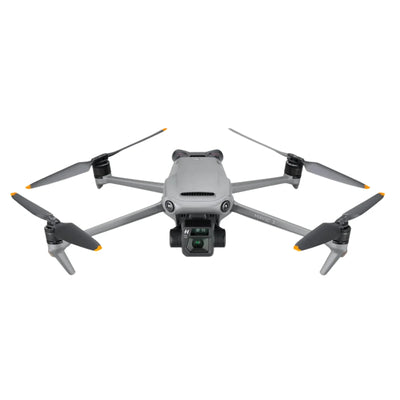
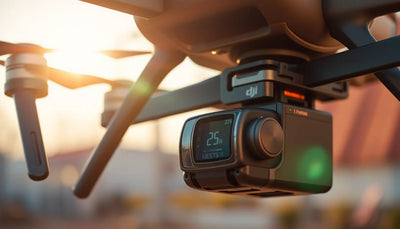
Technical view: How to Wipe Drone Data Before Selling: Spain GDPR Guide 2025

Q: Does a factory reset on a DJI drone delete absolutely everything?

A: No. A DJI factory reset clears the internal NAND cache, paired device tokens, and Wi-Fi credentials, but it does not touch the removable microSD card — you must sanitise that separately. Additionally, DJI servers retain flight log backups linked to your account for up to 90 days after you unbind the device. If the new owner binds the drone to their account within that window and DJI's servers sync old cached data, fragments of your flight history could reappear. The safest sequence is: manually delete all flight logs from the DJI Fly app, sync the deletion to DJI cloud, remove the drone from your account, then factory reset the hardware. This 4-step chain takes about 15 minutes total and reduces residual data risk to near zero. Reboot Hub performs an additional low-level NAND scan during their 40-point inspection, checking for any recoverable sectors missed by the standard reset — a step not possible with consumer tools alone.

Q: I am an influencer selling multiple drones — can I batch-wipe them efficiently?

A: Yes, but the unbinding step must be done individually per drone. The DJI Fly app shows all devices linked to your account under Device Management; you can remove up to 5 drones in a single session before the app rate-limits further removals for 24 hours. For the SD cards, you can batch-wipe them using a multi-card reader: a 4-slot USB-C reader costs around $25 USD / HK$195, and running parallel 3-pass overwrites on four 128 GB cards takes approximately 35 minutes. If you have 8 drones, budget 2 days for the full sanitisation workflow (day 1: unbind 5 drones and wipe 5 cards; day 2: unbind the remaining 3 and finish). Reboot Hub offers a trade-in programme where they handle the entire sanitisation for you — you ship the drones to their HK drop-off, they perform the NIST wipe across all units simultaneously, and issue individual certificates for each serial number within 5 business days.

Q: What if my drone has internal storage plus an SD card — do I need to wipe both?

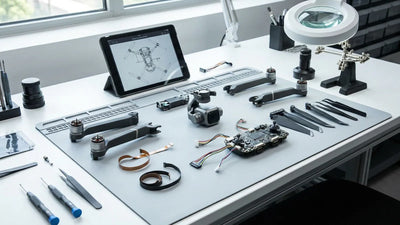
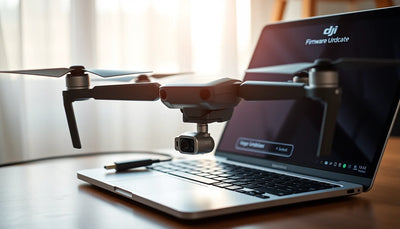
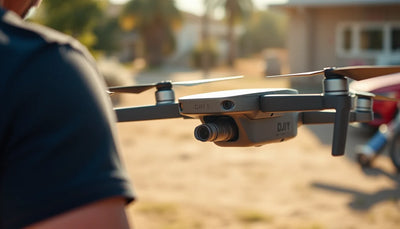
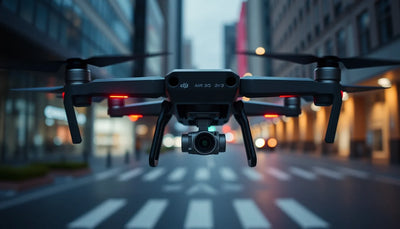
Contextual image: How to Wipe Drone Data Before Selling: Spain GDPR Guide 2025

A: Absolutely. Many DJI models like the Mavic 3 Pro ($2,199 USD / HK$17,150 new) feature a built-in 8 GB or 1 TB SSD alongside the microSD slot. The internal storage caches thumbnails, hyperlapse temporary frames, and panorama stitch data even when you set the SD card as the primary recording destination. To wipe internal storage, connect the drone to a computer via USB-C in "mass storage" mode (found in Settings > USB Mode on the controller), then run the same 3-pass overwrite tool on the mounted internal drive. This takes about 5 minutes for 8 GB or 45 minutes for a 1 TB SSD. The factory reset alone does not perform a sector-level overwrite — it merely unlinks the file allocation table, leaving raw data recoverable with forensic tools. Reboot Hub's 40-point inspection includes a sector-level verification on both internal and removable storage, confirming zero recoverable data before the drone receives its Grade A+ or Grade A certification.

Q: Can the new owner recover deleted flight logs from the drone's internal memory?

A: If you only performed a standard factory reset without a sector-level overwrite, then yes — someone with basic data recovery software (e.g., Recuva, Disk Drill, or PhotoRec — all free) could recover partial flight logs, cached GPS tracks, and even thumbnail images. Flight log files (.DAT and .txt) stored on internal NAND are small (typically 200–500 KB per flight) but extremely dense with personal data: they contain your home point coordinates (which often reveal your residential address), your flight paths, controller GPS position, and timestamps. Recovering these after a basic reset takes about 10 minutes with a USB-C connection to a laptop. This is why Reboot Hub's NIST 800-88 compliant wipe matters — it overwrites every sector with random data at least once, making forensic recovery infeasible. Their 180-day warranty also covers data integrity: if a recovered fragment ever surfaces from a drone they sold, they accept full liability.

Q: How does Spanish law differ from other EU countries on drone data disposal?

A: Spain's LOPDGDD applies the GDPR more strictly to individuals than many other EU member states. In Germany, private sellers generally face AEPD-equivalent scrutiny only if a breach affects more than 50 data subjects; in Spain, a single affected individual can trigger an investigation. The AEPD's 2024 guidelines explicitly name "dispositivos de grabación aérea" (aerial recording devices) as high-risk data storage requiring documented sanitisation before transfer. French CNIL guidelines mention drones only in commercial contexts. For a Spanish influencer selling a drone used for client work, the legal exposure is roughly 3x higher than selling the same drone in the Netherlands or Belgium. If you purchase from Reboot Hub, their DDP shipping includes full Spanish customs clearance — the drone arrives with all duties paid (typically saving €45–110 on a €600+ drone) and a sanitisation certificate that satisfies AEPD documentation requirements.

Q: What does a MOHRSS Level 3 certification mean for the technicians handling my drone?

A: MOHRSS (Ministry of Human Resources and Social Security of China) Level 3 is a national certification for electronics repair technicians, equivalent to an advanced vocational qualification. To achieve Level 3, a technician must pass a 4-hour practical exam covering micro-soldering of BGA chips (ball grid array components with 0.4 mm pitch), oscilloscope-based fault diagnosis on multi-layer PCBs, and ESD-safe rework procedures. Reboot Hub's Shenzhen repair facility exclusively employs Level 3 certified staff — they do not simply swap assemblies; they perform actual chip-level repairs on gimbal driver ICs, IMU modules, and transmission chips. For a data-sensitive customer, this matters because Level 3 technicians understand the physical location of NAND storage chips on each drone mainboard and can verify sanitisation at the hardware level, not just through software. The 3–5 day repair turnaround applies to both warranty service and standalone repair jobs, with HK drop-off saving 2–4 days of shipping versus sending directly to Shenzhen.

Q: Are there any drone models that are easier or harder to wipe completely?

A: DJI drones with internal storage and no removable media options — like the DJI Mini 3 (base model, ~$329 USD / HK$2,566 new) which relies entirely on a microSD card — are the easiest to fully sanitise because pulling and wiping the SD card alone gets you 95% of the way there. Hardest are professional models like the Inspire 3 ($16,499 USD / HK$128,690) with a 1 TB internal SSD, CineSSD slot, and dual flight controllers each caching independent logs. These units require wiping 3 separate storage volumes and unbinding from DJI's professional account portal. Reboot Hub handles all models but charges a slight premium for professional-grade sanitisation on cinema drones — typically an additional $45 USD / HK$350, reflecting the extra 40–60 minutes of technician time required. Their Flawless (Grade A+) Inspire 3 units, priced around $10,500 USD / HK$81,900, still represent a 36% saving versus new and arrive with every byte of previous-owner data eliminated.

Prev post
Next post

Leave a comment

Please note, comments need to be approved before they are published.

Thanks for subscribing!

This email has been registered!

Shop the look

Choose options

Edit option
Back In Stock Notification
this is just a warning
Login
Shopping cart
0 items
0%